Workflow
水果零售
icon
Search documents
水果店竟成了最难做的生意
虎嗅APP· 2025-07-13 02:52
Core Viewpoint - The fruit retail industry is facing significant challenges, with many small store owners struggling to maintain profitability due to increased competition and changing consumer behaviors [2][9][12]. Group 1: Challenges Faced by Fruit Store Owners - Many fruit store owners, like Zhang Dong, initially experienced success but later faced increased competition as new stores opened nearby, leading to a decline in customer traffic and profits [2][3]. - The average operating period for individual fruit store owners has decreased from 4.3 years in 2019 to 1.8 years in 2024, indicating a growing instability in the sector [5]. - High rental costs and short shelf life of fruits contribute to the financial strain on fruit retailers, making it difficult to sustain operations [13]. Group 2: Attempts to Find Breakthroughs - Some store owners, such as Li Na, have attempted to diversify their offerings by adding vegetables or snacks, but these efforts have not yielded significant improvements in sales [7][8]. - The use of live streaming and online sales has been explored as a potential solution, but only 12.7% of operators have found success through this channel [8]. - The fruit retail industry is experiencing a systemic crisis, with major chains like Baiguoyuan closing stores and reporting declining sales and profitability [9][10]. Group 3: Market Dynamics and Consumer Behavior - Consumers are increasingly opting for online purchases, with 63% preferring to select fruits in-store but ultimately buying online, leading to a rise in online penetration from 17% in 2020 to 39% in 2024 [10]. - The price sensitivity of consumers has intensified, with many choosing the cheapest options available, further squeezing the margins of physical stores [10][11]. - The fruit industry is undergoing a deep adjustment, with traditional business models facing severe challenges due to high competition and changing consumer preferences [12][14].
水果店竟成了最难做的生意?
Hu Xiu· 2025-07-12 12:01
Core Insights - The fruit retail industry is facing severe challenges, with many small store owners struggling to maintain profitability due to increased competition and changing consumer behavior [6][12][21] - The average operating cycle for individual fruit store owners has decreased significantly, indicating a high turnover rate in the industry [6] - Major fruit retail chains are also experiencing significant losses, with closures and declining sales figures highlighting the systemic issues within the industry [12][13] Group 1: Challenges Faced by Individual Store Owners - Many fruit store owners report a decline in business due to the influx of new competitors offering promotions, leading to reduced customer traffic and profit margins [2][4][9] - Store owners are attempting to diversify their offerings by adding vegetables or snacks, but these strategies often fail to yield significant improvements in sales [10][11] - The pressure from online platforms and group buying options is further exacerbating the difficulties faced by traditional fruit stores [14][21] Group 2: Industry Trends and Consumer Behavior - The fruit retail market is undergoing a transformation, with consumers increasingly opting for online purchases and showing a preference for lower-priced options [14][15][21] - The logistics and supply chain inefficiencies contribute to high costs and waste, making it difficult for physical stores to compete with online platforms that can offer better prices [13][14][21] - The overall fruit production in China is increasing, but the wholesale market prices are declining, indicating a mismatch between supply and demand [16] Group 3: Systemic Issues in the Industry - The fruit retail sector is characterized by low entry barriers, leading to oversaturation and intense competition among numerous players [19][20] - High rental costs and short shelf life of fruits create significant financial risks for store owners, making it challenging to sustain operations [18][21] - The shift in consumer purchasing behavior towards value-oriented options is diminishing the appeal of high-end fruit offerings, impacting specialized fruit retailers [21][22]
行进中国丨东盟果香飘 “邕”抱消费热
Sou Hu Cai Jing· 2025-07-12 09:57
Group 1 - In July, Guangxi launched a summer consumption season, leading to a surge in demand for ASEAN fruits like durian and mangosteen, enhancing consumer experience in Nanning [1] - The price of durian at Walmart is appealing, with "Golden Pillow Durian" priced at 19.99 yuan per 500g, attracting many customers and resulting in sales exceeding 1,000 kg per day during peak times [3][5] - Nanning's ability to achieve "ASEAN fruit freedom" is attributed to its advantageous transportation network and logistics infrastructure, including a major fruit trading center with an annual trading volume exceeding 1.5 million tons, of which over 300,000 tons are imported fruits [6] Group 2 - The popularity of ASEAN fruits has transformed them from luxury items to everyday purchases for consumers, with products like Philippine bananas and Thai coconuts also seeing significant sales [5] - The continuous demand for ASEAN fruits is revitalizing the local consumption market, with plans for Nanning to deepen trade cooperation with ASEAN to further enhance the availability of quality fruits [10]
百果园 (02411)打造“升级范式”:战略转型成效显著,新一轮成长周期启动在即
智通财经网· 2025-07-11 10:12
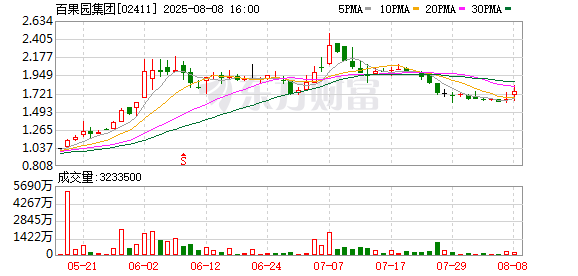
Core Viewpoint - The strategic transformation of the domestic fruit retail leader, Baiguoyuan, is showing initial positive results, with key operational data indicating a new growth cycle is beginning [1][2][3] Group 1: Strategic Transformation - Baiguoyuan's strategic transformation is driven by the dual trends of consumption upgrading and downgrading in the domestic market, leading to increased consumer demand for "high quality" and "high cost-performance" fruits [1][2] - The "High Quality and Cost-Performance Reputation Campaign" is a core initiative, featuring monthly promotions of selected high-value fruits to enhance customer loyalty and drive foot traffic [2][3] Group 2: Operational Performance - The "Good Fruit Reward" campaign has led to significant sales increases, with the first phase seeing a 234% increase in sales of kiwifruit priced at 5.9 yuan each, and the second phase achieving nearly 2,800 tons of sales for autumn pears, setting a five-year record [3][4] - Overall customer traffic has increased by 1,078% year-on-year, indicating successful validation of the company's strategic positioning [3] Group 3: Profitability and Supply Chain - The strategic focus on high-quality and cost-effective products is expected to optimize Baiguoyuan's profit structure, enhancing overall profitability and operational efficiency [4][5] - The company has established a global supply chain network, collaborating with over 800 direct sourcing bases across 26 countries, which strengthens its brand barrier and supports long-term value creation [6] Group 4: Store Optimization and Future Growth - Baiguoyuan has closed 966 underperforming stores to concentrate resources on more profitable locations, improving overall operational efficiency [7][8] - The company is set to restart its expansion in 2026, with expectations of revenue recovery and accelerated growth driven by improved product structure and customer traffic [7][8]
百果园20250709
2025-07-11 01:13
Summary of Baiguoyuan Conference Call Company Overview - **Company**: Baiguoyuan - **Year**: 2024 - **Net Loss**: 390 million yuan due to high cost-performance strategy leading to a decrease in gross margin from 11.5% to 7.4% [2][4] Key Financial Metrics - **Total Revenue**: 10.27 billion yuan, a decrease of 9.8% year-on-year [4] - **Retail GMV**: 12.7 billion yuan [4] - **C-end Revenue**: Decreased by 13% [4] - **B-end Revenue**: Increased by 22% [4] - **Gross Profit Decrease**: Approximately 550 million yuan [2][4] Strategic Adjustments - **Store Closures**: Net reduction of 966 stores in 2024, with an additional 400 expected in the first half of 2025 [2][6] - **Store Count**: Total stores reduced to 5,127 [6] - **Expansion Plans**: Expected to restart expansion in the second half of 2025 [6] Operational Improvements - **Order and Customer Growth**: Double-digit growth in order volume and customer traffic since April 2024 [2][8] - **Product Structure Optimization**: Improved gross margin and single-store gross profit through product adjustments [2][8] Franchisee Support - **Franchise Fee Waiver**: Cancellation of franchise fees and introduction of opening subsidies [9] - **Initial Investment Cost Reduction**: Reduced from 280,000 yuan to 234,000 yuan, shortening payback period to approximately two years [9][19] Sales Performance - **Same-store Sales**: Flat in the first half of 2025, but customer traffic showed double-digit growth [8] - **Gift Business Growth**: Gift business saw double-digit growth during the Spring Festival [3][8] Market Strategy - **High-Quality, Cost-Effective Strategy**: Focus on enhancing single-store profitability and optimizing investment costs [7] - **Domestic Market Focus**: Deepening channels in catering, tea drinks, and other sectors [7] - **International Expansion**: Opening stores in Indonesia and expanding product categories to include melons and blueberries [7][13] Consumer Insights - **Customer Base**: Approximately 90 million members, with an average purchase frequency of twice a month [5][16] - **Consumer Demographics**: Primarily community residents, including families and elderly individuals [16] Future Plans - **Store Model Development**: Currently refining store models in Indonesia to understand local consumer habits [13][14] - **Lightweight Store Concept**: Reducing investment costs and exploring smaller community store formats [17][18] Challenges and Risks - **High Rent Impact**: Closure of high-rent stores due to long-term contracts and unwillingness of landlords to reduce rents [9] - **Market Competition**: National price reductions affecting same-store sales, particularly for strawberries and cherries [8] Additional Insights - **Gift Strategy**: Continued collaboration with IT companies and designers for diverse gift options, contributing to 15% of store sales [25] - **Temperature Impact**: Recent temperature increases have led to significant growth in fruit sales [24] Conclusion - **Overall Performance**: 2024 was a year of strategic adjustment for Baiguoyuan, with a focus on improving profitability and market positioning through store optimization and enhanced consumer engagement strategies [4][7]
水果越自由,百果园越危险
3 6 Ke· 2025-06-12 04:29
Core Viewpoint - The article discusses the transformation of the fruit retail market in China, highlighting the decline of high-end fruit retailers like Baiguoyuan amidst increasing competition and changing consumer preferences towards more affordable options [1][21]. Industry Overview - The concept of "fruit freedom" has emerged as consumers now have access to a wider variety of fruits at lower prices due to improved supply chain efficiency, expanded import trade, and the rise of fresh e-commerce [1][21]. - The China-ASEAN Free Trade Area negotiations have further intensified this trend, leading to an influx of tropical fruits into the market [1]. Company Performance - Baiguoyuan, once a leading fruit retailer, is facing unprecedented operational challenges, closing an average of 2.65 stores daily in 2024 and reporting a staggering pre-tax loss of 391 million yuan [1]. - The company's stock price has remained below 2 yuan, categorizing it as a "zombie stock" [1]. Financial Trends - Baiguoyuan's revenue growth rates have significantly declined from 16.22% in 2021 to just 0.7% in 2023, with net profit growth also plummeting from 369.49% to 11.9% during the same period [7]. - The average revenue per store has decreased from 884,500 yuan to 796,000 yuan from 2021 to the first half of 2023, with a significant portion of stores in major cities like Beijing and Wuhan operating at a loss [14]. Competitive Landscape - The rise of e-commerce platforms and new retail formats has intensified competition, with consumers increasingly preferring to shop at places like Sam's Club and Hema for their fruit needs [16][18]. - These new retail formats leverage their extensive product offerings and strong membership systems to negotiate better prices with suppliers, further eroding Baiguoyuan's market position [18]. Brand and Consumer Trust - Baiguoyuan's brand value has been severely impacted by quality control issues, including reports of selling substandard fruits, which have led to a loss of consumer trust [12][15]. - The company's shift to a "high cost-performance" strategy in 2024, aimed at lowering prices to attract customers, may not be sufficient to compete in the highly competitive low-price market [18][19]. Conclusion - The article concludes that Baiguoyuan's inability to maintain high quality while competing on price has left it in a precarious position, as the market shifts towards more affordable and fresher options [21][22].
暴跌的榴莲
虎嗅APP· 2025-06-05 14:24
Group 1 - The core issue behind the sharp decline in durian prices is related to supply and quality problems, with wholesale prices dropping from 69.26 yuan/kg in April to 51.38 yuan/kg by May 23, a decrease of 25.8% [2][3] - The increase in supply is significant, with Thailand's eastern region expected to see a 30% increase in production, reaching a total of 1.5 million tons, while Vietnam's production is projected at 850,000 tons, far exceeding China's expected import volume of 1.56 million tons in 2024 [2][3][4] - Trade facilitation improvements have also contributed to the price drop, as the efficiency of cross-border supply chains has increased, reducing transportation time by approximately 30% and lowering costs [4][5] Group 2 - There is a notable decline in the quality of imported durians, with a high proportion of "raw packages" that appear ripe but have poor taste, leading to consumer dissatisfaction [8][10] - The quality issues are exacerbated by adverse weather conditions affecting the sugar accumulation and ripening of durians, resulting in a significant number of low-quality fruits entering the market [8][12] - The market is experiencing a severe polarization in quality, with low-quality durians flooding the market at low prices, while high-quality durians remain scarce and maintain stable prices [9][11] Group 3 - The volatility in durian prices reflects deeper changes in the high-end fruit market, prompting retailers to rethink their business models and strategies [14][15] - Retailers are facing reduced profit margins, with some reporting that profits have been nearly halved due to the price drop, leading to increased competition and pressure on profitability [15][16] - Consumer demand for high-end fruits is uncertain, as economic instability leads to reduced spending on non-essential items, further complicated by quality issues that have resulted in negative consumer experiences [17][18] Group 4 - Retailers are now focusing on quality control and are establishing direct relationships with quality suppliers to ensure better product offerings [18][19] - There is a shift towards diversifying product offerings to mitigate risks, with retailers introducing new fruit varieties to attract customers and enhance resilience against market fluctuations [19][20] - The future of high-end fruit retailing will likely emphasize quality and service as core competitive advantages, with a need for retailers to balance quality, service, and cost to meet diverse consumer demands [19][20]
暴跌的榴莲
3 6 Ke· 2025-06-05 03:29
Core Viewpoint - The significant drop in durian prices this summer is primarily driven by supply-demand dynamics and quality issues in the market [1][10][14]. Supply and Demand - The wholesale average price of durian in China fell to 51.38 yuan per kilogram by May 23, down 25.8% from April's average of 69.26 yuan [1]. - An increase in supply from major producing regions is expected, with Thailand's eastern durian production projected to rise by 30% to 1.5 million tons in 2024, and Vietnam's output at 850,000 tons [3][14]. - The influx of Vietnamese durians is anticipated to continue the downward price trend into June [1][3]. Trade Facilitation - The ongoing negotiations for the upgraded China-ASEAN Free Trade Area are reducing barriers for Southeast Asian fruits entering China, improving logistics efficiency [4][5]. - The time taken for durians to reach the Chinese market has decreased by approximately 30%, lowering overall distribution costs [5]. Domestic Production - Domestic durian cultivation is emerging, with over 4,000 acres yielding results in Hainan, expected to produce around 600 tons of "tree-ripened" durians by mid-June [7]. Quality Issues - There is a notable decline in the quality of imported durians, with a high proportion of "raw packages" that appear ripe but have poor taste and texture [8][10]. - The rainy season in Thailand has adversely affected the sugar accumulation and ripeness of durians, leading to a higher incidence of subpar quality [10][18]. Price Dynamics - The price of low-quality durians has significantly dropped, creating a misleading perception of overall price decline in the market [11][14]. - High-quality durians remain scarce and are still commanding stable prices, with some premium varieties selling for as much as 78 yuan per pound [13][14]. Market Impact - The price volatility is putting immense pressure on the entire durian supply chain, with Thai farmers experiencing a drop in purchase prices to around 10 yuan per pound, half of last year's prices [14]. - Retailers are facing reduced profit margins due to the price drop, leading to a reevaluation of their business strategies [15][18]. Consumer Behavior - The fluctuations in durian prices reflect broader changes in the high-end fruit market, with consumers becoming more cautious in their spending on non-essential items [18][21]. - Retailers are now focusing on quality control and diversifying their product offerings to mitigate risks and meet evolving consumer demands [19][21].
食饮吾见 | 一周消费大事件(5.26-5.30)
Cai Jing Wang· 2025-05-30 08:04
Group 1: Company Strategies and Developments - JiuGuiJiu has reduced its SKU by 50%, eliminating low-sales and non-growth potential products, and is focusing on a "2+2+2" strategic product system [1] - BaiGuoYuan Group has submitted an application to the China Securities Regulatory Commission for H-share full circulation, converting approximately 85.45 million non-listed shares into H-shares [2] - XiWang Food is committed to improving its sports nutrition business despite recent underperformance, citing long-term market potential and brand recognition [3] Group 2: Financial Performance and Projections - Vitasoy International expects a profit increase of approximately 94% to 111% for the fiscal year ending March 31, 2025, driven by improved operating profits in mainland China and Hong Kong [6] - NaiXue's Tea opened its 8th store in Southeast Asia in Chiang Mai, generating nearly 3.5 million Thai Baht (approximately 770,000 RMB) in its first month [9] Group 3: Market Reactions and Consumer Engagement - Luckin Coffee denied reports of price reductions, stating that it is offering promotional coupons for the Dragon Boat Festival and Children's Day instead [8] - WuFangZhai is gifting zongzi gift boxes to shareholders to promote traditional culture and gather feedback on its products [4] Group 4: Regulatory and Legal Matters - SanZhiSongShu has submitted its H-share issuance application to the Hong Kong Stock Exchange, which has been accepted by the China Securities Regulatory Commission [7] - DaRunFa clarified that it has restructured its operational zones from five to four, denying any plans to eliminate the Northeast region [12] - WanChen Group announced that its chairman, Wang JianKun, has had his detention lifted and is resuming his duties [13]
外国“水果贵族”,集体沦为中国土特产
东京烘焙职业人· 2025-05-22 09:36
Core Viewpoint - The article discusses the decline of high-end fruit retailers like Baiguoyuan, highlighting the significant drop in prices of premium fruits in China due to increased supply and changing consumer behavior [4][6][24]. Group 1: Market Dynamics - Baiguoyuan, once a leader in high-end fruit retail, is facing challenges with nearly 1,000 store closures and its first net loss in five years [4][6]. - The price of blueberries has plummeted to around 60 yuan per kilogram, marking the lowest price in a decade due to a surge in supply [8][10]. - China has become the world's largest blueberry producer, with planting areas increasing by over 44% since 2020 [10]. Group 2: Consumer Behavior - Chinese consumers have shown a willingness to pay high prices for premium fruits, but this trend is shifting as they seek more affordable options [12][14]. - The article notes that high-end fruits like Chilean cherries and Malaysian durians have seen their prices drop significantly as domestic production increases [41]. Group 3: Supply Chain and Technology - The rise in domestic fruit production is attributed to advancements in agricultural technology, including improved cultivation techniques and the introduction of high-yield varieties [31][35]. - Efficient business models, such as direct sourcing from farms, have become popular to reduce costs and improve freshness [40]. Group 4: Quality Concerns - There are concerns about the quality of high-end fruits as production increases, with reports of lower taste satisfaction among consumers [44][48]. - The lack of standardized management practices in fruit cultivation has led to quality degradation, highlighting the need for better agricultural practices [53][58]. Group 5: Future Outlook - For China to transition from a fruit-producing country to a fruit powerhouse, maintaining quality is crucial [59][60]. - The article emphasizes that local specialties must also be refined to compete with imported fruits effectively [61].