日用品

Search documents
东莞市初言雪日用品有限公司成立 注册资本1万人民币
Sou Hu Cai Jing· 2025-09-13 06:51
Core Viewpoint - Dongguan Chuyan Xueri Daily Necessities Co., Ltd. has been established with a registered capital of 10,000 RMB, focusing on various retail and wholesale activities related to daily necessities and kitchenware [1] Company Summary - The company is registered with a capital of 10,000 RMB [1] - It operates in multiple sectors including retail and wholesale of kitchenware, daily necessities, and stationery [1] - The business scope includes internet sales (excluding items requiring permits), domestic trade agency, and research and development of new materials [1] Industry Summary - The establishment of the company reflects ongoing growth in the daily necessities and kitchenware market in Dongguan [1] - The diverse range of products and services indicates a strategic approach to capture various segments of the consumer market [1]
广州擎动世纪汽配有限公司成立 注册资本10万人民币
Sou Hu Cai Jing· 2025-09-13 06:51
Group 1 - Guangzhou Qingdong Century Auto Parts Co., Ltd. has been established with a registered capital of 100,000 RMB [1] - The legal representative of the company is Zhou Xiaoying [1] - The business scope includes retail and wholesale of auto parts, manufacturing of auto parts and accessories, and sales of various consumer goods [1] Group 2 - The company is involved in a wide range of activities including the sale of clothing, personal hygiene products, and electronic products [1] - It also engages in domestic trade agency, technology import and export, and goods import and export [1] - The company is positioned to operate in the automotive and consumer goods sectors, indicating potential growth opportunities [1]
东莞市科乐日用品有限公司成立 注册资本10万人民币
Sou Hu Cai Jing· 2025-09-13 06:19
Core Insights - Dongguan Kele Daily Necessities Co., Ltd. has been established with a registered capital of 100,000 RMB [1] - The company is engaged in a wide range of activities including the sale and wholesale of daily necessities, household goods, and various types of products such as chemical products, metal products, and plastic products [1] Company Overview - The legal representative of the company is Ma Yanling [1] - The business scope includes general projects such as daily necessities sales, daily chemical product manufacturing, and internet sales [1] - The company is also involved in import and export activities, subject to legal approvals [1]
How You Should Invest in a Tariff-Filled World
The Smart Investor· 2025-09-11 03:30
Group 1: Tariff Announcements and Responses - President Trump announced tariffs targeting over 180 countries, later suspending reciprocal tariffs for 90 days and reducing most rates to 10%, except for China, which retained a 145% tariff [1] - China retaliated with a 125% tariff on US goods, escalating fears of a trade war between the two largest economies [2] Group 2: Market Impact and Business Sentiment - The tariffs have led to increased operational costs for businesses, causing many to delay expansion plans, cut back on investments, and freeze hiring [4] - Companies may pass higher costs onto consumers, leading to price hikes that could dampen consumer sentiment and spending [5] Group 3: Stock Recommendations - Companies selling consumer staples, such as Kimberly-Clark, Procter & Gamble, and Colgate-Palmolive, are well-positioned due to their strong market presence and pricing power [7][8][9] - Cybersecurity firms like Crowdstrike, Palo Alto Networks, and Zscaler are expected to benefit from ongoing demand for security solutions despite potential tariff impacts [10][11] - Companies generating most of their revenue from Asia, such as Sheng Siong and ComfortDelGro Corporation, are insulated from US tariffs [13][15] - Singapore Exchange Limited (SGX) is likely to thrive amid market volatility, with increased trading activity expected due to its range of hedging products [16][17][18] Group 4: Portfolio Strategy - Investors are advised to reassess their portfolios in light of the tariffs, focusing on defensive positions to remain resilient amid ongoing volatility [19][20]


东莞市津渡日用品有限公司成立 注册资本10万人民币
Sou Hu Cai Jing· 2025-09-10 06:19
Core Insights - Dongguan Jindu Daily Necessities Co., Ltd. has recently been established with a registered capital of 100,000 RMB [1] - The company’s business scope includes wholesale and retail of kitchenware, daily necessities, clothing, and various other consumer goods [1] Business Scope - The company engages in wholesale and retail of kitchenware and daily necessities [1] - It also sells clothing, footwear, and baby products, along with offering services related to clothing inspection and organization [1] - Additional activities include internet sales (excluding licensed goods), retail of arts and crafts, personal hygiene products, office supplies, outdoor products, hardware, textiles, electronics, and cosmetics [1] - The company provides professional cleaning, disinfection services, domestic services, and intellectual property services (excluding patent agency services) [1]
九江复雅日用品有限公司成立 注册资本20万人民币
Sou Hu Cai Jing· 2025-09-06 03:16
Core Insights - A new company, Jiujiang Fuyah Daily Necessities Co., Ltd., has been established with a registered capital of 200,000 RMB [1] - The legal representative of the company is Chen Zhiwen [1] Business Scope - The company operates in various sectors including the sale of daily necessities, daily chemical products, insecticides, disinfectants (excluding hazardous chemicals), and miscellaneous daily goods [1] - It also engages in wholesale and retail of daily necessities, kitchenware, hygiene products, disposable medical supplies, personal hygiene products, cosmetics, and medical devices (both Class I and Class II) [1] - Additionally, the company provides information technology consulting services and conducts import and export activities (excluding projects that require approval) [1]
P&G(PG) - 2025 FY - Earnings Call Transcript
2025-09-04 13:17
Financial Data and Key Metrics Changes - Global market growth in dollar terms is stabilizing at around 2% to 2.5%, below the long-term average of 3% to 4% [2] - North America shows 2% to 3% dollar growth with very little volume growth, primarily driven by price mix [2] - The impact of tariffs has been reduced from a $1 billion growth impact to approximately $750 million [20] Business Line Data and Key Metrics Changes - The China business has shown positive momentum with the first positive growth dot in the last quarter, indicating a potential positive trajectory [3][5] - Europe is currently flat, but there is potential for slight volume growth combined with innovation-based pricing to return to positive growth [17][19] Market Data and Key Metrics Changes - The promotional environment in the U.S. is stable, with pockets of heavy promotion investment to gain short-term volume share [10][11] - Retail inventory levels in the U.S. are expected to remain relatively stable, with no significant negative adjustments anticipated [6][7] Company Strategy and Development Direction - The company is focused on driving innovation and market growth in both volume and dollar terms as a primary strategy [3] - There is a commitment to lean into challenges rather than pull back on investment and innovation [30] - The organizational redesign aims to enhance integrated decision-making and reduce internal transaction costs [52] Management's Comments on Operating Environment and Future Outlook - The operating environment is characterized as stable but challenging, with a need to drive innovation to stimulate market growth [2][24] - Management expresses confidence in the innovation pipeline and its ability to drive growth, particularly in Europe and the U.S. [17][19][31] Other Important Information - The company is implementing Supply Chain 3.0, focusing on optimizing end-to-end value chains and leveraging technology for productivity improvements [56][57] - Employee morale is high, particularly in facilities utilizing automation, indicating a positive work environment [61] Q&A Session Summary Question: What is the current operating environment and category growth? - The operating environment is stable, with global market growth stabilizing at around 2% to 2.5% [2] Question: How is the China business performing? - The China business is on a positive trajectory, with recent interventions paying dividends [5] Question: What are the expectations regarding retail inventory adjustments in the U.S.? - Retail inventory levels are expected to remain stable, with no significant negative adjustments anticipated [6][7] Question: How is the promotional environment evolving in the U.S.? - The promotional environment is stable, with some areas seeing increased promotional investment [10][11] Question: What is the impact of tariffs on pricing? - The impact of tariffs has been reduced, and pricing strategies are being paired with innovation [20][12] Question: What is the focus of the organizational redesign? - The redesign aims to enhance integrated decision-making and reduce internal transaction costs [52][53]

P&G(PG) - 2025 FY - Earnings Call Transcript
2025-09-04 13:15
Financial Data and Key Metrics Changes - Global market growth in dollar terms is stabilizing at around 2% to 2.5%, below the long-term average of 3% to 4% [2][3] - North America shows 2% to 3% dollar growth with very little volume growth, primarily driven by price mix [2] - The impact of tariffs has been revised from a $1 billion growth impact to approximately $750 million [21] Business Line Data and Key Metrics Changes - The China business has shown positive momentum with the first positive growth dot in the last quarter, indicating a potential positive trajectory [5][6] - Europe is experiencing flat growth, but there is potential for slight volume growth combined with innovation-based pricing [17][18] Market Data and Key Metrics Changes - The promotional environment in the U.S. is stable, with pockets of heavy promotion to gain short-term volume share, but overall value share gains are not expected [11][12] - Retail inventory levels in the U.S. are expected to remain stable, with no significant negative adjustments anticipated in Q1 [7][8] Company Strategy and Development Direction - The company is focused on driving innovation and market growth in both volume and dollar terms as a primary strategy [3][4] - There is a commitment to not react to short-term promotional pressures but to maintain integrated superiority across product offerings [11][12] - The organizational redesign aims to enhance decision-making speed and quality by creating smaller, integrated teams [50][53] Management's Comments on Operating Environment and Future Outlook - The operating environment is characterized as stable but challenging, with a need to drive innovation to stimulate market growth [2][3] - Management expresses confidence in the innovation pipeline and its ability to drive growth, particularly in Europe and the U.S. [17][18][20] - The company acknowledges the volatility in the market and emphasizes the importance of maintaining pricing strategies that align with innovation [13][14] Other Important Information - The company is committed to investing in integrated superiority despite market challenges, with a focus on innovation and productivity improvements [27][29] - Supply Chain 3.0 initiatives are being implemented to optimize end-to-end value chains, with significant improvements expected in productivity and quality [59][60] Q&A Session Summary Question: How has the promotional environment in the U.S. changed? - The promotional environment remains stable, with some areas seeing increased promotional investment to gain short-term volume share, but this does not lead to sustained value share gains [11][12] Question: What is the outlook for pricing in light of tariff impacts? - The company expects to offset tariff impacts primarily through pricing strategies, with a focus on innovation-based pricing rather than just cost increases [21][14] Question: How is the company addressing competition from smaller brands? - The company acknowledges the presence of smaller brands but emphasizes that the majority of growth will come from its core brands, which still have significant room for growth [46][48]
商家蜂拥入驻,日销轻松破亿:新平台让生产者靠贡献享上市红利
Sou Hu Cai Jing· 2025-09-03 03:15
Core Insights - The "San Niu Hui Pai Pai" platform has attracted many small and medium-sized producers by offering a model where supply can be exchanged for equity in listed companies, along with leveraging platform traffic to boost sales [1][3] - The platform's user base rapidly grew to tens of thousands, with daily sales exceeding 100 million, making it an attractive option for producers [1] - The model quantifies producers' contributions in terms of supply scale, product quality, and delivery efficiency, allowing them to earn equity based on their production contributions [1][3] Industry Transformation - The platform assists potential brands in incubation, providing support from market positioning to operational promotion and capital connection, thus enabling producers to aspire for capital growth [3] - The shift from "pure supply" to "ecological partnership" signifies a change in mindset for producers, moving towards a model where contributions lead to shared benefits [3] - As more merchants join the platform and its ecosystem expands, the concept of "production equals equity" is expected to become the norm, replacing traditional views of focusing solely on production [3]
别再吹嘘美国离不开中国商品,这些潜伏我国的美国货,你真知道?
Sou Hu Cai Jing· 2025-09-01 07:28
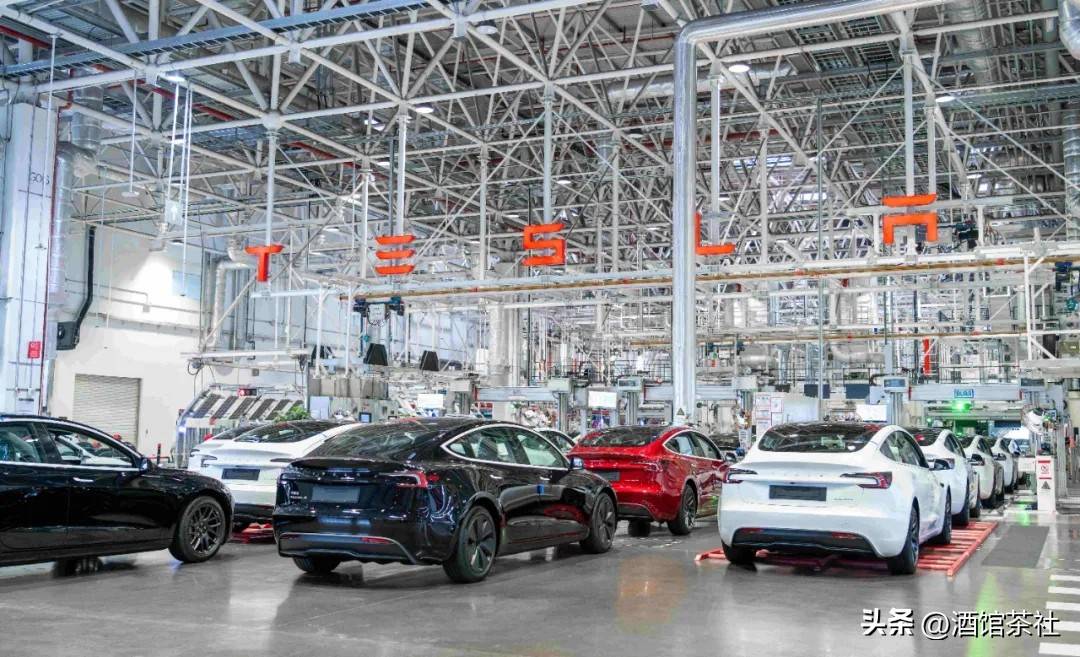
Core Viewpoint - The relationship between the U.S. and China is complex, with mutual dependencies in manufacturing and technology, despite the perception that the U.S. is heavily reliant on Chinese goods [3][12]. Group 1: U.S.-China Trade Relations - The U.S.-China trade war has escalated from minor friction to significant conflict, with tariffs reaching over 100% on certain goods, impacting consumers in both countries [4]. - American consumers have faced rising prices for everyday goods due to tariffs on low-cost Chinese imports, while China remains dependent on U.S. technology in high-value sectors [4][12]. Group 2: Manufacturing and Brand Ownership - Many products labeled as "Made in China" are actually produced for U.S. brands, indicating that the production capabilities are leveraged while the brand ownership remains with American companies [3][6]. - Companies like Tesla have high localization rates in their manufacturing but still rely on U.S. technology for core components, highlighting the intertwined nature of global supply chains [6]. Group 3: Capital Influence - Foreign capital, such as that from BlackRock, exerts significant influence over Chinese companies through equity holdings and board participation, affecting strategic decisions [9]. - The presence of multinational corporations in China, such as Procter & Gamble and Johnson & Johnson, shows how foreign firms adapt to local markets while maintaining control from abroad [7]. Group 4: Opportunities Amidst Challenges - There is a shift in consumer preferences towards domestic brands that emphasize quality and value, as seen with companies like Huawei and Hongxing Erke, which have gained popularity despite external pressures [10]. - The need for China to accelerate self-sufficiency in high-end technology and industry chains is emphasized as a crucial step for maintaining competitiveness in the global market [12].