直播电商

Search documents
13类食品禁售!食品直播新规即将实施
Zheng Quan Shi Bao· 2026-01-16 14:28
三是健全内部管理架构,平台必须明确食品安全管理机构,配备与平台交易规模相适应的食品安全总 监、食品安全员,平台主要负责人每个月还需要组织召开食品安全调度会。 1月16日,市场监管总局召开2026年首场食品安全专题新闻发布会,正式解读近日出台的《直播电商经 营者落实食品安全主体责任监督管理规定》(以下简称《规定》)。 新规将于2026年3月20日起施行,将直播电商全链条主体纳入监管,为直播电商食品经营"划红线、立规 矩"。 新规划定监管红线 全链条压实主体责任 近年来,食品成为直播电商带货的主力品类,但虚假宣传、假冒伪劣、售卖过期食品、诱导场外交易等 乱象频发,老年消费者被忽悠购买"问题食品"后维权无门等问题备受诟病。市场监管总局食品安全总监 孙会川指出,这些现象暴露出网络平台入网审核缺位、管理手段不足等问题,现有制度难以实现全链条 有效监管,《规定》的出台正是针对这些突出问题精准施策。 《规定》将直播电商平台经营者、直播间运营者、直播营销人员、直播营销人员服务机构全部纳入了监 管的范畴。从直播平台到直播间,再到主播和MCN机构,都必须按照《规定》的要求,履行相应的食 品安全主体责任。 部分平台以"主播信口开河 ...
国家市场监督管理总局:为直播电商“划红线、立规矩” 让消费者买得放心、吃得安心
Zheng Quan Ri Bao Wang· 2026-01-16 12:45
本报讯(记者寇佳丽)1月16日,国家市场监督管理总局(以下简称"市场监管总局")召开食品安全专题新闻 发布会。 二是压实了平台的主体责任。《规定》要求平台要建立审查登记、培训、风险管控等制度措施,配备食 品安全管理人员,制定《食品安全风险管控清单》,建立"智能监测、排查调度、快速处置"的工作机 制。 三是区分了不同主体的责任。针对不同直播形式的特点,《规定》明确要求,食品生产经营者开设直播 间需要公示许可信息、查验供货资质,非食品生产经营者需要建立严格的选品制度。 四是细化了禁止性的要求。《规定》明确了13类不得直播经营的食品,规范直播宣传行为,严禁虚假宣 传和混淆食品类型等行为。这就相当于给直播带货列出了一张"直播禁售食品的负面清单"。凡是在清单 上的食品,在直播间里坚决不能卖! 五是强化了监管的措施。《规定》要求市场监管部门将直播经营食品纳入到日常的监管和年度抽检计划 中,明确技术监测记录可以作为行政处罚的电子数据证据。 六是完善了消费者的保护。《规定》要求平台必须开通便捷投诉举报功能,及时处置消费者的诉求。 孙会川强调,下一步,市场监管总局将组织开展政策解读和宣贯培训,指导地方市场监管部门做好《规 定》 ...
抖音报告揭示新趋势:店播时代,你的实训室该换剧本了
Sou Hu Cai Jing· 2026-01-16 12:23
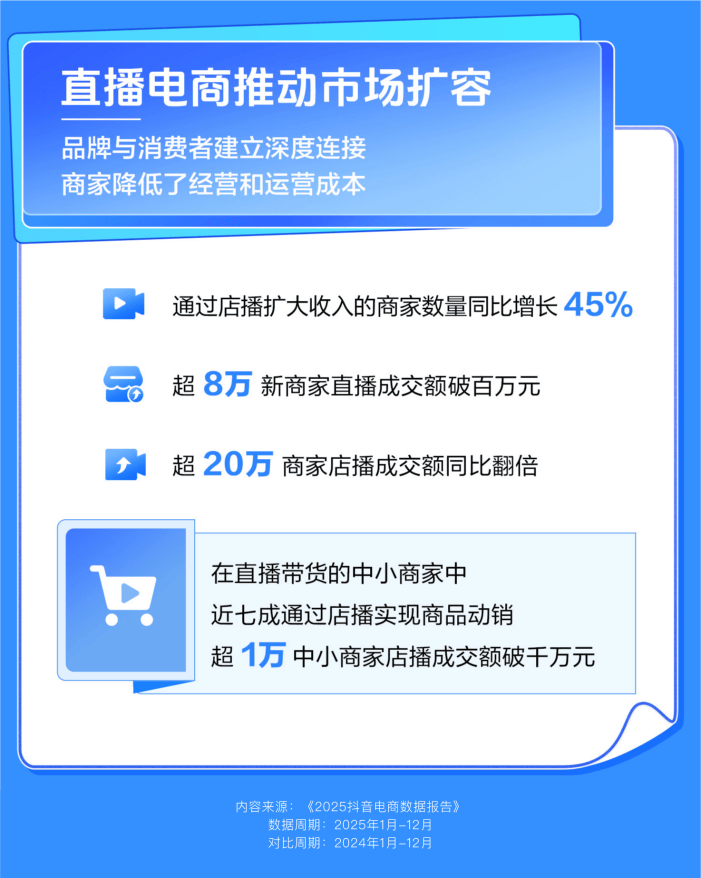
Core Insights - Douyin e-commerce report reveals over 80,000 new merchants achieving million-scale sales through live streaming, with more than 5 million new merchants and influencers earning stable incomes [1] - Small and medium influencers with less than one million followers contribute over 85% of the total sales in live commerce, indicating a shift from reliance on a few successful individuals to a focus on professional operations by the majority [1] - The demand for talent in the industry has changed, moving away from betting on viral influencers to recruiting a large number of professionals capable of consistent and specialized live streaming [1] Industry Trends - The growth of live commerce is driven by a standardized and replicable set of professional skills, which cannot be acquired through imitation of viral content but must be learned through systematic training [3] - The current educational practices in many institutions are outdated, focusing on superficial skills rather than the professional capabilities required for live streaming [1][3] - The industry is moving towards a model where the training of live streaming talent must shift from pursuing "viral hits" to producing "professional standards" [14] Training Solutions - EyeQing Technology's live training room solution addresses the gap in professional skills by providing a transparent and modular teaching system [3] - The K60 integrated device for teachers combines professional camera, lighting control, and broadcasting functions, allowing for direct demonstration of professional techniques [5] - The K200 operation terminal for students features a dual-screen design for real-time comparison and hands-on practice, ensuring seamless integration of instructional commands and practical application [8] Skill Development - The training process is broken down into independent modules covering lighting, camera work, audio, and process management, allowing for repeated and standardized training [11] - The system provides a clear progression path from understanding equipment principles to executing solo live streams and simulating team-based operations [14] - The skills developed through this training directly correspond to the industry's demand for supporting daily live streaming for small and medium merchants and aiding industrial transformation online [14][18]

直播电商食品安全新规发布,明确规定13类食品坚决不能卖
Xin Lang Cai Jing· 2026-01-16 11:53
炒股就看金麒麟分析师研报,权威,专业,及时,全面,助您挖掘潜力主题机会! (来源:智通财经) 1月16日,市场监管总局正式发布《直播电商经营者落实食品安全主体责任监督管理规定》(下称《规 定》),明确列出13类禁售食品清单。新规将于2026年3月20日起全面施行,直指直播食品乱象。 据市场监管总局食品安全总监孙会川介绍,近年来,食品成为电商直播带货的主打商品之一,为消费者 拓展了选购食品的新渠道。但与此同时,在大大小小的直播间里,虚假宣传、假冒伪劣、售卖过期食 品、诱导场外交易等乱象也是层出不穷,有的消费者称之为"主播一张嘴,啥话都敢吹"。 还有一些直播间以普通食品冒充特殊食品,肆意夸大食品功效,甚至销售有毒有害食品。一些老年消费 者为了保健,被一些无良主播忽悠,从直播间买回了一堆"不吃不甘心、吃了更闹心"的"问题食品",当 他们想要退货维权时,还处处碰壁,也让广大消费者叫苦不迭。 为此,市场监管总局针对食品直播领域存在的突出问题,依据食品安全法、电子商务法等法律法规,专 门组织起草了上述《规定》。 其核心内容主要包括六方面,一是明确了适用范围。《规定》将直播电商平台经营者、直播间运营者、 直播营销人员、直播 ...
13类食品直播间禁售 直播电商食品安全新规发布
21世纪经济报道· 2026-01-16 11:48
记者从今天(16日)下午市场监管总局召开的新闻发布会上了解到,《直播电商经营者落实食 品安全主体责任监督管理规定》正式发布,将在今年3月20日正式实施。《规定》将直播电商 平台经营者、直播间运营者、直播营销人员、直播营销人员服务机构全部纳入了监管的范畴。 平台作为直播电商活动的重要载体,是食品安全风险防控的关键环节。《规定》提出了一系列 创新性的举措,对平台明确了刚性的要求。 一是建立全链条审核机制。 《规定》明确,平台需要对直播间运营者的主体资质、食品经营 许可或备案信息进行核验登记,建立档案并且每六个月更新一次;对于首次开展食品直播的营 销人员,必须核验身份信息并组织食品安全培训,必须杜绝"无资质直播""无培训上岗"的现象 出现。 二是创新风险管控体系。《规定》要求,平台必须结合食品类别、交易规模和风险状况,制定 《食品安全风险管控清单》,将直播间运营者资质、禁售食品排查、直播行为规范等,作为重 点管控内容;建立"智能监测、排查调度、快速处置"的工作机制,通过技术监测、实时巡查等 方式,主动识别风险,即时推送风险提示。 三是健全内部管理架构。《规定》强调,平台必须明确食品安全管理机构,配备与平台交易规 模 ...

陕西佳县在全市直播电商行业首届职业技能大赛斩获大奖
Huan Qiu Wang Zi Xun· 2026-01-16 02:14
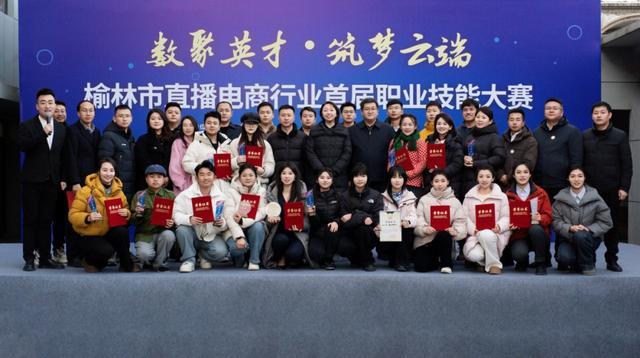
Core Viewpoint - The first professional skills competition for the live e-commerce industry in Yulin City successfully concluded, highlighting local talent and promoting the development of the digital economy [1][3]. Group 1: Competition Overview - The competition was organized by the Yulin City Bureau of Commerce and took place from January 12 to 14 [1]. - Two e-commerce hosts from Jia County stood out among numerous participants, with "Shanbei Cai Meimei" (Chai Yahui) winning first place and "Wangjia San Guiniang" (Wang Yumei) winning second place in the food category [1]. Group 2: Objectives and Innovations - The competition adopted an innovative model of "training + competition," aiming to cultivate local e-commerce talent and stimulate industry innovation [3]. - This initiative is part of Yulin City's efforts to promote the deep integration of the digital economy with the real economy [3]. Group 3: Performance and Strategy - Jia County contestants focused on live streaming local agricultural products such as handmade noodles and red dates, utilizing engaging presentation styles and detailed product introductions [5]. - Their strategies included "direct supply from the source + limited-time discounts," which effectively attracted viewers and increased order volumes, receiving positive feedback from judges and audiences [5]. Group 4: Future Development - The Jia County Bureau of Industry and Commerce plans to use this competition as a catalyst to enhance the e-commerce talent cultivation system and strengthen policy support and service guarantees [7]. - The goal is to promote high-quality development of the county's e-commerce industry, positioning it as a key driver for rural revitalization and income generation for the community [7].
抖音电商年度报告:购买国货的用户同比增长51%
Guan Cha Zhe Wang· 2026-01-15 14:53
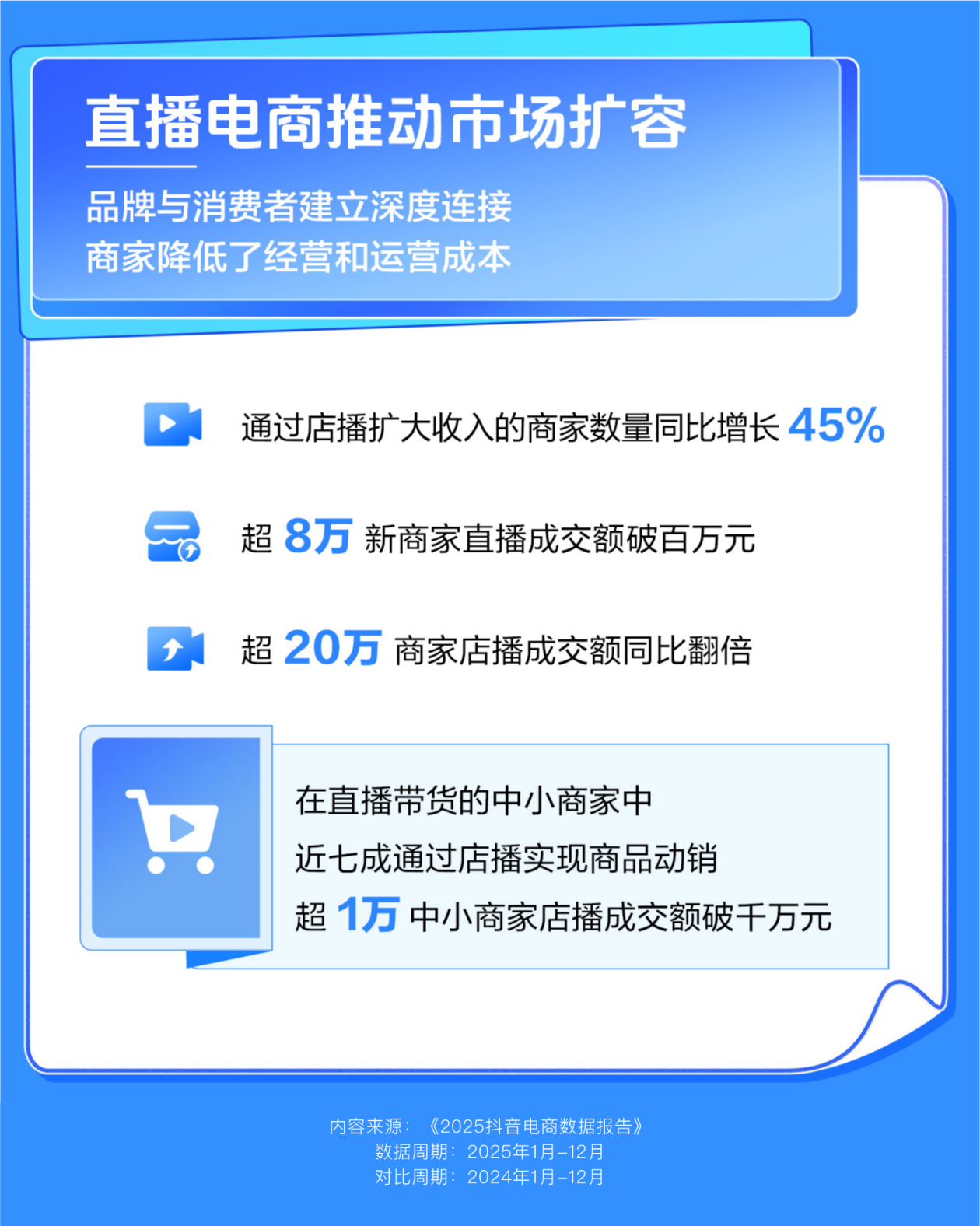
Core Insights - Douyin e-commerce is projected to see a 49% year-on-year growth in transaction volume from August 2024 to August 2025, with over 5.36 million new merchants and 5.11 million new influencers earning stable incomes through the platform [1] - Live streaming has become the main source of growth for e-commerce, with significant contributions from small and medium-sized merchants [1][2] - The report highlights the importance of live streaming e-commerce in driving regional economic development and industry expansion, with a notable increase in the number of merchants and transaction volumes in various sectors [1][2] Group 1 - From August 2024 to August 2025, the number of merchants achieving revenue growth through live streaming increased by 45%, with over 80,000 new merchants surpassing 1 million yuan in live streaming sales [1] - Nearly 70% of small and medium-sized merchants participating in live streaming achieved product sales through the platform, with over 10,000 small merchants exceeding 10 million yuan in sales [1] - Influencers with fewer than 1 million followers accounted for over 85% of the transaction volume in influencer-led sales [1] Group 2 - In the past year, 491 interest-based industrial belts achieved transaction volumes exceeding 100 million yuan, with 108 located in county-level cities contributing approximately one-quarter of the total transaction volume [2] - The number of merchants selling domestic products increased by 100% year-on-year, with a 51% rise in the number of users purchasing domestic goods, and nearly 10,000 domestic brands achieving over 1 million yuan in live streaming sales [2] - In the agricultural sector, Douyin e-commerce sold over 10.2 billion units of agricultural specialty products, with the number of merchants selling these products increasing by 51% [2]
抖音电商发布年度报告:超8万新商家直播成交额破百万
Huan Qiu Wang· 2026-01-15 08:56
Core Insights - Douyin e-commerce is experiencing steady growth, with a significant increase in transaction volume and the number of new merchants and influencers participating in the platform [1][2][4] Group 1: E-commerce Growth and Merchant Participation - From August 2024 to August 2025, the transaction volume in Douyin's shelf scene increased by 49%, with over 5.36 million new merchants and 5.11 million new influencers earning stable incomes through the platform [1] - The number of merchants achieving revenue growth through live streaming increased by 45% in 2025, with over 80,000 new merchants surpassing 1 million yuan in live streaming sales [2] - Nearly 70% of small and medium-sized merchants participating in live streaming achieved product sales through store broadcasts, with over 10,000 small merchants exceeding 10 million yuan in sales [2] Group 2: Employment and Economic Impact - Live streaming e-commerce is becoming a major source of employment, with over 85% of sales from influencers with fewer than 1 million followers, highlighting their crucial role in the sector's growth [4] - The integration of live streaming e-commerce is expected to enhance the operational conditions for merchants, reduce transaction costs, and allow more small businesses to benefit from technological advancements [4][11] Group 3: Industry and Regional Development - In 2025, Douyin e-commerce facilitated the sale of 18.8 billion units of source goods, with the number of industry merchants engaging in live streaming increasing by 83% [6] - The number of small merchants in industrial belts achieving over 1 million yuan in sales grew by 49%, with nearly 400 industrial belts processing over 10 million orders [6] - In the past year, 491 interest industrial belts achieved over 100 million yuan in sales, with 108 located in county towns contributing approximately one-quarter of the total sales [7] Group 4: Cultural and Agricultural Growth - The number of merchants selling intangible cultural heritage products through live streaming increased by 43%, while sales from time-honored brands rose by 70% [10] - Douyin e-commerce sold over 10.2 billion units of agricultural specialty products from September 2024 to September 2025, with the number of agricultural merchants engaging in live streaming increasing by 51% [10]
“与辉同行”带货“麻黄鸡”引争议,最新进展
新华网财经· 2026-01-15 07:00
近日,某电商平台上"与辉同行"直播间带货的一款"某某轩83.3元三只大别山黄油母鸡"引发行业质疑。 1月15日上午,澎湃新闻从产品的委托商公司所在监管单位安徽六安霍邱县市场监督管理局获悉, 该局已于当日上午前往现场调查,所售产品是否为"皖 西麻黄鸡",目前尚无结论,具体情况仍在调查中。 生产商所在地监管单位安徽肥西县市场监督管理局山南市场监督管理所表示,他们已收到相关线索正 在进一步核实与调查中,如有最新进展会与肥西县市场监督管理局办公室进行联系。 据大河报报道,1月14日,记者搜索发现一个在主页自称六安市麻黄鸡产业协会会长的账号曾于近日发布上述《声明》及相关内容。截至1 月15日上午11时,记者发现, 该账号已删除相关内容。记者多次尝试联系账号运营人员未果。 1月9日,安徽省六安市麻黄鸡产业协会(以下简称:协会)发布《郑重声明》。声明中称,经对皖西地区麻黄鸡主要养殖供应主体开展全 面摸排与核实, 暂未发现向该款大别山黄油母鸡的相关经营方供应过货源,双方无采购往来记录。皖西地区麻黄鸡养殖周期达500天以上 的老母鸡, 单只养殖成本远超150元, 此为皖西地区主流养殖模式下的行业普遍核算结果。行业统计显示,目前 ...

董宇辉比于东来还会赚钱
投中网· 2026-01-15 06:23
Core Viewpoint - The article discusses the rapid growth and challenges faced by the live-streaming e-commerce platform "Yuhui Tongxing" led by Dong Yuhui, highlighting its impressive sales figures and the underlying issues that may affect its future sustainability [5][21]. Group 1: Sales Performance and Growth - "Yuhui Tongxing" achieved a remarkable annual sales figure of approximately 21 billion yuan, nearing the performance of the retail giant "Pang Donglai" [6][7]. - In 2025, the account gained 11.23 million followers, bringing the total to over 38 million, with an average sales per live stream ranging from 50 million to 75 million yuan [7][8]. - The platform's sales model focuses on creating irreplaceable value in specific areas, building deep trust with consumers, particularly targeting middle-class women aged 24 to 45 [9][8]. Group 2: Business Model and Strategy - "Yuhui Tongxing" operates on a "light asset platform" model, emphasizing product selection and traffic distribution rather than controlling the entire supply chain [19]. - The company has invested over one million yuan monthly in quality control through third-party testing and employee blind tests [9]. - Dong Yuhui has diversified income sources, moving from a commission-based model to equity dividends and IP value appreciation, which ties his wealth growth to the overall profitability of the company [12][13]. Group 3: Challenges and Risks - Despite the growth, "Yuhui Tongxing" faces structural challenges, including a significant drop in average daily viewers from 27.5 million to 15.04 million, a 45% decrease year-on-year [17]. - The platform's reliance on third-party suppliers has raised concerns about product quality and safety, as evidenced by incidents involving product recalls due to quality issues [18][20]. - The competitive landscape is becoming increasingly crowded, with the live-streaming e-commerce industry experiencing a slowdown in growth rates, which may impact future performance [17][21].