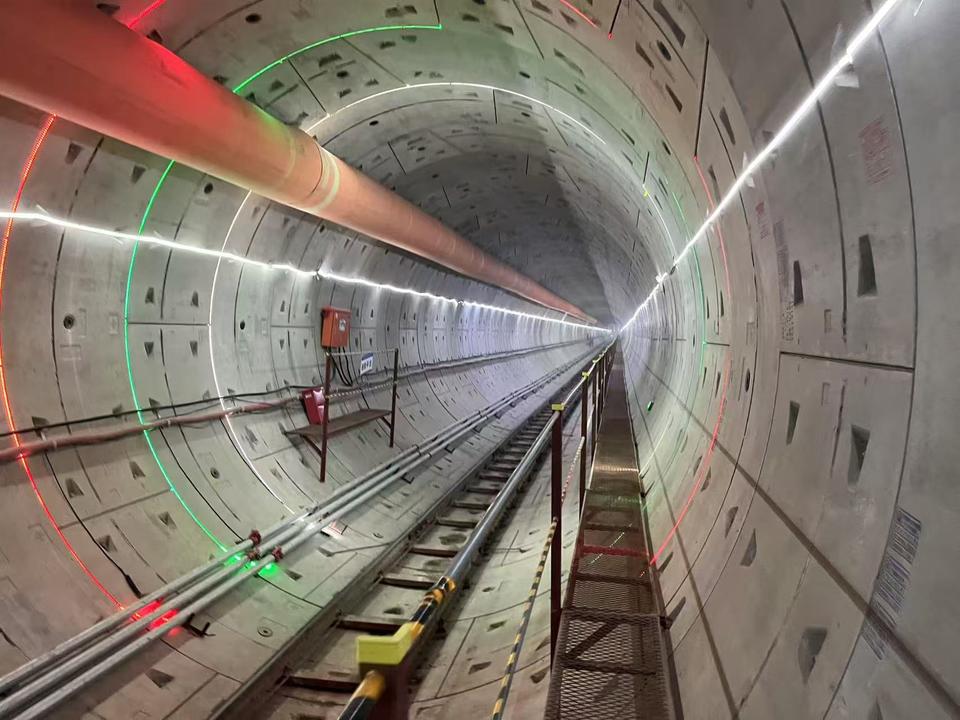
轨道交通建设

Search documents
天津轨道交通Z4线建设取得新进展
Zhong Guo Jing Ji Wang· 2025-05-15 03:17
5月14日,随着右线最后一方混凝土浇筑完成,天津市轨道交通Z4线矮塔斜拉桥全线顺利合龙,项目建 设取得重大阶段性进展,为全线通车运营按下"加速键"。作为国内首座轨道交通波形钢腹板矮塔斜拉 桥,其顺利合龙为全线轨道铺设及通车运营奠定坚实基础。 作为天津市滨海新区"十大工程"轨道交通系统建设的重点项目之一,Z4线建成后将有效打通滨海新区核 心区与双城发展轴的快速通道。 施工过程中,泰达城轨公司充分发挥建设管理职能,多次组织召开现场生产会及技术交底会,组织行业 专家充分讨论并不断优化桥梁施工方案,反复模拟试验,制定综合应急专项预案,为桥梁施工提供了充 足的技术指导。施工单位中铁上海工程局项目部抽调专业人员组成科研团队,开发大跨度、小曲线矮塔 斜拉桥波形钢腹板线性施工控制工法,建立动态资源管理台账,由专人随时监控物资设备及劳动力配置 情况。定期开展全员安全培训与应急演练,涵盖高空作业、起重吊装等各方面,确保每位施工人员熟悉 安全操作规程、掌握应急处置技能,高效推进工程建设。?? 该桥位于滨海新区黄海路和集疏港公路交叉路口,上跨京津高速、集疏港公路。主桥为波形钢腹板混凝 土结合箱梁,桥塔采用塔梁固结形式的钢筋混凝土结构 ...
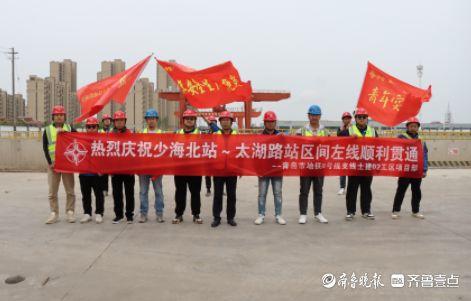
最新进展!青岛地铁8号线支线少海北站-太湖路站区间双线贯通
Qi Lu Wan Bao Wang· 2025-05-13 06:32
技能水平;聚焦盾构掘进参数控制、管片拼装、螺栓复紧等关键环节严加管控,多措并举保障隧道外观 及实体质量,"三阶段验收"多次获评"A"级,整体隧道不渗不漏,顺利完成贯通任务。 下一步,青岛地铁8号线支线各项目团队将深入践行绿色低碳高质量发展理念,以创新为引擎,通过优 化施工工艺、强化质量管控,全面推进"双一流"地铁建设,着力打造安全可靠、低碳环保的品质工程, 持续为城市高质量发展注入新动能。 齐鲁晚报.齐鲁壹点赵波 在青岛市市政公用工程质量安全监督站、青岛地铁集团第三建设分公司及中国交建(601800)8号线支 线项目经理部的大力支持下,中交一航局项目团队克服软土地层易造成地表沉降等问题,通过超前地质 预报、地面及隧道专人监测、严格控制出土量确保土压稳定、严密开展同步注浆及二次注浆等措施确保 盾构掘进安全稳定;以班组建设为抓手广泛开展拼装手、防水材料粘贴等技能比武,持续提升作业人员 日前,青岛地铁8号线支线少海北站-太湖路站区间(以下简称"少太区间")左线隧道顺利贯通,标志着8号 线支线起点至站前大道站9.3公里区间盾构施工任务圆满完成。 少太区间全长721.8米,主要穿越粉质黏土、粗砂、强风化泥岩、强风化泥质 ...


国内在建最大断面地铁暗挖隧道通过验收 地铁8号线三期今年直达大鹏
Shen Zhen Shang Bao· 2025-05-12 23:27
Core Viewpoint - The successful acceptance of the underground section of the Shenzhen Metro Line 8 Phase III project marks the completion of the largest underground excavation tunnel structure currently under construction in China, with plans to open this line within the year, providing direct access to Dapeng for citizens [1][2]. Group 1: Project Overview - The Line 8 Phase III project is a crucial transportation artery for Shenzhen's "Eastward Strategy," stretching approximately 3.7 kilometers from Xiaomeisha Station to Xiyong Station in Dapeng New District [1]. - The project includes one station, one section, and one vehicle depot, specifically Xiyong Station, the section from Xiaomeisha Station to Xiyong Station, and the corresponding entry and exit lines [1]. Group 2: Technical Details - The accepted underground tunnel section is considered the "throat" of the Line 8 Phase III project, characterized by high difficulty and technical complexity [1]. - The tunnel comprises three parts: entry and exit lines, connection lines, and extraction lines, all constructed using the mining method (drilling and blasting) [1]. - The entry and exit line tunnel is particularly complex, measuring approximately 490 meters in length and featuring multiple cross-section transitions, involving 15 different lining types [1]. - The core section of the single-hole three-line tunnel has an excavation span of 23.78 meters, a height of 18.13 meters, and a single-span excavation area of 334.18 square meters, setting a record for the largest cross-section of underground excavation tunnels in China [1][2]. Group 3: Impact and Connectivity - As the first metro line extending to Dapeng New District, Line 8 Phase III is expected to open this year and will connect with existing Metro Line 2 and the first two phases of Line 8, creating a major transportation corridor across Nanshan, Futian, Luohu, and Yantian to Dapeng New District [2]. - This project will significantly enhance daily commuting for residents along the route, alleviate traffic pressure in the eastern region, and provide strong transportation support for the development of tourism in the eastern coastal area, contributing to the establishment of Dapeng New District as a global marine center and a world-class coastal ecological tourism resort [2].
京津通勤将有大变化!涉高铁、地铁、旅游巴士
Bei Jing Ri Bao Ke Hu Duan· 2025-05-12 13:58
Core Viewpoint - The Beijing-Tianjin transportation authorities have jointly issued the "2025 Beijing-Tianjin Transportation Convenience Enhancement Work Plan" to promote regional integration and facilitate commuting between the two cities [1][3]. Group 1: Railway Network Layout - Completion of the rapid access channel renovation at Beijing South Station and continuous increase in the number of intercity trains between Beijing and Tianjin to alleviate peak capacity shortages [5][8]. - Construction of the Beijing Urban Sub-center Station to add more train services for the Beijing-Binhai and Beijing-Tang intercity lines [5][8]. - Research on increasing train stops at Wuqing Station and increasing ticket quotas to ease passenger flow and shorten commuting times [5][8]. - Additional trains from Beijing to Tianjin West during peak hours to meet the high demand for commuting [5][8]. - Accelerated construction of the Tianjin-Weifang high-speed railway and the northern section of the Beijing-Binhai intercity line to enhance travel service capacity [5][8]. Group 2: Urban Hub Functionality - Updating signage at Tianjin Station for better passenger navigation and installing sunshades at Tianjin West Station to improve the travel environment [5][9]. - Completion of the Beijing Daxing Airport Tianjin West Station urban terminal to provide check-in services for passengers traveling to Beijing Daxing Airport [5][9]. - Improvement of traffic order around key stations like Beijing South Station and Tianjin Station to ensure public safety and smooth travel [5][9]. - Opening of transportation hubs such as Beijing Wangjing West and Wansheng West to enhance connectivity between city centers and sub-centers [5][9]. Group 3: Rail Network Construction Acceleration - Accelerating the construction of the Beijing Metro M101 line to serve the urban sub-center station and facilitate intercity transfers [5][9]. - Opening of the middle section of Beijing Metro Line 17 and the southern extension of Line 6 to alleviate surrounding traffic pressure [5][9]. Group 4: Road Network Connectivity - Commencement of the G95 Capital Region Ring Road (Tangluo Expressway Phase II) project to improve the regional highway network [5][9]. - High-quality opening of the Beijing East Sixth Ring Road renovation project to ease traffic congestion in the urban sub-center [5][9]. - Completion of the expansion of the Jingping Expressway and commencement of the construction of the Jingqin Expressway to enhance cross-regional road infrastructure [5][9]. - Upgrading the Jinghu Expressway Wangqingtuo service area and building a supercharging station at the Baigutun parking area to improve electric vehicle charging efficiency [5][9]. Group 5: Road Passenger Transport Services - Optimization of the Yongle Comprehensive Inspection Station on the Jingjin Expressway to enhance traffic efficiency [5][9]. - Extension of customized commuter bus routes to surrounding areas based on operational conditions [5][9]. - Launch of the first inter-provincial tourist bus line from Tianjin to Universal Studios as a pilot for expanding more operational routes [5][9]. Group 6: Transportation Mode Connection Optimization - Increasing the transfer ratio of public transport within 50 meters of subway stations to 90% to improve transfer efficiency [5][10]. - Promotion of integration among subway networks, suburban railways, and bus networks to enhance urban transportation connectivity [5][10]. - Improvement of facilities at rail stations for seamless transfers among different transportation modes [5][10]. - Research on adding escalators to old subway stations and enhancing public transport accessibility for the elderly and disabled [5][10]. Group 7: Smart and Green Travel Promotion - Optimization of the 12306 ticketing system to offer various types of periodic tickets for intercity commuters [5][10]. - Completion of 30 urban congestion relief projects and smart traffic signal control to improve road traffic flow [5][10]. - Expansion of the MaaS green travel incentive program to encourage low-carbon travel [5][10]. - Launch of Robotaxi services from Beijing South Station to Yizhuang for seamless travel connections [5][10]. - Pilot program for integrating social security cards with railway travel for a unified travel experience [5][10].
青春奋斗绽放芳华 协同聚力共谱新篇
Bei Jing Ri Bao Ke Hu Duan· 2025-05-04 21:15
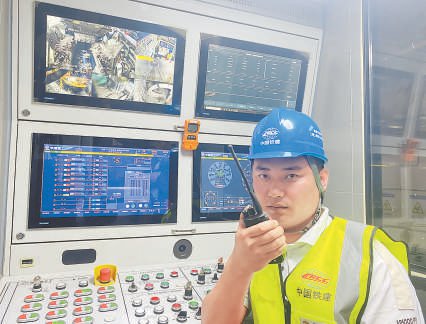
Group 1: Subway Construction and Operations - Wang Yandong, a shield driver, has been working in subway construction since 2015, operating in various cities across China, including Beijing, where he is currently involved in the construction of Line 22 [3][4] - The construction of the Beijing Subway Line 22 spans approximately 81.82 kilometers and connects key areas such as the CBD core, urban sub-center, and neighboring regions, enhancing connectivity and urban development [4] - The shield tunneling operation is continuous, requiring drivers to monitor various parameters and coordinate with over sixty personnel on the surface [3][4] Group 2: Xiong'an New Area and High-Speed Rail - The Xiong'an Intercity Station is under construction in the Xiong'an New Area, designed as a fully underground station with a total building area of 173,000 square meters [7][8] - The station will feature four platforms and six tracks, integrating with the urban development of Xiong'an and serving as a key transportation hub for travelers [7][8] - Advanced construction technologies, including drones and automated systems, are being utilized to ensure quality and efficiency in the project [8] Group 3: River Management and Ecological Restoration - The Yongding River improvement project aims to enhance flood control capabilities and restore ecological balance along a 73-kilometer stretch, addressing damages caused by flooding [11][12] - The project includes the reconstruction of damaged water facilities and the implementation of protective measures for nearby villages, contributing to the overall health of the river ecosystem [11][12] - The successful restoration of the Yongding River has led to increased tourism and local economic development, showcasing the benefits of ecological management [12] Group 4: Forest Conservation Efforts - The Zhangjiakou Xuanhua Forest Farm, managed by Yang Fugui, covers 118,000 acres with a 97% vegetation coverage rate, demonstrating significant reforestation efforts over 24 years [15][16] - Advanced monitoring technologies, including drones and surveillance cameras, have been implemented to enhance forest protection and fire prevention measures [17] - Yang Fugui emphasizes the importance of hands-on management and regular inspections to ensure the health and growth of the forest [17]
坚守一线 各地民生工程建设按下“加速键”
Yang Shi Xin Wen Ke Hu Duan· 2025-05-03 05:15
Group 1: Energy Projects - The construction of the China Green Development Ginta Multi-Energy Complementary Power Station in Gansu is accelerating, with the molten salt liquefaction process nearing completion during the May Day holiday. The power station is expected to generate 1.45 billion kilowatt-hours annually upon completion [1] - In Jiangsu, the Guodian Investment Binhai 2×1 million kilowatt thermal power expansion project is underway, with 410 workers actively engaged. Once operational, it will supply 10 billion kilowatt-hours of electricity to the Yangtze River Delta each year [1] - The Qingyu DC Phase II 100 MW solar thermal power station in Qinghai is preparing for grid connection testing, with over 100 workers involved in pipeline and heliostat inspections. This project is part of the world's first long-distance renewable energy transmission corridor and is expected to generate 227.1 million kilowatt-hours annually [1] Group 2: Civil Engineering Projects - The Kunming Changshui International Airport expansion project in Yunnan is progressing rapidly, utilizing advanced distributed IoT management to create a smart terminal [2] - The Jinan Metro Line 4 has achieved a significant breakthrough with the completion of a 589-meter underground tunnel, paving the way for its operation by the end of the year [2] - The Longyun Irrigation District project in Guangxi is over 85% complete, with the construction of three remaining dams underway. Once finished, it will improve irrigation for 514,000 acres and produce an average of 32,400 tons of grain annually [2] - The Dianzhong Water Diversion Project, the largest water resource allocation project in Southwest China, has over 2,000 workers focused on tunnel excavation. The project aims to alleviate water supply issues in urban areas and improve local ecological conditions [2]
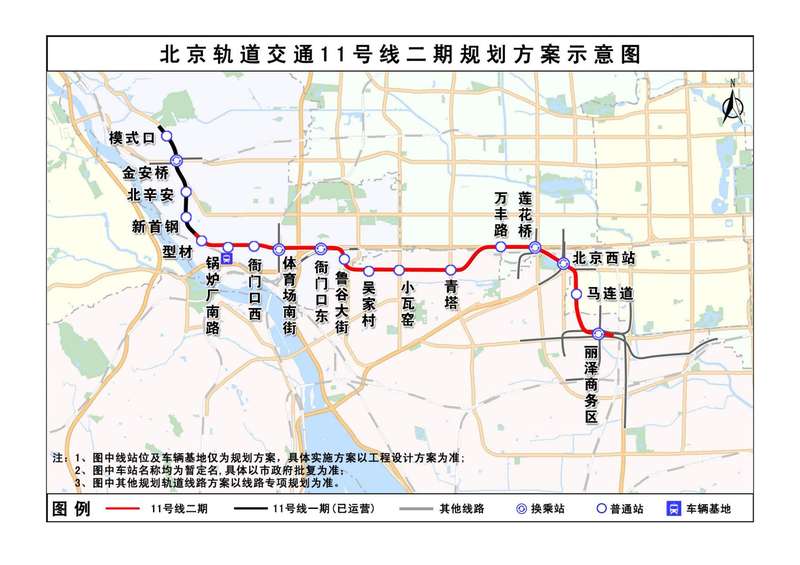
北京地铁11号线二期线路方案公布
Bei Jing Wan Bao· 2025-05-01 08:56
Core Viewpoint - The second phase of Beijing Metro Line 11 is set to extend eastward, improving transportation conditions and providing rapid, high-capacity public transit services in the city [1] Group 1: Project Overview - The second phase of Line 11 will extend approximately 18.3 kilometers, featuring 14 underground stations [1] - The line will connect key urban functional nodes, including Xincheng Steel Station and Lize Business District, with five interchange stations at Beijing West Station, Lize Financial Business District, and others [1] - A vehicle base will be established in Shijingshan District, covering an area of about 33.8 hectares [1] Group 2: Planning and Development - The project is part of the third phase of Beijing's rail transit construction plan approved by the National Development and Reform Commission [1] - The planning emphasizes the integration of the line with urban functions and the optimization of the city's spatial structure [1] - The public consultation period for the project is set for 30 days, from May 1, 2025, to May 30, 2025 [1]
北京地铁11号线二期将设站14座:5座可换乘,串联北京西站
Xin Jing Bao· 2025-05-01 05:26
Core Points - The Beijing Subway Line 11 Phase II has made significant progress with the release of an integrated planning scheme by the Beijing Investment Company [1][3] - The line will extend approximately 18.3 kilometers from the new Shougang Station to the Lize Business District Station, featuring 14 stations, including 5 transfer stations [1][4] Infrastructure Development - The Phase II project is part of the Beijing Rail Transit Phase III planning, which includes 11 new lines, with rapid construction progress on Line 1 branch and M101 line [3] - The construction of Line 11 Phase II aims to improve transportation conditions in the surrounding areas, providing fast, high-capacity, and public transport-like services [3][4] Technical Specifications - The technical standards for Line 11 Phase II will be consistent with Phase I, with a maximum design speed of 100 kilometers per hour [4] - The line will be entirely underground and will include a vehicle base located in the southern area of the new Shougang High-end Industry Comprehensive Service Zone, covering approximately 33.8 hectares [4][5] Planning Adjustments - The length and number of stations for Line 11 Phase II have undergone several adjustments, with the current plan showing a length of 18.3 kilometers and 14 stations, differing from earlier proposals [5] - The stations will include key locations such as Beijing West Station and Lize Financial Business District, with the names being provisional [5] Public Engagement - The public consultation for the planning scheme will be conducted online, with a 30-day period for feedback starting from May 1, 2025 [5]
重庆轨道交通7号线一期全线最长区间TBM顺利始发
Zhong Guo Jing Ji Wang· 2025-04-30 02:54
Core Points - The "Electric Pioneer" TBM (Tunnel Boring Machine) has commenced operation, marking the start of the shield tunneling phase for the Chongqing Rail Transit Line 7 Phase I project, which spans approximately 28 kilometers and includes 18 stations [1][2] - The project aims to enhance the north-south transportation capacity in Chongqing, connecting various urban clusters and facilitating transfers with existing and under-construction rail lines [2] Group 1: Project Overview - The Chongqing Rail Transit Line 7 Phase I will connect key areas such as Xiyong, Hangu, and Jinfeng, with a total length of about 28 kilometers and 18 stations [1] - The tunneling section includes a 3.3-meter shallow cover segment and a challenging 1,332-meter segment with a 38‰ gradient, requiring significant engineering solutions [1] Group 2: Technical Specifications - The "Electric Pioneer" TBM has a working length of 85 meters, a diameter of 6.84 meters, and weighs approximately 500 tons, with a main drive power of 945 kW and a maximum thrust of 4,344 tons [2] - The TBM is designed to achieve an average daily advance rate of 9 to 12 meters while performing excavation, support, and ventilation tasks [2] Group 3: Engineering Innovations - The construction team has implemented 3D simulation technology for advanced planning and developed an intelligent control system for real-time data analysis to ensure efficient tunneling [1] - A special wear-resistant layer with a shear strength exceeding 350 MPa has been added to the TBM's cutting tools to enhance durability against hard rock formations [1]
青岛地铁8号线支线首个使用新能源管片区间实现双线贯通
Qi Lu Wan Bao Wang· 2025-04-29 09:02
Core Viewpoint - The successful breakthrough of the right-line shield machine in the Taihu Road Station to Station Front Avenue Station section marks the completion of the first dual-line connection using new energy segments for the Qingdao Metro Line 8 branch [1][5]. Group 1: Project Overview - The Taihu Road Station to Station Front Avenue Station section is 1,465.9 meters long, starting from Taihu Road Station and traversing complex environments including residential areas, factories, and under various infrastructures [3]. - The construction faced challenges such as soft ground above and hard ground below, as well as the need to navigate under rivers, roads, and gas pipelines [3]. Group 2: Technological Innovations and Safety Measures - The project team implemented new energy segments to address underground thermal pollution while providing heating and cooling sources for surrounding buildings [5]. - Advanced geological forecasting was conducted to adapt construction strategies, ensuring safe and smooth shield tunneling through the use of information monitoring and data analysis [5]. - Safety measures included the installation of anti-slippage devices and emergency platforms, enhancing operational safety and emergency management [5]. Group 3: Future Plans and Goals - The project team aims to scientifically coordinate efforts, focusing on key milestones to accelerate the construction of the interconnecting passage [5]. - Continuous technical innovation and strict quality control will be prioritized to ensure high standards in the ongoing construction of the Line 8 branch, contributing to the upgrade of Qingdao's urban rail transit network [5].