Semiconductors

Search documents
Nvidia Just Handed Marvell Technology the Ultimate Buy Signal
247Wallst· 2026-03-31 13:03
Core Viewpoint - Nvidia's $2 billion investment in Marvell Technology signals strong confidence in Marvell's role in the AI infrastructure ecosystem, particularly in addressing GPU interconnect challenges and enhancing data center capabilities [2][3][6]. Company Overview - Marvell Technology received a $2 billion direct investment from Nvidia, integrating deeper into Nvidia's AI ecosystem [2][6]. - Marvell's fiscal 2026 revenue reached $8.195 billion, reflecting a 42% year-over-year increase, with management guiding for fiscal 2027 revenue to exceed $11 billion [2][10]. - The acquisition of Celestial AI adds photonic fabric technology to Marvell's offerings, addressing GPU interconnect challenges [2][8]. Competitive Positioning - Marvell competes with Broadcom and other connectivity suppliers, but its unique combination of custom silicon, Ethernet solutions, and photonic technology provides a differentiated position in the data-center infrastructure layer [2][10]. - The investment from Nvidia validates Marvell's critical role in enabling AI data center scaling beyond just GPU capabilities [3][11]. Financial Performance - Marvell reported record fiscal 2026 results, with non-GAAP earnings rising 81% to $2.84 per share and fourth-quarter revenue hitting $2.219 billion, up 22% from the prior year [9][10]. - Management anticipates over 30% growth for fiscal 2027, with data-center revenue expected to accelerate [10][12]. Market Outlook - The forward P/E ratio for Marvell is approximately 22.9x, which is below its historical average and reasonable given projected growth [12]. - Analyst consensus ranges from Moderate Buy to Strong Buy, with average 12-month price targets near $117, suggesting a 25% upside from recent levels around $88 [12][13].


Nvidia takes $2 billion stake in Marvell, stock surges 9%
Yahoo Finance· 2026-03-31 13:01
Core Insights - Nvidia has announced a $2 billion investment in Marvell Technology, enhancing its AI ecosystem and leading to an 11% increase in Marvell's stock price [1][2]. Group 1: Partnership and Integration - The partnership will integrate Marvell into Nvidia's AI ecosystem, facilitating product development for customers [2]. - Collaboration will also focus on silicon photonics and telecom networking infrastructure [2]. Group 2: Market Context and Trends - Nvidia's CEO highlighted a surge in demand for token generation and the race to build AI factories, emphasizing the importance of this partnership for scaling AI compute [3]. - This investment is part of Nvidia's broader strategy of deploying $2 billion investments across the technology sector, with previous investments in companies like Synopsys and CoreWeave [3]. Group 3: Economic Implications - Analysts have noted the emergence of a circular AI economy, where chip companies, cloud providers, and AI labs finance each other's infrastructure, raising concerns about inflated demand and valuations [4]. - Nvidia has countered these concerns by stating that its investments are relatively small compared to its overall revenue and that the companies it supports primarily earn from external customers [5].
Forget The GPU Wars. Marvell Is Cornering AI's Nervous System
Forbes· 2026-03-31 12:51
Core Insights - Investors are focused on AI computing competition, particularly on companies like Nvidia and AMD, but are overlooking the importance of interconnect technology in AI data centers [1][3][4] Group 1: Importance of Interconnects - The performance of AI systems relies on efficient data movement among numerous chips across servers, making interconnects crucial [6] - As AI data transmission demands increase, traditional electrical connections are becoming inefficient, leading to a shift towards optical connections for better data transfer efficiency [7][8] Group 2: Marvell's Position - Marvell is positioned as a key player in data center networking and interconnect silicon, aiming to become the default architect for next-generation data center interconnects [4][5] - The company is a significant contributor to the transition towards optical connectivity, supplying optical DSPs for high-speed data movement [10] Group 3: Competitive Landscape - Marvell faces competition from Broadcom in the interconnect and custom ASIC markets, but may benefit from Broadcom's recent price increases, positioning itself as a more reliable alternative [12] - Marvell's data center segment generated $6.1 billion in FY'26, with interconnect products expected to grow over 50% by fiscal 2027 [13] Group 4: Valuation and Growth Potential - Marvell's stock is currently undervalued at 26x FY'27 earnings and 18x FY'28 earnings, despite projected revenue growth exceeding 30% annually over the next two years [14] - The company's market capitalization is approximately $85 billion, significantly lower than Broadcom's $1.4 trillion, indicating potential for revaluation if Marvell secures key interconnect and computing wins [15]

Rubin Ultra设计调整--价值量重新分配
傅里叶的猫· 2026-03-31 12:47
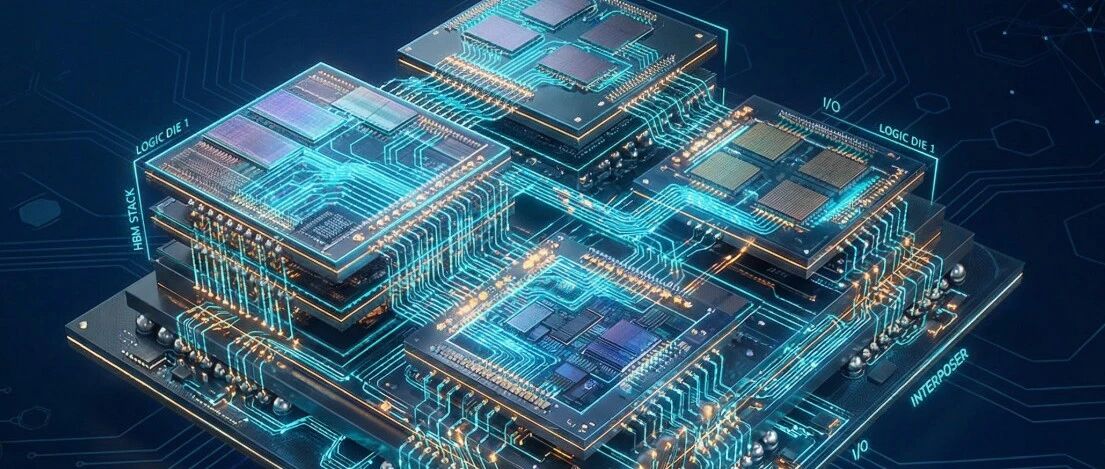
Core Viewpoint - The cancellation of the Rubin Ultra 4-die design highlights the challenges in manufacturing complex chips, but the engineering team's adjustments reflect a pragmatic approach to problem-solving rather than a rigid adherence to initial plans [1][3]. Design Configuration - GFHK suggests a potential shift from a native 4-die design to a 2+2 configuration, though this is still under development, making it difficult to finalize the solution [2]. - The specific design choice is less critical as cloud service providers purchase complete computing systems rather than individual chips, meaning the overall system specifications remain unchanged [2]. - If the 2+2 configuration can still deliver approximately 1TB of HBM4e memory per high-end unit, the overall memory capacity of the system will not be affected [2]. Industry Impact - Adjustments in the Rubin Ultra design will alter the value distribution within the hardware supply chain. A native 4-die solution centralizes complexity and pricing power in advanced packaging, while a 2-die module approach reduces pressure on the most advanced packaging layers [4]. - As die aggregation shifts upstream, more integration work will be required at the PCB and module design levels, increasing their importance [4]. - The focus will shift towards system integration and scalability at the tray and rack levels, rather than solely on the scale of individual packaging [4]. Hardware Demand - The demand for hardware remains robust, driven by the AI boom, which has led to shortages across various components, including CPUs and transformers [6]. - A report from Nomura indicates that AI hardware demand is expected to continue growing from 2026 to 2030, with a projected increase in new data center demand from 7 GW in 2025 to 27 GW in 2026 and 28 GW in 2027 [7][10]. - The construction of data centers in North America is ongoing, with numerous projects announced, indicating a strong infrastructure development trend [8]. Capacity Deployment - Incremental capacity deployment is forecasted to rise significantly, with projections of 26.67 GW in 2026 and 28.48 GW in 2027, driven by major players like OpenAI and top cloud service providers [10]. - The demand for CoWoS wafers is expected to increase, with an additional 450,000 wafers needed in 2026 and 600,000 in 2027 [7][10].
进入国际顶级会议 ISCA 2026,这家国产AI芯片公司实力几何?
傅里叶的猫· 2026-03-31 12:47
Group 1 - ISCA (The International Symposium on Computer Architecture) is the top academic conference in the field of computer architecture, with the 2025 event receiving 570 paper submissions and accepting 132, resulting in an acceptance rate of 23% [1] - The paper by Yixing Intelligence titled "Dynamic Scheduling for AI Accelerators via TISA" has been accepted for ISCA 2026, highlighting the company's advancements in AI chip technology [2] - The core research direction of the accepted paper focuses on a Tile-level dynamic scheduling architecture that addresses key challenges such as cross-generation compatibility, dynamic hardware behavior adaptation, and breaking the static optimization ceiling [3][5] Group 2 - The performance evaluation results from the paper indicate significant acceleration across various benchmark models, achieving an overall speedup of 1.52–1.92× and a performance improvement of 1.14–1.63× compared to strong static pipeline scheduling [6] - The evaluation models include DeepSeek-R1, ResNet-50, BERT, GPT-J, LLaMA2, and FlashAttention-3, demonstrating the architecture's applicability across different model scales and task types, potentially providing new technical insights for AI chip performance upgrades [7] Group 3 - Yixing Intelligence's achievement of being accepted into ISCA on its first submission reflects its technical accumulation in AI chip architecture research, focusing on RISC-V AI computing chips optimized for AI scenarios with a full-stack self-research approach [8]

Marvell Stock Soars. Nvidia Is Taking a Stake in Its AI Chip Rival.
Barrons· 2026-03-31 12:47
Core Insights - Nvidia will acquire a stake in Marvell as part of a strategic collaboration to enhance customer offerings by integrating components from both companies [1] Company Collaboration - The partnership aims to allow customers to utilize components from both Nvidia and Marvell, potentially leading to improved product solutions [1]
Trump Signals Near-Victory in Iran War as Nvidia and Buffett Execute Multi-Billion Dollar Moves
Stock Market News· 2026-03-31 12:38
Military and Geopolitical Developments - President Trump announced that the military campaign in Iran is "two weeks ahead of schedule," with U.S. forces having struck over 11,000 targets and neutralized Iran's naval capabilities by destroying over 150 ships [2][9] - Defense Secretary Pete Hegseth indicated that the upcoming days will be crucial, and the U.S. will continue military actions until a formal agreement is reached [3] Semiconductor Industry - Nvidia has made a strategic investment of $2 billion in Marvell to enhance its AI infrastructure through the NVLink Fusion platform, which integrates custom accelerators and networking silicon [4][9] - Following the announcement, Marvell's shares increased by more than 10% in premarket trading, indicating positive market reception and analysts' views of Nvidia's move as a consolidation of the AI hardware supply chain [5] Investment Strategies - Warren Buffett's Berkshire Hathaway invested $17 billion in U.S. Treasury bills, reflecting a defensive strategy amid market volatility while maintaining a bullish outlook on core holdings like Apple [6][7][9] - The significant investment in short-term government debt suggests that Berkshire is preparing for potential market pullbacks due to geopolitical instability [7] Pharmaceutical Industry - Novo Nordisk launched a subscription model for its weight-loss drug Wegovy, offering plans starting at $249 per month through telehealth partners, aiming to regain market share [8][10][11] - The pricing strategy is designed to undercut competitors and lower entry barriers for self-pay patients, with various subscription tiers available [11] Shipping and Aviation Sectors - Maersk has implemented a Temporary Emergency Bunker Surcharge due to rising global logistics costs driven by fuel volatility and supply chain issues [12] - Lufthansa is considering grounding 20 aircraft as the ongoing conflict in the Middle East affects flight operations, leading to reduced expectations for ECB intervention in monetary policy [13]


Wall Street sets Micron stock price target
Finbold· 2026-03-31 12:32
Group 1 - Micron Technology's price target was lowered from $510 to $425 by Citi, while maintaining a "Buy" rating due to a recent decline in RAM prices, specifically a 6% drop in mainstream DDR5 16GB RAM prices since the last earnings report on March 18 [1][2] - Analysts believe that cheaper technology historically increases demand, and they expect AI to follow this trend, leaving earnings forecasts unchanged [2] - Micron shares have decreased by 30% since the last earnings report, attributed to profit-taking, rising capital expenditures, and concerns about peak margins [3] Group 2 - The launch of Google's AI algorithm, TurboQuant, is expected to boost overall demand for Micron's products, although recent price declines may be linked to concerns about this new product [4] - The broader analyst consensus remains optimistic, with an average price target of $533.4 for Micron shares, indicating a potential upside of 66% [5] - Micron stock holds a "Strong Buy" rating, supported by twenty-six "Buy" recommendations and only two "Holds," with no other price cuts reported this month [7]


Jensen Huang Just Raised Nvidia's Order Outlook to $1 Trillion. Should You Buy the AI Stock -- or Has the Market Already Priced It in?
Yahoo Finance· 2026-03-31 12:30
Core Insights - Nvidia's CEO announced a staggering $1 trillion order book through 2027, highlighting the immense demand for AI infrastructure [1] - The backlog signifies a major shift for Nvidia, moving from reliance on gaming to a focus on AI and data center equipment [1] Group 1: Growth Prospects - Nvidia's backlog includes contractual commitments from major AI developers, indicating strong demand from hyperscalers, cloud providers, and governments [3] - The demand transforms the narrative from uncertainty about infrastructure spending to questions about production ramp-up speed [4] - The backlog is expected to maintain high gross margins due to premium pricing on locked-in orders [4] Group 2: Market Sentiment - Concerns over rising capital expenditure (capex) budgets in the tech sector have been prevalent, with fears of disappointing returns on AI investments [5] - Nvidia's $1 trillion backlog counters these fears, as commitments from major companies like Microsoft and Amazon reflect confidence in AI investment returns [6] - This visibility supports the narrative that AI infrastructure development is a long-term, multi-trillion-dollar endeavor rather than a short-term trend [6]
刚刚,铠侠突然官宣停产,三大真相浮出水面
是说芯语· 2026-03-31 12:29
Core Viewpoint - KIOXIA's announcement of the end-of-life (EOL) for its 2D NAND and third-generation 3D NAND products marks a significant shift in the global storage industry, indicating the end of an era for traditional flash memory technologies and a transition towards advanced 3D NAND and AI-driven storage solutions [1][11][24]. Group 1: Product Lines Affected - KIOXIA will cease production of all types of 2D NAND, including SLC, MLC, and TLC, as well as its third-generation BiCS FLASH™ 3D NAND products, covering various packaging forms such as Wafer, BGA, TSOP, eMMC, UFS, and Normal SD [1][2][6]. - The last time customers can place orders is September 30, 2026, with final shipments expected by December 31, 2028 [3][11]. Group 2: Reasons for Production Cessation - The decision to discontinue these products is driven by the need to reallocate production capacity towards higher-value segments, particularly in response to the growing demand for AI and high-performance storage solutions [11][12]. - The market for older products is shrinking, with demand for low-capacity SLC and MLC NAND declining significantly, as evidenced by the drop in market share for TSOP packaging from 8.2% in 2023 to an expected 4.7% in 2025 [13][14]. Group 3: Impact on Industries - The cessation of production will primarily impact sectors that rely on high-reliability, low-capacity storage solutions, such as industrial control and automotive electronics, which have long product life cycles and cannot quickly transition to newer technologies [16][18]. - The price of older NAND products is projected to increase by 15%-20% starting in the second half of 2026 due to supply shortages, which may persist until 2029 [16]. Group 4: Opportunities for Domestic Manufacturers - With international giants exiting the low-capacity NAND market, domestic companies like Yangtze Memory Technologies and JHICC are positioned to fill the gap, providing alternatives for industrial and automotive applications [17][18]. - These companies are already developing competitive products, including advanced 3D NAND and low-capacity solutions, which can help mitigate supply risks for domestic customers [18][20]. Group 5: Industry Trends - The storage industry is moving towards a complete transition to 3D NAND technology, with major players like KIOXIA, Samsung, and Micron reducing or shutting down their 2D NAND production lines [21][22]. - The focus is shifting to high-layer 3D NAND technologies, with advancements in stacking layers leading to increased capacity and reduced costs, essential for meeting the demands of AI and big data applications [22][23].