
互联网医疗

Search documents
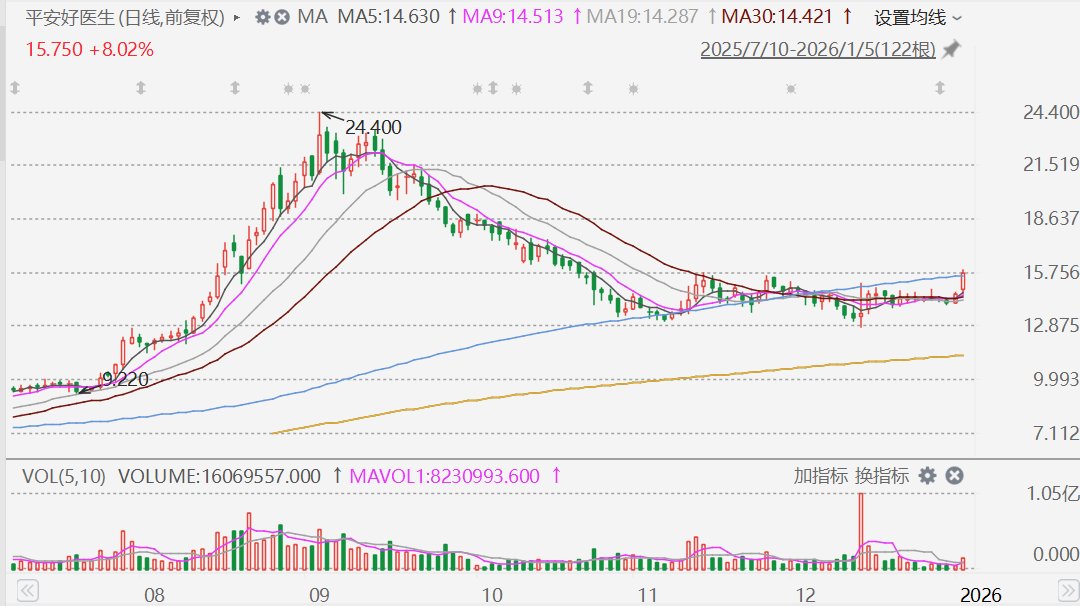
港股异动丨平安好医生大涨9%,领涨互联网医疗板块
Ge Long Hui A P P· 2026-01-05 03:19
Core Viewpoint - China Ping An's stock price surged to a five-year high, positively impacting Ping An Good Doctor's stock, which rose by 9% during trading, reaching a new high since October 2025 [1] Group 1: Company Performance - Ping An Good Doctor led the internet healthcare sector with significant stock price growth, reflecting strong market interest and investor confidence [1] - Morgan Stanley's report in December 2025 highlighted Ping An's potential to capitalize on key growth opportunities in wealth management, healthcare, and elderly care, raising its target price to HKD 89 [1] Group 2: Strategic Positioning - Ping An Good Doctor is positioned as a strategic component within Ping An's healthcare services, aiming to create a differentiated advantage through synergy with comprehensive financial services [1] - The company is seen as a critical anchor in the "value re-evaluation" process, contributing to the overall growth narrative in China's aging economy [1]

从“流量高地”到“巨头环伺” 百度健康如何突围?
Xi Niu Cai Jing· 2026-01-04 06:45
近期,百度健康密集推进业务迭代,连续两次发布新版服务,创新节奏明显加快。与此同时,有报道称,百度大搜索算法策略部T10级技术专家王俊峰已调 任百度健康,出任策略研发部负责人。这一人事变动被业内解读为百度加码健康业务底层算法支撑、强化核心技术布局的重要信号。 曾几何时,"身体不适先百度"是不少中国人的固有习惯。依托百度搜索的流量红利,百度健康通过竞价排名、内容分发及医生问答等模式,逐步搭建起规模 庞大的医疗健康商业体系。 但随着各大互联网巨头纷纷加速布局医疗健康领域,百度健康在流量获取上遭遇明显瓶颈。其中,抖音、快手等短视频平台分流了大量医疗科普流量,不少 医生大V通过直播间实时解答患者疑问,并引导用户转入私域流量池完成转化;小红书则成为年轻女性群体的"医疗参考阵地",从医美攻略到养生话题,均 有大量用户分享笔记。 除流量压力外,竞争对手在服务体系的深度布局,更让百度健康的发展之路布满荆棘。随着互联网医疗行业迈向智能化、精准化发展新阶段,各平台纷纷依 托自身核心优势抢占市场。例如,蚂蚁阿福借助支付宝的实名认证体系及芝麻信用机制,有效化解了医患之间的信任痛点;腾讯健康则依托微信的社交生态 链条和电子健康卡功能,牢 ...


打出“无广告牌”,蚂蚁阿福要在AI医疗赛道突出重围
3 6 Ke· 2026-01-04 01:59
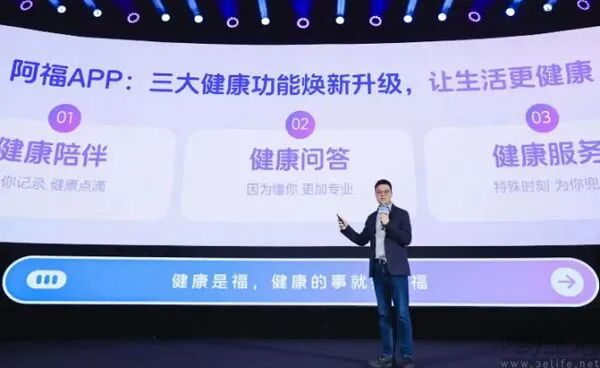
Group 1 - Ant Group's AI health application "Ant Aifu" has made a strong statement asserting that its answers are free from commercial advertisements and rankings, emphasizing its neutrality [1] - The application has been upgraded from "AQ" to "Ant Aifu," introducing three core functions: health companionship, health Q&A, and health services, aiming to transform from a tool to an "AI health friend" [3][5] - The marketing strategy includes high-profile endorsements and extensive advertising, but the focus remains on building user trust in a sensitive healthcare domain [3][5] Group 2 - The application claims impressive metrics such as over 15 million daily active users and a training dataset exceeding one trillion medical model training data, but merely presenting data may not effectively capture user trust [5] - Users prioritize safety and trust in healthcare, which is why Ant Group emphasizes its commitment to maintaining professional objectivity and not promoting any drugs or medical institutions [5][9] - The historical context of the "Wei Zexi incident" highlights the importance of transparency and trust in healthcare services, as past failures in online medical advertising have led to significant public concern [9][10] Group 3 - The potential for AI-generated content to be influenced by external marketing practices raises concerns about the neutrality of AI models, as they are based on existing data and can be manipulated [12][13] - The integrity of AI models is at risk from data poisoning, which can compromise the accuracy of outputs, emphasizing the need for Ant Aifu to maintain a clean training dataset [12][13] - Ant Aifu's commitment to neutrality and the purity of its data training set is framed as a long-term promise to users, beyond just a one-time declaration [13]
京东健康授出53.65万股奖励股份
Zhi Tong Cai Jing· 2026-01-01 11:11
京东健康(06618)发布公告,于2026年1月1日,公司根据首次公开发售后股份奖励计划向承授人授出了 涉及53.65万股新股份的53.65万股奖励股份,约占于授出日期已发行股份总数的0.02%。 ...

非药行业2026年度投资策略
2025-12-31 16:02
Summary of Key Points from the Conference Call Industry Overview - The focus is on the non-pharmaceutical sector within the healthcare industry for the investment strategy in 2026, emphasizing overseas expansion and innovation as key growth drivers [2][12]. Key Companies and Sectors Insulin Sector - Core companies include Ganli Pharmaceutical, Federal Pharmaceutical, and Tonghua Dongbao, with Ganli's insulin products expected to receive European regulatory approval in 2026 [1][4]. - Ganli is expanding into European, American, and Asian markets, while Tonghua Dongbao is advancing its U.S. market strategy through Jiangyang [1][4]. Biopharmaceuticals - Blood products companies like Jinbao and Renbai are anticipated to see performance inflection points in the second half of 2026, with a focus on plasma station planning and state-owned enterprise reform opportunities [5]. - Vaccine companies such as Olin Bio, Kanghua Bio, and CanSino are highlighted, with Olin focusing on superbug vaccines and Kanghua developing RSV vaccines [5]. Traditional Chinese Medicine (TCM) - Investment opportunities in TCM include transformation and innovation (companies like Jiuzhitang, Yiling Pharmaceutical), essential drug catalog considerations, and OTC (over-the-counter) products [6][8]. - Key strategies involve dividend safety margins, valuation speculation post-policy implementation, and monitoring performance impacts from policy changes [8]. Medical Devices - The medical device sector is seeing significant overseas revenue contributions, with companies like Blueway, Mindray, and Kaili reporting 45%-60% of their income from international markets [9]. - Innovations in surgical robotics and brain-computer interfaces are critical areas of focus, with the latter having established a commercial closed loop [9]. Market Dynamics and Trends - The non-pharmaceutical sector is expected to benefit from changes in consumer behavior, particularly in internet healthcare, which has shown substantial growth potential compared to traditional retail [10][11]. - The shift in consumption patterns is creating new incremental opportunities across various segments, including pharmacies, medical services, and consumer healthcare [11]. Investment Strategy - The overarching strategy for 2026 emphasizes overseas expansion and innovation across insulin, medical devices, and TCM to achieve dual enhancements in valuation and performance [2][12]. - Investors are advised to closely monitor policy developments and market changes to identify quality investment opportunities in these sub-sectors [7][12].
突然,大涨24%!
Zhong Guo Ji Jin Bao· 2025-12-31 12:18
Market Overview - The Hong Kong stock market experienced slight declines on the last trading day of 2025, with the Hang Seng Index closing at 25,630.54 points, down 0.87% [2] - Despite the daily drop, all three major indices maintained an upward trend for the second consecutive year, with the Hang Seng Index rising 27.77%, the Hang Seng Tech Index increasing by 23.45%, and the Hang Seng China Enterprises Index up by 22.27% for the year [2] Sector Performance - Major technology stocks mostly declined, with JD.com and Alibaba both falling over 1%, while internet healthcare stocks like JD Health and Ping An Good Doctor also dropped more than 1% [3] - Automotive stocks weakened, with Li Auto down nearly 3% and BYD down over 2% [3] - Conversely, airline stocks surged, with China Eastern Airlines rising nearly 5%, China Southern Airlines up over 4%, and Air China increasing by over 3% [3] New Listings - The newly listed company, Insilico Medicine, saw a significant increase of nearly 24% on its second day of trading, with its market capitalization surpassing 18 billion HKD [4] - Insilico Medicine, established in 2014, is a leading player in AI-driven drug discovery and development, having generated over 20 clinical or IND-stage assets through its Pharma.AI platform [7][8] - The company has licensed three assets to international pharmaceutical firms, with a total contract value of up to 2.1 billion USD [7] Entertainment Sector - The entertainment sector showed positive performance, with shares of Damai Entertainment rising nearly 6%, China Star Group up nearly 5%, and Maoyan Entertainment increasing by over 3% [9] - The total box office for the 2025 holiday season (November 28 to December 31) exceeded 5.245 billion CNY, marking the highest figure for the same period in nearly eight years, with a year-on-year increase of 76.35% [10]

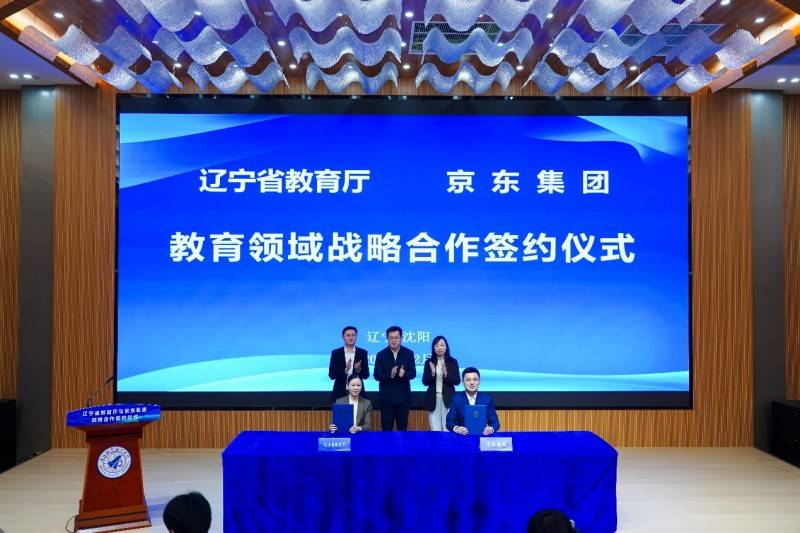
助力学生健康成长!辽宁省教育厅与京东共推“AI+积极心理”示范工程
Sou Hu Cai Jing· 2025-12-31 06:10
Core Viewpoint - The strategic cooperation between China Medical University and JD Group aims to enhance the psychological health service system for students in Liaoning Province through the integration of AI and positive psychology [1][3]. Group 1: Strategic Cooperation - The signing of the strategic cooperation agreement is a significant step in implementing the economic work meeting spirit of the central and Liaoning provincial governments [3]. - The collaboration responds to the directives from the Ministry of Education and 17 other ministries regarding the improvement of student mental health services [3]. Group 2: Psychological Health Services - JD Internet Hospital will leverage its medical resources and digital service capabilities to create a new paradigm for student psychological health services, covering screening, intervention, referral, and rehabilitation [3]. - The cooperation plan includes providing intelligent psychological assessment tools to schools in Liaoning for monitoring student mental health [3]. Group 3: Technological Integration - JD Internet Hospital will utilize its expertise in AI and digital healthcare to implement innovative applications such as multi-modal emotion recognition and AI psychological support [5]. - The partnership will also focus on training psychological teachers and introducing positive psychology curricula, enhancing the overall mental health service ecosystem [5]. Group 4: Future Development - The collaboration aims to create a replicable and scalable "AI + Positive Psychology" model for student mental health services in Liaoning, which could serve as a reference for similar initiatives nationwide [5].

慢病管理新局已开:方舟健客以AI激活健康效能
Jiang Nan Shi Bao· 2025-12-31 03:16
Core Insights - The article highlights the innovative integration of AI in chronic disease management by Fangzhou Jianke, showcasing its potential to address global health challenges [1][2][3] Group 1: Company Overview - Fangzhou Jianke has been a pioneer in the "Internet + Chronic Disease Management" sector since 2015, developing a Hospital to Home (H2H) smart healthcare ecosystem [2] - The company has upgraded its platform to create a more professional, intelligent, and efficient "AI + H2H Smart Healthcare Ecosystem," enhancing patient care from hospital to home [2] Group 2: AI Technology Integration - AI technology is fully integrated into Fangzhou Jianke's healthcare services, utilizing the self-developed Xing Shi model, which includes multi-modal capabilities such as image and voice recognition, and natural language processing [2] - The AI health steward provides continuous real-time interaction, assisting patients in managing their health effectively, while the AI academic assistant addresses urgent clinical decision-making needs and improves the efficiency of medical information retrieval for doctors [2][3] Group 3: Industry Impact - The integration of AI not only enhances the operational efficiency of the H2H smart healthcare ecosystem but also builds trust among patients and doctors by addressing their pain points [3] - Fangzhou Jianke aims to set a new benchmark in the "AI + Internet Healthcare" sector, promoting standardized and intelligent development in chronic disease management, and providing a replicable "Chinese solution" for global health challenges [3]
平安好医生HMO模式引领行业,AI重构医疗健康新生态
Sou Hu Cai Jing· 2025-12-28 23:38
Core Insights - The article highlights the transformation of the healthcare industry in China, driven by the "Healthy China" strategy and an aging population, with Ping An Good Doctor emerging as a leader in the shift from disease treatment to health management [1][18] - Ping An Good Doctor has achieved significant growth, with a 13.6% increase in revenue to 3.725 billion yuan and a 45.7% rise in adjusted net profit to 216 million yuan in the first three quarters of 2025, while maintaining over 70% market share in online consultations [1][6] Group 1: Business Model and Strategy - Ping An Good Doctor has adopted a unique "insurance + healthcare" collaborative model, inspired by the successful HMO strategy in the U.S., to create a closed-loop system that integrates financial protection with healthcare services [3][4] - The core of the HMO strategy is to establish a comprehensive health management system that includes preemptive health management, in-treatment services, and post-treatment care, differentiating it from traditional internet healthcare platforms [4][12] Group 2: Service Innovation and Technology - The company has developed a four-pronged service system ("to line, to hospital, to enterprise, to home") to ensure comprehensive coverage of healthcare services, enhancing user access to professional medical care [5][10] - Ping An Good Doctor leverages AI technology to optimize service delivery, resulting in a 52% reduction in average service costs per family doctor, thus creating a virtuous cycle of growth, cost optimization, and profit enhancement [6][8] Group 3: Market Position and Competitive Advantage - The company has established a strong market presence, serving over 45,000 corporate clients and covering more than 26 million employees, thereby creating a dominant position in corporate health management [13][14] - The deep collaboration with Ping An Group's various business units provides a unique competitive edge, facilitating a positive cycle of user retention and financial growth [14][16] Group 4: Future Outlook - The successful implementation of the HMO model and the continuous application of AI technology position Ping An Good Doctor for significant future growth, particularly in corporate health management and home care services [18][19] - The company's innovative approach and sustainable profitability model serve as a benchmark for the internet healthcare industry, indicating strong long-term growth potential [16][19]

医疗与消费周报:政策驱动与技术赋能下的中国互联网医疗发展-20251227
Huafu Securities· 2025-12-27 12:00
Investment Highlights - The report highlights that the internet healthcare sector in China is experiencing rapid growth, with a market size exceeding 100 billion yuan and an annual growth rate of over 18%. The primary user demographic consists of young and middle-aged individuals aged 18-45 [2][9][10] - The Chinese government has introduced multiple policies to support the internet healthcare industry, including expanding the scope of online medical consultations and including eligible services in health insurance reimbursement [8][9] - The competitive landscape is characterized by leading companies such as Alibaba Health and Ping An Good Doctor, alongside emerging firms focusing on niche market innovations. Key technological drivers include mobile internet, big data, artificial intelligence, and 5G [2][9][10] Market Trends - The report anticipates continued high-speed growth in the internet healthcare sector, with the market size expected to surpass several hundred billion yuan. User expansion is projected to reach lower-tier cities and rural areas [10] - The integration of advanced technologies like AI, big data, and blockchain is expected to drive the evolution of services towards precision and intelligence [10] - The report identifies challenges such as regulatory compliance, uneven distribution of medical resources, and data security concerns that the industry must address [10][29] Policy Developments - The report discusses the implementation of various supportive policies, including the "Implementation Opinions on Further Optimizing the Business Environment" and the "Health China Action Plan," which encourage the use of AI and big data in healthcare [8][9] - Specific measures from the Shandong provincial government aim to enhance drug and medical device regulation, promoting innovation and international competitiveness in the pharmaceutical industry [22][26] Industry Innovations - The launch of internet hospitals, such as the one by Xining First People's Hospital, aims to improve healthcare access and efficiency, particularly for chronic disease management [21] - Changes in tax policies regarding contraceptive products are expected to drive industry upgrades, pushing low-quality products out of the market while favoring companies focused on research and innovation [27]