
营养保健品

Search documents
葵花药业2月25日获融资买入340.09万元,融资余额1.28亿元
Xin Lang Cai Jing· 2026-02-26 01:36
Core Viewpoint - On February 25, 2025, Kewah Pharmaceutical's stock increased by 0.43%, with a trading volume of 30.14 million yuan. The company experienced a net financing outflow of 680,200 yuan on that day, indicating a low financing balance relative to its market value [1]. Financing Summary - Kewah Pharmaceutical had a financing buy-in of 3.40 million yuan on February 25, with a current financing balance of 128 million yuan, accounting for 1.56% of its circulating market value. This financing balance is below the 10th percentile level over the past year, indicating a low position [1]. - In terms of securities lending, the company repaid 2,500 shares and sold 500 shares on February 25, with a selling amount of 7,045 yuan. The current securities lending balance is 2.18 million yuan, which exceeds the 90th percentile level over the past year, indicating a high position [1]. Financial Performance - As of December 31, 2025, Kewah Pharmaceutical reported a revenue of 1.684 billion yuan for the first nine months, a year-on-year decrease of 43.24%. The net profit attributable to shareholders was -33.54 million yuan, a year-on-year decrease of 105.72% [2]. - Cumulatively, since its A-share listing, Kewah Pharmaceutical has distributed a total of 4.045 billion yuan in dividends, with 1.752 billion yuan distributed over the past three years [3]. Shareholder Structure - As of September 30, 2025, Kewah Pharmaceutical had 48,000 shareholders, a decrease of 2.04% from the previous period. The average circulating shares per person increased by 2.08% to 12,166 shares [2]. - Among the top ten circulating shareholders, E Fund CSI Dividend ETF (515180) is the fifth largest, holding 3.4008 million shares, an increase of 239,600 shares from the previous period. Hong Kong Central Clearing Limited is the seventh largest, holding 2.8412 million shares, a decrease of 128,700 shares [3].

健康年货旺销成潮流
Jing Ji Ri Bao· 2026-02-20 21:57
Group 1: Health Consumption Trends - Health consumption has become a prominent choice during the Spring Festival, reflecting the robust vitality of the Chinese economy [1] - Consumers are increasingly opting for health-oriented products as New Year gifts, with a shift from traditional items like rice and alcohol to organic vegetables and health supplements [1] - Data from Meituan shows a significant increase in health product orders, with orders for Ejiao rising nearly 4 times and protein powder orders increasing by 118% [1] Group 2: Consumer Preferences for Gifts - A survey by JD Research indicates that 65.6% of consumers prioritize purchasing gifts for their parents, with 77.2% choosing nutritional supplements as gifts [2] - The food gift market is experiencing a "health return," with 83.6% of consumers selecting food gift boxes, emphasizing low-sugar and low-fat options [2] - The demand for low-sugar pastries is growing rapidly, with companies innovating to meet the nutritional and taste preferences of consumers [2] Group 3: Smart Health Products - Smart health technology products are becoming popular as gifts, with 73.5% of consumers looking for intelligent and convenient health monitoring devices for their parents [3] - Health monitoring and chronic disease management products account for 45.2% of the smart gift market [3] - The rise in health consumption is attributed to improved living standards, heightened health awareness, and innovative supply from businesses [3]
京东年货消费观察:春节情感浓度高 “送长辈”关键词搜索量位居全年节日榜首占比78%
Zheng Quan Ri Bao Wang· 2026-02-03 10:45
Core Insights - The primary focus of consumers during the Spring Festival is on gifts for elders, with 78% of searches related to "gifts for elders" [1] - There is a significant shift in consumer behavior towards selecting gifts based on the actual needs and preferences of elders, emphasizing practicality and frequent use [1] Group 1: Consumer Preferences - 47.1% of consumers prioritize health and safety when selecting gifts for elders, followed closely by 46.8% considering the actual needs and preferences of the elders [1] - 77.2% of consumers are choosing nutritional supplements as gifts, indicating a more targeted and refined approach compared to traditional gift-giving [1] Group 2: Trends in Gift Selection - 73.5% of consumers are interested in selecting smarter and more convenient electronic products for elders, focusing on features like health monitoring and assistance in daily tasks [2] - The overall search volume for gift boxes has increased by over 60% since the launch of the Spring Festival shopping event, with specific categories like nut gift boxes seeing a tenfold increase [2] Group 3: Health and Practicality - 83.6% of consumers are opting for food gift boxes, reflecting a significant trend towards "health return" in gift selection [2] - The essence of gift-giving is shifting from mere presentation to practical care that aligns with the daily needs of elders, emphasizing comfort and safety [2]

叮当快药启动“春节不打烊”服务
Bei Jing Shang Bao· 2026-02-02 05:26
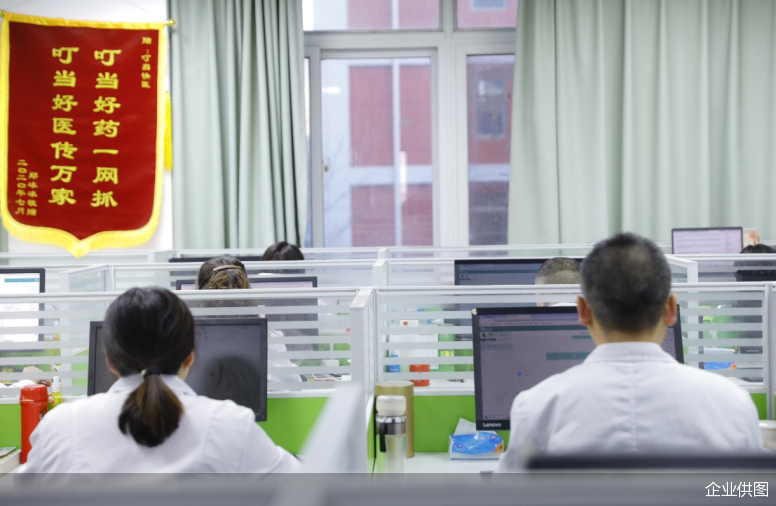
Group 1 - The core initiative of Dingdang Health is the launch of the "2026 Year of the Horse Spring Festival Non-Stop" service, which will operate from New Year's Eve to the ninth day of the Lunar New Year, ensuring continuous delivery of medications and health products [2] - During the holiday period, Dingdang Health's team, including doctors, pharmacists, customer service representatives, delivery personnel, and pharmacy staff, will be on duty to provide home delivery services and online health consultations [2] - Dingdang Health has over 300 pharmacies that have launched pet-related products, which will also remain operational during the Spring Festival, offering pet supplies delivery and health consultation services [2] Group 2 - Currently, Dingdang Health has established hundreds of smart pharmacies across 10 major cities in China, creating a comprehensive instant medical service network [2]

前路拥挤信号!金达威及时止损,微元合成甲醇生物制造加速
合成生物学与绿色生物制造· 2026-01-16 04:14
Core Viewpoint - The article discusses the shift in investment focus for the company from producing allulose and myo-inositol to developing high-end functional oils and nutritional health products due to declining investment value and increased competition in the allulose market [4][6][10]. Industry Trends - The biomanufacturing industry is experiencing a transformation, with a focus on enhancing key technological barriers and exploring differentiated products to overcome raw material cost challenges [2]. - The demand for high-end functional oils, particularly Omega-3 and ARA, is increasing in the Chinese market, driven by new standards for infant formula and a shift towards modern biomanufacturing techniques [8]. Company Actions - The company has announced a change in its fundraising projects, reallocating funds from the allulose and myo-inositol projects to new initiatives in oil and nutritional health products [4][6]. - The new projects include a 10,000-ton oil project and a smart factory for nutritional health products, with total planned investments of 25,708.54 million and 36,173.86 million respectively [5][9]. Financial Overview - The total planned investment for the new projects is 147,883.52 million, with 128,125.87 million expected to come from fundraising [5]. - The allulose and myo-inositol project had an original planned investment of 53,655.12 million, but was deemed less viable due to market conditions [6]. Project Details - The oil project aims to meet the growing demand for high-end functional oils and enhance China's market share in the international arena [7][8]. - The smart factory project will focus on creating a transparent and automated production system to improve product quality and traceability, enhancing competitiveness in the domestic market [9][10].

葵花药业1月15日获融资买入264.61万元,融资余额1.41亿元
Xin Lang Cai Jing· 2026-01-16 01:41
Group 1 - The core viewpoint of the news is that Kewah Pharmaceutical experienced a decline in stock price and trading volume, with significant changes in financing and margin trading activities [1][2] - As of January 15, Kewah Pharmaceutical's stock price fell by 0.20%, with a trading volume of 39.39 million yuan, and a net financing outflow of 24.22 million yuan [1] - The company's financing balance is 1.41 billion yuan, accounting for 1.62% of its market capitalization, indicating a low level compared to the past year [1] Group 2 - For the fiscal year ending December 31, Kewah Pharmaceutical reported a revenue of 1.684 billion yuan, a year-on-year decrease of 43.24%, and a net profit attributable to shareholders of -33.54 million yuan, a decrease of 105.72% [2] - The company has distributed a total of 4.045 billion yuan in dividends since its A-share listing, with 1.752 billion yuan distributed in the last three years [3] - As of September 30, 2025, Kewah Pharmaceutical had 48,000 shareholders, a decrease of 2.04%, with an average of 12,166 circulating shares per shareholder, an increase of 2.08% [2]
食品饮料:2026 年行业投资策略报告:破晓启航-20260115
Huafu Securities· 2026-01-15 09:22
Group 1 - The food and beverage sector is showing signs of recovery after a prolonged adjustment period, with macroeconomic indicators stabilizing and the restaurant industry experiencing a rebound in daily operations [2][14][15] - The report suggests that investment opportunities in 2026 should focus on three main directions: capturing the recovery rhythm, identifying growth opportunities within existing markets, and leveraging emotional consumption trends [2][3][4] - The restaurant industry is expected to lead the recovery, with a projected annual revenue of 5.7 trillion yuan in 2025, reflecting a 3.3% year-on-year growth [20][26] Group 2 - The report highlights the importance of focusing on demand-driven scenarios, channels, and product innovations, particularly in the snack and beverage sectors, which are expected to continue their growth trajectories [3][4][66] - The snack retail sector is experiencing significant growth, with a projected GMV of 600 billion yuan by 2029, driven by the expansion of major players like Wanchen Group and Mingming Hen Mang [68][74] - The beverage and low-alcohol sectors are also identified as areas of growth, with companies like Kuaijishan and Nongfu Spring expected to benefit from ongoing market expansion [4][66] Group 3 - The beer sector is anticipated to benefit directly from the recovery of the restaurant industry, with a notable trend towards premiumization and a shift in consumer preferences towards higher-priced products [40][41] - The white wine industry is undergoing a rebalancing, with demand expected to show weak recovery in 2026, characterized by a concentration of high-priced products and minor innovations in mid-priced segments [48][49][64] - The report emphasizes the need for companies to manage supply effectively in response to weak demand, with a focus on optimizing product offerings and enhancing operational efficiency [49][53][64]
葵花药业1月9日获融资买入291.52万元,融资余额1.33亿元
Xin Lang Cai Jing· 2026-01-12 01:45
Group 1 - The core viewpoint of the news is that Kew Flower Pharmaceutical experienced a slight increase in stock price and trading volume, with notable changes in financing and stockholder dynamics [1][2] Group 2 - As of January 9, Kew Flower Pharmaceutical's stock price rose by 0.74%, with a trading volume of 37.18 million yuan. The financing buy-in amount was 2.92 million yuan, while the financing repayment was 2.43 million yuan, resulting in a net financing buy-in of 489,200 yuan [1] - The total financing and securities balance for Kew Flower Pharmaceutical reached 135 million yuan, with the financing balance accounting for 1.51% of the circulating market value, indicating a low level compared to the past year [1] - On the short-selling side, Kew Flower Pharmaceutical had a short-selling repayment of 100 shares and no short-selling sales, with a short-selling balance of 2.05 million yuan, which is above the 80th percentile level over the past year, indicating a high level [1] Group 3 - As of December 31, the number of shareholders for Kew Flower Pharmaceutical was 48,000, a decrease of 2.04% from the previous period, while the average circulating shares per person increased by 2.08% to 12,166 shares [2] - For the period from January to September 2025, Kew Flower Pharmaceutical reported a revenue of 1.684 billion yuan, a year-on-year decrease of 43.24%, and a net profit attributable to shareholders of -33.54 million yuan, a decrease of 105.72% year-on-year [2] - Since its A-share listing, Kew Flower Pharmaceutical has distributed a total of 4.045 billion yuan in dividends, with 1.752 billion yuan distributed in the last three years [2] Group 4 - As of September 30, 2025, among the top ten circulating shareholders of Kew Flower Pharmaceutical, E Fund CSI Dividend ETF ranked fifth with 3.4008 million shares, an increase of 239,600 shares from the previous period [2] - Hong Kong Central Clearing Limited ranked seventh with 2.8412 million shares, a decrease of 128,700 shares from the previous period [2] - The eighth largest circulating shareholder, China Merchants CSI Dividend ETF, held 2.8382 million shares, an increase of 234,900 shares, while the ninth largest, Southern CSI 1000 ETF, held 2.6757 million shares, a decrease of 20,300 shares [2]
金达威(002626.SZ):拟变更部分募集资金投资项目
Ge Long Hui A P P· 2026-01-08 09:19
Core Viewpoint - The company has approved a change in its fundraising investment projects, shifting focus from producing alulose and inositol to new projects related to oil and health products [1] Group 1: Fundraising and Investment Projects - The company will issue convertible bonds to raise funds for new projects, specifically the "10,000-ton oil project" and the "smart factory for nutritional health products" [1] - The implementation of these projects will be carried out by the company's wholly-owned subsidiary, Inner Mongolia Jindawei Pharmaceutical Co., Ltd. [1] - The projects will be located within the factory premises of Jindawei Pharmaceutical [1] Group 2: Board Decisions and Authorizations - The ninth board meeting has authorized the chairman or designated individuals to handle specific matters related to the fundraising, including opening a special account and signing regulatory agreements [1]
增值税发票数据显示 成都健康消费市场火热
Mei Ri Jing Ji Xin Wen· 2025-12-20 15:06
Core Insights - The health consumption market in Chengdu is experiencing significant growth, driven by the "Healthy China 2030" initiative and the influence of sports events, with a notable increase in consumer engagement in health-related activities [1] Group 1: Sports and Fitness Consumption - The sports goods manufacturing and sales revenue in Chengdu increased by 6.02% year-on-year from January to October 2025, reflecting a diverse demand for products like running shoes and yoga mats [1] - Retail sales in cultural and sports goods saw a remarkable growth of 26.89% year-on-year, indicating a rising demand for home fitness equipment and outdoor sports gear [2] Group 2: Health Services and Consulting - Revenue from sports health services, including rehabilitation and professional fitness guidance, grew by 17.27% year-on-year, while sales from fitness and leisure activities like ball sports and hiking surged by 35.77% [2] - The demand for customized fitness plans and injury recovery consultations led to a 47.16% year-on-year increase in sports consulting revenue [2] Group 3: Smart Health Devices - The sales revenue from smart health devices in Chengdu increased by 50.76% year-on-year, driven by the popularity of devices like smart blood pressure monitors and fitness trackers among various consumer groups [2] Group 4: Nutritional and Health Products - The market for nutritional and health products in Chengdu maintained steady growth, with sales revenue increasing by 3.14% year-on-year from January to October 2025, reflecting a shift in consumer focus towards daily prevention and precise health management [3]