创业投资

Search documents
“金融有为”地方纵横谈丨以科技风险分担为核心的科技产业金融循环模式
Zhong Guo Jin Rong Xin Xi Wang· 2025-12-02 01:49
Core Insights - The "15th Five-Year Plan" emphasizes the combination of an effective market and a proactive government, aiming to enhance the role of the market in resource allocation while improving government functions [1][2] - Financial markets are identified as crucial for capitalizing and securitizing resources, with local governments encouraged to develop unique financial service systems based on regional conditions and industrial structures [1][2] Group 1: Financial Market Development - The plan highlights the need for local governments to explore financial service systems that cater to local characteristics, focusing on five development models: regional financial centers, technology industry financial cycles, government investment banking, new financial service elements, and local specialty financial services [1] - The integration of technology, industry, and finance is essential for driving innovation, with local governments tasked with creating mechanisms to share risks associated with technological advancements [3][4] Group 2: Role of Local Governments - Local governments are encouraged to provide foundational support for major technological research and development, recognizing that early-stage innovation often requires stable funding that the market alone cannot provide [4] - Establishing government-led funds and investment initiatives is crucial to attract social capital into areas deemed high-risk or difficult to evaluate [4][7] Group 3: Shenzhen's Experience - Shenzhen serves as a model for creating a synergistic system of technology, capital investment, and industrial transformation, demonstrating effective integration of financial and technological services [5][6] - The city has developed a comprehensive service system that connects technology achievements with capital markets, enhancing the ability to assess and commercialize technological innovations [6][8] - Shenzhen's government investment fund system operates on a model of "government guidance, market operation, risk sharing, and profit sharing," which has successfully supported numerous technology enterprises and led to a significant number of companies going public [7][8]
鲁信创业投资集团股份有限公司关于对外投资暨关联交易的公告
Shang Hai Zheng Quan Bao· 2025-12-01 19:13
Core Viewpoint - The company plans to establish a new investment fund, Shandong Kejin Jushi Venture Capital Partnership (Limited Partnership), with a total subscription scale of 400 million yuan, aiming to enhance its investment layout in life sciences, advanced manufacturing, and artificial intelligence sectors [2][5][25]. Summary by Sections 1. Investment Overview - The fund will have a total subscription scale of 400 million yuan, with the company contributing 148 million yuan, accounting for 37% of the total [2][23]. - The company's wholly-owned subsidiary, Shandong High-tech Venture Capital Co., Ltd., will act as the general partner and fund manager, contributing 2 million yuan (0.5%) [2][23]. - The company's associate, Shenzhen Huaxin Capital Management Co., Ltd., will also contribute 2 million yuan (0.5%) as a general partner [2][23]. - Another associate, Zibo High-tech Venture Capital Co., Ltd., will contribute 100 million yuan (25%) [2][23]. 2. Related Party Transactions - The investment constitutes a related party transaction as Huaxin Capital and Zibo High-tech are associated with the company [2][5][8]. - The transaction does not require shareholder approval as it does not exceed 5% of the company's latest audited net assets [3][6]. 3. Fund Details - The fund will have a duration of 5 years, with an investment period of 3 years and an exit period of 2 years [14]. - The fund will prioritize investments in high-quality projects nationwide, especially in Jinan and Zibo [17][18]. - The management fee will be capped at 2% per year during the investment period, with a minimum return rate of 6.5% per year for profit distribution [20][21]. 4. Impact on the Company - Establishing the fund is expected to strengthen the company's investment strategy in key sectors, aligning with its overall strategic goals [25]. 5. Approval Process - The related party transaction was reviewed and approved by the company's board of directors and independent directors, ensuring compliance with relevant regulations [27][30].


鲁信创投:拟联合其他合作方设立科金居实基金
Ge Long Hui· 2025-12-01 09:35
Group 1 - The company, Lushin Investment (600783.SH), announced the establishment of the KJJS Fund to enhance its investment in life sciences, advanced manufacturing, and artificial intelligence sectors [1] - The fund has a total subscription size of 400 million yuan, with the company contributing 148 million yuan, representing 37% of the total [1] - The company's wholly-owned subsidiary, Shandong High-tech Investment, will act as the general partner and fund manager, contributing 2 million yuan, which is 0.5% of the total [1] Group 2 - The company's affiliated firm, Shenzhen Huaxin Capital, will also serve as a general partner and contribute 2 million yuan, accounting for 0.5% of the fund [1] - Another affiliated company, Zibo High-tech Investment, will contribute 100 million yuan, making up 25% of the fund's total subscription size [1]
一级市场的“上证50”来了丨投中嘉川
投中网· 2025-11-30 07:21
Group 1 - The core viewpoint of the article is that the Chinese venture capital market is experiencing a significant recovery, transitioning from a fundraising-driven phase to an exit-driven phase [5][6][10] - The "China Venture Capital 100 Comprehensive Index" was developed to quantify the industry's temperature and assess its current stage and future direction [7][9] - The index shows that the market has gone through various phases over the past decade, influenced by policy, industry development, geopolitical factors, and unexpected events [9][10] Group 2 - The comprehensive index has rebounded to 194.06, indicating the emergence of a new cycle and a recovery in market confidence [10][12] - The investment index reached a low of 81.86 in the first half of 2024 but improved to 109.12 by the first half of 2025, reflecting a recovery in investment activity [20][24] - The exit index saw a strong rebound to 195.40 in the first half of 2025, driven by improved IPO channels and increased merger and acquisition activities [27][28] Group 3 - The fundraising index remains in a bottoming phase, having peaked at 326.35 in 2018 before entering a downward trend [29][32] - By the first half of 2025, the number of funds raised was 1,966, with a total fundraising amount of 10,665 billion, continuing the downward trend [33]


七匹狼等在厦门投资成立创投合伙企业
3 6 Ke· 2025-11-28 02:50
Core Insights - A new venture capital firm, Xiamen Qisheng Guangyao Venture Capital Partnership (Limited Partnership), has been established with a registered capital of 104 million RMB [1] Group 1: Company Formation - The firm is focused on venture capital investments, specifically targeting unlisted companies [1] - The partnership includes contributions from Qipilang Holdings Group Co., Ltd. among other investors [1] Group 2: Business Scope - The operational scope encompasses private equity investments, investment management, and asset management activities [1]

北京初步打造形成全国领先的科技金融发展环境
Xin Jing Bao· 2025-11-27 10:13
Core Insights - Beijing is enhancing its technology finance service system, focusing on policy innovation, venture capital, credit financing, and other specialized work to support technology enterprises [1][6] Group 1: Investment and Funding - In the first three quarters of this year, equity investment in Beijing reached 112 billion yuan, a year-on-year increase of 47.9% [2] - The government has established 8 municipal investment funds, making investment decisions for 255 enterprises with a total investment amount of 29.8 billion yuan, which has attracted social investment of 104 billion yuan [2] - The total scale of national-level funds established in Beijing exceeds 500 billion yuan, including the third phase of the National Integrated Circuit Fund and the second phase of the Military-Civilian Integration Fund [2] Group 2: Credit and Loan Mechanisms - As of the end of August, the balance of technology loans in Beijing reached 4.2 trillion yuan, reflecting a year-on-year growth of 8.8% [3] - Over 1,400 enterprises have received nearly 70 billion yuan in loans through enhanced bank-enterprise connections and monitoring [3] - The introduction of innovative loan products such as "merger loans" and "technology R&D loans" has led to over 30 billion yuan in applications [3] Group 3: Capital Market and Insurance - More than 60% of listed companies in Beijing are high-tech enterprises, with 475 companies listed [4] - The city has issued over 230 technology innovation bonds, raising more than 520 billion yuan [4] - Beijing has established the first commercial aerospace insurance consortium in the country, providing nearly 5 billion yuan in risk coverage for private aerospace launch projects [4][7] Group 4: Future Plans - Beijing aims to accelerate the establishment of national-level funds and enhance investment in key and emerging industries [6] - The city plans to support banks in exploring innovative loan products with longer terms and optimize the evaluation standards for technology enterprises [6] - Future initiatives include forming a major technology attack insurance community in fields like intelligent driving and biomedicine [7]
长三角最佳早期创业投资机构TOP10发布
Su Zhou Ri Bao· 2025-11-27 00:32
苏高新创投作为重点深耕长三角地区的国资投资机构,始终坚持"投早投小投硬科技"的核心策略, 累计参与基金130余只,基金总规模超900亿元(其中自主管理基金规模超190亿元),累计投资项目 1000余个,助推卓兆点胶、贝克微、西典新能、珂玛、中诚咨询等110家企业上市。作为区域早期创业 生态的重要推动者,苏高新创投将持续培育战略性新兴产业标杆,为长三角创新驱动发展注入资本活 力,成为连接资本与区域创新力量的关键纽带。 近日,投中信息重磅发布"投中榜·2025年度长三角地区榜单"。该榜单针对区域内300余家股权投资 机构,通过定量与定性相结合的评选体系(涵盖在管规模、投资退出表现等核心指标,历经初选、信息 核实、最终排名及市场影响力综合评估),最终评定行业标杆机构。苏高新金控下属苏高新创投凭借突 出的早期投资实力与市场声誉,成功入选"长三角地区最佳早期创业投资机构TOP10",获行业权威认 可。 ...
华通创投首次亮相资本市场 发行科技创新公司债券
Zheng Quan Ri Bao· 2025-11-26 09:39
近日,青岛华通创业投资有限责任公司(简称"华通创投")2025年面向专业投资者非公开发行科技创新 公司债券(第一期)(简称"25华通K1",280649.SH)在上海证券交易所成功发行,发行规模3亿元, 发行期限3+2年,票面利率2.30%,全场倍数2.47倍。本次债券募集资金将重点投向新一代信息技术、人 工智能等战略性新兴产业,强化产业协同,为青岛市构建"10+1"创新型产业体系贡献创投力量。 (文章来源:证券日报) 华通创投成立于2015年9月,作为青岛区域国有创投机构,协同行业头部机构与产业资本方构建起开放 的"基金领航+科技驱动+投促招引"产业赋能体系,奋力夯实"资本链"、延伸"产业链",为国有创投机构 提升行业竞争力、放大国有资本功能提供了有益探索。华通创投通过市场化、专业化运作,引导嫁接产 业资本与产业资源,聚焦青岛"10+1"创新型产业体系,锚定先导产业和新兴产业开展多层次股权投资, 成功培育出多家行业领军企业,助推多家科技型创新企业登陆境内外资本市场,实现经济效益与社会效 益的"双赢"。 本期发行是华通创投在资本市场的首次亮相,彰显了其在创业投资与科技创新领域的价值定位,有力提 升了华通创投在 ...
青岛华通创投首次亮相资本市场 发行科技创新公司债券
Zhong Zheng Wang· 2025-11-26 06:28
华通创投成立于2015年9月,作为青岛区域国有创投机构,协同行业头部机构与产业资本方构建起开放 的"基金领航+科技驱动+投促招引"产业赋能体系,奋力夯实"资本链"、延伸"产业链",为国有创投机构 提升行业竞争力、放大国有资本功能提供了有益探索。华通创投通过市场化、专业化运作,引导嫁接产 业资本与产业资源,聚焦青岛"10+1"创新型产业体系,锚定先导产业和新兴产业开展多层次股权投资, 成功培育出多家行业领军企业,助推多家科技型创新企业登陆境内外资本市场,实现经济效益与社会效 益的"双赢"。 中证报中证网讯(王珞)近日,青岛华通创业投资有限责任公司2025年面向专业投资者非公开发行科技创 新公司债券(第一期)(简称"25华通K1",280649.SH)在上海证券交易所成功发行,发行规模3亿元,发行 期限3+2年,票面利率2.30%,全场倍数2.47倍。本次债券募集资金将重点投向新一代信息技术、人工智 能等战略新兴产业,强化产业协同,为青岛市构建"10+1"创新型产业体系贡献创投力量。 本期发行是华通创投在资本市场的首次亮相,彰显了其在创业投资与科技创新领域的价值定位,有力提 升了华通创投在资本市场的品牌形象与行业 ...
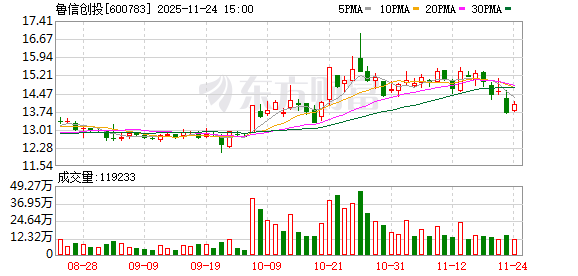
鲁信创投:关于公司及全资子公司受让基金份额暨关联交易进展公告
Zheng Quan Ri Bao· 2025-11-24 12:12
Core Points - On November 24, 2025, Lushin Investment announced the acquisition of fund shares from Shandong Guoxin for a total of RMB 166.38 million [2] - The company acquired an 18.20% stake in the Shandong Lushin New and Old Kinetic Energy Conversion Venture Capital Fund [2] - Lushin Investment's wholly-owned subsidiary, Shandong High-tech Venture Capital Co., Ltd., acquired an 8% stake in the Anhui Lushin Wanhe Technology Innovation and Entrepreneurship Equity Investment Fund for RMB 37.16 million [2] - The profit and loss from the assessment date of December 31, 2024, until the date of property transfer will be shared between Lushin Investment and its subsidiary [2] - As of November 24, 2025, the total payment for the fund share transfers has been completed, and the company will proceed with the necessary business registration changes [2]