Transportation

Search documents
Midway in the Sky: Rethinking Urban Life | YI LU | TEDxTheBund
TEDx Talks· 2025-08-21 15:58
Industry Overview - The rise of electric vertical take-off and landing aircraft (eVTOL) opens new horizons for city mobility, offering greater safety, lower noise, and improved performance and cost efficiency [1] - The low-altitude economy is seen as a strategic frontier for global competition and a leap in human civilization [1] Key Challenges - Industry faces challenges such as technological breakthroughs, noise control, and safety systems [1] - Real accident cases highlight the vital role of ducted design [1] Vision - Envisions limitless new connections between people and cultures from the vantage point in the skies [1]


主线切换下的红利配置机遇备受关注
Sou Hu Cai Jing· 2025-08-21 04:09
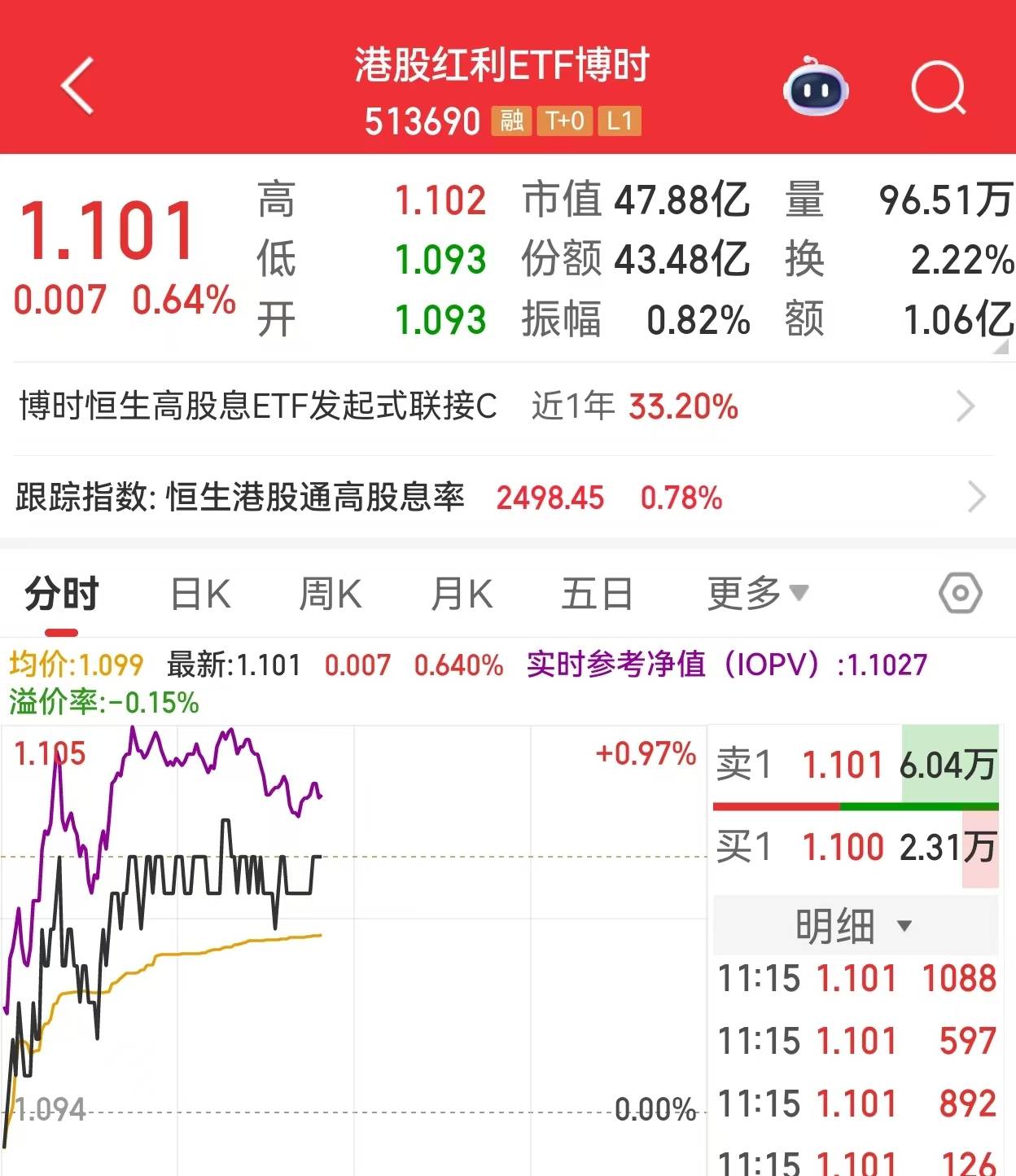
Market Overview - The market is experiencing structural differentiation, with AI and innovative pharmaceutical sectors showing volatility, while agriculture, beauty care, and retail sectors are leading in gains [1] - Defensive assets characterized by high dividends and stable cash flows continue to rise steadily [1] ETF Performance - The Hong Kong Dividend ETF (博时 513690) increased by 0.64%, with a turnover rate of 2.22% and a trading volume of 106 million [1] - The Low Volatility Dividend 100 ETF (红利低波100ETF 159307) rose by 0.55%, with a turnover rate of 0.57% and a trading volume of 7.022 million, showing a net inflow of 24 million over the past five days [3] - The All-Index Cash Flow ETF (全指现金流ETF基金 563830) increased by 0.36%, with a turnover rate of 17.20% and a trading volume of 3.987 million [3] Investment Insights - Recent market volatility has led to profit-taking in some popular sectors, indicating a potential internal market switch towards dividend and cash flow sectors that have seen sufficient pullbacks and increased attractiveness [5] - The logic favoring dividend sectors is reinforced by a low-interest-rate environment, which enhances the relative value of dividend stocks compared to other asset classes [3] - Historical data shows that when the dividend yield premium (股息率-10年国债收益率) is high, the CSI Dividend Total Return Index significantly outperforms the CSI All Share Total Return Index, particularly since 2021 [3] Sector Analysis - The Low Volatility Dividend 100 ETF currently has a dividend yield of 4.31%, with the top five sectors being banking (20.6%), transportation (13.3%), coal (7.4%), pharmaceuticals (6.2%), and basic chemicals (5.6%) [5] - The Hong Kong Dividend ETF has a dividend yield of 5.71%, with the leading sectors being real estate (17.6%), banking (15.3%), coal (10.8%), transportation (8.7%), and oil & petrochemicals (6.9%) [5] - The All-Index Cash Flow ETF has a dividend yield of 4.14%, with the top sectors being non-ferrous metals (15.2%), transportation (13.6%), food & beverage (10.8%), and oil & petrochemicals (9.5%) [5] Strategic Recommendations - Investors are encouraged to consider differentiated allocations between traditional dividend products and free cash flow products to enhance portfolio stability and return potential [4]
主题投资 -人工智能应用与工作的未来-Thematic Investing- AI Adoption and the Future of Work
2025-08-18 08:23
Summary of AI Adoption and the Future of Work Conference Call Industry Overview - The conference call focuses on the impact of AI adoption on the S&P 500 companies and the broader labor market, emphasizing the transformative potential of AI across various sectors [2][21]. Key Points and Arguments 1. **Economic Value Creation**: - Corporate adoption of AI could yield annual net benefits of approximately $920 billion for S&P 500 companies, translating into a long-term market value creation potential of $13-16 trillion [2][23]. - This represents 24-29% of the current S&P 500 market capitalization and 36-45% when excluding the Magnificent Seven companies [3][23]. 2. **Sector Exposure**: - Certain sectors are more exposed to AI adoption, with potential savings exceeding 50% of 2026 estimated pretax earnings. The top three sectors are Consumer Staples Distribution/Retail, Real Estate Management & Development, and Transportation, all exceeding 100% [4][27]. - Sectors like Technology Hardware & Equipment and Semiconductors show lower impacts from AI adoption [4][27]. 3. **AI Types and Job Impact**: - Agentic AI (software-driven) is expected to affect a broader range of occupations with a lower risk of job loss due to augmentation opportunities, while embodied AI (humanoid robots) has a narrower impact but a higher risk of job displacement [10][24]. - Approximately 90% of occupations will be impacted by AI automation and augmentation, leading to both job creation and destruction [7][21]. 4. **Investment Strategies**: - The analysis supports a bullish outlook for AI enablers and adopters, with a focus on maximizing AI adoption benefits and providing necessary AI infrastructure [3][7]. - The report suggests developing thematic investment strategies to capitalize on AI adoption benefits [7][30]. 5. **Future of Work**: - AI is expected to reshape job roles, creating new opportunities while transforming existing ones. Historical technological shifts indicate that while some jobs may be automated, new roles will emerge [48][49]. - Companies may introduce executive-level roles focused on AI leadership and governance to align AI initiatives with business goals [49][50]. 6. **Methodology**: - The analysis combines multiple data sets, including job postings, salary data, and task automation rates, to estimate the economic value creation potential from AI adoption [17][33]. Additional Important Insights - The pace of AI capability improvement is non-linear, with task duration for agentic AI doubling every seven months, suggesting that the value creation potential may exceed current estimates [13]. - The report highlights the importance of re-skilling the workforce to meet the demands of AI integration in various industries [14]. - AI-driven efficiency is projected to contribute an incremental 30-50 basis points to net margins for the S&P 500 in 2026 and 2027 [40]. This summary encapsulates the critical insights from the conference call regarding AI adoption's potential impact on the economy, job market, and investment strategies.
东吴证券:人工智能掀起软件更新大潮 C端AI工具预计未来两年渗透率将进一步提升
智通财经网· 2025-08-18 03:29
Group 1: AI Industry Overview - The AI industry has transitioned from an exploratory and growth phase to a rapid development stage over the past two decades, with global ChatGPT monthly active users exceeding 2 billion, becoming an efficient tool for daily work and study [1] - In China, AI applications are rapidly penetrating the market, with "Doubao" achieving over 50 million daily active users and "Yuanbao" focusing on workplace scenarios, showing a 200% month-on-month increase in document processing and meeting minutes usage [1] Group 2: Customized Software for Enterprises - The Chinese software industry is projected to exceed 3.5 trillion yuan by 2030, with an annual compound growth rate of around 8%, driven by the rapid development of the digital economy and accelerated digital transformation of enterprises [2] - AI plays a crucial role in software development, utilizing machine learning and deep learning to optimize performance and enhance user experience, as well as natural language processing for better human-computer interaction [2] Group 3: AI in Finance and Asset Management - The demand for AI applications in finance is strong, with many banks still in the technology reserve phase, while leading institutions are beginning to explore core business applications [3] - It is predicted that financial technology investment will exceed 580 billion yuan by 2027, with a compound annual growth rate of 11.8%, and over half of financial institutions plan to allocate 30%-39% of their IT budgets to generative AI [3] Group 4: Smart Transportation - Smart transportation, supported by information and communication technologies, is a key strategic direction for national support, with the market expected to reach 261 billion yuan by 2024 and 287.1 billion yuan by 2025 [4] - Fixed asset investment in transportation is projected to reach 3.7893 trillion yuan in 2024, focusing on smart transportation and related fields [4] Group 5: C-end AI Products - The development of AI products for consumers in China is rapid, with diverse product types and wide application scenarios, expected to break new ground by early 2025 [5] - The continuous development of the AIGC industry will provide a stable technological foundation and innovative potential for the AI e-commerce industry chain, significantly transforming the e-commerce sector [5]

FedEx Corporation (FDX) Presents at Deutsche Bank 2025 Transportation Conference Transcript
Seeking Alpha· 2025-08-13 18:13
Group 1 - FedEx is actively navigating an uncertain market environment while focusing on executing its strategic initiatives [7] - The company serves approximately 3 million customers and facilitates the transportation of around $2 trillion worth of goods annually [7]


X @The Economist
The Economist· 2025-08-12 11:00
London’s cabbies have had a hard few years. Before picking up their first passengers they must pass ta 160-year-old test that involves memorising more than 6,000 streets and points of interest https://t.co/CVjgUVGZK3 ...
X @The Wall Street Journal
The Wall Street Journal· 2025-08-08 20:57
Autonomous Vehicle Strategy - Lyft is expecting a revenue increase by deploying autonomous vehicles in the U S and Europe [1] - The company aims to expand its robotaxi presence [1]

Elon Musk's Boring Company is turning into a flop #tech #podcast
Bloomberg Technology· 2025-08-08 13:39
Company Overview - The Boring Company aims to revolutionize public transportation by constructing underground tunnels for Tesla vehicles, seeking to eliminate traffic congestion [1] - The company, founded nearly a decade ago by Elon Musk, draws parallels with SpaceX, intending to improve existing technologies [1] Challenges & Government Partnership - The Boring Company faced difficulties in securing government partnerships, unlike SpaceX's collaboration with NASA, which provided crucial support and investment [1] - A meeting with the Port Authority of New York revealed the company's lack of preparedness regarding safety (fire), accessibility (ADA compliance), and land acquisition processes [1] - The company has struggled to find a government entity willing to invest hundreds of millions of dollars to support its projects [1]