卫星通信

Search documents
低轨卫星板块爆发,哪些公司值得关注?| A股2026投资策略③
Xin Lang Cai Jing· 2025-12-28 23:09
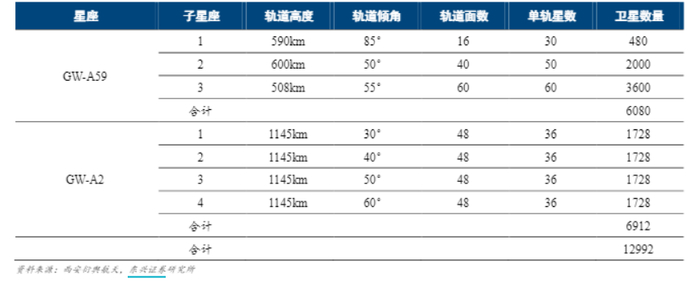
Core Insights - Low Earth Orbit (LEO) satellite communication has become a new focal point in global competition, paralleling the AI investment boom that began in 2023, with commercial space emerging as a core battleground for technological competition [1] - The investment logic in commercial space is driven by technological breakthroughs, policy support, and capital influx, focusing on advanced manufacturing supply chains that are rooted locally and connected globally [1] Industry Overview - By 2026, China is expected to reach a significant turning point in the construction of its LEO satellite communication network, focusing on autonomous global communication coverage to support emerging fields such as autonomous driving and communication security [2] - The "14th Five-Year Plan" emphasizes the development of commercial space, with a goal of exceeding 10 million satellite communication users by 2030, including new applications like direct satellite connections for mobile phones [2] - Major satellite constellations like China Star Network's GW constellation and Yuanxin Satellite's Qianfan constellation are accelerating, creating clear demands for large-scale construction [2] Market Dynamics - The LEO satellite communication industry is transitioning from a technology validation phase to a large-scale networking phase, with 2026 identified as a critical year for domestic LEO constellation construction [3] - The market for LEO satellites is projected to grow from $12.6 billion in 2024 to $23.2 billion by 2029, with a compound annual growth rate (CAGR) of 13.0%, driven by the demand for low-latency, high-speed connections [5] - The demand for key components such as antennas and RF devices is expected to surge, with the commercial viability of direct satellite connections for mobile devices creating additional market opportunities [6] Investment Opportunities - Companies that can enter the SpaceX supply chain while also meeting domestic LEO constellation construction needs are likely to experience high growth due to dual market benefits [2][7] - The differentiation in the commercial space sector is evident, with companies lacking performance support relying on speculative trading, while those with core technologies and order backing are entering a phase of performance realization [7] - Companies like Tongyu Communication and Xinwei Communication are positioned to benefit from both domestic and global supply chain demands, with significant orders expected as the industry matures [9][10] Key Components and Supply Chain - The LEO satellite communication industry chain consists of upstream core components, midstream satellite manufacturing and launching, and downstream operations and applications [8] - Upstream components, particularly antennas and RF devices, are seen as the most advantageous investment segments due to their strong demand, high technical barriers, and quick revenue realization [8] - Companies that have secured orders from the SpaceX supply chain are particularly noteworthy, as they can benefit from both global demand and domestic construction orders, leading to higher performance certainty [8][11]


SpaceX 募资材料
美股IPO· 2025-12-28 06:56
Core Viewpoint - The article emphasizes SpaceX's ambitious financial goals, aiming for $100 billion in revenue and $26 billion in net profit by 2035, highlighting its unique position in the space industry and the potential for significant growth in the coming years [1]. Investment Highlights Overview - SpaceX is positioned as a unique and scarce asset, aiming to capture the high ground of the space industry [6]. - The company has the potential to reshape human civilization with a growth potential of $10 trillion [6]. - Elon Musk is recognized as a leading entrepreneur with long-term investments in various technology ventures [6]. - SpaceX has a strong ecosystem supported by Tesla, xAI, Neuralink, and other ventures [6]. - The company has established a mature reusable rocket system, holding a relative monopoly in the launch market [6]. - SpaceX is building the largest low Earth orbit satellite constellation, Starlink, leveraging its first-mover advantage [6]. - The company possesses extreme industrial manufacturing capabilities and vertical integration efficiency, providing it with scale advantages [6]. Financial and Operational Data Forecast - SpaceX's projected total revenue is expected to reach $103.7 billion by 2030 and $141.9 billion by 2040, with a compound annual growth rate (CAGR) of 53.5% from 2023 to 2024 [66]. - The share of Starlink in total revenue is anticipated to increase from 51.1% in 2023 to 74.6% by 2040, while the launch business's share is expected to decrease from 48.9% to 25.4% over the same period [66]. - The company aims to achieve a total of 453 launches by 2030, with an average of 1.2 launches per day by 2035 [66]. - Starlink's total subscription user base is projected to grow significantly, reaching approximately 1,032 million by 2040 [66].

【广发金工】AI识图关注化工、非银、通信和卫星
广发金融工程研究· 2025-12-28 03:02
Market Performance - The Sci-Tech 50 Index increased by 2.85% over the last five trading days, while the ChiNext Index rose by 3.90%. The large-cap value index fell by 0.02%, and the large-cap growth index increased by 2.70%. The Shanghai 50 Index gained 1.37%, and the small-cap index represented by the CSI 2000 rose by 3.55%. The sectors of non-ferrous metals and national defense performed well, while beauty care and social services lagged behind [1]. Valuation Levels - As of December 26, 2025, the static PE ratio of the CSI All Share Index is at the 82nd percentile. The Shanghai 50 and CSI 300 both stand at 74%, while the ChiNext Index is close to 59%. The CSI 500 and CSI 1000 are at 62% and 64%, respectively. The valuation of the ChiNext Index is relatively at the historical median level [1]. Risk Premium - The risk premium, calculated as the inverse of the static PE of the CSI All Share Index minus the yield of the 10-year government bond, is at 2.69% as of December 26, 2025. The two standard deviation boundary is at 4.70% [1]. Fund Flows - In the last five trading days, ETF inflows amounted to 41.6 billion yuan, and the margin trading balance increased by approximately 45.7 billion yuan. The average daily trading volume across the two markets was 1.9454 trillion yuan [2]. Thematic Investment - The latest thematic investment configuration includes sectors such as chemicals, non-bank financials, communications, and satellite industries. Specific indices mentioned are the CSI Sub-Industry Chemical Index, CSI 300 Non-Bank Financial Index, CSI All Share Communication Equipment Index, and the National Satellite Communication Industry Index [2][3]. AI and Machine Learning Application - The application of convolutional neural networks (CNN) for modeling price and volume data has been explored, focusing on standardizing chart data to predict future prices and mapping learned features to industry themes [10].

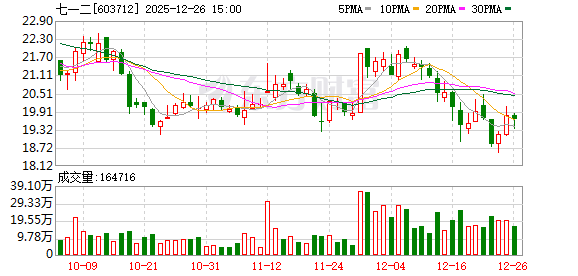
七一二:公司研制出多款天通一号等通信和导航终端设备
Zheng Quan Ri Bao· 2025-12-26 13:36
Group 1 - The company has steadily expanded its presence in the satellite communication and navigation sectors in recent years [2] - The company has developed multiple communication and navigation terminal devices, including Tiantong-1, high-throughput satellites, BeiDou-2, and BeiDou-3 [2] - The company possesses the capability to develop ground control stations, terminal stations, and operational management software for satellite communication networks [2] Group 2 - Fangzhou Technology currently has no business involvement in the commercial aerospace sector [2]

南京熊猫:目前按照客户的要求进行新一代卫星通信终端的研制及相关研发等工作
Ge Long Hui· 2025-12-26 07:43
Core Viewpoint - Nanjing Panda (600775.SH) emphasizes its commitment to technological innovation and aligns its research and development strategy with national strategic directions and market demands [1] Group 1: R&D Strategy - The company maintains a high intensity of R&D investment in recent years [1] - It is conducting research on next-generation satellite communication terminal technologies [1] - The company is developing next-generation satellite communication terminals according to customer requirements [1] Group 2: Business Operations - The wholly-owned subsidiary, Panda Communication, is engaged in the R&D and manufacturing of satellite communication modules and handheld terminals [1] - The revenue scale from this type of business is relatively small [1]

中国卫星三连板市值逼近千亿!卫星产业ETF(159218)放量涨超4%创年内第30次新高!
Sou Hu Cai Jing· 2025-12-26 06:25
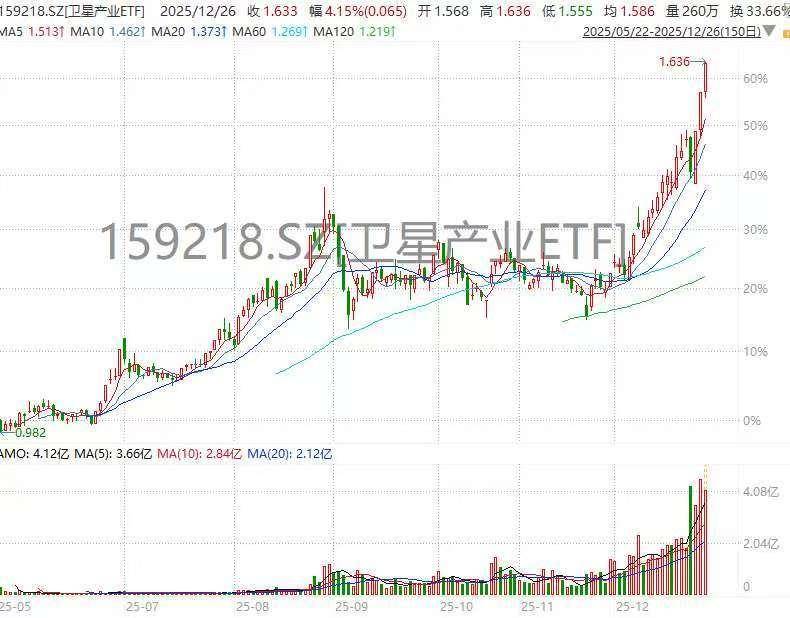
Group 1 - The satellite sector showed strong performance on December 26, with the satellite industry ETF (159218) rising by 4.08%, marking the 30th new high of the year [1] - Major stocks in the sector included Aerospace Electronics, which increased by 6.56%, and China Satellite, which achieved a three-day consecutive rise, approaching a total market value of 100 billion [1] - The net inflow of funds exceeded 70 million during the trading session, indicating sustained investor interest [1] Group 2 - The Long March 12 rocket successfully launched 16 low-orbit satellites for satellite internet, with the satellites entering their designated orbits [3] - A high-level meeting emphasized the need for high-quality development in the information and communication industry, including the promotion of 6G technology research and the acceleration of satellite internet infrastructure development [3] - The Long March 12 rocket, which is China's second liquid oxygen-methane rocket to attempt recovery on its maiden flight, successfully completed its primary mission on December 23, although the recovery of the first stage did not meet expectations [3]

两家卫星公司 同日冲击港交所IPO
Sou Hu Cai Jing· 2025-12-25 10:25
Core Viewpoint - Shenzhen Huada Beidou and Fuxin Futong submitted their listing applications to the Hong Kong Stock Exchange on December 19, aiming to go public on the main board [2][4]. Group 1: Company Overview - Huada Beidou, established in December 2016 and headquartered in Shenzhen, is a provider of space positioning services, offering chips, modules, and related solutions supporting Beidou and other major GNSS [6]. - Fuxin Futong, founded in September 2010 and located in Fuzhou, Fujian, specializes in satellite time-space digital solutions, leveraging satellite communication, positioning, navigation, and timing technologies [9]. Group 2: Market Position and Performance - In 2024, Huada Beidou ranked sixth globally in GNSS chips and modules by shipment volume, holding a market share of 4.8%, and ranked eighth by revenue, with a market share of approximately 1.1% among mainland Chinese companies [6]. - Huada Beidou's revenues for 2022, 2023, and 2024 were 698 million, 645 million, and 840 million yuan, respectively, with annual losses of 93 million, 289 million, and 141 million yuan [6]. - Fuxin Futong's revenues for 2022, 2023, 2024, and the first half of 2025 were 419 million, 521 million, 597 million, and 241 million yuan, respectively, with corresponding net profits of 75 million, 92 million, 112 million, and 49 million yuan [9]. Group 3: IPO Details - Huada Beidou's updated prospectus indicates that it is seeking to become the first stock in the Hong Kong market focused on Beidou chips [4]. - Fuxin Futong is making its first attempt to list on the main board of the Hong Kong Stock Exchange [6][9].

中国卫通股价涨5.01%,国泰基金旗下1只基金位居十大流通股东,持有820.64万股浮盈赚取1009.38万元
Xin Lang Cai Jing· 2025-12-25 05:39
Group 1 - China Satellite Communications Co., Ltd. (China Satcom) experienced a stock price increase of 5.01%, reaching 25.79 CNY per share, with a trading volume of 2.875 billion CNY and a turnover rate of 2.70%, resulting in a total market capitalization of 108.947 billion CNY [1] - The company, established on November 27, 2001, and listed on June 28, 2019, is primarily engaged in satellite space segment operations and related application services, with its main revenue source being broadcasting, television, and satellite transmission services, accounting for 100.00% of its revenue [1] Group 2 - Among the top ten circulating shareholders of China Satcom, Guotai Fund's Guotai Zhongzheng Military Industry ETF (512660) reduced its holdings by 1.6061 million shares in the third quarter, now holding 8.2064 million shares, which represents 0.19% of the circulating shares [2] - The Guotai Zhongzheng Military Industry ETF (512660) was established on July 26, 2016, with a current scale of 14.109 billion CNY. Year-to-date returns are 22.66%, ranking 2446 out of 4197 in its category, while the one-year return is 22.27%, ranking 2199 out of 4170. Since inception, the fund has achieved a return of 27.78% [2] Group 3 - The fund manager of Guotai Zhongzheng Military Industry ETF (512660) is Ai Xiaojun, who has a cumulative tenure of 11 years and 350 days. The total asset scale of the fund is 169.029 billion CNY, with the best fund return during his tenure being 288.07% and the worst being -46.54% [3]

卫星通信专场
2025-12-25 02:43
Summary of Satellite Communication Industry Conference Call Industry Overview - The satellite communication sector has experienced an excess market performance since November 21, 2025, likely driven by optimistic market sentiment due to the progress of the reusable Zhuque 3 rocket [2][3] - Key upcoming events such as the Long March 10 reusable test and Tianbing Tianlong 3 launch tests are expected to further enhance market attention and sustain the sector's momentum [2][3] - The National Grid's second-generation satellite launches are projected to double the previous total launch volume in 2025, indicating a potential turning point for the industry if this trend continues into 2026 [2][7] Core Insights and Arguments - The satellite communication sector is currently viewed as a thematic investment opportunity, with its performance closely mirroring the Guozheng 2000 index from early 2022 to November 2025 [3] - The industry is characterized by three main categories of catalytic factors: launches, policies, and applications [4][5] - Specific launches, such as the National Grid's second-generation satellites, are expected to have a significant catalytic effect despite an overall increase in launch frequency reducing market sensitivity [5][6] Key Catalysts for Future Development 1. **Launch Acceleration**: The ability to provide low-cost, stable launch capacity through reusable rockets is crucial for reducing costs and enhancing network deployment [8] 2. **Policy Support**: National policies are vital for maintaining competitive advantage in the context of limited low-orbit resources and intense Sino-US competition [6][9] 3. **New Applications**: The introduction of new technologies and applications, such as mobile direct satellite internet access, could significantly boost market enthusiasm [8][9] Market Projections - By 2026, the satellite communication industry is expected to reach a critical inflection point, with approximately 1,200 satellites needed to effectively support satellite internet deployment [11] - The market potential is substantial, with projections indicating annual revenues of around 124 billion RMB at peak, translating to a profit increment of 25 billion RMB if a 20% net profit margin is achieved [12] Recommended Companies - **Xinke Mobile**: Involved in joint R&D with the National Grid, holding significant shares in the second-generation satellite project [13] - **Fenghuo Communication**: Known for its 100G inter-satellite laser communication terminals, expected to generate notable profit increases [13] - **Chengchang Technology**: Engaged in TR chip business, likely to benefit from the doubling of communication satellite channels [13] - **Zhenlei Electronics**: High market share in power chip products, with potential positive impacts on overall performance [13] - **Guobo Electronics**: Leading position in TR components, poised for new opportunities if third-party participants are introduced [14] Conclusion - The satellite communication industry is on the brink of significant growth, driven by technological advancements, supportive policies, and increasing market demand. Investors are encouraged to focus on companies with strong performance certainty and relevant business connections within the industry.
股价大跌9%!AST SpaceMobile成功发射“最强卫星”,估值过高忧虑引发抛售
美股IPO· 2025-12-25 01:04
Core Viewpoint - AST SpaceMobile has successfully launched the BlueBird 6 satellite, claiming it to be the largest commercial communication array deployed in low Earth orbit to date [1] Group 1: Satellite Launch and Capabilities - The BlueBird 6 satellite can provide high-speed 4G and 5G signals directly from space to standard, unmodified smartphones and government devices [3] - Launched from the Satish Dhawan Space Centre in Sriharikota, India, using the LVM-3 rocket, the satellite is three times the size of the existing six satellites in orbit and has ten times their capacity [3] - The satellite is designed to support peak data transmission rates of up to 120 Mbps, enabling voice, full data, and video applications [3] Group 2: Future Plans and Market Reaction - The company aims to launch between 45 to 60 satellites by the end of 2026, with an average launch frequency of every one to two months [3] - Following the announcement, AST's stock price initially rose over 7% but ultimately closed down nearly 9% at $78.05 [4] - The trading volume exceeded 26 million shares, surpassing the three-month average trading volume, indicating heightened market activity [5] Group 3: Analyst Concerns - Some Wall Street analysts have expressed concerns about the stock being overvalued, especially given the speculative price increases and execution uncertainties [5] - Year-to-date, ASTS stock has surged by 336%, while the S&P benchmark index has increased by 17.5% during the same period [5] - Analyst StoneFox Capital noted that despite the potential for speculative price increases, the stock appears too expensive relative to realistic financial targets due to repeated launch delays [5]