
渔业

Search documents
京蒙携手为兴安盟乡村振兴注入强劲动能
Xin Lang Cai Jing· 2026-01-14 20:46
Core Viewpoint - The collaboration between Beijing and the Xing'an League has significantly contributed to rural revitalization and economic development in the region, showcasing a successful model of inter-regional cooperation and resource sharing [4][5][15]. Group 1: Economic Development and Investment - Since the initiation of the Beijing-Xing'an collaboration in 2017, a total of 2.7 billion yuan has been invested in various projects, resulting in 982 implemented projects across multiple sectors including industry cultivation, consumption promotion, employment support, talent exchange, and cultural tourism integration [5][8]. - The collaboration has led to the establishment of key projects such as the Alshan Deer Horn Bay Hot Spring Resort and the Zhalai Nuoer Beef Industry Cluster, which have bolstered local economies and created significant employment opportunities [8][15]. - The tourism sector in Alshan has seen a remarkable increase, with 6.14 million visitors and total tourism revenue reaching 7.68 billion yuan from January to October 2025, marking substantial year-on-year growth [6][8]. Group 2: Agricultural and Seafood Development - The collaboration has also focused on modern facility aquaculture, with an investment of 20.4 million yuan supporting the establishment of a seafood farming project in the Keshiketeng Banner, which is expected to fill local industry gaps and provide fresh seafood to the market [7][8]. - The Xing'an League has successfully developed a comprehensive agricultural product marketing strategy, resulting in 7.3 million tons of rice sold in Beijing, generating sales of 1 billion yuan, and establishing a pathway for agricultural product upgrades [10][12]. Group 3: Employment and Skills Training - The collaboration has facilitated the creation of 51,000 job opportunities through various recruitment events and skills training programs, significantly enhancing local employment rates [11][12]. - A total of 2,769 rural laborers have received targeted skills training, contributing to the development of labor brands such as "Xing'an Housekeeping" and "Tuqian Welder" [12][13]. Group 4: Education and Healthcare - The partnership has led to the integration of educational resources, with 652 Beijing support personnel aiding in the development of 160 local schools, benefiting over 50,000 students [13][15]. - In healthcare, 389 Beijing medical experts have provided assistance to local hospitals, enhancing the quality of medical services and establishing a sustainable healthcare workforce in the region [13][15]. Group 5: Cultural and Tourism Integration - The collaboration has promoted cultural tourism by developing attractive rural areas and creating a comprehensive tourism route that has gained recognition and increased visitor numbers [14][15]. - Various promotional activities have been conducted to enhance the visibility of Xing'an products in major markets, resulting in significant sales and partnerships with businesses in Beijing [10][15].

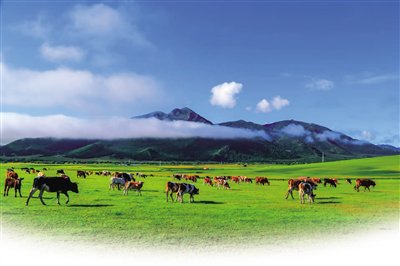
端牢“中国饭碗”!多省份“十五五”农业规划路线图出炉
2 1 Shi Ji Jing Ji Bao Dao· 2026-01-14 12:13
Core Viewpoint - The "14th Five-Year Plan" emphasizes strengthening food security and enhancing the supply capacity of important agricultural products, with a focus on technological innovation and land management as key strategies for agricultural development [2][3]. Group 1: Food Security and Agricultural Production - Food security is identified as a national priority, with the plan to implement a new round of actions to increase grain production capacity by 100 billion jin [3]. - Various provinces have set specific goals for grain production, such as Heilongjiang aiming for a total grain output of 1640.1 billion jin by 2025 and striving for 2000 billion jin by 2030 [3]. - Each province's plan highlights the importance of enhancing agricultural production capacity and quality, with specific tasks assigned to regions based on their agricultural strengths [3]. Group 2: Technological Innovation - Technological innovation is positioned as the core driver for improving agricultural production capacity and ensuring food security, focusing on overcoming challenges in seed technology and promoting smart agricultural machinery and big data applications [4][5]. - Provinces like Inner Mongolia and Jilin are implementing actions to revitalize the seed industry and enhance breeding technologies, while also focusing on smart machinery development [5][6]. Group 3: Differentiated Development Strategies - Different regions are encouraged to adopt differentiated development paths based on local resource endowments, with a focus on enhancing local agricultural characteristics and consumer demand [6][7]. - The plans emphasize the need for a diversified food supply system, integrating various agricultural sectors such as livestock, aquaculture, and specialty crops [7][8]. Group 4: Agricultural Industry Upgrading - Many provinces are prioritizing the upgrading of agricultural industries and the development of specialty products, with initiatives to enhance modern agricultural practices and promote local specialties [8][9]. - For instance, Shandong and Fujian are focusing on integrating agriculture with other industries and enhancing brand influence for local agricultural products [9][10]. Group 5: Infrastructure and Supply Chain - The plans call for improvements in infrastructure, such as cold chain logistics and storage facilities, to enhance the agricultural supply chain and avoid oversaturation of primary agricultural products in the market [9][10]. - Strengthening the entire agricultural value chain is essential for promoting industry clustering and ensuring efficient production and distribution [10].
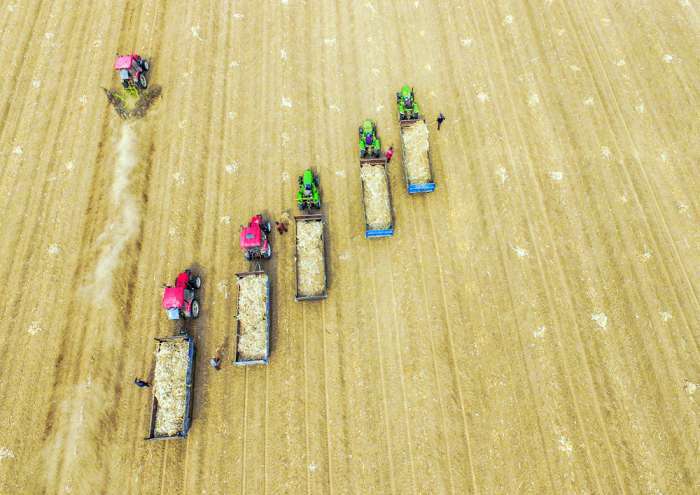
天马科技:2025年公司鳗鱼累计出池约1.87万吨
Zheng Quan Shi Bao Wang· 2026-01-14 09:16
Core Viewpoint - The announcement from Tianma Technology indicates a significant production and sales performance in eel farming for the year 2025, highlighting both domestic and export figures along with pricing details [1] Group 1: Production and Sales Data - In December 2025, the company reported an eel output of approximately 2,254.02 tons, with exports accounting for about 1,131.24 tons and self-use for approximately 1,122.78 tons [1] - For the entire year of 2025, the total eel output reached approximately 18,669.89 tons, with exports around 9,829.91 tons and self-use about 8,839.98 tons [1] Group 2: Pricing Information - The sales price range for eels in December 2025 was between 51,000 yuan/ton and 91,000 yuan/ton [1] - For the year 2025, the sales price range for eels varied from 50,000 yuan/ton to 130,000 yuan/ton [1]

天马科技:1-12月公司鳗鱼累计出池约18669.89吨
Ge Long Hui· 2026-01-14 09:09
格隆汇1月14日丨天马科技(603668.SH)公布,2025年12月,公司鳗鱼出池约2254.02吨,其中外销约 1131.24吨,自用约1122.78吨,本月鳗鱼出池规格主要在1P-5P之间,销售价格区间为5.1万元/吨-9.1万 元/吨。 2025年1-12月,公司鳗鱼累计出池约18669.89吨,其中外销约9,829.91吨,自用约8,839.98吨,本期鳗鱼 出池规格主要在1P-5P之间,销售价格区间为5.0万元/吨-13.0万元/吨。 ...
天马科技(603668.SH):1-12月公司鳗鱼累计出池约18669.89吨
Ge Long Hui A P P· 2026-01-14 09:08
格隆汇1月14日丨天马科技(603668.SH)公布,2025年12月,公司鳗鱼出池约2254.02吨,其中外销约 1131.24吨,自用约1122.78吨,本月鳗鱼出池规格主要在1P-5P之间,销售价格区间为5.1万元/吨-9.1万 元/吨。 2025年1-12月,公司鳗鱼累计出池约18669.89吨,其中外销约9,829.91吨,自用约8,839.98吨,本期鳗鱼 出池规格主要在1P-5P之间,销售价格区间为5.0万元/吨-13.0万元/吨。 ...
渔业板块1月14日跌0.28%,中水渔业领跌,主力资金净流出2.25亿元
Zheng Xing Xing Ye Ri Bao· 2026-01-14 08:44
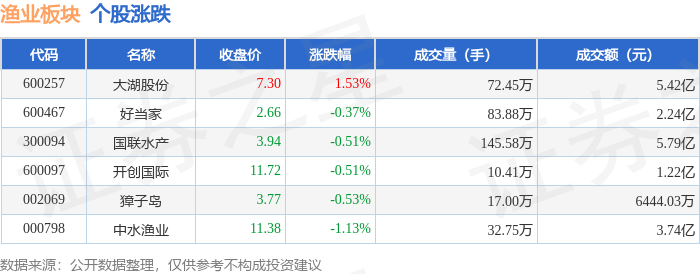
Core Viewpoint - The fishery sector experienced a decline of 0.28% on January 14, with Zhongshui Fisheries leading the drop, while the Shanghai Composite Index fell by 0.31% and the Shenzhen Component Index rose by 0.56% [1] Group 1: Market Performance - The closing price of Dahu Co. was 7.30, with an increase of 1.53% and a trading volume of 724,500 shares, amounting to a transaction value of 542 million yuan [1] - Haodangjia closed at 2.66, down by 0.37%, with a trading volume of 838,800 shares and a transaction value of 2.247 million yuan [1] - Guolian Aquatic Products closed at 3.94, down by 0.51%, with a trading volume of 1,455,800 shares and a transaction value of 579 million yuan [1] - Kaichuang International closed at 11.72, down by 0.51%, with a trading volume of 104,100 shares and a transaction value of 122 million yuan [1] - Zhangzidao closed at 3.77, down by 0.53%, with a trading volume of 170,000 shares and a transaction value of 64.44 million yuan [1] - Zhongshui Fisheries closed at 11.38, down by 1.13%, with a trading volume of 327,500 shares and a transaction value of 374 million yuan [1] Group 2: Capital Flow - The fishery sector saw a net outflow of 225 million yuan from main funds, while retail investors contributed a net inflow of 154 million yuan [1] - The main fund net inflow for Zhangzidao was -2.8093 million yuan, with a retail net inflow of 4.6675 million yuan [2] - Haodangjia experienced a main fund net outflow of -2.8886 million yuan, with a retail net inflow of 11.2071 million yuan [2] - Kaichuang International had a main fund net outflow of -13.4641 million yuan, with a retail net inflow of 9.3837 million yuan [2] - Dahu Co. faced a main fund net outflow of -20.0915 million yuan, with a retail net outflow of -21.7751 million yuan [2] - Zhongshui Fisheries had a significant main fund net outflow of -60.008 million yuan, while retail investors contributed a net inflow of 59.5947 million yuan [2] - Guolian Aquatic Products saw a main fund net outflow of -12.67 million yuan, with a retail net inflow of 90.916 million yuan [2]


中水渔业股价连续3天下跌累计跌幅7.33%,招商基金旗下1只基金持155.68万股,浮亏损失140.11万元
Xin Lang Cai Jing· 2026-01-14 07:12
Group 1 - The core point of the news is that Zhongshui Fisheries has experienced a decline in stock price, dropping 1.13% to 11.38 CNY per share, with a total market value of 4.163 billion CNY and a cumulative drop of 7.33% over three consecutive days [1] - Zhongshui Fisheries is primarily engaged in deep-sea fishing and ship repair, with its main business revenue composition being: fishing services 36.88%, retail and processing trade 20.73%, squid 16.99%, tuna 15.92%, other catches 9.39%, and others 0.09% [1] Group 2 - From the perspective of major circulating shareholders, a fund under China Merchants Fund has entered the top ten circulating shareholders of Zhongshui Fisheries, holding 1.5568 million shares, which accounts for 0.43% of circulating shares [2] - The fund, China Merchants Quantitative Selected Stock A (001917), has a current scale of 3.663 billion CNY and has reported a year-to-date return of 3.91% [2] - The fund manager, Wang Ping, has a tenure of 15 years and 211 days, with the best fund return during his tenure being 294.94% [2]
海洋四所与马方公司开展渔业产业交流
Zhong Guo Zi Ran Zi Yuan Bao· 2026-01-14 02:37
Core Viewpoint - The recent collaboration between the Fourth Institute of Oceanography and Malaysia's One Marine Company aims to enhance fisheries cooperation through innovation in aquaculture species, seed breeding technology upgrades, and facilitation of cross-border circulation [1] Group 1: Industry Collaboration - The exchange program serves as a significant step in deepening China-Malaysia marine technology cooperation [1] - The Fourth Institute of Oceanography plans to initiate a joint research and development project for breeding precious marine aquaculture species by 2026 [1] - The collaboration aims to implement relevant technological achievements in Malaysia to improve the local fisheries industry [1] Group 2: Research and Development Focus - The exchange team visited various facilities, including the Yellow Sea Fisheries Research Institute and Hainan Xing Shui Yan Technology Co., to assess breeding, equipment application, and disease prevention for valuable marine species [1] - Key experiences shared during the exchange included quality variety selection, efficient seedling technology, and ecological farming models [1] Group 3: Long-term Goals - The Fourth Institute of Oceanography aims to continuously promote industrial cooperation with Malaysia's One Marine Company [1] - The initiative is part of a broader strategy to leverage small-scale collaborations for larger cooperative efforts, driving sustainable development in the regional marine economy [1]
海南文昌:开年迎丰收 码头渔市旺
Xin Lang Cai Jing· 2026-01-13 23:59
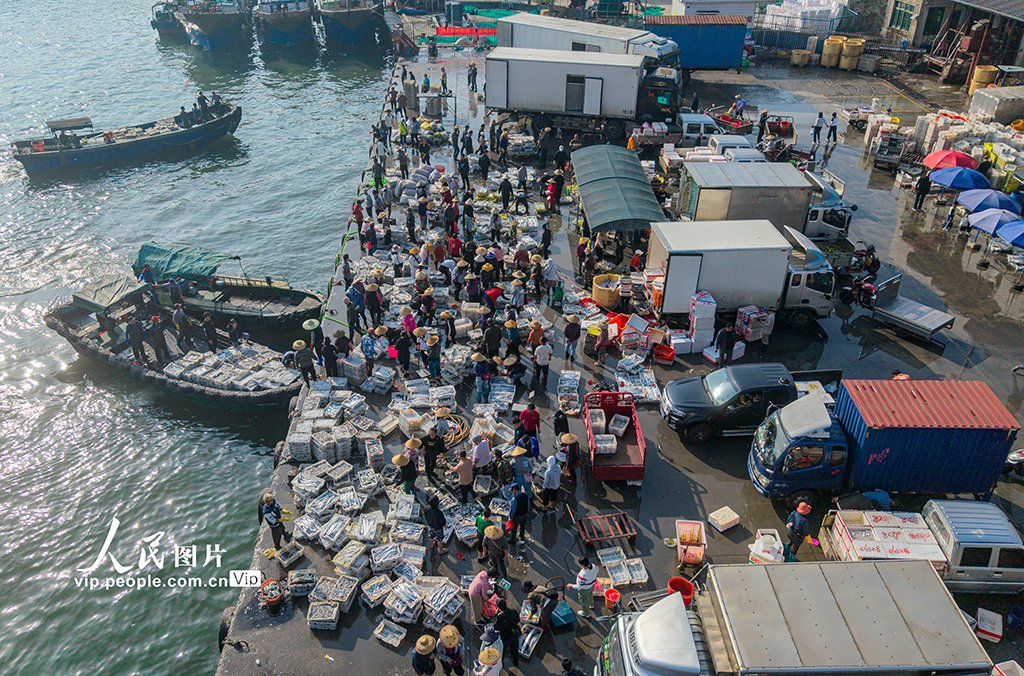
Group 1 - The article highlights the favorable weather conditions in Hainan at the beginning of the new year, contributing to a productive fishing season [2] - Fishing boats are returning to Wenchang Qilan Port with abundant catches, including fresh hairtail, mackerel, and various shellfish [2] - Fishermen are efficiently sorting and transporting their catches, indicating a well-organized operation at the port [2]
中水渔业:2026年1月30日召开2026年第一次临时股东会
Zheng Quan Ri Bao Wang· 2026-01-13 14:12
证券日报网讯1月13日,中水渔业(000798)发布公告称,公司将于2026年1月30日召开2026年第一次临 时股东会。 ...