
软件和信息技术服务

Search documents
赛力斯取得充电桩确定方法专利
Jin Rong Jie· 2026-01-09 01:25
Group 1 - The core point of the article is that Chongqing Silis Phoenix Intelligent Technology Co., Ltd. has obtained a patent for a method, device, and readable storage medium related to charging piles, with the patent announcement number CN119714340B and an application date of January 2025 [1] - Chongqing Silis Phoenix Intelligent Technology Co., Ltd. was established in 2023 and is located in Chongqing, primarily engaged in software and information technology services [1] - The company has a registered capital of 122,225 million RMB and has participated in two bidding projects, with a total of 2,769 patent information entries and 2 administrative licenses [1]

“人工智能+制造”重磅部署 五大行业迎转型路线图
2 1 Shi Ji Jing Ji Bao Dao· 2026-01-08 23:30
Core Viewpoint - The "Artificial Intelligence + Manufacturing" initiative aims to enhance the integration of AI technologies within China's manufacturing sector, targeting significant advancements by 2027, including the establishment of a secure supply of core AI technologies and a leading position in industry scale and empowerment levels [1][3][14]. Group 1: Key Objectives and Measures - By 2027, China aims to achieve a secure and reliable supply of key AI technologies, with industry scale and empowerment levels ranking among the world's top [3][14]. - The initiative outlines seven key tasks, including innovation foundation, intelligence upgrade, product breakthroughs, entity cultivation, ecosystem expansion, safety protection, and international cooperation, with 21 specific measures to promote "dual empowerment" of AI technology and manufacturing applications [1][4][16]. Group 2: Industry-Specific Pathways - The initiative customizes transformation pathways for five major industries: raw materials, equipment manufacturing, consumer goods, electronic information, and software and IT services, moving away from a one-size-fits-all approach [7][17]. - For the raw materials sector, the focus is on enhancing the intelligent level of the steel industry through the development of dynamic models covering the entire production process [17][18]. - In the automotive sector, the initiative emphasizes the intelligent upgrade of the entire supply chain, including the creation of automotive models for real-time optimization [18]. Group 3: Support for Enterprises - The initiative encourages local governments to provide support such as "computing power vouchers" and "model vouchers" to lower the application costs of AI technologies for enterprises, particularly small and medium-sized enterprises (SMEs) [11][21]. - It aims to cultivate a tiered support mechanism for enterprises, fostering both large enterprises and specialized SMEs to create a collaborative ecosystem [21][22]. Group 4: Technological Advancements - The initiative promotes the iteration of intelligent equipment and the upgrade of smart terminals, including the development of new-generation AI numerical control systems and intelligent medical equipment [10][20]. - It also focuses on the integration of AI technologies into major technical equipment development, such as large aircraft and ships, and the commercialization of new terminal technologies like AR/VR devices [20]. Group 5: Overall Impact and Future Directions - The initiative is seen as a critical step for China's manufacturing sector to transition from scale advantages to quality, efficiency, and intelligence advantages, requiring continuous exploration and collaboration among government, industry, academia, and research [4][15]. - The ultimate goal is to enable AI not only as a tool for efficiency but also as a catalyst for disruptive innovation in manufacturing, facilitating the transition from "Made in China" to "Intelligent Manufacturing in China" [3][14].
以数字匠心 深耕实体经济融合之路
Xin Lang Cai Jing· 2026-01-08 20:04
扎实的耕耘,在2019年结出了第一颗标志性硕果。事途科技协同上海市闵行区成功打造了经济治理数字 化转型系统。这不仅是一个IT项目,更是一场治理理念的革新。该系统利用大数据、人工智能等技术, 实现了区域经济运行的精准洞察、招商资源的智能匹配以及企业服务的动态优化,成为国内罕有的利用 数字化手段实现"精准招商"与"安商稳商"的典范案例。 随着企业的稳步发展,涂乔升的个人才华与贡献也日益凸显。正是因其主导的该项目对地方发展产生的 显著效能,同年他被闵行区纳入第一批特殊人才引进名单,荣登福布斯中国30岁以下精英榜,获选"经 济与金融"领域十大青年人物。此外,他还荣获了"2019年FIF卓越财税领袖奖"。这些荣誉共同印证了他 在推动产业数字化与金融科技融合方面的卓越领导力与前瞻视野。 在科技浪潮奔涌的时代,总有一些人敏锐地捕捉到技术与产业共振的脉搏,以坚实的脚步踏出一条融合 创新之路。涂乔升正是这样一位笃行实干、目光长远的探索者。2016年,他在上海创办事途科技,以此 为原点,开启了一段以科技驱动产业变革的旅程。 创业维艰,但清晰的战略定位让事途科技迅速找到了发力点。公司以上海为核心,业务版图辐射全国, 涉足数字化、大 ...
八部门聚力推出“人工智能+制造”专项行动 装备制造等行业成重点
Zhong Guo Jing Ying Bao· 2026-01-08 15:22
Core Viewpoint - The deep integration of artificial intelligence (AI) with the manufacturing industry is significantly transforming production models and economic forms in China, as outlined in the "AI + Manufacturing" action plan released by multiple government departments, aiming for substantial advancements by 2027 [1][2]. Group 1: Policy and Implementation - The "AI + Manufacturing" action plan aims for the secure and reliable supply of key AI technologies and to maintain a leading position in industry scale and empowerment by 2027 [1]. - The plan emphasizes the need for a dual approach: enhancing technology supply to promote "intelligent industrialization" and accelerating "industrial intelligence" to foster a robust industrial ecosystem [1][3]. - It encourages leading enterprises and state-owned enterprises to pioneer new models of AI empowerment in manufacturing, while also supporting small and medium-sized enterprises (SMEs) in their digital transformation [2][3]. Group 2: Market Opportunities - The integration of AI in manufacturing is expected to enhance customization capabilities, reduce labor costs, and improve market responsiveness and production quality, thereby increasing competitiveness [2]. - The action plan is anticipated to benefit industrial internet infrastructure companies and robotics firms, creating new market opportunities for comprehensive solution providers in manufacturing [2]. - A significant increase in the adoption of large models and intelligent agents in industrial enterprises is projected, with a rise from 9.6% in 2024 to 47.5% in 2025 [3]. Group 3: Financial and Investment Aspects - The plan proposes establishing a collaborative mechanism among departments and industries to guide enterprises in differentiated development and prevent "involution" in competition [3]. - It aims to leverage existing funding channels to support technology research and application tasks related to "AI + Manufacturing," while also enhancing the role of the national AI industry investment fund to attract more social capital [3].
利好来了,八部门重磅部署
21世纪经济报道· 2026-01-08 15:10
Core Viewpoint - The article discusses the implementation of the "Artificial Intelligence + Manufacturing" initiative by eight Chinese government departments, aiming for significant advancements in AI technology and its integration into the manufacturing sector by 2027 [1][6]. Group 1: Key Goals and Tasks - By 2027, China aims to achieve secure and reliable supply of key AI technologies, maintaining a leading position in industry scale and empowerment levels [3][6]. - The initiative outlines seven key tasks, including innovation foundation, intelligence upgrade, product breakthroughs, enterprise cultivation, ecosystem expansion, safety assurance, and international cooperation, with 21 specific measures to promote mutual empowerment between AI technology and manufacturing [1][7]. Group 2: Industry-Specific Pathways - The initiative customizes transformation pathways for five major industries: raw materials, equipment manufacturing, consumer goods, electronic information, and software and IT services, moving away from a one-size-fits-all approach [9][10]. - For the raw materials sector, the focus is on enhancing the intelligent level of the steel industry through dynamic modeling and real-time optimization [10]. - In the automotive industry, the initiative emphasizes the need for a comprehensive intelligent upgrade across the entire supply chain, including the development of large models for design optimization [10]. Group 3: Product Breakthroughs - The initiative promotes the iteration of intelligent equipment, including industrial robots and AI-driven medical devices, to enhance decision-making and operational capabilities [13]. - It also encourages the development of new AI terminals, such as smart home devices and AR/VR equipment, to accelerate commercialization [13]. Group 4: Enterprise Cultivation - The initiative proposes a tiered approach to enterprise cultivation, supporting the development of globally influential enterprises and encouraging local governments to provide resources like "computing power vouchers" and "model vouchers" to lower application costs for SMEs [2][14]. - It aims to foster a collaborative ecosystem where large enterprises build the framework while SMEs participate actively [15].

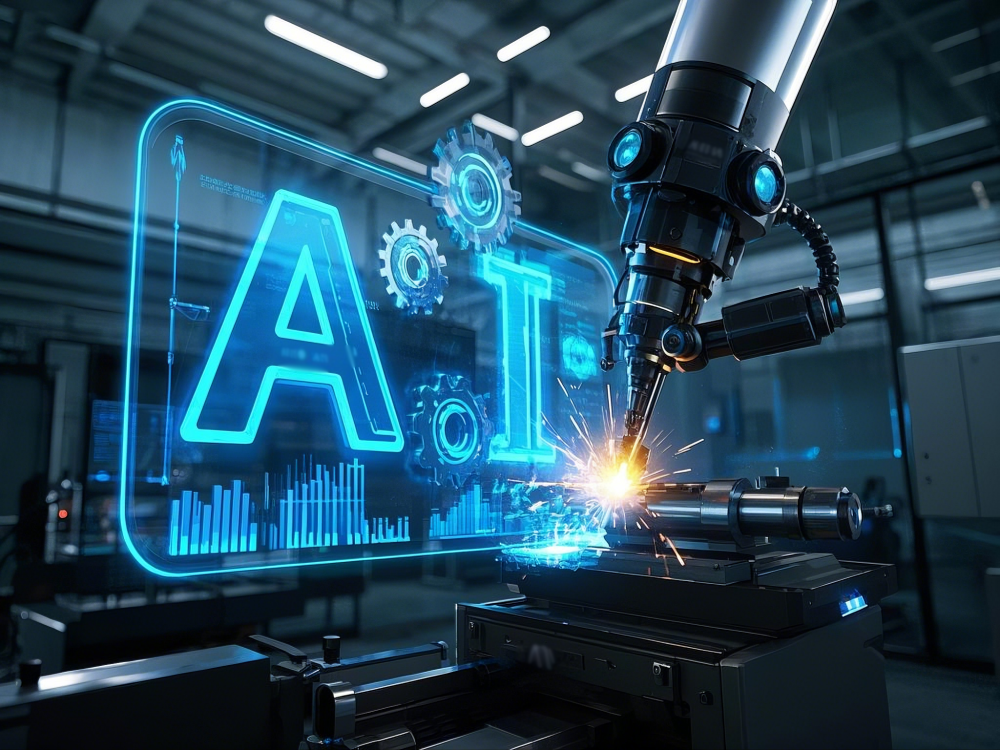
“人工智能+制造”重磅部署,五大行业迎转型路线图
2 1 Shi Ji Jing Ji Bao Dao· 2026-01-08 13:33
Core Viewpoint - The joint issuance of the "Artificial Intelligence + Manufacturing" Special Action Implementation Opinions marks a significant step in China's systematic advancement of intelligent manufacturing, aiming for a transformative integration of AI into the manufacturing sector by 2027 [3][4]. Group 1: Key Objectives and Measures - By 2027, China aims to achieve secure and reliable supply of key AI technologies, maintaining a leading position in industry scale and empowerment levels globally [3][4]. - The implementation plan outlines seven key tasks, including innovation foundation, intelligence upgrade, product breakthroughs, entity cultivation, ecosystem expansion, safety protection, and international cooperation, with 21 specific measures to promote mutual empowerment between AI technology and manufacturing applications [4][6]. Group 2: Industry-Specific Pathways - The guidelines provide tailored transformation pathways for five major industries: raw materials, equipment manufacturing, consumer goods, electronic information, and software and IT services, moving away from a one-size-fits-all approach [7][8]. - For the raw materials sector, the focus is on enhancing the intelligent level of the steel industry through the development of dynamic models covering the entire production process [8]. - In the equipment manufacturing sector, particularly in the automotive industry, the guidelines emphasize the need for a comprehensive intelligent upgrade across the entire supply chain [8]. Group 3: Empowerment and Support for Enterprises - The plan encourages the cultivation of enterprises through tiered support, including the provision of "computing power vouchers" and "model vouchers" to reduce application development costs for small and medium-sized enterprises [2][11]. - It aims to foster a collaborative ecosystem where large enterprises build the ecosystem while smaller enterprises participate, enhancing the overall innovation capacity [11][12]. Group 4: Technological Advancements and Product Innovation - The implementation plan emphasizes the need for breakthroughs in intelligent equipment, including the development of new-generation AI numerical control systems and smart medical devices [10]. - It also highlights the importance of upgrading intelligent terminals and promoting the commercialization of new types of devices, such as AR/VR wearables and brain-computer interfaces [10].
深圳东壁科技数据有限责任公司获“Pre-A轮”融资,金额近亿人民币
Sou Hu Cai Jing· 2026-01-08 05:32
资料显示,深圳东壁科技数据有限责任公司法定代表人为吴登生,成立于2024年,位于深圳市,是一家 以从事软件和信息技术服务业为主的企业。企业注册资本153.532648万人民币,并已于2026年完成了 Pre-A轮,交易金额近亿人民币。 1月7日,天眼查融资历程显示,深圳东壁科技数据有限责任公司近日获得"Pre-A轮"融资,涉及融资金 额近亿人民币,投资机构为中科创星天使轮项目「东壁科技数据」完成近亿元Pre-A轮融资。 通过天眼查大数据分析,深圳东壁科技数据有限责任公司共对外投资了3家企业,知识产权方面有商标 信息40条,此外企业还拥有行政许可4个。 来源:市场资讯 天眼查信息显示,深圳东壁科技数据有限责任公司的股东为:吴登生、熊德、北京中科创星硬科技中小 企业创业投资合伙企业(有限合伙)、深圳东壁智联科技数据合伙企业(有限合伙)、深圳东壁智汇科 技数据合伙企业(有限合伙)。 ...
工信部等八部门联合印发《“人工智能+制造”专项行动实施意见》
中汽协会数据· 2026-01-08 05:13
Core Viewpoint - The article discusses the implementation of the "Artificial Intelligence + Manufacturing" initiative, aiming to enhance the integration of AI technologies in the manufacturing sector by 2027, establishing China as a global leader in AI technology and application [1][6]. Group 1: Overall Requirements - By 2027, China aims to achieve secure and reliable supply of key AI technologies, maintaining a leading position in industry scale and empowerment levels globally. The initiative includes the application of 3-5 general large models in manufacturing, the launch of 1,000 high-level industrial intelligent entities, and the creation of 100 high-quality industrial data sets [6][5]. Group 2: Innovation Foundation - The initiative emphasizes strengthening AI computing power supply, supporting the development of intelligent chips and high-level computing facilities, and promoting the establishment of a national integrated computing network [7]. - It also focuses on developing high-performance algorithm models tailored for the manufacturing sector, encouraging the creation of industry-specific models and enhancing data governance capabilities [8][7]. Group 3: Application Empowerment - The initiative promotes the deep integration of AI in key manufacturing sectors, facilitating the development of intelligent factories and enhancing capabilities in design, production, and management processes [9][10]. - It encourages the establishment of AI application platforms to match supply and demand accurately, and supports the digital transformation of small and medium-sized enterprises [11][12]. Group 4: Product Breakthrough - The initiative aims to accelerate the iteration of intelligent equipment and the upgrade of smart terminals, including industrial robots and AI-driven medical devices, to enhance decision-making and operational capabilities [13][14]. - It also focuses on fostering new business models around intelligent entities and promoting the integration of AI with traditional software products [15][16]. Group 5: Ecological Growth - The initiative emphasizes the importance of standardization in AI development, encouraging participation in international standardization efforts and promoting an open-source ecosystem for AI projects [17][18]. - It aims to strengthen talent cultivation in the AI sector, ensuring a skilled workforce that understands both AI and manufacturing applications [19][18]. Group 6: Safety Assurance - The initiative outlines measures to enhance safety and security in AI applications, including the development of safety governance mechanisms and risk monitoring systems [20][21]. Group 7: International Cooperation - The initiative encourages international collaboration in AI, supporting enterprises in customizing AI products for different markets and participating in global AI discussions [21][20]. Group 8: Support Measures - The initiative calls for a comprehensive policy support system to facilitate the development of AI in manufacturing, including funding and resource allocation to promote new technologies and applications [22][23].

这些行业迎利好!八部门重磅发布
Mei Ri Jing Ji Xin Wen· 2026-01-07 23:23
Group 1 - The core viewpoint of the article is the implementation of the "AI + Manufacturing" initiative, aiming to enhance the application of AI in the manufacturing sector by 2027, including the development of general large models and high-quality data sets [1][2] - The initiative outlines the goal to cultivate 2 to 3 globally influential leading enterprises and a number of specialized small and medium-sized enterprises, as well as to establish a global leading open-source ecosystem [1][2] - The document emphasizes the importance of strengthening AI computing power supply and promoting the development of intelligent chips and core technologies [2][3] Group 2 - The initiative prioritizes the empowerment of five key industries: raw materials, equipment manufacturing, consumer goods, electronic information, and software and information technology services [4][5] - Specific applications of AI in the equipment manufacturing sector include the intelligent upgrade of the automotive industry, focusing on real-time simulation and optimization of design parameters [4][5] - The initiative aims to address the urgent need for digital transformation in these industries, leveraging AI to enhance production efficiency and reduce defect rates in manufacturing processes [5]
八部门聚力推出“人工智能+制造”专项行动
Xin Lang Cai Jing· 2026-01-07 18:14
Core Viewpoint - The integration of artificial intelligence (AI) with the real economy is set to profoundly change the production models and economic forms in the manufacturing industry, as outlined in the "AI + Manufacturing" action plan issued by multiple government departments [1]. Group 1: Goals and Objectives - By 2027, China aims to achieve secure and reliable supply of key AI technologies, maintaining a leading position in industry scale and empowerment levels globally [1]. - The plan includes the deep application of 3 to 5 general large models in manufacturing, the creation of 100 high-quality industrial data sets, and the promotion of 500 typical application scenarios [1]. - The initiative seeks to cultivate 2 to 3 globally influential ecosystem-leading enterprises and a number of specialized small and medium-sized enterprises, while establishing 1,000 benchmark enterprises [1]. Group 2: Key Industries and Applications - Key industries targeted for AI empowerment in new industrialization include raw materials, equipment manufacturing, consumer goods, electronic information, software, and information technology services [2]. - The plan encourages leading enterprises and state-owned enterprises to explore new models and applications of AI in manufacturing, alongside implementing digital empowerment initiatives for small and medium-sized enterprises [2]. Group 3: Implementation Strategies - The action plan emphasizes strengthening AI computing power supply, promoting the development of intelligent chips, and supporting breakthroughs in key technologies such as high-end training chips and AI servers [2]. - It outlines the need for an integrated mechanism for data collaboration, model training, application development, and security assurance through the "model-number resonance" initiative [2]. - The plan also focuses on upgrading intelligent equipment and terminals, fostering new business forms like humanoid robots, and enhancing the integration of AI with industrial software [2]. Group 4: International Cooperation and Funding - The initiative promotes high-level international cooperation, encouraging the export of advantageous industries and participation in AI discussions within multilateral cooperation frameworks [3]. - It proposes the establishment of a collaborative work mechanism involving departments, central and local governments, and industry to guide enterprises in differentiated development and prevent internal competition [3]. - The plan aims to leverage existing funding channels to support AI-related technology research and application tasks, utilizing the national AI industry investment fund to attract more social capital [3].
