博物馆

Search documents
卢浮宫安防为啥这么脆弱
Jing Ji Ri Bao· 2025-10-24 22:17
Core Points - The recent theft of eight treasures from the Louvre in just seven minutes has raised serious concerns about the museum's security measures, which are perceived as inadequate [1][2] - A report from the French Court of Auditors revealed that about one-third of the Louvre's 800 exhibition halls lack effective surveillance cameras, highlighting a broader issue of insufficient funding for security across many museums globally [2][3] - Critics argue that the Louvre's management has misallocated its budget, prioritizing celebrations and special exhibitions over essential security measures, which has led to a decline in the effectiveness of its security systems [3] Summary by Sections Security Concerns - The Louvre's security system has been criticized for being "fragile," with historical incidents of theft and vandalism prompting only incremental improvements over the years [1] - The recent theft incident has reignited discussions about the museum's security capabilities, which remain a concern despite past efforts to enhance protection [2] Funding Issues - Many museums, including the Louvre, face significant financial challenges in establishing high-quality security systems, balancing the need for public access to art with operational and security costs [2] - The British Museum and the Metropolitan Museum of Art in New York also struggle with funding, leading to operational deficits and inadequate security measures [2] Management and Operational Challenges - The Louvre's management has been criticized for not prioritizing the safety of cultural heritage, with budget allocations favoring events over security [3] - Increased visitor numbers, projected to reach 8.7 million in 2024, have added pressure on security staff, who have seen a reduction in their ranks over the past 15 years, leading to burnout and decreased vigilance [3]
卢浮宫被劫三天后重新开放
Bei Jing Shang Bao· 2025-10-23 16:21
Group 1 - The Louvre Museum reopened on October 22, three days after a jewelry heist, but the Apollo Gallery remains closed [1][4] - The stolen jewelry is not insured, meaning France cannot receive compensation for the historically invaluable items [2] - The estimated loss from the theft is €88 million, but the historical loss is considered far greater [3] Group 2 - The thieves used an elevator to access the museum and cut open display cases to steal eight pieces of jewelry [3] - Experts believe the stolen items may be disassembled and sold on the black market, with low chances of recovery [3] - The French government is conducting both administrative and judicial investigations into the theft, with President Macron calling for enhanced security measures at the Louvre [3]

151.35亿元、119亿人次!“数”看美食撬动文旅、舌尖带动脚尖 跨城带动效能释放
Yang Shi Wang· 2025-10-23 05:53
Group 1 - The service consumption sector is becoming a new engine for economic growth, driven by increasing demand and activities such as performances, music festivals, and events since 2025 [1] - In the summer season (July-August), the national box office revenue from commercial performances reached 15.135 billion yuan, showing a year-on-year growth of 3.90% [1] - Museums across the country welcomed 304 million visitors during the summer, a 2.6% increase compared to 296 million visitors in 2024, marking a historical high [1] Group 2 - The e-commerce transaction volume for tourism and sightseeing services grew by over 20% in the first three quarters [2] - The national catering revenue reached 409.89 billion yuan in the first three quarters, reflecting a year-on-year increase of 3.3% [2] Group 3 - In the summer transportation period of 2025, the total cross-regional movement of people reached 11.9 billion, averaging 192 million daily, with a year-on-year growth of 4.3% [3] - Policy incentives have led to a surge in inbound consumption, with 178 million people entering and exiting the country in the third quarter, a 12.9% increase year-on-year [3] - Among the inbound foreign visitors, 7.246 million were from visa-exempt countries, accounting for 72.2% of total inbound foreigners, which is a 48.3% increase year-on-year [3]

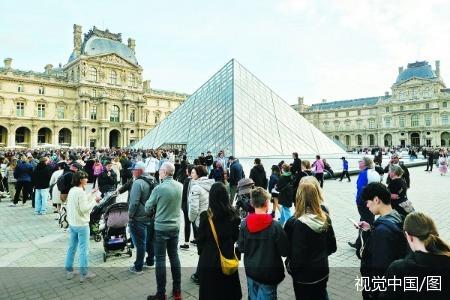
法国卢浮宫在遭遇严重盗窃案后重新开放
Zhong Guo Xin Wen Wang· 2025-10-22 23:29
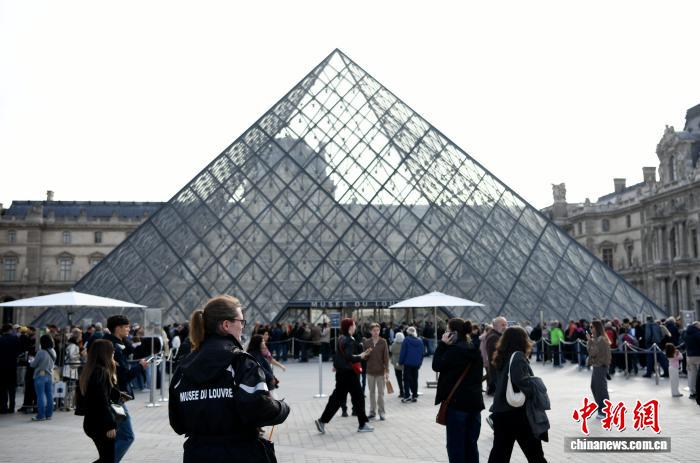
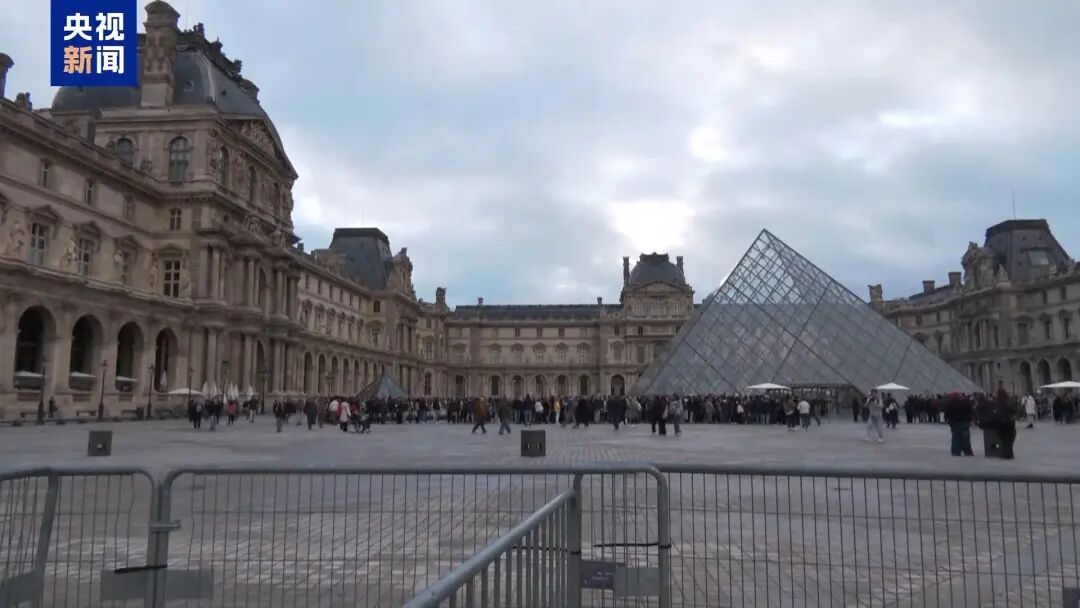
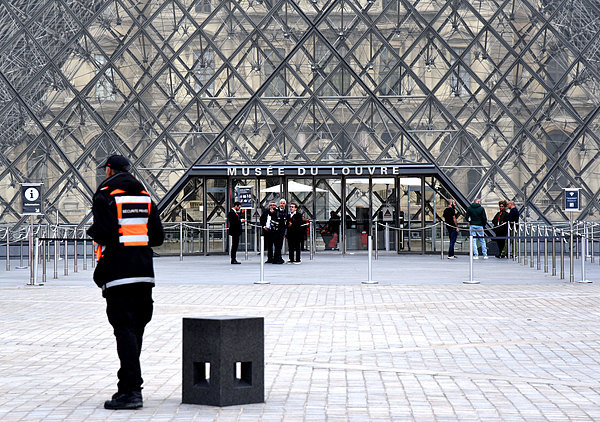
Core Points - The Louvre Museum in France reopened on October 22 after a serious theft incident, but the affected area, the "Apollo Gallery," remains closed [1][3][5] - The theft occurred on October 19, resulting in the loss of eight pieces of jewelry valued at €88 million (approximately 720 million RMB) [5] - The stolen items included jewelry belonging to historical figures such as Queen Marie Louise and Empress Eugenie, with types including necklaces, earrings, and brooches [3][5] Summary by Sections - **Incident Details** - The Louvre was closed to the public immediately following the theft, with an evacuation of visitors on the day of the incident [1][3] - The museum remained closed on October 20 and was scheduled to be closed on October 21, resuming operations on October 22 [1][3] - **Security Measures** - Despite the reopening, security measures at the Louvre have not significantly increased, with only a few additional security personnel present at the main entrance [3] - The French government, including President Macron, has called for enhanced security measures at the museum following the incident [5] - **Investigation Status** - The Paris prosecutor's office reported that the economic loss from the theft is "extraordinary," emphasizing the greater loss to France's historical heritage [5] - The theft was executed by a gang that used a vehicle to access the exhibition area directly, escaping on motorcycles after the crime [5] - The investigation is ongoing, with over a hundred investigators involved, and authorities express confidence in apprehending the suspects [5]
卢浮宫被抢文物没买保险
Bei Jing Shang Bao· 2025-10-22 09:54
Group 1 - The Louvre Museum in France was robbed of several artifacts, and due to legal regulations and insurance costs, it did not have insurance coverage for these items, meaning no compensation can be sought if the items are not recovered [1][2] - A spokesperson from the French Ministry of Culture stated that national museums are self-insured as long as the collections remain in their regular storage locations [1] - French law prohibits national museums from purchasing commercial insurance for their collections unless the items leave the museum or are loaned to other institutions [1] Group 2 - Over 60 national museums in France do not have insurance for their collections, as many items are considered "priceless," making it nearly impossible for insurance companies to assign a value [1] - The estimated economic loss from the robbery is around 88 million euros, with the loss of the artifacts being incalculable from an art perspective [1] - Criminals are likely to dismantle the stolen artifacts for secret sale on the black market, with low chances of recovery if they are sold in parts [2]
大劫案3天之后,卢浮宫重新开放!损失文物价值7.2亿元,没买保险
Mei Ri Jing Ji Xin Wen· 2025-10-22 09:16
Core Viewpoint - The Louvre Museum in Paris reopened to visitors after a robbery incident, with significant economic losses estimated at €88 million (approximately ¥720 million) due to the theft of eight pieces of jewelry, which remain missing [3][11]. Summary by Relevant Sections Incident Details - On September 19, four masked individuals executed a coordinated robbery at the Louvre, using a lift to access the museum's interior and threatening security personnel with a grinder. Within minutes, nine pieces of jewelry were stolen, including a crown belonging to Empress Eugénie, which has since been recovered [3][12]. - The stolen items include various crowns and jewelry sets associated with historical figures, such as Queen Marie-Amélie and Queen Marie-Louise [3][11]. Economic Impact - The estimated economic loss from the robbery is €88 million, which does not account for the historical value of the stolen items, deemed incalculable by authorities [3][11]. - The French Ministry of Culture stated that the stolen items were not insured due to legal restrictions, meaning that the Louvre and the French government cannot claim insurance compensation for the loss [11]. Security Concerns - Following the robbery, there has been increased scrutiny regarding the security measures at the Louvre. The French Minister of Culture defended the museum's security, stating that recent upgrades had been made [12][14]. - Historical context reveals that the Louvre has experienced multiple thefts over the past century, raising concerns about the adequacy of its security protocols [12][13]. Government Response - French President Emmanuel Macron condemned the robbery as a serious violation of cultural heritage and pledged efforts to recover the stolen items. He also announced a new initiative aimed at enhancing security at the Louvre, with an estimated budget of $930 million [14].
卢浮宫遭抢文物未投保 分析称追回可能性低
Yang Shi Xin Wen· 2025-10-22 08:44
Core Points - The Louvre Museum was robbed of several artifacts, and due to legal regulations and insurance costs, these items were not insured, meaning no compensation will be available if they cannot be recovered [1][3] - French law prohibits national museums from purchasing commercial insurance for their collections unless the items are temporarily removed or loaned to other institutions [3] - The estimated economic loss from the theft is around €88 million, with the loss of the artifacts deemed priceless [3][4] Group 1 - The French Ministry of Culture stated that national museums are self-insured as long as the collections remain in their regular storage locations [3] - Over 60 national museums in France do not have insurance for their collections, as many items are considered "priceless," making it nearly impossible for insurance companies to assign a value [3] - The robbery involved four masked individuals who used a lift to access the museum and threatened security personnel, resulting in the theft of nine artifacts, with only one item recovered so far [4] Group 2 - There is a high likelihood that the stolen artifacts will be dismantled and sold on the black market, with low chances of recovery if this occurs [3] - The stolen items included a crown belonging to Empress Eugénie, which has been recovered, while the remaining eight items are still missing [4]
卢浮宫遭抢文物未投保
Xin Hua She· 2025-10-22 08:23
Core Points - The Louvre Museum in France was robbed of several artifacts, and due to legal regulations and insurance costs, these items were not insured, meaning the French government and the museum cannot seek compensation if the items are not recovered [1][2] - French law prohibits national museums from purchasing commercial insurance for their collections unless the items leave the museum or are loaned to other institutions [1] - The estimated economic loss from the theft is around €88 million, while the cultural loss is deemed incalculable [1][2] Summary by Sections - **Insurance and Legal Framework** - The Louvre Museum's artifacts are considered national property, and the state assumes all risks related to loss, theft, or damage [1] - Over 60 national museums in France do not have insurance for their collections, as many items are considered "priceless" and difficult to value [1] - **Theft Details** - On the morning of the theft, four masked individuals used a lift to access the museum and stole nine pieces of jewelry, threatening security personnel during the operation [2] - One of the stolen items, a crown belonging to Empress Eugénie, has been recovered, while the remaining eight items are still missing [2] - **Market Implications** - There is a high likelihood that the stolen artifacts will be dismantled and sold on the black market, reducing the chances of recovery [2]
“小博物馆”靠醉人秋色出圈
Bei Jing Wan Bao· 2025-10-22 07:52
Core Insights - The "Lao She Memorial Museum" has increased its daily visitor reservation limit to 2,000, yet tickets remain highly sought after, indicating a surge in interest for smaller museums during the autumn season [1][3] - The autumn season has led to a notable increase in visitors to various museums in Beijing, with many locations showcasing unique autumn-themed attractions [2] Group 1: Visitor Trends - The Lao She Memorial Museum has become a popular destination, with visitors eager to experience the literary ambiance associated with the author and the seasonal beauty of persimmon trees [1] - Other museums, such as the Beijing Stone Carving Art Museum and Qi Baishi's former residence, are also experiencing increased foot traffic, highlighting a broader trend of autumn tourism in the region [2] Group 2: Challenges and Issues - The rise in popularity of these smaller museums has resulted in difficulties securing reservations, leading to the emergence of ticket scalpers offering to book visits for a fee [3] - The Lao She Memorial Museum has issued a reminder that it does not charge for entry and that all reservations should be made through official channels to avoid scams [3]
走进合浦汉代文化博物馆
Ren Min Wang· 2025-10-22 01:41
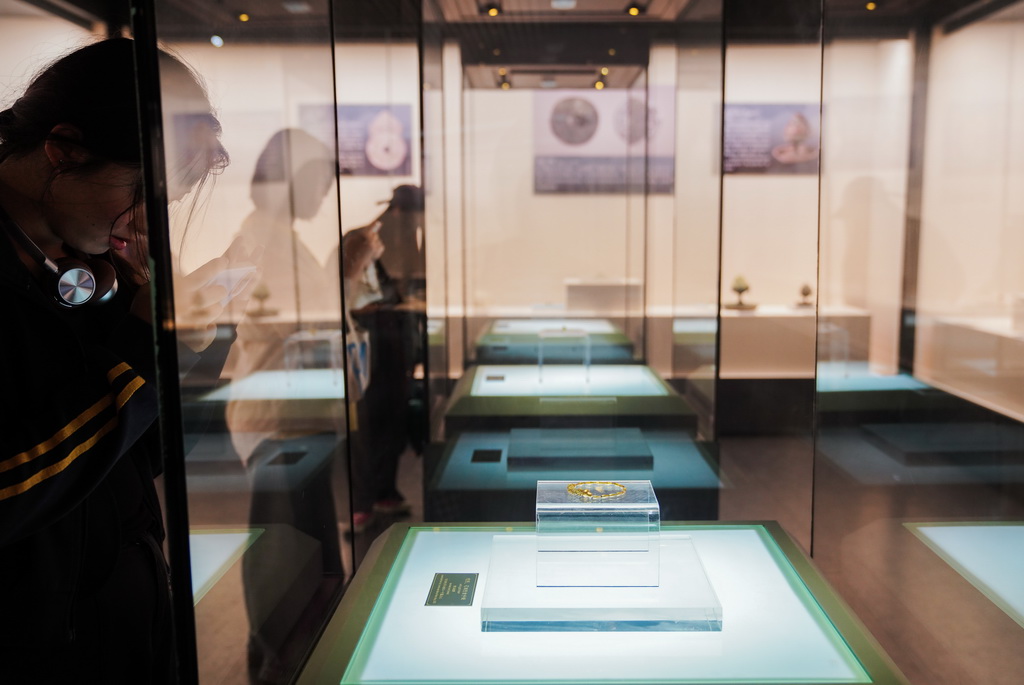
这是10月21日在广西合浦汉代文化博物馆拍摄的活链提梁铜灯。 这是10月21日在广西合浦汉代文化博物馆拍摄的铜凤灯。 10月21日,游客在广西合浦汉代文化博物馆参观。 这是10月21日在广西合浦汉代文化博物馆拍摄的陶屋。 10月21日,游客在广西合浦汉代文化博物馆参观。 10月21日,游客在广西合浦汉代文化博物馆的汉墓保护展示厅参观。 10月21日,游客在广西合浦汉代文化博物馆拍摄莲花顶。 10月21日,游客在广西合浦汉代文化博物馆参观。 10月21日,游客在广西合浦汉代文化博物馆拍摄波斯陶壶。 10月21日,游客在广西合浦汉代文化博物馆参观。 ...