职业教育

Search documents
以“融合型党建”赋能高质量发展
Xin Lang Cai Jing· 2025-12-20 22:07
Core Viewpoint - The article highlights the integration of party-building work with vocational education at Xuzhou Industrial Vocational and Technical College, emphasizing a collaborative approach to enhance industry development and educational outcomes. Group 1: Mechanism Innovation - The party branch collaborates with three leading industry enterprises to establish an integrated co-construction model, creating a "Party Building Joint Construction and Collaboration Zone" [1] - Since November 2024, 12 joint party-building activities have been conducted, involving 186 student party members, fostering a new pattern of shared resources and problem-solving [1] Group 2: Teaching Reform - The party branch leverages the dual leadership role of the party branch secretary to create a closed-loop teaching reform model, resulting in the upgrade of eight core courses and the establishment of 15 ideological demonstration courses [2] - Students have achieved notable success, including winning gold medals in national skill competitions and recognition in media for their educational outcomes [2] Group 3: Empowering Industry - The party branch focuses on transforming organizational strength into innovation and development capabilities, forming a technical team that has achieved breakthroughs in smart construction technologies [3] - In 2025, the team developed several innovative systems, including an AIoT-based integration system and a smart construction safety monitoring system, contributing to industry efficiency and digital transformation [3] Group 4: Practical Education - The party branch organizes extensive practical activities, including 35 on-site teaching and social service events, benefiting over 2,300 students [3] - Skills training programs have been conducted for over 700 employees in the construction industry, and a vocational experience center has introduced over 2,000 middle and primary school students to career opportunities [3]
长春职业技术大学成立集成电路产业学院和低空经济产业学院
Xin Lang Cai Jing· 2025-12-20 10:53
中国青年报客户端讯(中青报·中青网记者 王培莲)日前,在长春职业技术大学第八届校企合作大会 上,长春职业技术大学集成电路产业学院、低空经济产业学院揭牌成立。 大会现场,长春职业技术大学党委书记董妍在致辞中回顾了学校70多年办学历程,她说,新成立的两大 产业学院是学校深化产教融合的重要举措,将为长春市及吉林省高质量发展提供人才与智力支撑。 长春职业技术学校党委副书记、校长王军作产业学院筹建报告。他介绍了两个产业学院在治理机制、专 业布局、课程开发等方面的创新举措,以及在提升本科层次职业教育人才培养的新思路。 大会期间,上海启芯宸光智能科技有限公司创始人赵启林、长春市低空经济研究院副院长谢玲分别作 《长春建设中国芯片设计服务之都的可行性思考》《长春市低空经济发展的实践与展望》专题报告。他 们结合行业趋势、政策支持、案例实践,为校企合作提供了借鉴和实战路径,赢得了与会代表的共鸣。 来自全国各地的112家企业和科研院所代表,以及100多名学生家长参加了此次校企合作大会。 来源:中国青年报客户端 成立大会 现场。中青报·中青网记者 王培莲/摄 ...


实习期间表现优异!镇江高职校三名学子获政府表彰
Xin Lang Cai Jing· 2025-12-20 09:50
现场 扬子晚报网12月20日讯(通讯员 姚佳 王辰薇 记者 姜天圣)近日,镇江高等职业技术学校(江苏联院镇 江分院)旅游管理系收到来自镇江市文化广电和旅游局的感谢函,丰羽乡、陈睿坤、黄天锐三位同学在 岗位实习期间表现优异,为镇江市文旅宣传推广工作作出了积极贡献,获得主管部门的高度认可。 现场 在实习实践期间,三位同学分别参与到"跟着诗词游镇江"研学产品推介、江苏省城市足球联赛文旅宣传 等多项市级重要活动中。他们凭借扎实的专业知识、良好的服务意识以及出色的实践能力,在现场讲 解、活动执行与文旅推介等岗位上展现了职教学子的青春风采。其中,丰羽乡的讲解内容被收录进"中 华诗词学会百城牵手·镇江行"成果展示;陈睿坤在多项任务中灵活应对,表现全面;黄天锐在赛事服务 中热情投入,获得好评。 转自:扬子晚报 感谢函 感谢函 近年来,镇江高职校坚持"产教融合、实践育人",积极对接地方产业,与多家文旅单位共建实习基地, 将真实项目、真实岗位融入人才培养全过程。此次学生获得表彰,正是该校持续推进教育教学改革、强 化学生职业素养与综合能力培养的生动体现。 ...
玩转技能促消费!广东24所技工院校联手打造文明集市
Nan Fang Nong Cun Bao· 2025-12-19 20:36
玩转技能促消 费!广东24所技 工院校联手打造 文明集市_南方 +_南方plus 岁末的广州北京 路商圈,千年商 道与岭南风情交 相辉映。12月19 日至28日,广东 24所技工院校联 手打造的广东省 技工院校文明集 市展区(下称技 工院校展区)正 式亮相。 作为广东首个以 文明实践为基 底,以惠民生、 促消费为目标的 集市活动,文明 集市促消费系列 活动集文化惠 民、文旅推介、 消费促进、技能 惠民于一体。技 工院校展区则紧 扣"匠心点亮生 活,技能促进消 费"主题,以"文 创雅集、非遗留 韵、粤菜师傅、 山水农情、交流 互动"五大板块 为载体,创新打 造集产教融合实 践、非遗活态传 承、城乡资源对 接、消费场景升 级于一体的特色 窗口。 一展尽享非遗乡 味"双丰收" 工艺大师展位 上,掌画、榄 雕、蛋雕等多个 领域的艺术瑰宝 集中呈现;指尖 翻飞,河源技师 学院师生用青春 创意晕染出扎染 的蓝白纹路;广 州市轻工技师学 院打造簪花互动 区,市民争相试 戴雅致造型。 在"传承不泥 古、创新不离 宗"的理念中, 众多参展院校将 广绣、广彩、新 会葵艺等非遗元 素与现代审美、 日常需求相结 合,推出家居用 品、 ...

服务社会获赞誉 开放与治理齐进步
Xin Lang Cai Jing· 2025-12-19 20:27
Core Insights - Guiyang Vocational and Technical College has achieved significant development in the past five years, enhancing its educational quality and overall influence, thereby contributing to the high-quality development of vocational education [1] Group 1: Social Service Achievements - The college has made comprehensive innovations in social service, enhancing its research capabilities with 282 research projects implemented and 124 research topics at national, provincial, and municipal levels [2] - The college has trained over 40,000 individuals in various skills, with 3,436 students enrolled in continuing education programs [2] - The college has actively participated in rural revitalization, sending 15 staff members to assist over 10 villages and helping 43 impoverished students secure employment [2] Group 2: Internationalization Efforts - The college has deepened international cooperation, hosting the China-ASEAN Education Exchange Week for 13 consecutive years and establishing four overseas training stations [3] - It has developed international textbooks and contributed to the formulation of 11 foreign vocational education standards, enhancing its global influence [3] - The college has been recognized as a model for international vocational education in Guizhou Province, receiving visits from high-profile international officials [3] Group 3: Governance and Quality Improvement - The college has strengthened its governance structure, implementing a decision-making system and enhancing faculty satisfaction through improved compensation policies [4] - It has made significant progress in digital transformation, establishing a comprehensive information system and being recognized as a national benchmark for vocational education information technology [4] - Infrastructure improvements have been made, including the completion of new facilities and upgrades to existing ones, addressing previous shortcomings in educational conditions [4]
中公教育科技股份有限公司第七届董事会第八次会议决议公告
Shang Hai Zheng Quan Bao· 2025-12-19 19:37
Group 1 - The company held its 8th meeting of the 7th Board of Directors on December 19, 2025, in Beijing, with all 7 directors present, complying with relevant laws and regulations [2][3]. - The board unanimously approved the appointment of Liu Xiang as the vice president, effective from the date of the meeting until the end of the current board's term [3][8]. - Liu Xiang has extensive experience in securities investment, asset management, and corporate management, having worked for various prestigious companies and institutions [9]. Group 2 - The company reported a total of 1,471 new litigation and arbitration cases from November 4, 2025, to December 18, 2025, with a total amount involved of 81,111,413.65 yuan, representing 11.20% of the net assets attributable to shareholders for the year 2024 [11][12]. - Among the new cases, there is a significant lawsuit involving an amount exceeding 10 million yuan related to a construction project [13]. - The company confirmed that there are no other undisclosed significant litigation or arbitration matters as of the announcement date [14].

中公教育:新增累计诉讼、仲裁案件共1471件,涉案金额合计8111.14万元
Xin Lang Cai Jing· 2025-12-19 10:24
Group 1 - The company announced that from November 4, 2025, to December 18, 2025, it and its subsidiaries have accumulated a total of 1,471 new litigation and arbitration cases [1] - The total amount involved in these cases is approximately 81.11 million yuan, which accounts for 11.20% of the company's audited net assets attributable to shareholders for the fiscal year 2024 [1]
——海外消费周报(20251212-20251218):海外教育:景气与困境反转交织,投资机会纷呈——教育行业26年投资策略-20251219
Shenwan Hongyuan Securities· 2025-12-19 09:29
Group 1: Higher Education Sector - The higher education sector is expected to see a reversal of difficulties due to a combination of bottoming fundamentals and policy advancements, with a focus on improving educational quality and encouraging the expansion of high-quality private colleges [5][6] - The reintroduction of profit-oriented classification management in Hunan Province in 2025 may serve as a pilot for nationwide implementation, providing a stable policy environment for private colleges to expand and meet the growing demand for higher education [5][6] - Key indicators of educational quality, such as student-to-teacher ratios and per-student funding, have met standards after five years of increased investment, suggesting that the investment cycle is peaking and operational efficiency in higher education companies is likely to recover [5][6] - Companies to watch in this sector include Yuhua Education, Zhongjiao Holdings, New Higher Education, China Kepei, Neusoft Ruixin, Xijiao International Holdings, and Zhonghui Group [5][6] Group 2: Vocational Education Sector - The demand for vocational training is surging, driven by an increasing number of university graduates and high school students entering the labor market, leading to a projected market size of 80 billion yuan in 2025 with a penetration rate of only 5% [6][7] - The youth unemployment rate, particularly among those aged 16 to 24, is higher than the urban average, indicating a growing need for vocational skills training [6][7] - Companies to focus on in the vocational education sector include China Oriental Education and Fenbi [6][7] Group 3: Education Industry Trends - The education industry has undergone significant changes due to the "double reduction" policy, resulting in a 96% reduction in capacity in the academic training sector, with a limited number of operational licenses being redistributed [7] - The shift towards competency-based training is gaining momentum, with institutions leveraging their operational qualifications to expand their market share through non-academic training services [7] - The industry is moving towards a "franchise" model, which is expected to enhance revenue and profit growth for compliant institutions [7] Group 4: Investment Recommendations - The report recommends focusing on Hong Kong-listed vocational education companies, particularly China Oriental Education, which is adapting its operational strategy to cater to the needs of high school graduates [9] - In the higher education sector, the potential reintroduction of profit-oriented options is expected to enhance the revenue-sharing certainty for private colleges, with companies like Yuhua Education, Zhongjiao Holdings, and China Kepei being highlighted for their growth potential [9] - The report also suggests monitoring Chinese education companies listed in the US, such as New Oriental, TAL Education, and others, which are showing strong enrollment data [9]

教育行业26年投资策略:海外教育:景气与困境反转交织,投资机会纷呈
Shenwan Hongyuan Securities· 2025-12-19 09:11
Group 1: Overview of the Education Industry - The report highlights a potential recovery in the higher education sector, driven by improved quality standards and the reintroduction of profit-oriented licenses, particularly in Hunan province, which may serve as a pilot for national implementation [2][7] - The report anticipates that the operational efficiency of higher education companies will gradually improve as the investment cycle peaks, leading to a dual benefit of profit recovery and valuation enhancement in the sector [2][7] Group 2: Vocational Education Demand - There is a significant increase in demand for vocational training due to the rising number of young people entering the labor market, particularly high school graduates and college dropouts, which is expected to boost the vocational training market to a scale of 80 billion yuan in 2025, with a penetration rate of only 5% [3][8] - Companies such as China Oriental Education and Fenbi are recommended for investment as they adapt their strategies to meet the growing demand for skills training [3][8] Group 3: Training Industry Dynamics - The training industry has undergone a major restructuring, with a 96% reduction in capacity due to regulatory changes, leading to a supply shortage that has not yet improved significantly [4][9] - The report suggests that the industry is transitioning from a fully competitive market to a "franchise" model, which is expected to accelerate capacity expansion and revenue growth for compliant institutions [4][9] Group 4: Investment Recommendations - The report recommends focusing on companies in the higher education sector such as Yuhua Education, Zhongjiao Holdings, and China Kapei, as well as vocational education companies like New Oriental and TAL Education, due to their potential for growth and recovery in profitability [12][27] - Specific investment opportunities are highlighted, including the potential for profit-oriented licenses to enhance returns for private higher education institutions [12][27]
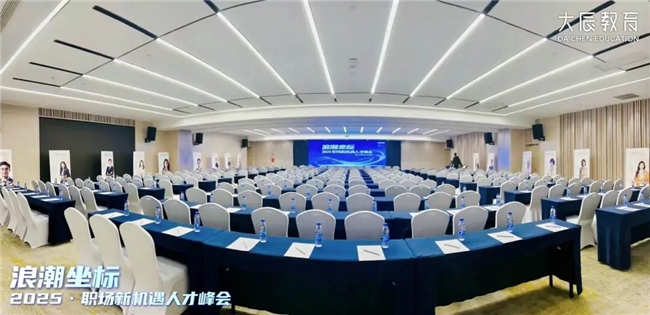
大辰教育2025职场新机遇人才成长峰会深圳收官站圆满落幕
Jin Tou Wang· 2025-12-19 08:27
Core Insights - The summit focused on the core development dynamics of the Guangdong-Hong Kong-Macao Greater Bay Area, addressing key topics such as AI, hard technology, low-altitude economy, business strategy, and personal branding [1][28] - The event aimed to provide clear industry maps, forward-looking talent demand analysis, and actionable growth paths for professionals and entrepreneurs amidst industrial transformation [1][28] Group 1: Industry Trends and Opportunities - Lisa emphasized the importance of aligning personal career development with national strategies and industrial cycles, establishing a strategic foundation for the summit [3] - Five key high-growth sectors identified for the next five years include AI revolution, embodied intelligence, low-altitude economy, green energy, and cross-border expansion [5] - The unique positioning of Shenzhen as a national economic center and innovative city was highlighted, along with the significant career opportunities arising from its industrial clusters and leading enterprises [5] Group 2: Consumer Market Dynamics - The analysis of market homogenization and "involution" highlighted the need to create value rather than consume resources, guiding professionals to find new growth avenues [7][9] - Two strategies for breaking through the "involution" include product differentiation through technology and brave international expansion to leverage domestic capabilities in foreign markets [10] Group 3: AI Industry Evolution - The evolution of AI is categorized into three stages: technological evolution in 2023, application evolution in 2024, and organizational evolution in 2025, indicating a deeper integration of AI into business processes [12][14] - Key challenges in AI implementation include unstructured knowledge, lengthy business processes, and a lack of collaborative AI talent [15] - Future talent shortages are predicted in roles such as Agent Owner, AI product managers, AI knowledge engineers, and workflow designers [15] Group 4: Low-Altitude Economy - The potential of China's low-altitude economy is underscored, with a projected market size of 2 trillion yuan by 2030, indicating a significant growth opportunity [18] - The Greater Bay Area's competitive advantages in low-altitude economy development were discussed, highlighting the collaborative strengths of cities like Shenzhen, Guangzhou, Zhuhai, and Dongguan [18] Group 5: Personal Branding and Career Development - The importance of managing personal brand and visibility in the workplace was emphasized, with strategies for showcasing value both internally and externally [23][26] - Practical methods for personal branding include effective communication in meetings and systematic management of social networks to enhance professional visibility [26] Group 6: Conclusion and Future Outlook - The summit concluded with a call for individuals to adapt to changes and seize opportunities in the evolving landscape of technology and industry [28] - The Greater Bay Area is positioned as a vibrant hub for innovation, inviting ambitious individuals to engage and learn in this dynamic environment [28]