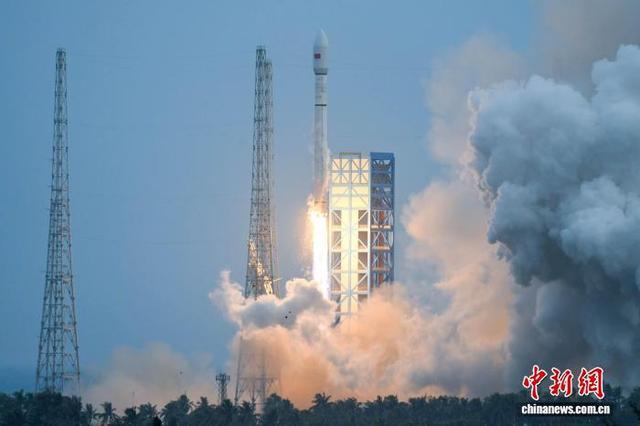
卫星制造与发射

Search documents
风云三号H星成功发射 首次实现百公里幅宽高精度全球温室气体精细探测
Ren Min Ri Bao· 2025-09-28 00:01
Group 1 - The core point of the article is the successful launch of the Fengyun-3H satellite, which will enhance China's capabilities in weather forecasting, climate change monitoring, and disaster prevention [1] - The Fengyun-3H satellite is equipped with 9 payloads and will provide 70 products across 6 categories, including cloud radiation, sea surface, land surface, atmospheric parameters, atmospheric components, and space weather [1] - China has launched a total of 22 Fengyun meteorological satellites, with 9 currently operational, providing data services to 133 countries and regions [1] Group 2 - The successful launch of 11 low-orbit satellites for satellite internet was conducted using the Long March 6 modified rocket, marking another achievement in China's satellite deployment efforts [2]
首次实现百公里幅宽高精度全球温室气体精细探测
Ren Min Wang· 2025-09-27 21:56
Core Points - China successfully launched the Fengyun-3H satellite on September 27, 2023, at 3:28 AM using the Long March 4B rocket, marking a significant advancement in meteorological satellite capabilities [1] - The Fengyun-3H satellite will replace the Fengyun-3D satellite, which has been operational for nearly 8 years, and will work in conjunction with other Fengyun satellites to enhance observational capabilities [1] - The Fengyun-3H is equipped with 9 payloads and will provide 70 products across 6 categories, significantly improving China's capabilities in weather forecasting, climate change monitoring, and disaster prevention [1] - As of now, China has launched a total of 22 Fengyun meteorological satellites, with 9 currently operational, providing data services to 133 countries and regions [1] - China is the only country globally operating a network of meteorological satellites in various orbits, including morning, afternoon, and inclined orbits [1] Additional Launch - On the same day, China successfully launched 11 low-orbit satellites for satellite internet using the Long March 6 rocket at 8:40 PM, completing the mission successfully [2]
“风云”可测,这颗卫星能观“气象万千”
Xin Hua She· 2025-09-27 12:56
Core Viewpoint - The successful launch of the Fengyun-3H satellite enhances China's capabilities in weather forecasting, atmospheric chemistry, and climate change monitoring, contributing significantly to global climate change efforts [1][2][3] Group 1: Satellite Features - Fengyun-3H satellite weighs approximately 2780 kilograms and operates at an altitude of 830 kilometers in a sun-synchronous orbit with an inclination of 98.7 degrees [1] - It is equipped with nine advanced remote sensing instruments, including a high-spectral greenhouse gas monitoring instrument, which will enable high-precision global greenhouse gas detection with a 100-kilometer width [1][2] Group 2: Monitoring Capabilities - The satellite will monitor ice and snow cover, sea surface temperature, and provide remote sensing information necessary for short-term climate forecasting and climate change assessment [2] - It will enhance the ability to respond to natural disasters and environmental issues, improving comprehensive capabilities for weather disaster prevention and mitigation [2] Group 3: Global Contribution - China operates a unique multi-satellite network for near-Earth meteorological observation, providing a complete global observation network with operational satellites in various orbits [3] - The Fengyun-3H satellite will replace the Fengyun-3D satellite in the afternoon monitoring role and work in conjunction with other operational satellites to ensure high-quality data support for meteorological services [3]
最新到太空“上岗”的风云三号08星,有多牛?
Xin Hua She· 2025-09-27 08:36
Core Insights - The successful launch of Fengyun-3 08 satellite enhances China's meteorological capabilities, with significant improvements in data update frequency and forecasting accuracy [2][3] Group 1: Launch Details - Fengyun-3 08 satellite was launched on September 27 at 3:28 AM using Long March 4B rocket from Jiuquan Satellite Launch Center [2] - The satellite weighs approximately 2780 kg and operates in a sun-synchronous orbit at an altitude of 830 km with an inclination of 98.7 degrees [2] - This satellite is the eighth in the Fengyun-3 series and the 22nd successful launch of Fengyun meteorological satellites [2] Group 2: Technological Advancements - Fengyun-3 08 is equipped with nine remote sensing instruments, including a medium-resolution spectral imager and a hyperspectral greenhouse gas monitor, enabling high-precision global greenhouse gas detection [2][3] - The satellite's spectral calibration precision reaches the picometer level, allowing for comprehensive atmospheric remote sensing [3] Group 3: Operational Enhancements - The satellite will reduce data update time from 6 hours to 4 hours and extend weather forecasting time by approximately 24 hours [3] - Forecasting accuracy is expected to improve by about 3%, and disaster monitoring efficiency will nearly double [3] - Fengyun-3 08 will work in conjunction with Fengyun-3 05, 06, and 07 satellites to achieve 100% global observation coverage [3]

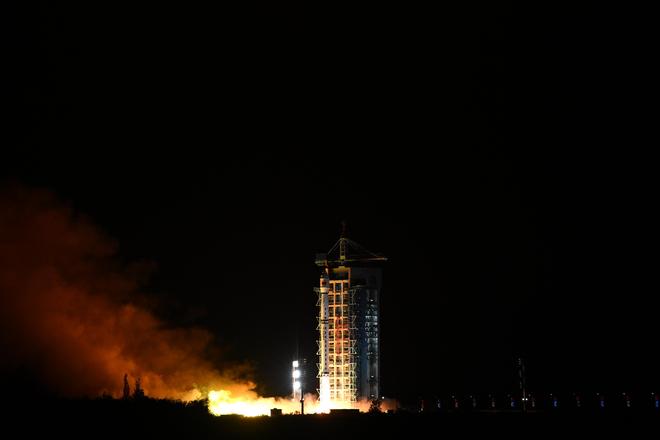
最新到太空“上岗”的风云三号08星 有多牛?
Xin Hua She· 2025-09-27 08:34
Core Insights - The successful launch of Fengyun-3 08 satellite enhances China's meteorological capabilities, including improved data update frequency and forecasting accuracy [3][4] Group 1: Launch Details - Fengyun-3 08 satellite was launched on the 27th at 3:28 AM from Jiuquan Satellite Launch Center using Long March 4B rocket [3] - The satellite weighs approximately 2780 kg and operates in a sun-synchronous orbit at an altitude of 830 km with an inclination of 98.7 degrees [3] Group 2: Technological Advancements - The satellite is equipped with nine remote sensing instruments, enabling high-precision global greenhouse gas detection with a 100 km width [3][4] - It features high quantitative accuracy and spectral calibration precision at the picometer level, allowing comprehensive atmospheric remote sensing [4] Group 3: Operational Enhancements - Data update frequency will decrease from 6 hours to 4 hours, while weather forecasting time will extend by approximately 24 hours [4] - Forecasting accuracy is expected to improve by about 3%, and disaster monitoring efficiency will nearly double [4]

我国第二代极轨气象卫星风云三号08星成功发射
Jing Ji Guan Cha Wang· 2025-09-27 01:22
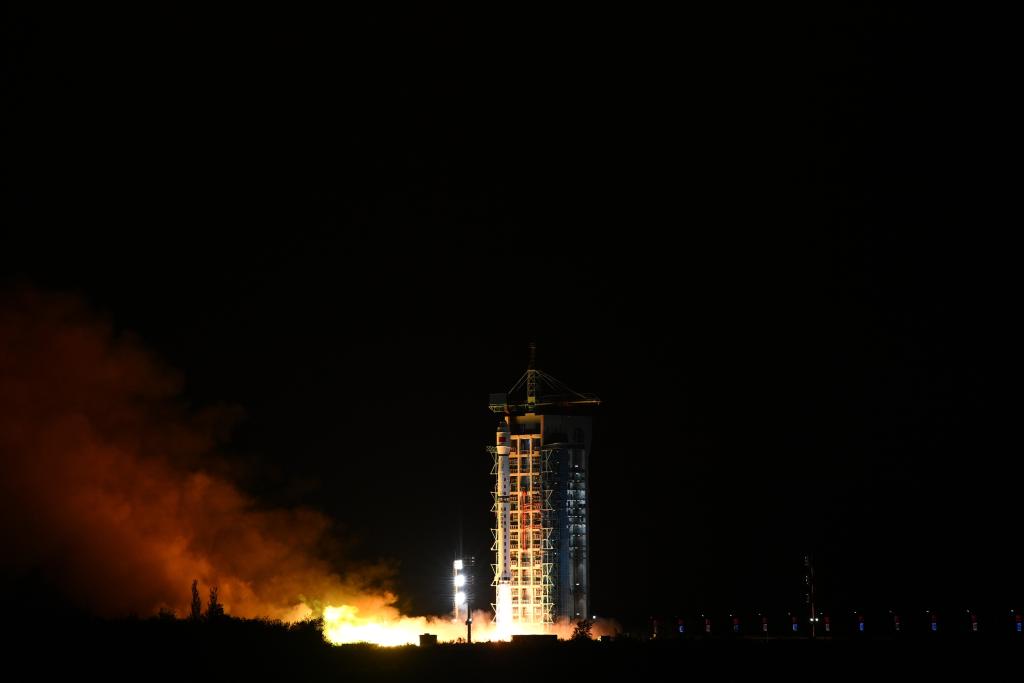
Core Points - The successful launch of the Fengyun-3 08 satellite (H star) on September 27, 2025, marks a significant achievement for China's space infrastructure development [1] - The satellite is equipped with nine remote sensing payloads, including a medium-resolution spectral imager and a microwave imager, focusing on climate change monitoring and enhancing weather forecasting capabilities [1] Company and Industry Summary - The Fengyun-3 08 satellite is part of China's long-term development plan for civil space infrastructure, aimed at improving global numerical weather forecasting and disaster prevention capabilities [1] - The China National Space Administration (CNSA) is responsible for the overall management and coordination of the satellite project, while the China Meteorological Administration oversees ground and application system construction [1] - China Aerospace Technology Corporation's Shanghai Academy of Spaceflight Technology is in charge of the satellite and launch vehicle system development [1] - This mission represents the 596th launch of the Long March series of launch vehicles, highlighting the ongoing advancements in China's space capabilities [1]

长二丙火箭发射卫星互联网技术试验卫星看点解析
Xin Hua She· 2025-09-18 08:30
Key Points - The successful launch of the satellite internet technology test satellite using the Long March 2C rocket marks a significant achievement in China's space endeavors [1] Group 1: Rocket Innovations - The Long March 2C rocket features a new star-arrow connection and separation device, enhancing the internal space utilization of the fairing and improving satellite separation safety, allowing for reliable and orderly multi-satellite separation [2] - The rocket employs shared inertial group technology and composite material satellite brackets, increasing payload capacity to better meet mission requirements [2] Group 2: Satellite Production - The satellite involved in this mission was developed by Galaxy Space, which has established a "cloud, edge, terminal" satellite mass production testing model, utilizing flexible island-style pulsed production line design for adaptability [3] - The production line operates at high speed, with streamlined processes for solar wings, cables, and other components, aiming to standardize and scale satellite production akin to automobile manufacturing [3] Group 3: Core Technology Innovations - The satellite is equipped with a lightweight, rollable, high aspect ratio flexible solar wing, optimizing weight and volume while providing substantial power [4] - The solar wing can be compactly rolled up for launch, minimizing its impact on the satellite's size and weight, and enabling multi-satellite stacked launch modes to reduce mission costs [4] Group 4: Commercial Space Development - The rapid development of global satellite internet necessitates advancements in key technologies such as space computing and fully flexible solar wings, which are crucial for accelerating satellite constellation construction [5] - Future satellite networks are expected to provide seamless connectivity in traditionally underserved areas, enhancing global communication and supporting the development of 6G networks [5]
21天5次发射,中国星网为什么这么急?
Guan Cha Zhe Wang· 2025-08-20 00:20
Core Viewpoint - China's Starlink program is racing against time to deploy a massive constellation of satellites, with a goal of launching approximately 13,000 satellites by 2034, driven by international regulatory deadlines set by the International Telecommunication Union (ITU) [1][3][5] Group 1: Launch Strategy and Goals - China has executed five satellite launches in just 21 days, marking an unprecedented pace in its satellite deployment efforts [1][10] - The ITU has established strict timelines for satellite deployment, requiring at least one satellite in orbit within seven years, 10% of the total by the ninth year, 50% by the twelfth year, and 100% by the fourteenth year [3][5][6] - By 2029, China needs to have approximately 1,300 satellites in orbit, with a significant ramp-up in launch frequency required to meet these targets [11][12] Group 2: Competitive Landscape - SpaceX's Starlink has set a high bar with its rapid deployment of thousands of satellites, creating pressure on other competitors like China's Starlink and Amazon's Project Kuiper [6][9] - Amazon's Kuiper project, aiming to deploy 3,200 satellites, is also under time constraints, having launched over 100 satellites recently [7][9] - The competitive environment is characterized by a race to secure frequency and orbital resources, with the potential for significant consequences for those who fail to meet deployment milestones [6][18] Group 3: Challenges and Solutions - China's current strategy involves multiple rocket types being launched in parallel to meet immediate deployment needs, but this approach may not be sustainable long-term due to complexity and cost pressures [11][15] - To meet future demands, China must increase the payload capacity of its rockets and establish a more efficient launch cadence, potentially moving towards reusable rocket technology [12][14][15] - The development of the Long March 12 rocket, which may evolve into a reusable platform, is seen as a critical step in enhancing China's launch capabilities [14][15] Group 4: Regulatory Environment and Implications - The ITU's deadlines are not just formalities; failure to meet them could result in reduced frequency allocations or even project termination [18][19] - The case of Rivada, which received a waiver despite not launching any satellites, illustrates that demonstrating credible progress can provide some leeway in regulatory compliance [18][19] - For China, the focus must be on consistent satellite launches and production capabilities to avoid reliance on potential regulatory leniency [19]
我国“海哨二号”卫星发射成功
Yang Shi Xin Wen· 2025-08-19 09:10
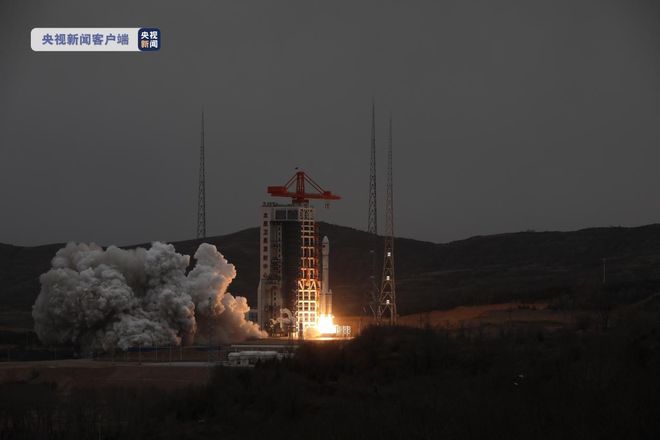
Core Viewpoint - The successful launch of the "AIRSAT-05 satellite/Marine Sentinel-2" marks a significant advancement in China's satellite technology, enhancing capabilities in remote sensing and data collection for various applications [1][3]. Group 1: Satellite Specifications - The satellite's main payload is an X-band multi-polarization synthetic aperture radar, which supports multiple operational modes and achieves an imaging resolution better than 1 meter [3]. - It has a maximum observation width exceeding 300 kilometers and includes an intelligent on-orbit processing module for high-quality radar imaging and intelligent extraction of ice and marine information [3]. Group 2: Applications and Impact - The satellite is part of the AIRSAT constellation developed by China Satellite Technology Group Co., Ltd., and will significantly support applications in marine environment and safety, polar scientific research and shipping, land resource surveys, and disaster emergency response [3]. - The satellite enables bidirectional communication between ground mobile vehicles and the satellite, greatly enhancing the timeliness of remote sensing services [3]. Group 3: Collaborative Development - The satellite was jointly developed by several institutions, including the Aerospace Information Research Institute of the Chinese Academy of Sciences, China Satellite Technology Group Co., Ltd., the Academy of Microelectronics and Nanoelectronics, and Qilu Aerospace Information Research Institute, with support from national major projects [3].
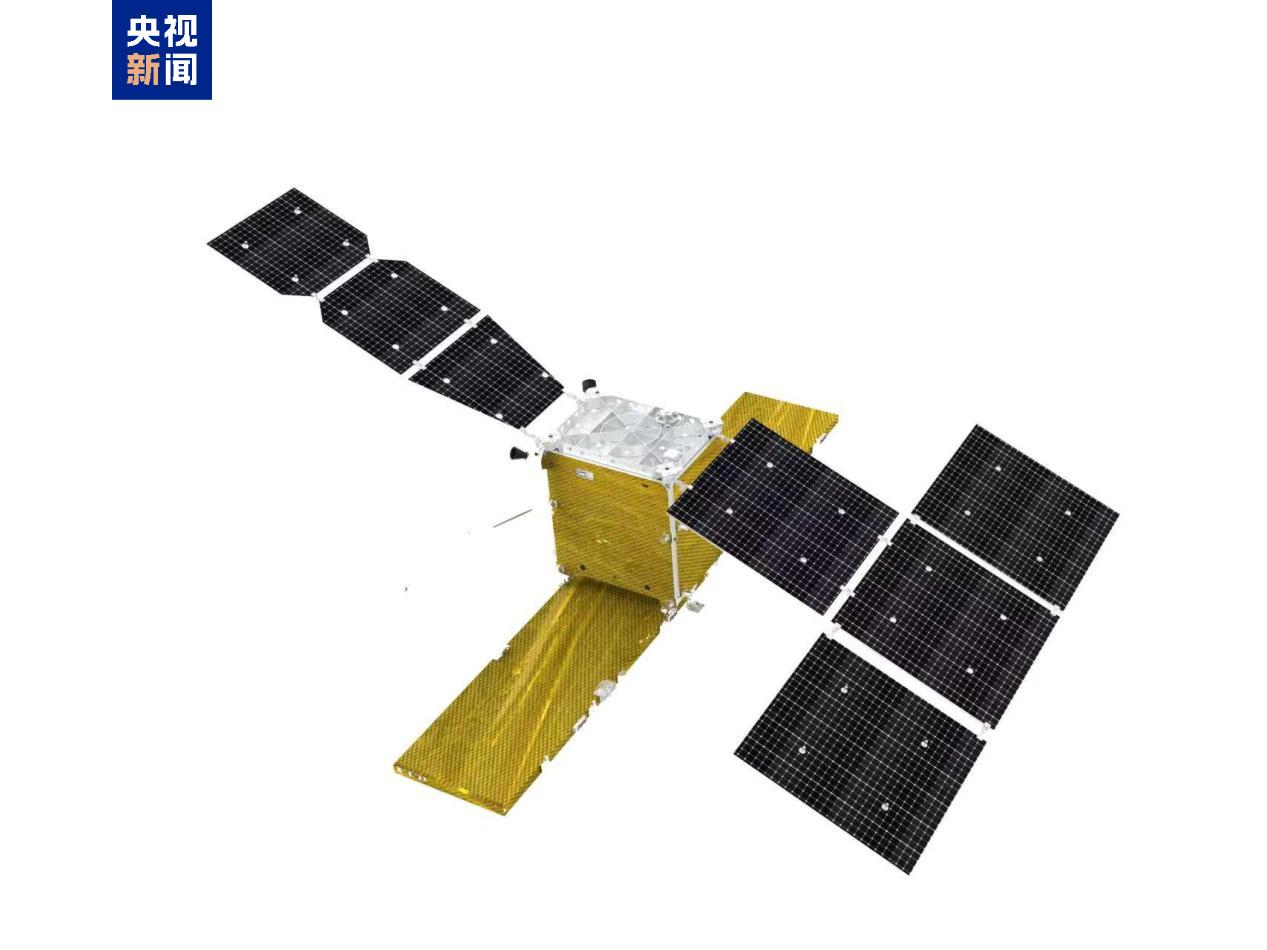
中国成功发射卫星互联网低轨07组卫星
Huan Qiu Wang Zi Xun· 2025-08-04 15:09
Core Viewpoint - China successfully launched the low Earth orbit satellite internet group 07 using the Long March 12 rocket, marking a significant achievement in its commercial space endeavors [1][3]. Group 1: Launch Details - The launch took place at 18:21 Beijing time on August 4 at the Hainan commercial space launch site [1]. - The mission was successful, with the satellites entering their designated orbits [1]. Group 2: Satellite Development - The satellites were developed by Galaxy Space, representing the first batch production of such satellites by a Chinese private commercial space company [3]. - The production utilized advanced technologies, including intelligent assembly robots and digital manufacturing systems, which reduced the satellite development cycle by 80% [3]. - The factory is capable of producing over 100 satellites annually, each weighing around 1000 kilograms [3]. Group 3: Rocket Specifications - The Long March 12 rocket, developed by the China Aerospace Science and Technology Corporation, is China's first 4-meter single-core launch vehicle [3]. - It has a near-Earth orbit carrying capacity of no less than 12 tons and a capacity of no less than 6 tons for a 700-kilometer sun-synchronous orbit [3]. - This launch marked the second flight of the Long March 12 rocket and the 587th flight of the Long March series [3].