
服装加工

Search documents
泰慕士上市三年多后拟“易主”,广州市政府将成新实控人 公司股价4月份曾收获六连板
Mei Ri Jing Ji Xin Wen· 2025-06-11 15:33
Group 1 - The core point of the article is that the supplier of Decathlon, Taimushi, is preparing for a change of control, with the new actual controller being the Guangzhou Municipal Government [1][2] - Taimushi's controlling shareholder plans to transfer control through a combination of equity transfer and voting rights waiver, with the total market value for the transfer set at 2.5 billion yuan [1][4] - The stock price of Taimushi experienced a significant increase, with a six-day limit-up period from April 10 to April 17, resulting in an approximate 80% rise [1][4] Group 2 - The controlling shareholder, Rugao Xintai Investment Co., Ltd., intends to transfer 29.99% of its shares to Guangzhou Light Industry Trade Group Co., Ltd., which will lead to a change in control [2][4] - Prior to the agreement, the actual controllers, Lu Biao and Yang Min, held a combined 70.91% of the voting rights [3] - Following the change of control, the transferring parties are required to assist Guangzhou Light Industry in increasing its stake in Taimushi through private placements within three years [4] Group 3 - Taimushi's financial performance has shown limited growth, with revenues of 742 million yuan in 2022 and 908 million yuan in the following year, while net profit decreased from 76.84 million yuan to 70.38 million yuan [5] - The company primarily provides OEM services for well-known clothing brands, including Decathlon, Semir, Anta, QUIKSILVER, and others [5][6] - Taimushi became Decathlon's first strategic partner in the global textile and apparel industry, with Decathlon orders accounting for 40% of its annual sales [6]
热搜第一!防晒衣不防晒 防晒指数随意写?最新回应来了
2 1 Shi Ji Jing Ji Bao Dao· 2025-06-09 08:26
Core Viewpoint - The investigation reveals that many sunscreen products marketed as effective do not meet national standards, leading consumers to purchase items that fail to provide adequate UV protection [2][3][5]. Group 1: Product Quality and Misrepresentation - Numerous sunscreen clothing items are being falsely advertised with claims such as "core cooling technology" and "UPF100+" despite lacking proper certification [3][5]. - A factory in Jiangxi was found selling sunscreen clothing without proper labeling, and the actual UV protection factor was not disclosed by the company [5]. - The factory's best-selling product reportedly sold over 300,000 units annually, despite its lack of compliance with safety standards [5]. Group 2: Regulatory Response - Local market supervision authorities in Jiangsu and Jiangxi have initiated immediate inspections, leading to the seizure and testing of related products, and have ordered the suspension of production and sales by the involved companies [7][9]. - Authorities are conducting special inspections of similar businesses to address any violations and protect consumer rights [9].


三无防晒衣一年卖出超30万件 江西上饶通报:责令涉事企业停售
news flash· 2025-06-08 16:54
Core Viewpoint - The report highlights the sale of over 300,000 pieces of unregulated sunscreen clothing, leading to regulatory action against the involved company in Jiangxi province [1] Company Summary - The company in question, Yiyang County Xinfeng Garment Processing Factory, was found to be selling sunscreen clothing without proper labeling, including product name, manufacturer details, and address [1] - The clothing was falsely advertised with a "UPF50+" label, but the company could not provide verification of the UV protection factor when questioned [1] Industry Summary - The local market supervision authority has initiated a crackdown on similar businesses, conducting inspections and product seizures to ensure compliance with consumer protection laws [1] - The authorities emphasized the importance of maintaining consumer rights and will take legal action against any identified violations in the industry [1]
重生的TA | 千万订单“复活”!AI虚拟人,拯救宁波老厂
新浪财经· 2025-05-25 00:40
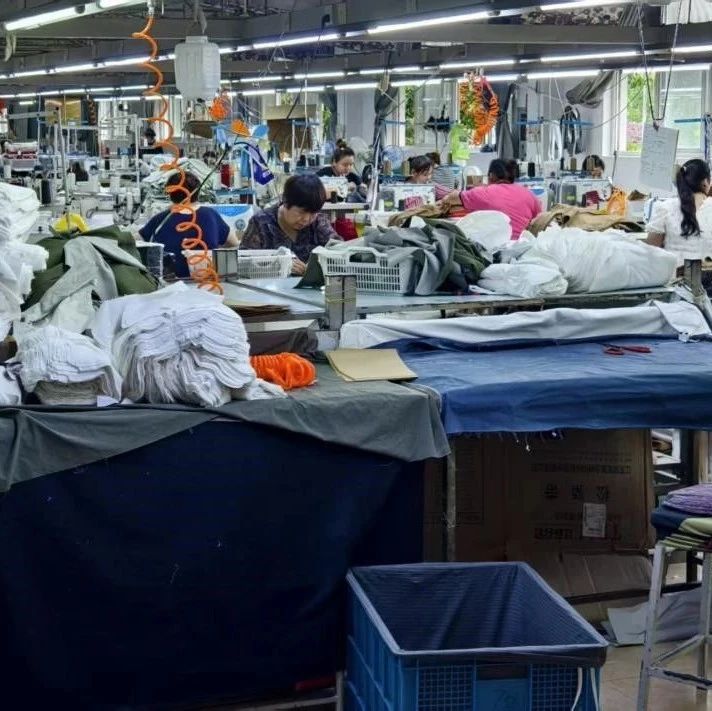
Core Viewpoint - The article highlights the transformation of a clothing factory in Ningbo, which faced challenges due to tariffs but found a solution through AI digital marketing, leading to a recovery in orders and a strategic shift towards both domestic and international markets [2][10]. Group 1: Company Overview - The clothing factory, established in 2002, has 23 years of experience in foreign trade garment processing, with an annual order volume reaching millions, and approximately 65% of its exports going to the United States [2][4]. - The factory faced significant losses, estimated at over ten million, due to canceled orders and production halts caused by tariff issues [5]. Group 2: Digital Transformation - The turning point for the factory came from utilizing AI digital humans for live streaming sales, which allowed for 24/7 automated selling without the need for a physical team, significantly reducing costs and time [3][6]. - The collaboration with Baidu provided the factory with favorable conditions, such as 180 days of commission-free product listings and zero-cost registration, enabling a quick entry into the digital sales space [6]. Group 3: Market Strategy - The factory is adapting to the domestic market's requirements, which differ from foreign trade, by hiring a professional live streaming team and combining digital and human elements to attract consumers [8]. - Orders have recovered to about 80-90% of last year's levels, and the company is now looking to expand into more overseas markets while strengthening its domestic presence [10]. Group 4: Industry Events - The article mentions the upcoming "Good Life Expo," aimed at stimulating consumer activity and supporting quality brands, which will take place from June 27 to 29 in Beijing [12].
塑造东北地区对外开放新优势
Jing Ji Ri Bao· 2025-05-20 22:12
Core Viewpoint - Dalian Jinpu New Area plays a crucial role in the economic development of Northeast China, serving as a strategic hub for international trade and cooperation in Northeast Asia, with significant advancements in logistics and infrastructure [1][4]. Strategic Positioning - Dalian Jinpu New Area is designated as a strategic high ground for Northeast Asia cooperation, a growth pole for regional revitalization, and a pilot area for innovation and urbanization [1]. - The area hosts the China (Liaoning) Free Trade Zone, with the Dalian section occupying half of its total area, enhancing its competitive edge [1]. Logistics and Infrastructure Development - The upgrade of the "Dalian-Changchun" intercity freight train service to a rapid freight service demonstrates the area's logistics capabilities, providing efficient transport for businesses [1]. - Dalian Port is enhancing its logistics infrastructure, integrating port, rail, and inland services to support container transport, with projected business volume growth of 18% in 2024 [2][4]. Trade and Investment Performance - In 2024, Dalian Jinpu New Area reported 3,665 enterprises engaged in import and export, achieving a total import and export value of 227.4 billion yuan, accounting for 51% of Dalian's total [4]. - The area has attracted 2,423 foreign-invested enterprises, with significant contributions from Japanese and Korean companies [4]. Industrial Development - The manufacturing sector in Dalian Jinpu New Area is robust, with 1,042 industrial enterprises generating a total output value of 385.5 billion yuan, representing 45.3% of Dalian's industrial output [10]. - The area is focusing on upgrading traditional industries and fostering emerging sectors, with a notable increase in high-tech and specialized enterprises [10]. Institutional Innovation - Dalian Jinpu New Area is implementing innovative customs and tax policies to facilitate trade, such as the new model for managing clothing processing and the recycling of lithium battery packaging [6][7]. - The area has introduced over 700 institutional innovations since the establishment of the Free Trade Zone, aimed at enhancing the business environment and promoting high-quality industrial development [7][8]. Collaborative Development - There is a call for establishing a long-term mechanism for coordinated development between Dalian Jinpu New Area and traditional industrial cities to enhance regional integration and global competitiveness [12].
大厂AI工具派上大用场!助力外贸企业稳订单,数字人24小时直播、多语种智能客服、应用层智能体……
Zheng Quan Shi Bao· 2025-04-20 06:37
Core Insights - The article highlights the challenges faced by small and medium-sized foreign trade enterprises in China due to sudden tariffs, particularly from the U.S., which constituted 65% of their customer base. Companies are seeking new paths to overcome these challenges, with AI technology emerging as a crucial tool for transformation and market expansion [1][2]. Group 1: AI Adoption and Transformation - Companies like a Ningbo-based clothing factory are leveraging AI technologies, such as Baidu's digital human live streaming, to transition from traditional foreign trade to e-commerce, enabling them to quickly tap into domestic and non-U.S. markets [1][2]. - Baidu's AI support plan aims to assist 1 million enterprises with free digital human live streaming, significantly reducing operational costs by over 80% and facilitating a shift from export to domestic sales [3][10]. - Alibaba's international platform has seen substantial growth in non-U.S. markets, with France experiencing a 125% increase in orders, showcasing the effectiveness of AI in enhancing communication and operational efficiency [4][5]. Group 2: Market Expansion Strategies - AI technologies are enabling foreign trade companies to optimize their operations across various markets, including Europe, Australia, and Southeast Asia, by providing multilingual support and tailored marketing strategies [2][6]. - The use of AI in customer service has led to a 30% increase in transaction volumes for companies, allowing them to respond to inquiries instantly and improve customer engagement [7][8]. - Companies are diversifying their customer bases, with some reporting that the U.S. market now only accounts for 10% of their overall clientele, indicating a strategic shift towards other international markets [8]. Group 3: Future Prospects and Innovations - AI is expected to play a significant role in predicting market trends, optimizing pricing strategies, and enhancing supply chain management for foreign trade enterprises [11]. - The integration of AI tools is seen as a vital step in the ongoing transformation of the foreign trade sector, with companies increasingly relying on technology to navigate challenges and seize new opportunities [6][10].


