东北老工业基地振兴

Search documents
振兴东北老工业基地,绿氢+绿色燃料是否靠谱?
势银能链· 2026-03-27 03:39
Core Viewpoint - The article emphasizes the importance of "green hydrogen + green fuel" as a sustainable development path for revitalizing Northeast China's old industrial base, highlighting collaborative efforts among the three provinces of Heilongjiang, Jilin, and Liaoning to leverage their respective resources and strengths in this transition [2][10]. Group 1: Policy and Strategic Initiatives - Jilin Province is focusing on the development of a comprehensive "green hydrogen" industry chain, aiming to establish itself as the largest "green liquid fuel supply base" in China, with plans to produce 100,000 tons of green hydrogen and 300,000 tons of green liquid fuel annually [2][3]. - Heilongjiang's "14th Five-Year Plan" outlines the development of the biomass fuel industry, targeting the production of green hydrogen, green ammonia, and green methanol, with an expected revenue of 30 billion yuan from related industries [3][4]. Group 2: Resource and Technical Challenges - The article identifies two main challenges in the sustainable development of the "green hydrogen + green fuel" model: the limited availability of biomass resources and the potential for supply shortages as production scales up [3][4]. - The reliance on biomass alone is insufficient for long-term sustainability, necessitating the integration of electric fuel production to enhance resource efficiency and reduce carbon emissions [4][5]. Group 3: Collaborative Development and Projects - The article highlights the collaborative efforts among the three provinces, showcasing various projects that integrate biomass and electric fuel production, such as the Tianying wind-solar-hydrogen ammonia project, which exemplifies the synergy between renewable energy and biomass resources [6][7]. - Jilin's notable projects include the world's largest green ammonia project, which produces 32,000 tons of green hydrogen and 180,000 tons of green ammonia annually, and has received international certification for its products [8][9]. Group 4: Future Outlook and Economic Impact - The article concludes that the "green hydrogen + green fuel" strategy is not only feasible but also essential for the economic revitalization of Northeast China, providing a robust framework for sustainable growth and new economic opportunities [10]. - The integration of electric fuel production with existing biomass resources is expected to create a billion-level green hydrogen and ammonia industry cluster, enhancing the region's economic landscape [6][9].


辽宁9个地区和单位入选第十二批全国民族团结进步示范区示范单位
Xin Lang Cai Jing· 2026-01-30 14:29
Core Viewpoint - The National Ethnic Affairs Commission has announced the naming of the 12th batch of national ethnic unity and progress demonstration units, with a total of 488 units recognized, including 9 from Liaoning Province [1]. Group 1: Recognized Units - The recognized demonstration units from Liaoning Province include: Benxi City, Xinfu District of Fuxin City, Kuandian Manchu Autonomous County, Guiyunhua Manchu Township in Zhuanghe City, Dongsheng Community in Shenyang City, Chuangye Community in Haizhou District of Fuxin City, Chaoyang Niuheliang Site Museum, Helong Township Central Primary School in Donggang City, and Fengguo Temple Management Office in Yixian County [1]. Group 2: Objectives and Achievements - Liaoning Province has integrated the creation of ethnic unity and progress into the broader revitalization and development strategy of the region, emphasizing the characteristics of the old industrial base and red cultural resources [1]. - The province has cultivated a number of national and provincial-level ethnic unity and progress demonstration units, contributing to the strong spiritual motivation for comprehensive revitalization in the new era [1].
1860年丢的海参崴,如今成中国中转港口,将带来一前所未有的机遇
Sou Hu Cai Jing· 2025-12-09 10:19
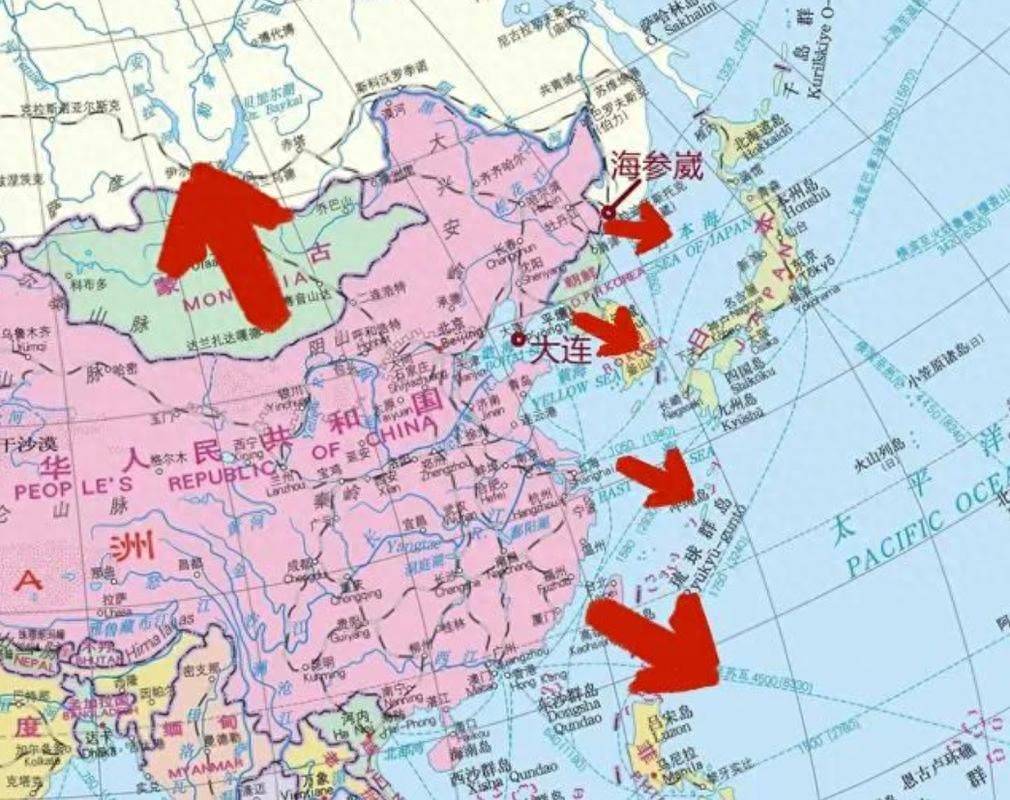
Core Viewpoint - The establishment of Vladivostok as a transit port is a significant step for the economic revitalization of Northeast China, particularly in promoting trade, rather than a political issue related to territorial sovereignty [1][3][9]. Group 1: Economic Implications - The announcement from the General Administration of Customs allows for the inclusion of Vladivostok as a transit port for domestic trade, which means goods transported from Northeast China through Vladivostok will not incur taxes and will be counted in China's trade data [3][9]. - The lack of a seaport has historically hindered the economic development of Northeast China's industrial base, which was once a pillar of China's economy [5][7]. - The Russo-Ukrainian War has led to a significant increase in trade volume between China and Russia, with a reported 38.7% year-on-year growth in imports and exports in the first quarter, making the establishment of Vladivostok as a transit port increasingly important [9][17]. Group 2: Transportation Efficiency - The new transit route through Vladivostok will significantly reduce transportation distances for goods from Jilin Province, cutting the distance from over 1000 kilometers to approximately 270 kilometers to Vladivostok [11][13]. - Each container transported from Jilin can save about 3000 yuan in land transportation costs, which, when scaled to the province's overall transportation volume, represents a substantial economic benefit [11][13]. - The new policy is expected to improve the utilization of return shipping capacity, thereby lowering shipping costs and enhancing competitiveness in exporting to markets like Japan and Southeast Asia [13][15]. Group 3: Strategic Opportunities - The opening of Vladivostok as a transit port presents an opportunity for Jilin Province to diversify its trade structure and attract foreign investment, which has been relatively low at 4.49 billion USD [15]. - If successful, this initiative could benefit surrounding areas like the Shenyang metropolitan area, increasing trade volumes and foreign investment attractiveness [15][17]. - Despite the potential for economic growth, challenges such as increased shipping costs and port congestion due to the Russo-Ukrainian War need to be addressed [17][19].
专家共议东北地区企业如何走好上市之路
Xin Hua Cai Jing· 2025-10-24 08:00
Core Insights - The Northeast Asia Financial Conference held in Shenyang focused on nurturing listed companies in the Northeast region, emphasizing the transformation of technological resources into industrial competitive advantages [1][5] - Key strategies discussed include early investment in potential tech companies, improving governance and internal controls, and providing ongoing support for companies post-listing [1][2] Group 1: Investment Strategies - Emphasis on early-stage investment in technology-driven companies, leveraging local research institutions and key industries in Liaoning [1] - Financial intermediaries are encouraged to assist tech companies in governance and business model development before listing [1][2] - Securities firms are expected to provide support during the listing process and continue to assist with mergers and financing afterward [1] Group 2: Listing Process and Challenges - Companies often lack systematic planning during the listing preparation phase, leading to costly mistakes [2] - The importance of compliance and growth strategies in the IPO process is highlighted, with six core areas identified for focus [2] - Successful case studies indicate that a well-structured approach can significantly shorten the time from establishment to listing [2] Group 3: Technological Integration - The integration of AI into traditional industries is seen as a key driver for revitalizing the Northeast's economy [3][4] - Companies are encouraged to explore AI applications in consumer electronics and robotics, which are expected to benefit from advancements in AI infrastructure [3] - The relationship between robots and humans is anticipated to evolve, with increased interaction and collaboration [4] Group 4: Networking and Collaboration - The "Incubation Plan" aims to create a high-quality platform for communication among companies facing challenges in the listing process [5] - Continuous updates and integration of technology-driven companies' lists will facilitate industry matching and collaboration [3]
钢铁丝路谱写东北振兴新篇章
Zhong Guo Jing Ji Wang· 2025-10-15 03:55
Core Insights - The China-Europe Railway Express (Shenyang) has achieved significant milestones, with over 2,000 trips and more than 220,000 TEUs of goods transiting through the center, highlighting its role as a key logistics hub in Northeast China [1][2] - The railway service has transformed from a one-way export route to a two-way trade channel, enhancing the balance and sustainability of foreign trade [1][2] - The logistics network supports various industries, including cross-border e-commerce and high-end manufacturing, fostering deep integration of supply chains and driving regional economic growth [2][3] Logistics Performance - The Shenyang center has serviced over 2,000 enterprises, with an annual import-export value exceeding $200 million, maintaining the highest train operation volume in Northeast China [1][2] - The logistics hub has a storage capacity of 2,600 TEUs and can meet the operational demand of 1,500 train trips annually, connecting six major ports and covering over 50 cities in Eurasia [2][3] - The daily operation has seen a maximum of 9 round trips, reflecting significant hardware upgrades and efficiency improvements [2] Efficiency and Innovation - The railway logistics information platform enables real-time data sharing among customs, railways, and enterprises, improving customs clearance efficiency by over 50% [3] - The transit time to Russia is approximately 12 days, which is three times faster than sea freight and only one-fifth the cost of air freight, establishing a competitive advantage in cross-border logistics [3] - The "Shenyang-Beloretsk" premium train service reaches Moscow in 10 days, setting a new benchmark for cross-border logistics efficiency [3] Future Outlook - As the only national-level China-Europe Railway Express gathering center in Northeast China, it is expected to continue driving the region's outward economic development [3] - The ongoing enhancement of the Eurasian logistics network will further strengthen Shenyang's logistics node capabilities in Northeast Asia, contributing to the comprehensive revitalization of the old industrial base [3]
“坐着高铁看中国·穿越白山黑水”主题宣传活动正式启动
Ren Min Wang· 2025-09-29 06:34
Group 1 - The "Sitting on High-speed Rail to See China: Crossing the White Mountains and Black Waters" promotional event was launched by the China National Railway Group and the Shenyang Railway Bureau, highlighting the opening of the Shenyang-Baihe High-speed Railway and its role in revitalizing Northeast China [1][3] - The event involved over 100 media reporters from central and provincial cities, who conducted in-depth reporting along the Shenyang-Baihe High-speed Railway, showcasing the new developments and achievements in the region [1][3] - The promotional activities included visits to various stations along the railway, such as Fushun Station, which features elements honoring the spirit of Lei Feng, and Tonghua Station, recognized as a model of smart station design integrating local and revolutionary culture [3] Group 2 - The Shenyang-Baihe High-speed Railway is positioned as a catalyst for economic growth in Northeast China, with the potential to transform local resources into economic benefits, as seen in the Long White Mountain West Station [3] - The event also included visits to historical sites like the Northeast Anti-Union Memorial Hall, emphasizing the connection between the railway development and the region's rich history and patriotic spirit [3] - The high-speed railway is expected to enhance connectivity and promote tourism, allowing travelers to experience the scenic beauty and cultural heritage of the region in a single day [3]

深化改革,经开区活力迸发
Ren Min Ri Bao· 2025-09-28 21:55
Core Insights - The news highlights the innovative developments in Shenyang High-tech Industrial Development Zone, showcasing advancements in technology and manufacturing, driven by institutional reforms and service upgrades [1][2] - The economic development zones in Liaoning province are undergoing significant reforms aimed at enhancing efficiency and clarity in management, contributing to high-quality economic growth [2] Group 1: Innovations and Achievements - Chip manufacturer ChipSource has developed a single-wafer cleaning machine for integrated circuit front-end chip processing, breaking foreign technology barriers [1] - New松 Industrial Robots have gained national attention by appearing in major televised events, demonstrating China's manufacturing capabilities [1] - Neusoft's Aurora Smart Radiotherapy System has surpassed international monopolies, achieving advanced global performance [1] Group 2: Economic Development Zones - Liaoning province has 96 economic development zones, including 11 national-level zones, which are pivotal for the province's economic revitalization [2] - In the first half of the year, these economic zones generated a GDP of 5,874 billion, accounting for 37.4% of the province's total [2] - The total import and export volume of these zones reached 2,624 billion, representing 70.9% of the province's total [2] - National-level economic zones contributed significantly, with their GDP, industrial output, and fixed asset investment accounting for 49.3%, 43.8%, and 39.5% of the total for all economic zones, respectively [2] Group 3: Policy and Reform Initiatives - The Liaoning Provincial Department of Commerce initiated a comprehensive reform survey for economic development zones, leading to the issuance of reform opinions aimed at enhancing operational efficiency [2] - The reforms focus on clarifying responsibilities, improving management efficiency, and fostering vitality within the economic zones [2] - The implementation of tailored strategies for each zone is expected to address systemic issues and promote sustainable growth [2]
我国最北电气化铁路改造工程开工建设 动车组将开进大兴安岭
Qi Lu Wan Bao· 2025-09-18 01:28
Core Viewpoint - The commencement of the renovation project for the Fuhua Railway marks a significant upgrade in railway transportation in the northernmost region of China, enhancing connectivity between Heilongjiang Province and Inner Mongolia Autonomous Region [1][2]. Group 1: Project Overview - The Fuhua Railway connects key areas in Heilongjiang Province and Inner Mongolia, starting from the Daxing'anling region and ending in Qiqihar City, serving as the only railway link for the Daxing'anling area [1]. - The railway, originally built in the last century, has outdated technical standards and slow operating speeds, with travel time from Aigedala to Harbin taking nearly 10 hours, which is insufficient for local travel needs and economic development [1]. Group 2: Renovation Details - The renovation will electrify the entire railway line, allowing for a maximum speed of 160 kilometers per hour, fundamentally addressing issues of insufficient capacity and low efficiency [2]. - Post-renovation, the travel time from Aigedala to Harbin will be reduced from 9 hours and 43 minutes to approximately 6 hours and 30 minutes, achieving a significant time saving of over 3 hours [2]. - The annual freight capacity of the railway will increase to 50 million tons, enabling efficient transportation of bulk commodities and local specialty resources [2]. Group 3: Economic Impact - The project will enhance the railway infrastructure network in Northeast China, strengthening economic ties and collaborative development between Heilongjiang Province and Inner Mongolia [2]. - It is expected to stimulate the growth of tourism, manufacturing, and other industries along the railway, contributing to high-quality regional economic development and revitalizing the old industrial base in Northeast China [2].
活力中国调研行丨“一根丝”牵起发展新动能
Xin Hua Wang· 2025-08-12 06:35
Core Viewpoint - The article highlights the significant advancements and market potential of carbon fiber, particularly through the efforts of Jilin Chemical Fiber Group, which has transitioned from reliance on imports to becoming a leading producer in the industry [1][4]. Group 1: Carbon Fiber Production and Innovation - Carbon fiber, known as "black gold," is noted for its strength, being 7 to 9 times stronger than steel while being extremely lightweight [1]. - Jilin Chemical Fiber Group has developed proprietary technologies for carbon fiber production, achieving a sales volume of over 25,000 tons in the first half of the year, representing a 65% year-on-year increase, with an annual forecast of over 56,000 tons [3][4]. - The company has successfully reduced its dependency on imports by establishing a domestic production capability since 2012, following years of research and development [3][4]. Group 2: Market Applications and Demand - The carbon fiber products have found applications in various sectors, including wind energy, sports equipment, and automotive components, with the wind power sector holding a 95% market share in the domestic market [4]. - The demand for carbon fiber is driven by the rapid growth of low-altitude economy, wind energy, and sports industries, prompting the company to aim for an annual production capacity of 70,000 tons by next year [4]. Group 3: Broader Industry Context - Jilin Chemical Fiber Group also produces other fibers, such as artificial silk and bamboo fiber, with significant global market shares of 34% and 90%, respectively [5]. - The overall high-tech manufacturing sector in Jilin Province has shown robust growth, with a 17.9% increase in value added in the first quarter, indicating a strengthening industrial base [8].

活力中国调研行|“一根丝”牵起发展新动能
Xin Hua She· 2025-07-18 14:14
Core Viewpoint - The article highlights the advancements and achievements of Jilin Chemical Fiber Group in the production and application of carbon fiber, emphasizing its significance in various industries and the company's growth trajectory in this sector [1][4]. Group 1: Carbon Fiber Production and Applications - Carbon fiber, known as "black gold," is significantly stronger than steel, with a strength 7 to 9 times greater while being only one-tenth the thickness of a human hair [1]. - Jilin Chemical Fiber Group has developed patented technologies for carbon fiber production, achieving a sales volume of over 25,000 tons in the first half of the year, representing a 65% year-on-year increase, with an expected total of over 56,000 tons for the year [3][4]. - The company has successfully established a diverse range of carbon fiber products, including sports equipment and industrial components, with a 95% market share in domestic wind turbine blade main beams and over half of the domestic market for drone structural components [4]. Group 2: Technological Innovations and Market Position - The company has invested nearly 20 years in research and development, transitioning from reliance on imports to achieving large-scale domestic production of carbon fiber since 2012 [4]. - The carbon fiber segment now accounts for 45% of the company's revenue, driven by the rapid growth in low-altitude economy, wind energy, and sports industries [4]. - Jilin Chemical Fiber Group aims to increase its carbon fiber production capacity to 70,000 tons next year, reflecting its commitment to meeting rising market demand [4]. Group 3: Broader Industry Impact - The company is also advancing in other fiber products, with its artificial silk holding a 34% share of global production capacity, acrylic fiber at 40%, and bamboo fiber at 90% [6][8]. - The growth of high-tech manufacturing in Jilin Province is evident, with a 17.9% year-on-year increase in value added in the first quarter, indicating a strengthening industrial base and innovation momentum [8].