
自由贸易

Search documents
中信建投:海南自贸港封关政策将深刻改变区域经济格局,为企业和投资者带来新机遇
Sou Hu Cai Jing· 2025-11-28 00:02
Core Viewpoint - The establishment of the Hainan Free Trade Port's customs closure operation marks a new phase in its strategic positioning as a comprehensive reform and opening-up pilot zone [1] Regulatory Framework - Hainan aims to create a new high ground for institutional openness through a regulatory framework of "open on the first line, controlled on the second line, and free within the island" [1] - The policy is designed to align with international high-standard economic and trade rules [1] Economic Impact - The customs closure policy reduces import costs for enterprises and enhances trade facilitation levels [1] - Tax incentives and financial openness measures have attracted significant domestic and foreign investment [1] Specific Policies - The implementation of "zero tariffs," tax exemptions for processing and value-added, and the establishment of multifunctional free trade accounts provide unprecedented development opportunities for enterprises [1] Compliance Requirements - The policy benefits come with increased compliance requirements, necessitating enterprises to establish more comprehensive compliance systems [1] Overall Outlook - The customs closure policy of the Hainan Free Trade Port is expected to profoundly change the regional economic landscape, bringing new opportunities for businesses and investors [1]

中信建投:海南自贸港封关政策将深刻改变区域经济格局 为企业和投资者带来新机遇
Xin Lang Cai Jing· 2025-11-27 23:48
Core Viewpoint - The establishment of the Hainan Free Trade Port's customs closure operation marks a new phase in its strategic positioning as a comprehensive reform and opening-up pilot zone [1] Regulatory Framework - Hainan aims to create a new high ground for institutional openness through a regulatory framework of "open on the first line, controlled on the second line, and free within the island" [1] - The policy is designed to align with international high-standard economic and trade rules [1] Economic Impact - The customs closure policy reduces import costs for enterprises and enhances trade facilitation levels [1] - Tax incentives and financial openness measures have attracted significant domestic and foreign investment [1] Specific Policies - The implementation of "zero tariffs," tax exemptions for processing and value-added, and the establishment of multifunctional free trade accounts provide unprecedented development opportunities for enterprises [1] Compliance Requirements - The policy benefits come with increased compliance requirements, necessitating enterprises to establish more comprehensive compliance systems [1] Overall Outlook - The customs closure policy of the Hainan Free Trade Port is expected to profoundly change the regional economic landscape, bringing new opportunities for businesses and investors [1]
海南封关运作准备就绪
Xin Lang Cai Jing· 2025-11-19 15:08
来源:恒力期货 海南封关运作准备就绪 再有一个月,海南自贸港全岛将正式封关运作。11月18日,海南自贸港10个"二线口岸"同步展开合成演 练。"封关"到底怎么封?将对海南岛内外产生怎样的影响?封关倒计时30天,各项准备工作进展如何? 首先,封关并非封岛。它是一项自由化便利化的政策制度,是要将海南岛全岛建成一个海关监管特殊区 域,基本特征是"'一线'放开、'二线'管住、岛内自由"。 (来源:恒力期货) 海关总署11月18日举行记者通报会,有关负责人介绍,目前,海南自由贸易港封关运作各项准备工作已 基本就绪。 从11月18日起,海南自贸港"二线口岸"启动了7x24小时热运行。 (来源:央视新闻) 市场信心不足 日本国债遭投资者抛售 当地时间19日,日本新发10年期国债收益率升至1.76%,为2008年6月以来新高。 由于市场担忧日本首相高市早苗提出的扩张性财政政策会导致财政状况进一步恶化,日本国债遭投资者 抛售,长期利率持续上升。 (来源:环球网) "一线"放开,就是将海南自贸港与我国关境外其他国家和地区之间作为"一线",实施一系列自由便利进 出举措;"二线"管住,就是将海南自贸港与内地之间作为"二线",针对"一 ...
海南自贸港封关运作软硬件条件已具备
Jing Ji Wang· 2025-11-19 01:28
Core Insights - The preparation for the Hainan Free Trade Port's full closure operation is on track, with a focus on establishing a robust customs regulatory system and risk prevention measures [1][2][8] - The customs authority has completed the necessary soft and hardware conditions for the closure operation, including the establishment of a comprehensive customs regulatory system [2][3] - Innovative customs supervision methods are being implemented to facilitate efficient and precise management of goods flow, particularly between Hainan and the mainland [4][5][8] Group 1: Customs Preparation - The customs authority has developed 12 supporting regulations for the supervision of "zero tariff" goods and other applicable policies, which have been publicly announced [2] - All four customs closure support projects have been put into operation, and the regulatory facilities at ten "second-line ports" have passed national acceptance [3] - The customs regulatory system for the Hainan Free Trade Port has been established, with ongoing pressure testing and comprehensive preparations for the closure operation [2][3] Group 2: Regulatory Innovations - The customs supervision design emphasizes a clear distinction between what is regulated and what is not, allowing for efficient management of goods leaving the island [4] - A new "batch departure, centralized declaration" model has been introduced, allowing eligible enterprises to streamline their export processes [4] - The "processing value-added tax exemption" policy aims to promote the development of Hainan's manufacturing sector and enhance industrial upgrading [5] Group 3: Risk Management and Monitoring - The customs authority has optimized the duty-free shopping regulatory system, adding 24 new functional modules and deploying intelligent monitoring equipment [6][7] - A comprehensive digital monitoring system has been established for duty-free goods, including dynamic risk monitoring models to combat illegal activities [6][7] - The customs authority is focused on ensuring a smooth transition to the new regulatory model post-closure, with an emphasis on effective policy implementation and communication [8]
海南自贸港具备封关运作条件
Jing Ji Ri Bao· 2025-11-19 01:16
经济日报北京11月18日讯(记者顾阳)从18日举行的海关总署例行记者通报会上获悉,目前,海南 自由贸易港封关海关监管制度体系已建成,封关运作软硬件条件已经具备。 海关积极推动岛内129家企业获批加工增值业务试点资格。截至今年10月份,累计监管内销货值 111.0亿元,减免关税8.6亿元。聚焦企业资质备案、账册管理、一线进出口、岛内流转、二线出岛等环 节,依托海关智慧监管平台扎实开展全流程、全要素实战化演练,实现10个"二线口岸"全覆盖,为实现 封关运作平稳有序奠定坚实基础。 围绕货物贸易自由化便利化,海关总署牵头制定了《中华人民共和国海关对海南自由贸易港监管办 法》《中华人民共和国海关对海南自由贸易港加工增值免关税货物税收征管暂行办法》以及径予放行、 报关单填制要求和执行海南自由贸易港货物进出"一线""二线"及在岛内流通税收政策有关要求等文件, 海口海关细化制定了12项关级配套制度。 海关总署有关负责人表示,封关运作后,海南自由贸易港将实施"一线放开、二线管住、岛内自 由"为核心的自由化便利化政策制度,海关将更加聚焦贸易自由便利和精准高效监管,建设具有国际竞 争力、影响力的海关监管特殊区域。 立足全岛封关监管 ...
高标准推进软硬件基础建设 海南自贸港具备封关运作条件
Jing Ji Ri Bao· 2025-11-18 23:22
Core Insights - The Hainan Free Trade Port has established a customs supervision system and is ready for closure operations, with necessary hardware and software conditions in place [1] - The General Administration of Customs has developed several regulatory documents to facilitate the liberalization and convenience of goods trade in Hainan [1][2] - A total of 129 enterprises in Hainan have been approved for processing and value-added business pilot qualifications, with significant tax reductions achieved [2] Group 1 - The customs supervision system for the Hainan Free Trade Port has been completed, and operational conditions are ready [1] - Key regulatory documents include the "Regulations on Customs Supervision of Hainan Free Trade Port" and interim measures for tax collection on duty-free goods [1] - The customs authority has implemented a smart supervision platform that integrates with various national regulatory systems for efficient operations [1] Group 2 - As of October, the total value of goods under supervision reached 111.0 billion yuan, with tax exemptions amounting to 8.6 billion yuan [2] - The customs will focus on a policy of "one line open, two lines controlled, and free circulation within the island" post-closure [2] - The customs aims to enhance trade facilitation and precise regulation to build a competitive and influential customs supervision area [2]
海南自贸港封关运作软硬件条件已具备(锐财经)
Ren Min Ri Bao· 2025-11-18 22:18
Core Insights - The preparation for the Hainan Free Trade Port's customs closure operation is on track, with a focus on both regulatory flexibility and effective management [2][3][9] Group 1: Customs Operation Readiness - The customs operation's software and hardware conditions are ready, with a complete regulatory system established for the Hainan Free Trade Port [3][4] - The customs authority has implemented 12 supporting regulations for the operation, including measures for zero-tariff goods and centralized declaration [3][4] - The customs testing and risk management systems are fully in place, ensuring a robust operational framework [3][4] Group 2: Regulatory Innovations - The regulatory design emphasizes a clear distinction between what is allowed to flow freely and what is regulated, enhancing efficiency and precision in customs management [6][9] - New customs procedures, such as "batch exit and centralized declaration," will facilitate smoother operations for eligible enterprises [6][9] - The introduction of a smart regulatory platform will support the effective implementation of these new procedures [6][9] Group 3: Tax Incentives and Industry Development - The processing and value-added tax exemption policy aims to boost the manufacturing sector in Hainan, with lowered thresholds for eligibility [7] - This policy is expected to enhance the development of industrial chains and clusters within the region [7] Group 4: Enhanced Monitoring and Compliance - The customs authority has upgraded its monitoring systems for duty-free shopping, implementing a comprehensive digital oversight framework [8] - A dynamic risk monitoring model has been established to identify and combat violations effectively [8] Group 5: Transition to New Regulatory Framework - The customs operation will adopt a policy of "one line open, one line manage, and free flow within the island," focusing on trade facilitation and efficient regulation [9] - Significant simplifications in the declaration process have been made, reducing the number of required items from 105 to 33, thereby improving customs efficiency [9] - The establishment of an intelligent risk control system aims to enhance overall risk management capabilities [9]

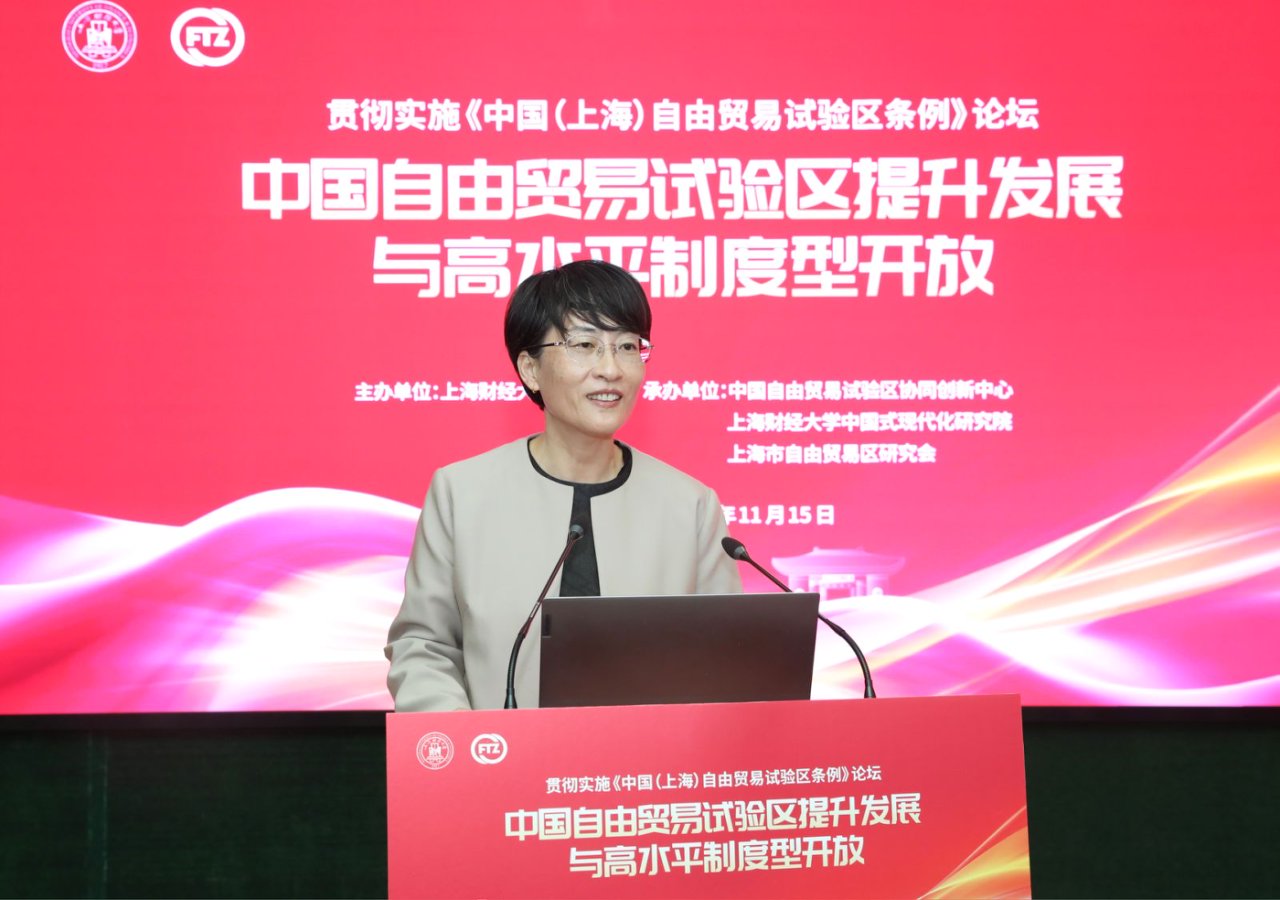
高校智慧赋能自贸区升级,上海财大论坛共探制度型开放
Guo Ji Jin Rong Bao· 2025-11-17 04:15
Core Viewpoint - The forum on the implementation of the "China (Shanghai) Free Trade Zone Regulations" emphasizes the strategic significance of the free trade zone's development and its role in high-level institutional openness [1][4]. Group 1: Strategic Importance - The free trade zone has become a testing ground for deepening reforms and a pioneer in institutional openness, significantly contributing to China's integration into the global economy [3][6]. - The forum serves as a timely opportunity to enhance academic research and policy recommendations in the field of free trade zones [4]. Group 2: Policy and Governance - The newly revised "China (Shanghai) Free Trade Zone Regulations" reflect Shanghai's confidence and determination to promote high-level openness [5]. - The Shanghai Free Trade Zone Research Association aims to address key issues in the construction of the free trade zone and to serve as a think tank for decision-making [4][7]. Group 3: Development and Innovation - Experts discussed the need for deepening investment openness and trade facilitation, as well as enhancing the service trade level through the implementation of negative lists [6]. - The Shanghai Free Trade Zone is recognized as a significant reform initiative, with a focus on both external engagement and internal reform to enhance governance and support high-level technological innovation [7][8]. Group 4: Future Outlook - The Shanghai American Chamber of Commerce highlights the positive impact of the free trade zone on foreign enterprises, indicating that future reforms and innovations will be crucial for its continued success [8]. - The development of a performance evaluation system for the free trade zone aims to provide dynamic monitoring and scientific assessment of its institutional openness [8].
新疆自贸试验区成立两周年 改革试点任务完成超八成
Xin Hua Wang· 2025-11-14 08:39
Core Insights - The Xinjiang Free Trade Zone has achieved significant progress in institutional innovation and economic development since its establishment on November 1, 2023, with a completion rate of 81.5% for reform pilot tasks by October 2023, surpassing the target of over 80% for the second year [1] - The zone has seen the establishment of over 18,000 new enterprises, bringing the total to 44,000, and recorded an import-export volume of 155.33 billion yuan, accounting for nearly 40% of the region's total [1][2] Group 1: Institutional and Economic Development - The Xinjiang Free Trade Zone has implemented 72 provincial-level institutional innovation achievements, which have been promoted throughout the region [1] - A total of 69 supportive policies have been introduced, and 45 economic and social management powers have been delegated to enhance the business environment [1] Group 2: Logistics and Trade Enhancement - The zone is enhancing its logistics hub capabilities with the construction of land and air port-type national logistics hubs, and the full application of "direct loading" for China-Europe (Central Asia) trains [2] - The international air network has expanded, with 28 international passenger routes and 36 international cargo routes, covering multiple countries and cities [2] Group 3: Foreign Trade and Investment - The Xinjiang Free Trade Zone has established 43 overseas and border warehouses, facilitating a multi-warehouse cross-border logistics model [2] - The zone has seen nearly 40% of new foreign enterprises established in the region, with ongoing innovations in foreign exchange business trials and management mechanisms [2] Group 4: International Cooperation - The zone is deepening cooperation with Central Asian countries and members of the Shanghai Cooperation Organization in various fields, including trade, industry, energy, and technology [2] - Platforms such as the "Belt and Road" joint laboratory and international offshore innovation centers have been established to support these collaborations [2]
“为全球自由区发展提供助力”
Ren Min Ri Bao· 2025-10-19 22:04
Core Insights - The 11th World Free Zone Organization Conference was held in Hainan, China, with over 70 countries and regions represented, highlighting the significance of free zones as engines for economic growth, industrial diversification, and sustainable development [1][2] - The theme of the conference was "Free Zones: A Gateway to Global Prosperity, Trade, and Sustainable Innovation," emphasizing Hainan's role as a modern free trade port and its potential for institutional innovation and global cooperation [1][2] Group 1 - The conference showcased Hainan's achievements in economic development and openness, featuring projects in green low-carbon initiatives, duty-free shopping, and cross-border e-commerce [1][2] - The World Free Zone Organization's president noted that modern free zones are evolving from mere trade facilitators to resilient frameworks that support the free flow of financial and logistical elements [1][2] Group 2 - Several cooperation agreements were reached during the conference, including a memorandum to promote cross-border data flow signed by representatives from Angola, Argentina, and Hainan's internet information industry park [2] - The conference concluded with the release of the "21st Century Economic Special Zone Hainan Declaration," which aims to share China's experience in special economic zone development and enhance global trade agreements [2]