
水利工程

Search documents
南水北调中线一期工程启动2025至2026年度冰期输水
Ren Min Ri Bao· 2025-12-01 22:08
记者从中国南水北调集团有限公司获悉:12月1日,南水北调中线一期工程启动2025至2026年度冰期输 水工作,工程运行管理正式进入冰期输水阶段,预计到2026年2月底结束。 (文章来源:人民日报) 该工程各级运行管理单位充分发挥数字孪生南水北调中线系统预报、预警、预演、预案作用,提升监测 感知能力。制定详细调度方案,优化动态调度,提前布设并调试拦冰、融冰、扰冰、排冰设备,对相关 建筑物采取保温措施,提升防御能力。做好各项应急准备,加强巡查值守,发挥多层次抢险救灾队伍作 用,开展冰冻灾害演练,切实筑牢安全防线。 目前,该工程向京津冀豫四省市供水730亿立方米,近1.18亿人受益,工程综合效益不断提升。 ...
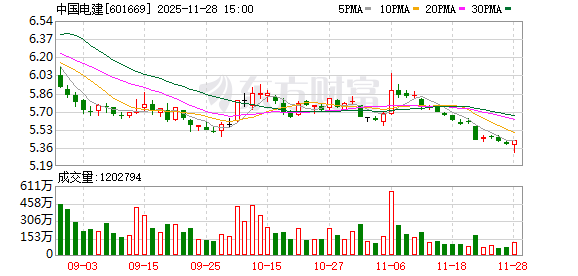
福建75亿元项目水库大坝被指偷工减料,中国电建深夜通报:全面调查核实!
Di Yi Cai Jing· 2025-11-30 06:58
Core Viewpoint - China Power Construction Group (China Power) has acknowledged serious quality issues in the construction of the Yong'an Pumped Storage Power Station and has established an investigation team to address these concerns and ensure compliance with regulations [1][4]. Group 1: Quality Issues - Reports indicate that the construction of the lower reservoir at the Yong'an Pumped Storage Power Station has been criticized for significant cost-cutting measures [4]. - The project, undertaken by subsidiaries of China Power, has revealed severe quality defects in the hundreds of anchor piles used for reinforcing the dam shoulder, with actual lengths significantly shorter than the design specifications [5][8]. - Many anchor piles were not constructed according to the required standards, with some being less than one-third of the specified length, and inadequate cement grouting was performed [5][8]. Group 2: Construction Practices - Experts have highlighted that the stability of the dam is critically dependent on the integrity of the anchor piles, which are essential for reinforcing the dam's slope [7]. - The design specifications required a complete structure for the anchor piles, but many were only connected using simple "spot welding," failing to meet the necessary structural integrity [7][8]. - On-site workers reported that the actual lengths of some anchor piles were as short as 2 to 5 meters, with significant discrepancies in the lengths of the reinforcing steel bars [8][9]. Group 3: Oversight and Accountability - Concerns have been raised regarding the oversight of the project, as the supervising entity is a subsidiary of the same parent company responsible for the design and construction, leading to questions about accountability [9]. - Reports of inappropriate conduct among monitoring personnel, including accepting entertainment from the construction team, have surfaced, raising further doubts about the integrity of the oversight process [11]. - The Yong'an Pumped Storage Power Station project has a total investment of 7.5 billion yuan, with expected annual power generation of 12.6 billion kilowatt-hours, contributing to significant carbon reduction and economic benefits [11].


总投资75亿元水库项目被指偷工减料 监理人员被曝接受异性陪侍!中国电建深夜通报:全面调查
Hua Xia Shi Bao· 2025-11-30 00:51
Core Viewpoint - The construction of the Fujian Yong'an pumped storage power station, a key project under China's 14th Five-Year Plan, is facing serious quality issues, particularly in the dam construction, raising concerns about safety and compliance [2][5][7]. Group 1: Project Overview - The Yong'an pumped storage power station has a total investment of 7.5 billion yuan and is the first large-scale energy storage project approved in Fujian's 14th Five-Year Plan [9]. - Once operational, the project is expected to generate an average annual electricity output of 12.6 billion kilowatt-hours, saving 660,000 tons of standard coal and reducing carbon dioxide emissions by 1.65 million tons, resulting in carbon reduction benefits of 153 million yuan and tax revenues of 180 million yuan [9]. Group 2: Quality Issues - Reports indicate that the construction of hundreds of anchor piles for the dam has significant quality defects, with actual lengths falling short of design standards, some being less than one-third of the required length [5][7]. - Many anchor piles were not properly filled with cement mortar as per regulations, with the construction team only performing minimal sealing at the pile openings to pass inspections [7]. Group 3: Investigation and Response - China Power Construction Group has taken the allegations seriously, forming an investigation team to thoroughly verify the claims and handle the situation according to legal and regulatory standards [2]. - The local water conservancy bureau has also established a special investigation team to assess the situation on-site [9]. Group 4: Company Performance - In the first three quarters of the year, China Power Construction Company reported a total operating revenue of 439.553 billion yuan, a year-on-year increase of 3.05%, while the net profit attributable to shareholders decreased by 14.86% to 7.474 billion yuan [9].
武引灌区金峰水库蓄水首次突破470米高程
Si Chuan Ri Bao· 2025-11-29 00:34
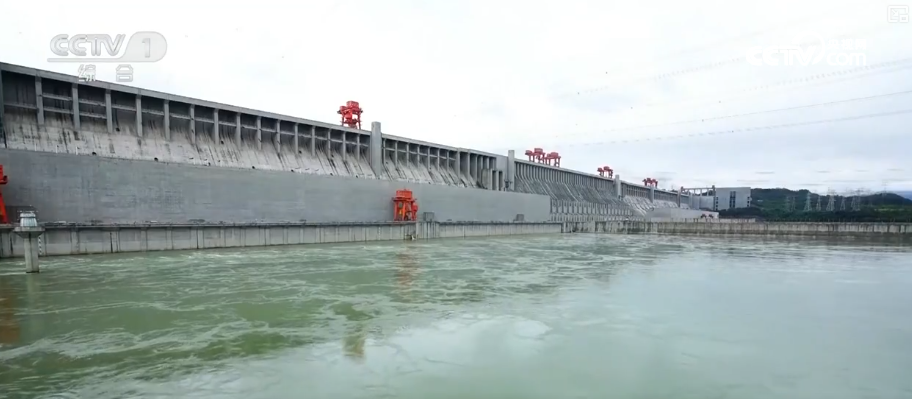
"此次金峰水库蓄水突破470米高程,是对水库工程建设质量与运行可靠性的一次全面检验。"运管 中心相关负责人表示,接下来将持续聚焦工程安全运行和精细化管理,深化信息化技术运用,密切监测 工程设施运转,不断优化完善调度运行机制,为灌区经济社会发展提供坚实水安全保障。(李文冬 邓 香铭 记者 邵明亮) 金峰水库是武都引水工程二期西梓干渠上的囤蓄水库,控灌盐亭、南部、射洪、蓬溪、船山、西充 等县(市、区)166.38万亩农田,并为灌区百万余人口提供饮用水水源。此次蓄水首次突破470米高 程,标志着该水库2025年度蓄水任务圆满完成,为今冬明春武引灌区充分发挥灌溉、供水、生态等综合 效益提供有力保障。 11月26日,记者从四川省武都引水工程运管中心(下称运管中心)获悉,近日,位于武引灌区内的 金峰水库水位首次突破470米高程(海拔),达到470.06米,库容达到8389.98万立方米,创下自2022年6 月下闸蓄水以来的历史最高纪录。 ...
海河水利委员会深化数字孪生海河建设合作交流
Shui Li Bu Wang Zhan· 2025-11-28 13:18
Group 1 - The meeting focused on the implementation of the digital twin water conservancy system, summarizing the achievements of the "14th Five-Year Plan" and planning for the "15th Five-Year Plan" [1][2] - The conference showcased the application of digital twin technology in flood defense, water resource allocation, and water conservancy project management [1] - Participants discussed the effectiveness, existing issues, and future strategies for the digital twin water conservancy construction [1][2] Group 2 - The meeting emphasized the need to integrate monitoring systems across various dimensions, ensuring comprehensive and continuous data collection [2] - A call was made to strengthen data collection and sharing, utilizing multi-source and multi-dimensional approaches [2] - Future efforts will focus on enhancing technological innovation and advancing the digital twin construction to support modernized governance in the river basin [2]
陕西省灌区现代化建设保障粮食安全培训班在杨凌示范区举办
Shui Li Bu Wang Zhan· 2025-11-28 13:05
Core Viewpoint - The training session on modernizing irrigation districts in Shaanxi Province aims to enhance food security through improved irrigation management and technology integration [1] Group 1: Training Session Overview - The training session took place from October 21 to 23 in Yangling Demonstration Zone, organized by the Provincial Organization Department and the Provincial Water Resources Department [1] - It included experts from the National Irrigation and Drainage Center and Northwest A&F University, focusing on national and provincial policies, planning, and technical standards for irrigation modernization [1] Group 2: Key Topics Covered - Topics included high-standard farmland irrigation, smart irrigation, measurement facilities, and integrated water-saving technologies [1] - The session analyzed agricultural water pricing reform policies, typical models, challenges, and countermeasures, along with successful case studies from within and outside the province [1] Group 3: Implementation and Goals - Participants were encouraged to relate learning to local irrigation realities, fostering practical application of knowledge gained [1] - The goal is to translate learning outcomes into actionable steps to enhance irrigation standards, management efficiency, water-saving effectiveness, and overall food production capacity in Shaanxi [1]
“十四五”期间陕西建成1426个政府投资重大项目
Shan Xi Ri Bao· 2025-11-27 22:49
Group 1 - The core report highlights that during the "14th Five-Year Plan" period, a total investment of 962.9 billion yuan has been completed, with 1,426 major projects constructed and put into operation, resulting in a significant number of quality assets and effective supply [1] - Since 2021, over 30,000 government investment projects have been implemented in Shaanxi, covering 17 public sectors including transportation and water conservancy [1] - In the comprehensive transportation sector, an investment of 388.8 billion yuan has been completed, with five high-speed rail constructions fully promoted, achieving historic "highway access for every county" [1] Group 2 - In terms of high-level innovation platforms, Shaanxi has completed the reorganization and establishment of 42 national key laboratories, accelerating the potential release of the Qin Chuang Yuan platform, and overcoming over 1,100 key core technologies in critical fields such as high-end equipment and aerospace [2] - To enhance public welfare capabilities, 56 key medical projects, including the provincial public health center (Phase I), have been put into use, along with the construction and expansion of 345 county-level hospitals and health centers [2] - In improving ecological environment quality, the province has completed afforestation of 1.585 million acres and improved the centralized sewage treatment rate in Guanzhong towns to 97% [2]
永定河古渠灌溉工程活化利用,将打造北京首个山洞沉浸式体验剧场
Xin Jing Bao· 2025-11-27 09:33
今年9月,北京门头沟永定河古渠灌溉工程入选2025年世界灌溉工程遗产名录,同时入选的还有我国申 报的云南元阳哈尼梯田、江苏句容赤山湖灌溉工程和四川彭州湔江堰。永定河古渠灌溉工程包括公议 沟、三家店、丁家滩、城龙、付家台五条核心古灌溉渠,以及周边多处古井、古泉等众多遗存,构成了 庞大的灌溉体系。 北京市水科院技术研究院教授级高工马东春表示,永定河古渠灌溉工程的逆坡供水系统的高程设计,是 三国至清代华北地区高含沙河流治理技术的集中体现,为研究北方干旱半干旱地区灌溉工程演变提供了 典型样本。永定河古渠沿线传承的"岁修制度",通过"春修渠、夏防汛、秋清淤、冬备料"的季节性养护 机制,保障了古渠千年永续利用。 古人在灌溉渠沿线开凿了5个山洞,水流"穿"山而过,流入村庄,灌溉农田。如今,这些山洞将有望成 为新的文旅项目。门头沟区水务局水资源科科长王健介绍,水务部门将以付家台古灌溉渠为核心,分为 渠首、山洞和下游灌溉农田三个部分开展文化挖掘。其中,渠首将重点突出弯道取水,感受古人智慧; 山洞部分将打造成北京市首例山洞沉浸式体验剧场,这里将通过声、光、电等,展示古人如何开凿山 洞,挖掘水利。下游的付家台村将重点打造灌溉农田体 ...
冬储、冬播、冬种 全方位解锁智慧农业赋能 农技护航筑牢丰收根基
Yang Shi Wang· 2025-11-27 02:26
Group 1 - The article emphasizes the importance of winter agricultural activities, including water conservancy construction, grain storage, and winter sowing, to strengthen the agricultural foundation [1] - Various regions are accelerating the renovation of irrigation areas to ensure stable grain production and increase income for the coming year, with nearly 80% of the annual construction tasks for large and medium-sized irrigation areas supported by the central government completed [4][6] - The introduction of smart grain storage systems in Jiangsu Huai'an enhances the preservation of rice, utilizing low-temperature drying technology and maintaining a stable environment for grain storage [5][8][10] Group 2 - Winter sowing activities are also being expedited, with significant progress in winter wheat sowing in Hefei, Anhui, where advanced machinery is being used for efficient planting [12][14] - The integration of modern agricultural technology with power supply services is highlighted, ensuring stable electricity output for grain processing enterprises [10]

中国电建两项工程接续完工助力苏里南民生改善与农业发展
Shang Wu Bu Wang Zhan· 2025-11-25 12:19
Core Insights - The successful completion of the Suriname Village Microgrid Photovoltaic Project (Phase II) and the irrigation and drainage system repair project marks significant milestones for local energy security and agricultural development [1][2][3] Group 1: Project Details - The Suriname Village Microgrid Photovoltaic Project (Phase II) includes nine sites along the Suriname and Marowijne rivers, covering 45 forest villages, with the Bakhu solar power station being the third completed site [2] - The Bakhu station features a mixed energy model with 720 photovoltaic modules, a 1505 kWh energy storage system, and a 190 kVA diesel generator, providing 24-hour continuous power to 492 households in three forest villages [2] - The irrigation and drainage system repair project in the Nickerie district, a key rice-producing area, involves clearing 290 kilometers of ditches, repairing 75 kilometers of roads, and constructing or repairing 59 water facilities [2] Group 2: Impact and Future Plans - The completion of these projects significantly enhances energy accessibility in remote areas of Suriname, improving living conditions and promoting rural development [2] - The projects demonstrate the company's expertise in water and electricity, addressing core needs for stable power supply and upgraded irrigation facilities to boost agricultural productivity [3] - The company plans to continue focusing on local needs in Suriname, aiming to develop more quality projects that benefit the community and enhance practical cooperation between China and Suriname [3]