生物医药

Search documents
武汉发布“365”重大科技创新成果
Chang Jiang Ri Bao· 2026-02-25 00:32
Core Insights - The article highlights the release of 65 major technological innovation achievements in Wuhan, categorized into basic research, core technologies, and innovative products, covering key fields such as biomedicine, optoelectronic information, new energy, and intelligent connected vehicles [1][2] Group 1: Technological Achievements - 15 basic research achievements include original innovations, with technologies like the wireless monitoring ultrasound sensor for intracranial physiological signals from Huazhong University of Science and Technology and high-precision chromosome-level DNA replication tools from Wuhan University reaching international leadership [1] - 20 core technology achievements break foreign monopolies, such as the multi-wafer integration technology for large model inference chips from Hubei Jiangcheng Laboratory, which meets international standards [1] - 30 innovative product achievements include the world's first mobile phone satellite-connected phased array antenna and the first plant-derived recombinant human albumin injection, showcasing strong industrial capabilities [1] Group 2: Strategic Development - Wuhan is focusing on the "965" modern industrial system and deepening the integration of innovation chains and industrial chains, leveraging its educational advantages to accelerate development [2] - The release of these 65 major technological achievements injects strong momentum into Wuhan's goal of becoming a national technology innovation center and lays a solid foundation for development during the 14th Five-Year Plan period [2]
金融赋能:做两业协同的耦合器与加速器
Xin Lang Cai Jing· 2026-02-25 00:30
Group 1 - Financial support is crucial for the collaborative development of advanced manufacturing and modern services, creating a positive ecosystem [1] - Shenzhen Innovation Investment Group has managed over 500 billion yuan, investing in over 1,800 companies, with more than 90% in hard technology sectors [1] - The Guangdong-Hong Kong-Macao Greater Bay Area Venture Capital Guidance Fund has a scale of 50.45 billion yuan, aimed at supporting startups [1] Group 2 - Guangdong leads in capital market tools, holding six "firsts" in the Shenzhen Stock Exchange, including the highest number of new listings and IPO applications [2] - The Shenzhen Stock Exchange plans to enhance support for quality enterprises to go public and promote the growth of large-scale leading companies [2] Group 3 - By 2025, Guangdong's industrial enterprises are projected to exceed 19 trillion yuan in revenue, with high-tech and equipment manufacturing accounting for over 30% and 50% of industrial added value, respectively [3]
红杉中国杨云霞:2026年医疗健康领域看哪里? | 投资人说
红杉汇· 2026-02-25 00:05
Core Insights - The article discusses the insights from Yang Yunxia, a partner at Sequoia China, highlighting that China's biopharmaceutical innovation has become a significant player in the global industry and a source of world innovation [3][6]. Group 1: Market Trends and Investment Directions - The biopharmaceutical sector in China is expected to continue its growth, with a focus on major disease areas such as oncology, autoimmune diseases, neurology, and metabolism, while also addressing underrepresented fields like gynecology, nephrology, and ophthalmology [3][8]. - The transaction value of Chinese innovative drug business development (BD) has increased tenfold over the past five years, indicating a growing recognition and willingness of multinational corporations (MNCs) to pay premiums for Chinese assets [3][9]. - The market is experiencing a resurgence, with increased enthusiasm from early-stage entrepreneurs and active participation from investors, making 2025 a fruitful year for the industry [5][6]. Group 2: Product Development and Innovation - There is an ongoing evolution in drug molecular forms, with advancements expected in antibody-drug conjugates (ADCs) and small nucleic acids, moving towards dual-target and dual-toxin formats [3][8]. - The trend of Chinese innovative drugs gaining international recognition is anticipated to continue, with more overseas companies showing interest in Chinese assets and establishing collaborations with local investment institutions [9][10]. Group 3: Future Outlook and Strategic Focus - The investment strategy of Sequoia China remains consistent, focusing on innovation and maintaining long-term relationships with early-stage companies and entrepreneurs [7][10]. - The expectation for 2026 is to see more entrepreneurs with a global perspective and competitive products entering the market, reflecting a shift in focus towards genuine global innovation [11].


2026医疗展望:百家公司港股排队,医疗板块能否再创「神话」
3 6 Ke· 2026-02-25 00:02
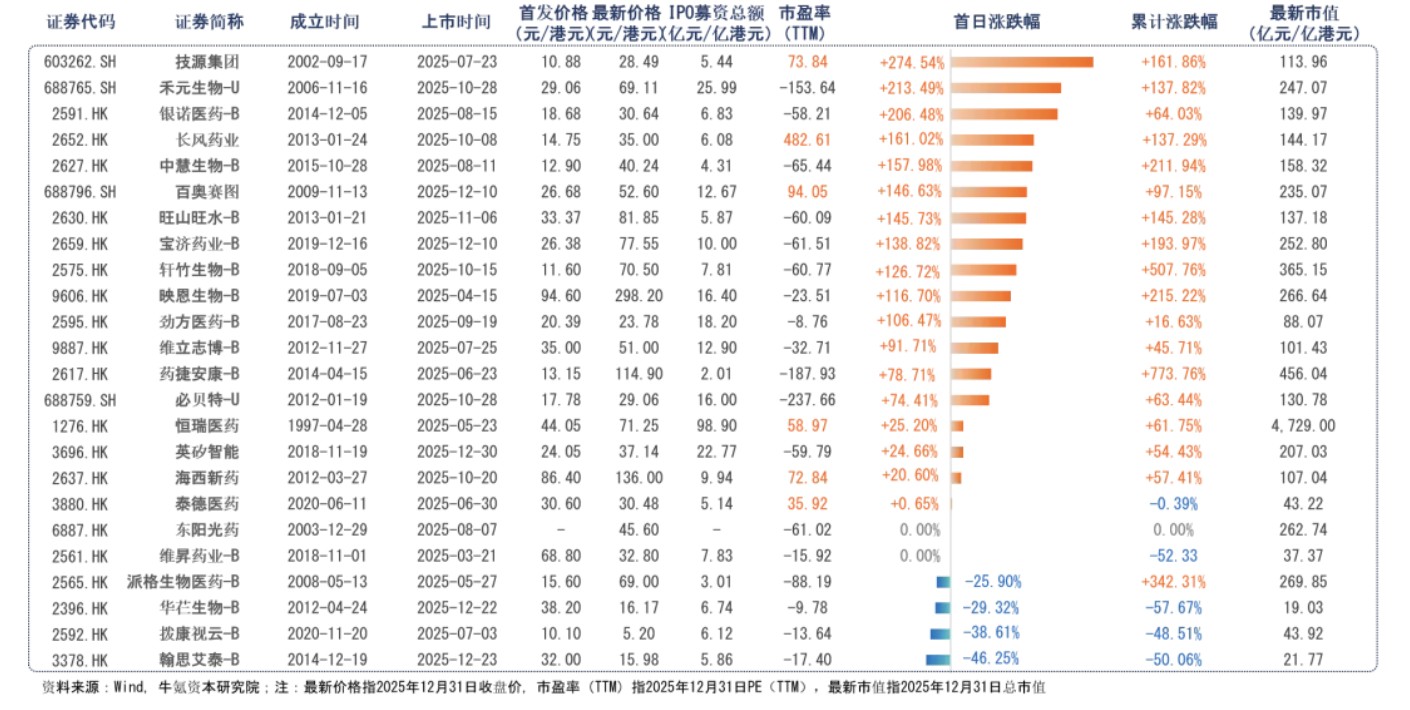
Core Insights - The medical sector is experiencing both "explosive growth" and "cooling" trends as companies like Jingfeng Medical and Beixin Life go public, with over 100 medical companies waiting for IPOs in Hong Kong amid tightening regulations [1][2] - The performance of new drug IPOs in 2026 is expected to be significantly differentiated, with investors becoming more selective and focusing on companies with successful overseas BD cases and clear product timelines [2][3] - The AI-driven pharmaceutical sector is gaining traction, with companies like InSilico Medicine and Huasheng Zhiyuan achieving significant BD transactions, indicating a growing interest in AI's potential in drug development [1][5][11] Medical Device Sector - The medical device sector is recovering at a slower pace compared to the innovative drug sector, facing challenges such as geopolitical issues and difficulties in international expansion [2][24] - Investment in the medical device market is currently low but is expected to gradually improve, with opportunities in high-end imaging, surgical robots, and AI-driven devices [22][24] - The export of innovative medical devices is anticipated to improve in 2026, with leading domestic manufacturers enhancing product quality to compete in international markets [24][25] BD Transactions and Market Trends - The global share of China's new drug BD transactions is expected to continue rising, although the growth rate may slow due to geopolitical factors and changing perceptions of value [5][6] - The oncology treatment landscape is becoming crowded, prompting a shift in focus towards autoimmune, metabolic, and central nervous system-related new drugs [7][8] - AI in drug development is seen as a significant trend, with companies needing to leverage data effectively to succeed in clinical applications [11][12] Investment Opportunities - The investment landscape for medical devices is characterized by a focus on therapeutic devices, with a shift from diagnostic to treatment-oriented products [17][22] - There is a growing interest in consumer medical devices, particularly those enhanced by AI, which are expected to see increased demand and market penetration [13][14] - The need for innovative solutions in areas like cardiovascular and neurological treatments remains strong, with potential for significant market growth [17][24]

京津冀地区生产总值近12万亿元
Xin Lang Cai Jing· 2026-02-24 23:26
Core Insights - The Beijing-Tianjin-Hebei region is projected to see its GDP grow from 8.96 trillion yuan in 2020 to nearly 12 trillion yuan by 2025, with annual growth rates of 5.2%, 4.4%, and 5.4% for the three areas respectively [1][2] Economic Growth and Industrial Transformation - The industrial structure of the region is shifting, with the proportion of the tertiary industry increasing from 67.6% in 2020 to 70.1% in 2025, indicating a significant transition towards service-oriented sectors [2] - The added value of industrial enterprises above designated size is expected to grow by 6.6% year-on-year by 2025, with high-tech manufacturing leading the charge [2] - The production of integrated circuits is projected to increase by 74.3% compared to 2020, while the output of industrial robots is expected to grow exponentially [2] Collaborative Development and Innovation - By 2025, Tianjin is expected to receive 184.78 billion yuan in industrial project investments from Beijing and Hebei, accounting for 52.1% of all industrial project investments [3] - The number of national advanced manufacturing clusters in the region is set to increase from 2 in 2022 to 7 by 2025, showcasing enhanced industrial collaboration [3] - The total value of technology contracts in the region is projected to reach 1.4 trillion yuan by 2025, 1.8 times that of 2020, with Beijing's technology contracts to Tianjin and Hebei exceeding 320 billion yuan [3] Infrastructure and Urban Development - The urban sub-center in Tongzhou is expected to see an average GDP growth rate exceeding 6% during the 14th Five-Year Plan, with significant infrastructure projects being completed [4] - Xiong'an New Area is entering a phase of large-scale construction, maintaining an annual investment scale of 200 billion yuan, with numerous central enterprises relocating to the area [4] Transportation and Environmental Improvements - The region has added 710 kilometers of railway during the 14th Five-Year Plan, with total operational railway mileage reaching 10,394.9 kilometers [5] - The air quality and water ecosystem in the region are improving, with groundwater levels rising significantly compared to the end of the 13th Five-Year Plan [6] Social Welfare Enhancements - By 2025, the number of insured individuals from Tianjin and Hebei seeking medical treatment in Beijing is expected to increase by 25.2% year-on-year [6] - Collaborative educational initiatives are being established, with 314 quality schools in Beijing partnering with 496 schools in Hebei [6]
从坐C位到换逻辑,南京营商环境进入“读心”时代
Yang Zi Wan Bao Wang· 2026-02-24 23:20
Group 1 - The Nanjing government is enhancing its business environment by prioritizing private enterprises in sectors like biomedicine, chips, and artificial intelligence, indicating a shift towards understanding and addressing the needs of businesses [1] - Liu Shuang, Chairman of Nanjing Tianchuang Intelligent Technology Co., emphasized the importance of a robust platform for technology transfer, particularly the need for "concept validation" to bridge the gap from laboratory to production [1] - The government is actively exploring solutions to the challenges of technology transfer, with initiatives like the Nanjing Post and Telecommunications University concept validation center and the Jiangbei New Area biomedical transformation center [1] Group 2 - The newly released "Nanjing 2026 Action Plan for Optimizing the Business Environment" represents an upgraded policy framework that includes measures like dedicated service personnel for key enterprises and AI-driven government services [2] - The plan reflects a shift from passive to proactive service, aiming to support hard technology startups throughout their entire lifecycle, recognizing that future industrial competition will hinge on the research capabilities of universities [2] - Nanjing's strategy focuses on transforming cutting-edge research from its 53 universities into viable industrial applications, requiring not just funding and policies but also a deep understanding of innovation dynamics [2]
县域经济活力涌动 城乡居民收入比缩小至2.27:1
Nan Fang Du Shi Bao· 2026-02-24 23:13
2月24日,农历正月初八,广东新春"第一会"——全省高质量发展大会在广州举行。"十五五"时期,广 东有何产业政策红利?现代化产业体系建设怎样形成合力?县域经济如何激活新动力?当天下午,三场 聚焦不同领域的分会场同步开启。 在"产业融合与政策创新"分会场上,省发展改革委释放重磅信号,宣布即将出台系列政策,包括构建优 质企业梯度培育体系、出台降本增效措施及支持个体工商户发展等,以实招助力市场主体。同期举行 的"智能制造与工业互联网"分会场,则汇聚政企学研力量,围绕加快构建以先进制造业为骨干的现代化 产业体系,深入探讨了智能制造与工业互联网的发展路径。而在"'百千万工程'县域产业融合与高质量 发展"分会场上,与会嘉宾围绕壮大县域特色产业、镇村组团式发展等议题展开研讨,数据显示"百千万 工程"实现"三年初见成效",县域经济活力涌动,城乡居民收入比从2022年的2.41:1缩小至2.27:1。 广东金融与科技这对"CP"在2026年将碰撞出什么样的新火花?昨日,广东省委金融办相关负责人围绕 《广东省推动金融服务科技强省建设工作方案》(以下简称《工作方案》)、《广东省金融支持企业开 展产业链整合兼并行动方案》(以下简称《 ...
去年江苏发明专利授权量居全国第二
Xin Hua Ri Bao· 2026-02-24 21:20
Core Insights - In 2025, Jiangsu is projected to have 116,900 invention patents authorized, ranking second in the country and accounting for 12.95% of the national total [1] - Among these, enterprises will contribute 86,300 invention patents, representing 73.79% of the provincial total, highlighting the significant role of enterprises as innovation leaders [1] - Universities and research institutions will contribute 25,300 and 3,300 authorized patents, making up 21.66% and 2.83% of the provincial total, respectively, indicating their importance in fundamental research and cutting-edge technology exploration [1] Industry Analysis - The analysis of authorized invention patents reveals a clear characteristic of "technology innovation empowering industrial development" in Jiangsu [1] - Six major fields, including computer technology, electrical machinery, electrical devices, and electric power, account for over 50% of the patents, which are also key areas for national invention patent authorization in 2025 [1] - The patent layout in the computer technology field supports the deep integration of artificial intelligence and big data with the real economy [1] - Accumulation of patents in electrical machinery and electrical devices underpins breakthroughs in new energy and high-end equipment industries [1] - Patents in the chemical engineering field provide technological support for industries such as biomedicine and new materials, further solidifying the core competitiveness of the province's industries [1]
聚力产业链 区(市)县如何“拼”
Xin Lang Cai Jing· 2026-02-24 20:22
Core Viewpoint - The article emphasizes the commitment of various districts to enhance key industrial chains, focusing on high-quality development to support the "14th Five-Year Plan" and improve local economies. Group 1: Strengthening Industrial Chains - Chengdu High-tech Zone aims to accelerate major integrated circuit projects to address weaknesses in the industrial chain [1] - Sichuan Tianfu New Area is focusing on strategic emerging industries and future industries, strengthening key enterprises and project support [1] - Chengdu Eastern New Area plans to enhance key segments in gas turbines, hydrogen internal combustion engines, and drones, targeting sustainable aviation fuel [1] Group 2: Project Planning and Implementation - Wenjiang District will focus on project planning to support the radioactive drug industry park and other major projects [2] - Xindu District is committed to enhancing both manned and unmanned aviation industries, integrating research and manufacturing in rail transit [2] - Longquanyi District aims to produce 950,000 vehicles by 2026, with over 40% being new energy vehicles [2] Group 3: Specialty Development and Efficiency Improvement - Xinjin District plans to expand into pre-prepared foods and health foods, establishing a health food technology innovation center [3] - Wuhou District is focusing on the microwave and radio frequency industry, developing a dedicated science city [3] - Qingbaijiang District will leverage its logistics hub advantages to build a world-class land port and accelerate major project developments [3] Group 4: Technology Innovation and Transformation - Wuhou District will enhance local technology transfer and collaborate with universities to maximize the impact of innovation activities [4] - Qingyang District is building a robust platform system to support the operation of key innovation centers [4] - Shuangliu District is committed to supporting major scientific projects and establishing innovation joint ventures [5] Group 5: Future Industry Focus - Jinjiang District is targeting future industries such as brain-computer interfaces and building high-level innovation platforms [5] - Wenjiang District is planning for next-generation mobile communications and quantum technology innovation platforms [5] - Jianyang District aims to link with high-quality resources to create a technology innovation and industry development center [5]
亮出“计划书” 成都“链”动未来
Xin Lang Cai Jing· 2026-02-24 20:22
Core Viewpoint - Chengdu is focusing on high-quality development of key industrial chains to support the "14th Five-Year Plan" and enhance its modern industrial system through a comprehensive deployment at the recent work meeting [2][3]. Group 1: Industrial Development Strategy - Chengdu aims to empower high-quality development of industrial chains by integrating technology and industry, enhancing organized innovation, and promoting effective transformation of technological achievements [4]. - The city plans to accelerate the construction of major innovation platforms and strengthen the role of enterprises in technological innovation, focusing on key core technology breakthroughs [4]. - Chengdu will implement over 300 industrial chain docking activities under the "Sci-Tech Innovation Tianfu · Wisdom Gathering Rongcheng" initiative to facilitate technology transfer [4]. Group 2: Financial Support and Investment - Chengdu is set to strengthen its fund cluster, focusing on key industrial chains and enhancing industry-finance collaboration to support the entire growth cycle of industrial chains [4]. - The city will optimize the efficiency of fund registration and expand the coverage of green channels to attract more financial resources [4]. - Chengdu aims to establish sub-funds of national venture capital guidance funds and other major national funds to invest in key industrial chains [4]. Group 3: Goals and Targets - The city has set specific targets for industrial economic growth, project investment, revenue from key industrial chains, and enterprise cultivation for the year [5]. - Chengdu will leverage large enterprises as chain leaders to enhance cluster construction and focus on developing future products in sectors like semiconductors, high-end displays, and innovative pharmaceuticals [5]. Group 4: Regional Development Initiatives - Chengdu High-tech Zone and other industrial parks are implementing unique strategies to strengthen, supplement, and extend industrial chains, aiming for stable growth in strategic emerging industries [7]. - The Double Flow Economic Development Zone is focusing on creating characteristic industrial clusters and enhancing the quality of the business environment to support enterprise growth [8]. - By 2026, the park aims to establish itself as a center for seed industry in Southwest China, targeting significant revenue growth across various metrics [8].