
航天科技

Search documents
2天→6.5小时→3.5小时,跨越式发展!中国空间站永远值得期待
Yang Shi Wang· 2025-11-01 04:57
Core Points - The Shenzhou 21 manned spacecraft successfully docked with the Tianhe core module of the Chinese space station on November 1, marking the seventh "space meeting" in China's space history [1][7] - The docking process took approximately 3.5 hours, setting a new record for the fastest docking between a Shenzhou spacecraft and the space station [3][19] - The Shenzhou 21 crew will stay at the space station for about six months, conducting various scientific and application tasks [9] Group 1: Docking Process - The Shenzhou 21 spacecraft underwent four orbital maneuvers before successfully docking, with the entire process taking about 3.5 hours [3][5] - This docking time has been reduced from the previous 6.5 hours, showcasing advancements in docking technology [5][17] - The new docking mode requires higher precision in both the space station's attitude control and the rocket's launch accuracy [11][13] Group 2: Technological Advancements - The ability to achieve a 3.5-hour docking time represents a significant leap in China's manned spaceflight capabilities [19] - The improvements in docking efficiency enhance astronaut comfort and safety, as well as overall mission efficiency [19] - This advancement is crucial for future deep space missions, including manned lunar and Mars exploration [19] Group 3: Future Plans - The Shenzhou 21 crew will engage in tasks such as extravehicular activities, cargo operations, and installation of space debris protection devices [9] - The successful docking and subsequent operations will contribute to the comprehensive application benefits of the space station [9]

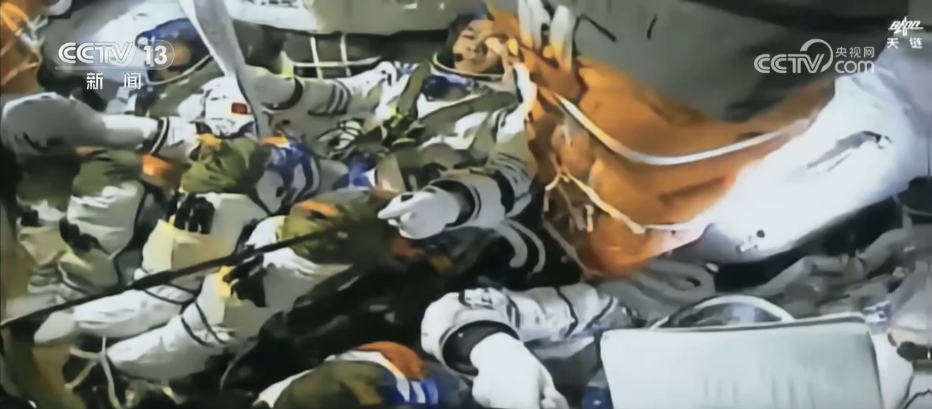
神舟载人飞船首次实现3.5小时交会对接
Zhong Guo Xin Wen Wang· 2025-10-31 21:30
Core Points - The Shenzhou 21 manned spacecraft achieved a significant milestone by completing a 3.5-hour rendezvous and docking with the Tianhe core module of the Chinese space station, marking a breakthrough in China's autonomous rapid rendezvous technology [1][2] - This achievement reflects a major evolution in China's docking technology, transitioning from the initial 44-hour docking with Tiangong-1 to a standard of 6.5 hours, and now to the current 3.5 hours [1][2] Summary by Sections Technological Advancements - The reduction in docking time was achieved by decreasing the number of orbits from 3 to 2 during the remote guidance phase and shortening the initial distance in the close-range guidance phase [2] - The GNC (Guidance, Navigation, and Control) system plays a crucial role in managing the entire docking process, from launch to docking and return, by processing vast amounts of data for precise decision-making [3] Energy Management - The rapid docking mode presents new challenges for the spacecraft's power distribution system, requiring quick maneuvers and adjustments that demand reliable energy supply [3] - Upgrades to the power distribution system allow the solar panels to quickly orient towards the sun, ensuring stable energy conditions and enhancing mission reliability [4] Mission Flexibility - The new docking mode eliminates previous constraints on launch windows related to solar panel angles, significantly improving mission planning flexibility and overall reliability [4]
【环球财经】SpaceX提交“精简版”登月计划
Xin Hua She· 2025-10-31 11:28
Core Points - SpaceX has submitted a "streamlined" lunar landing plan to NASA in response to dissatisfaction regarding the development progress of its crewed lunar lander [1][2] - The company claims to have achieved 49 "milestone" results, including tests for protection against micro-meteoroids and space debris, as well as demonstrations of lunar environmental control, life support, and thermal control systems [1] - NASA has criticized SpaceX for delays in the development of the lunar lander and has allowed competitors like Blue Origin to participate in the bidding process [2] Group 1 - SpaceX's streamlined lunar plan was developed under pressure from NASA due to concerns over the timeline and progress of the crewed lunar lander [1] - The company plans to conduct a long-duration flight test of its next-generation heavy-lift rocket, Starship, next year, which includes complex refueling operations in space [1] - NASA's Artemis program has faced multiple delays, with the crewed lunar missions being postponed due to significant technological development setbacks [2] Group 2 - SpaceX was awarded a contract worth approximately $2.9 billion by NASA in 2021 for the development and manufacturing of the lunar lander [2] - NASA's acting administrator has publicly expressed concerns about SpaceX's progress, indicating a shift in focus towards other competitors for the lunar lander project [2] - The Artemis program aims to return humans to the Moon, but has experienced delays in both the Artemis II crewed lunar flyby and the Artemis III crewed lunar landing missions [2]
什么样的科学家能“上天”?在天上干什么?选拔条件揭秘→
Huan Qiu Wang Zi Xun· 2025-10-31 09:07
Core Viewpoint - The Shenzhou 21 mission features a notable astronaut, Zhang Hongzhang, who is a doctoral degree holder and a payload expert, marking him as the second payload expert from China to go to space after Gui Haichao from Shenzhou 16 [1][3]. Group 1: Role of Scientists in Space - Scientists, particularly payload experts, are selected for their ability to conduct important scientific experiments and technical tests in space that cannot be performed on Earth [4][6]. - Payload experts must have a strong background in specific scientific fields and undergo over two years of space training to operate experimental equipment and analyze data in the unique environment of space [4][6]. Group 2: Physical and Psychological Requirements - While the physical requirements for payload experts are lower than for astronauts and flight engineers, they still need to meet certain health standards, including the ability to withstand significant weight during launch and re-entry [7][9]. - Specific health conditions, such as dental issues or chronic diseases, disqualify candidates from becoming payload experts [10]. Group 3: Selection and Training Process - The selection process for payload experts involves a rigorous two-and-a-half-year training program that includes learning about spacecraft structure, emergency skills, and adapting to the physical sensations of space [11][13]. - After completing training, candidates must pass additional evaluations to ensure they can handle the physiological and psychological demands of space missions [13].
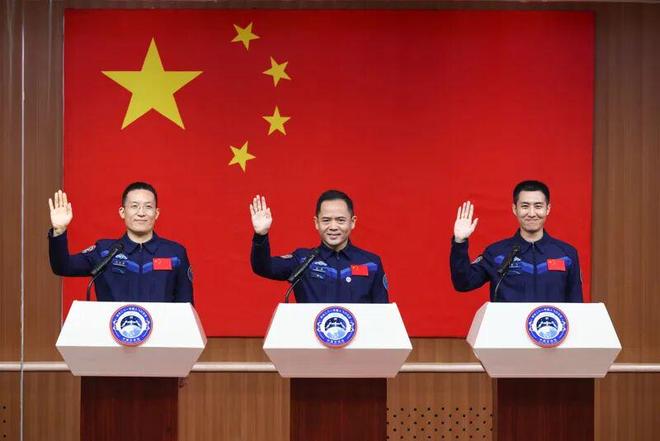
SpaceX提交“精简版”登月计划
Xin Hua She· 2025-10-31 07:45
Core Points - SpaceX has submitted a "streamlined" lunar landing plan to NASA in response to recent dissatisfaction regarding the development progress of its crewed lunar lander [1][3] - The company claims to have achieved 49 "milestone" results, including tests for protection against micro-meteoroids and space debris, as well as demonstrations of lunar environmental control, life support, and thermal control systems [1] - SpaceX plans to conduct a long-duration flight test of its next-generation heavy-lift rocket, Starship, next year, along with complex refueling tests in space [1] Industry Context - NASA's acting administrator criticized SpaceX for delays in the development of the crewed lunar lander, leading to the decision to allow competitors like Blue Origin to participate in the lunar lander bidding [3] - SpaceX was awarded approximately $2.9 billion by NASA in 2021 for the development and manufacturing of the lunar lander [3] - The Artemis program, announced by the U.S. in 2019, has faced multiple delays in its missions due to significant technological development setbacks [3]
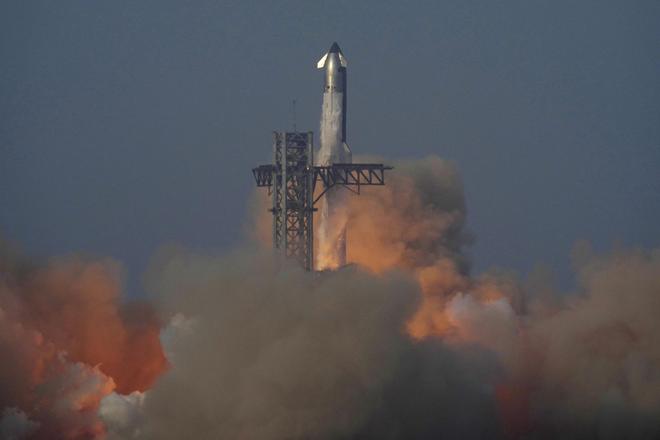
为孩子们解锁航天的奥秘
Bei Jing Wan Bao· 2025-10-31 07:20
Core Viewpoint - The article emphasizes the need for deep science popularization to bridge the gap between advanced technology and public understanding, particularly in the context of rapid technological advancements in China, such as AI, solid-state batteries, and space exploration [2][6]. Group 1: Book Overview - The book "Rocket Science Towards the Stars" effectively utilizes the familiar concept of rockets to engage the public, linking simple fireworks to advanced aerospace technology, thus providing a rich narrative space for science popularization [3][4]. - It presents a historical timeline of rocket evolution, from ancient signal rockets to modern space exploration, highlighting key figures and milestones in rocket science [4][5]. Group 2: Educational Approach - The book features a cartoon character named "Flying Duck" that guides readers through complex rocket science concepts using engaging illustrations, making the material accessible and relatable [4][8]. - It encourages readers to explore unanswered questions about the universe, fostering a scientific mindset of "bold ideas, careful verification" while satisfying children's curiosity about future space exploration [5][6]. Group 3: Philosophical Insights - The narrative draws parallels between human aspirations and technological advancements, illustrating how humanity has continually sought to transcend physical limitations through innovation [7][8]. - The book aims to instill a sense of exploration and curiosity in children, emphasizing that the desire to explore is a fundamental driving force behind human civilization [7][8].
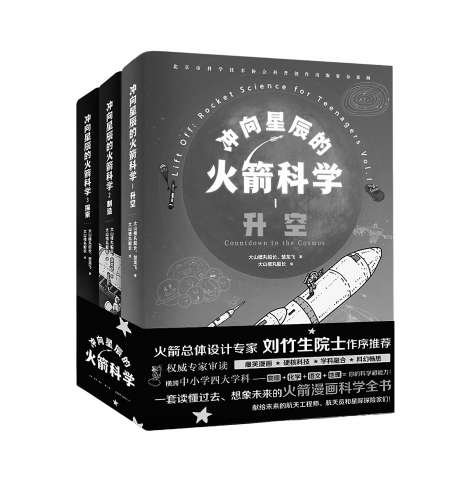
什么样的科学家能上太空
Ke Ji Ri Bao· 2025-10-31 00:41
Core Points - The Shenzhou 21 astronaut crew, including payload expert Zhang Hongzhang, is preparing for a mission, highlighting the importance of scientists in space exploration [1] - Payload experts are selected based on their specific scientific backgrounds and undergo extensive training to conduct important experiments in space [2] - The physical and psychological requirements for astronauts vary, with payload experts having lower physical demands but higher expectations in scientific and experimental capabilities [3][4] Group 1: Role of Scientists in Space - Scientists, particularly payload experts, perform critical experiments in space that cannot be conducted on Earth, requiring a combination of research and space adaptation skills [2] - Zhang Hongzhang, a scholar in high-energy battery technology, will conduct experiments related to space power systems during the Shenzhou 21 mission [2] Group 2: Selection and Training of Payload Experts - The selection process for payload experts involves a rigorous two-and-a-half-year training program covering spacecraft structure, emergency skills, and specific mission training [5] - Even after completing training, candidates must pass additional evaluations to ensure they can handle the physical and psychological demands of space missions [6]
航天科技控股集团股份有限公司2025年第三季度报告
Shang Hai Zheng Quan Bao· 2025-10-30 22:42
Core Viewpoint - The company has disclosed its third-quarter financial report for 2025, including the approval of asset impairment provisions and adjustments to the board's specialized committee members [7][10][13]. Financial Data - The third-quarter financial report has not been audited [6]. - The company has confirmed that there are no non-recurring gains or losses applicable [3]. - The company has reported a total credit impairment loss of 5,671,430.00 yuan and an asset impairment loss of -21,083,979.96 yuan, which will reduce the total profit for 2025 by 15,412,549.96 yuan [23]. Board Decisions - The eighth board meeting approved the adjustment of the specialized committee members [8]. - The board also approved the proposal for asset impairment provisions, which was reviewed by the audit committee prior to the board meeting [11][25]. - The board confirmed that the asset impairment provisions are in accordance with accounting standards and reflect the company's financial status accurately [26]. Shareholder Information - The company has provided details regarding the total number of shareholders and the status of major shareholders, although specific figures were not disclosed in the documents [5].

航天宏图:2025年前三季度净利润约-3.66亿元
Mei Ri Jing Ji Xin Wen· 2025-10-30 15:30
Company Performance - Aerospace Hongtu reported a revenue of approximately 403 million yuan for the first three quarters of 2025, representing a year-on-year decrease of 70.06% [1] - The net profit attributable to shareholders of the listed company was a loss of approximately 366 million yuan [1] - The basic earnings per share showed a loss of 1.4 yuan [1] Market Capitalization - As of the report, Aerospace Hongtu's market capitalization stands at 8.1 billion yuan [1]

日本新一代货运飞船与国际空间站成功对接
Xin Hua She· 2025-10-30 15:24
Core Points - Japan's new cargo spacecraft HTV-X1 successfully arrived at the International Space Station (ISS) on October 30, following its launch on October 26 [1] - The spacecraft was captured by the ISS using a robotic arm operated by Japanese astronaut Koichi Wakata [1] - The HTV-X1 will deliver supplies to the ISS and will also be used for technology validation tasks in orbit [1][2] Group 1 - HTV-X1 was launched at a speed of approximately 8 kilometers per second and successfully docked with the ISS at 20:10 JST on October 30 [1] - The spacecraft is designed to carry about 6 tons of payload to low Earth orbit, making it a successor to the HTV cargo spacecraft [2] - After unloading its cargo, HTV-X1 is planned to remain in orbit for about three months to conduct technology validation, including the release of a small satellite and testing of lightweight solar panels [1][2] Group 2 - The HTV-X1 measures approximately 8 meters in length and 4.4 meters in diameter, and it can function as a space experiment platform after detaching from the ISS [2] - The spacecraft will also facilitate the installation of a small exposure experiment platform on the Japanese "Hope" module of the ISS [1]