水利工程

Search documents
小浪底水库水位蓄至270.2米 为历史同期最高
Jing Ji Guan Cha Wang· 2025-10-31 14:34
Core Insights - The water level of the Xiaolangdi Reservoir on the Yellow River reached 270.2 meters, the highest for this time of year, providing a solid foundation for drought resistance and water supply for the upcoming winter and spring [1] - From July to October, water inflow in the upper reaches of the Yellow River was 21% lower than the average for the same period, while inflow in the middle reaches was 35% higher than average, indicating uneven water distribution that poses risks to water security [1] - The Yellow River Water Conservancy Committee has focused on water storage in reservoirs while ensuring flood prevention, with a total storage volume of 10.552 billion cubic meters in six reservoir groups in the middle and lower reaches, marking the second highest level for this time of year [1]
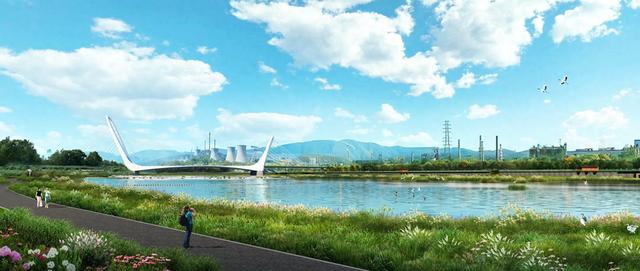
堤上新建9.1公里慢行步道,永定河左岸堤防“平急两用”升级
Bei Jing Ri Bao Ke Hu Duan· 2025-10-31 13:04
Core Viewpoint - The Yongding River Lushan Section Comprehensive Improvement Project is nearing completion, featuring a 4.6-kilometer long waterfront slow-moving system that will connect with an existing system to create a total of approximately 9.1 kilometers of waterfront pathways for public leisure and recreation [1][9]. Group 1: Project Overview - The main construction of the Yongding River left bank embankment has been largely completed, with finishing touches being applied, including the planting of trees such as Chinese scholar trees and drought-resistant willows [3][5]. - The new slow-moving space on the embankment, which is 3.4 meters wide, will provide citizens with opportunities for walking, running, cycling, and enjoying river views, enhancing public access to the waterfront [5][9]. Group 2: Engineering and Environmental Aspects - The project includes the installation of a vertical anti-erosion wall that enhances flood resistance, with a depth of 23 meters and a thickness of 0.8 meters, significantly improving the structural integrity and longevity of the embankment [5][7]. - The construction process minimizes disruption to the river environment and surrounding communities, avoiding large-scale excavation while also focusing on ecological restoration by planting various plants along the riverbanks [7][9]. Group 3: Broader Context and Future Developments - This improvement project is part of the post-disaster recovery efforts following the "23·7" flood in the Haihe River basin, aiming to enhance the flood control system and improve the water ecology and environment of the Yongding River [9]. - The Yongding River management authority is currently in a critical phase of a three-year enhancement plan, which includes multiple sections and aims to provide better recreational spaces for the public [9].

三方合力推进建设!黄茅峡水库建设座谈会召开
Nan Fang Nong Cun Bao· 2025-10-31 04:34
Core Viewpoint - The Huangmaoxia Reservoir construction meeting was held to accelerate the project, which is a significant water conservancy initiative aimed at flood control and comprehensive utilization, including navigation, irrigation, and power generation [2][5][11]. Group 1: Project Overview - The Huangmaoxia Reservoir is located on the Lianjiang River in Qingyuan, with a total storage capacity of 570 million cubic meters and a total investment of 12.388 billion yuan [6]. - The project officially commenced on July 22, 2025, and aims to enhance the flood control system in the middle and lower reaches of the Beijiang River, alleviating flood pressure on cities like Guangzhou and Foshan [7][6]. Group 2: Current Progress - As of now, 19 culvert foundations have been excavated and constructed, with 7.6 kilometers of access roads cleared and 47,000 cubic meters of earthwork completed [8][9]. - The focus is on commencing the main construction work by November [10]. Group 3: Strategic Goals - The project is not only a flood control initiative but also a long-term public welfare project, aiming to be a benchmark for quality and sustainability [11][12]. - The meeting emphasized the need for high standards in project planning and execution, integrating it with broader development initiatives [12][13]. Group 4: Collaborative Efforts - The meeting highlighted the importance of collaboration between the provincial water resources department and the Qingyuan municipal government to address challenges effectively [15][20]. - The project will leverage the strengths of the Yuehai Group in funding, technology, and talent, incorporating advanced management techniques such as digital twin technology [21][22].

“十四五”时期我省启动的首个国家级重大水利工程——袁湾水库正式下闸蓄水
He Nan Ri Bao· 2025-10-30 23:15
责任编辑: 郭栩汝 10月30日上午,随着导流洞闸门缓缓落下,我省"十四五"时期启动的首个国家级重大水利工程——袁湾水库 正式下闸蓄水,标志着袁湾水库开始发挥防洪减灾效益,淮河上游防洪工程治理翻开崭新一页。 袁湾水库工程自2022年3月正式开工,同年10月13日成功实现截流,全面转入主体工程施工阶段。今年3月31 日,工程建设再传捷报——土坝主坝提前45天填筑至设计高程,大坝顺利封顶,为下闸蓄水奠定了坚实基 础。 作为国家150项重大水利工程项目之一,袁湾水库工程总投资55.16亿元,是一座以防洪为主,结合供水、灌 溉,兼顾发电、改善生态等综合功能的大(2)型水库。这座横亘在光山县潢河上游的"巨龙",总库容达2.43 亿立方米,控制流域面积480平方公里,它的建成将改变淮河上游的防洪格局。 "袁湾水库是淮河上游防洪工程体系的关键一环。"袁湾水库工程建设方负责人表示,水库建成后,可与淮河 上游现有大型水库及规划工程联合运用,使淮河干流王家坝以上圩区的防洪标准由10年一遇提高到20年一 遇,将淮河干流淮滨站20年一遇设计流量控制在7000立方米每秒以内,显著提升淮河流域防洪保安能力。 除了防洪这一首要功能,袁湾水 ...
钱江水利(600283.SH):第三季度净利润同比下降2.82%
Ge Long Hui A P P· 2025-10-30 09:39
Core Viewpoint - Qianjiang Water Conservancy (600283.SH) reported a year-on-year increase in operating revenue for Q3 2025, but a decline in net profit attributable to shareholders [1] Financial Performance - Operating revenue reached 626 million yuan, representing a year-on-year increase of 14.34% [1] - Net profit attributable to shareholders was 78.11 million yuan, showing a year-on-year decrease of 2.82% [1] - Net profit attributable to shareholders after deducting non-recurring gains and losses was 70.20 million yuan, reflecting a year-on-year decline of 1.89% [1]

数字孪生水利工程的建设重点和实践应用
Qi Lu Wan Bao· 2025-10-29 02:19
Core Insights - The article discusses the construction of digital twin hydraulic engineering, focusing on data foundation, monitoring perception, data integration, intelligent model development, and precise decision support, which collectively enhance flood prevention, water resource scheduling, and engineering management [1][2]. Group 1: Data Foundation - A high-precision multi-dimensional modern surveying benchmark system is established, integrating satellite positioning and computer information technologies, which resolves issues related to spatial data standardization and fusion [3]. - The construction includes L3-level high-precision data foundations and LOD3.0 BIM models for hydraulic structures, enabling real-time dynamic physical mapping of hydraulic projects [3]. Group 2: Monitoring Enhancement - The enhancement of monitoring capabilities is crucial for the efficient operation of digital twin projects, utilizing satellite remote sensing, drones, and 5G technologies to create a dynamic monitoring and intelligent perception system [4]. - New monitoring systems are established for hydraulic structures, including online flow measurement systems and non-contact intelligent real-time detection technologies [4]. Group 3: Data Governance - Data governance and resource integration are essential for maximizing data value, involving the unification of data standards and the creation of a data directory to meet business needs [5]. - A grid-based storage and integrated management model is developed, covering all elements of hydraulic engineering for efficient data support in subsequent intelligent model development [5]. Group 4: Intelligent Model Development - Diverse intelligent analysis models are developed for water resource management, including rainfall-runoff models and structural stress analysis models, which support precise operations of hydraulic structures [7]. - The models aim to enhance flood management and optimize the scheduling of hydraulic structures, contributing to the overall efficiency of water resource management [7]. Group 5: Decision Support - Business applications are optimized to support precise decision-making, utilizing hydraulic models for flood evolution analysis and water resource scheduling [8]. - A smart management platform is constructed to facilitate the application of BIM technology throughout the lifecycle of hydraulic projects, promoting intelligent and refined management practices [8]. Group 6: Conclusion - The integration of IoT, big data, and AI technologies in digital twin hydraulic engineering promotes comprehensive data sharing and infrastructure upgrades, significantly enhancing flood prevention and water resource optimization [9]. - This initiative is strategically important for modernizing the governance system and capabilities in watershed management [9].
南水北调东中线调水超830亿立方米 受益范围拓展
Ren Min Ri Bao· 2025-10-28 23:50
Core Insights - The South-to-North Water Diversion Project has transferred over 83 billion cubic meters of water to northern regions, benefiting 195 million people across 48 large and medium-sized cities [1] - The project is expanding its benefits from urban areas to rural regions as supporting infrastructure improves [1] - The water loss rate in the main canal of the Middle Route has been significantly reduced from the designed 10% to approximately 3% in actual operation [1] Water Quality Management - The South-to-North Water Diversion Group has established a comprehensive water quality safety assurance system that includes monitoring, protection, prevention, emergency response, and research [1] - The number of water quality monitoring parameters at the Taocha monitoring station has increased from 101 to 197 [1] - The water quality of the Middle Route project has stabilized at or above Class II surface water standards, while the East Route project meets Class III surface water standards [1]
提升供水质量 润泽广袤乡村(人民时评)
Ren Min Ri Bao· 2025-10-28 22:30
Core Insights - The article discusses the challenges and improvements in rural water supply systems in China, emphasizing the need for sustainable and efficient management to ensure long-term access to clean water for dispersed farming communities [1][2][3][4] Group 1: Current State of Rural Water Supply - Significant improvements have been made in rural water supply systems, with over half of the counties achieving unified management and monitoring during the "14th Five-Year Plan" period [1] - China has established the world's largest rural centralized water supply system, with a projected national water network coverage rate of 80.3% by the end of the "14th Five-Year Plan" [1] - The rural tap water penetration rate is expected to reach 96%, with irrigated farmland area projected to be 10.9 million hectares [1] Group 2: Challenges in Rural Water Supply - Rural water supply projects face challenges related to funding, management, and sustainability, requiring a comprehensive approach to resource allocation and social management [2][3] - The need for effective coordination between large-scale and small-scale water projects is highlighted to maximize the overall benefits of the water network [2] Group 3: Innovative Solutions and Institutional Reforms - Institutional innovation is essential to address long-standing issues in rural water supply, such as funding sources and management responsibilities [3] - Examples of innovative practices include differentiated water pricing in Shanxi and water rights trading in Ningxia, which enhance resource efficiency while maintaining affordability for farmers [3] - The article advocates for a combination of market mechanisms and government planning to improve service quality and operational efficiency in rural water supply systems [3]
为谋取职务提拔,樊新中两次共送了200万,后升任董事长、厅长
Xin Jing Bao· 2025-10-28 14:04
Core Points - The case involves Fan Xinzhong, former deputy chief economist of China South-to-North Water Diversion Group, who is accused of bribery, money laundering, and receiving bribes totaling over 75.21 million RMB from 2017 to 2023 [1][2] - The prosecution has presented evidence, and Fan has expressed remorse during the trial, which has been adjourned with a verdict to be announced later [2] Summary by Sections Accusations and Charges - Fan Xinzhong is charged with accepting bribes amounting to over 75.21 million RMB while holding various positions, including deputy secretary-general of the Guizhou Provincial Government and general manager of Guizhou Water Investment Group [1] - He allegedly provided assistance in project contracting, fund disbursement, and promotions in exchange for bribes [1] - In 2018, he gave a total of 2 million RMB to state officials to secure a promotion [3] Background and Career - Fan Xinzhong, born in September 1964, has held several significant positions in the water resources sector, including vice president of the Shanxi Water Conservancy and Electric Power Survey and Design Institute [2] - He served as deputy secretary-general of the Guizhou Provincial Government in 2015 and became general manager of Guizhou Water Investment Group in August 2017 [3] - His career progressed with roles in Guizhou Wujang Energy Group and the Guizhou Provincial Water Resources Department, where he was appointed as the party secretary and director [3] Legal Proceedings - The trial included evidence presentation by the prosecution and cross-examination by Fan's defense team, with Fan admitting guilt during his final statement [2] - The court has adjourned the trial, with a decision on the case pending [2]
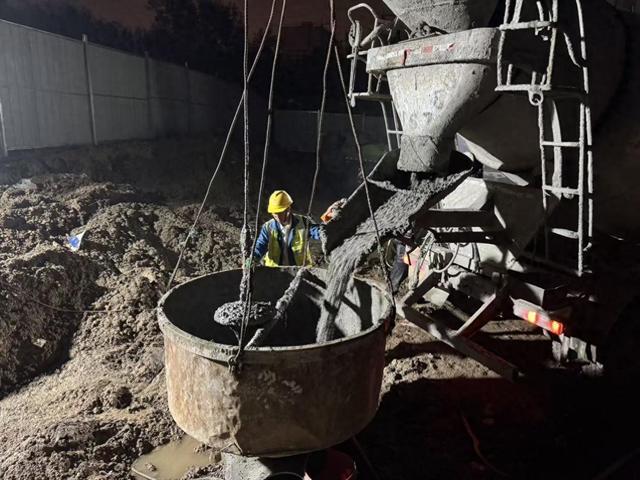
北京六水联通滞洪区三标项目管理中心桩基浇筑完成
Huan Qiu Wang· 2025-10-28 08:42
Core Points - The completion of the pile foundation for the Beijing Liushui Lian Tong flood control area project marks the official entry into the main construction phase of the project management center [1][3] Group 1: Project Overview - The project is located in the Mentougou District of Beijing and includes the renovation of the Chenglong Canal over 3.9 km, the construction of 6 new water supply pump stations, and 15.5 km of water supply pipelines [3] - Additional constructions include 2 new drainage pump stations, 3 sluices, a management center, and landscaping recovery in the Xihecha flood control area [3] Group 2: Challenges and Solutions - The project team actively engaged with owners and local relevant units to overcome challenges such as relocation difficulties and complex geological conditions [3] - During construction, the team optimized equipment scheduling and personnel allocation, strengthened safety and environmental control, and strictly implemented standardized management [3] Group 3: Project Impact - Upon completion, the project will enhance water resource regulation capabilities in the Mentougou District, addressing issues of disconnected water systems, insufficient water volume, and unstable water quality in the new city area [3] - The project aims to create a water network characterized by efficiency, greenness, intelligence, smooth circulation, and orderly regulation, laying a solid foundation for the goal of building a safe and resilient Mentougou [3]