
种植业

Search documents
天上有卫星,地面有气象站……种粮“神兵利器”各显神通 农高区刷新智慧农业图景
He Nan Ri Bao· 2026-01-14 23:25
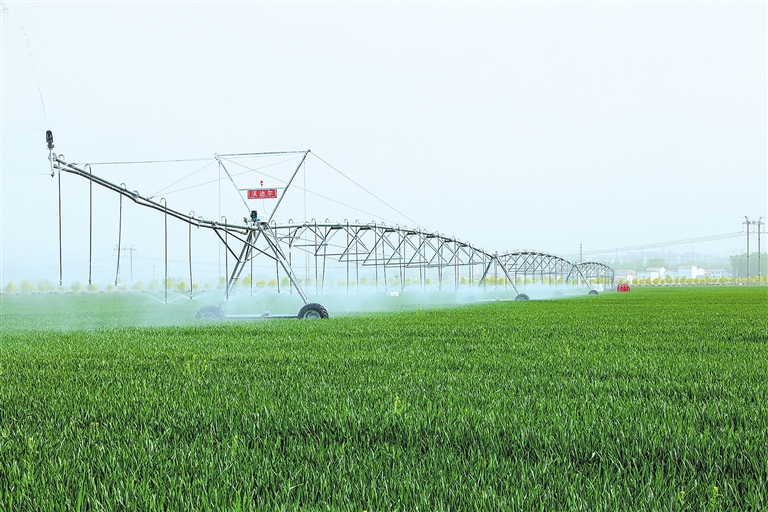
Core Viewpoint - The article highlights the transformation of agriculture in the Zhoukou National Agricultural High-tech Zone through the adoption of smart agricultural technologies, showcasing how these innovations enhance efficiency and productivity in farming practices [1][2][4]. Group 1: Technological Advancements - The use of drones and big data in agriculture allows for precise fertilizer application and real-time monitoring of soil conditions, significantly improving farming efficiency [1][2]. - The Zhoukou National Agricultural High-tech Zone has established a comprehensive smart agriculture information platform, integrating various advanced technologies such as soil moisture monitoring systems and AI pest prediction [4][5]. - The implementation of automated irrigation systems and precision farming techniques has led to substantial water savings and increased crop yields, demonstrating a shift from traditional farming methods to technology-driven practices [4][5]. Group 2: Training and Skill Development - New farmers in the region are actively learning drone operation and data analysis, indicating a cultural shift towards embracing modern agricultural technologies [2][5]. - The local government provides expert guidance and free training in smart agricultural techniques, facilitating the skill development of farmers [4]. Group 3: Economic Impact - The integration of technology in agriculture not only enhances productivity but also strengthens the confidence of farmers, enabling them to better manage their operations [2][5]. - The collaboration between local enterprises and farmers, such as direct supply chains for high-quality wheat, reflects a growing recognition of the importance of agriculture in the economy [5].


端牢“中国饭碗” 多省份“十五五”农业规划路线图出炉
2 1 Shi Ji Jing Ji Bao Dao· 2026-01-14 23:04
Core Viewpoint - The "14th Five-Year Plan" emphasizes strengthening food security and enhancing the supply capacity of important agricultural products, with a focus on technological innovation and land management as key strategies for agricultural development across various provinces [1][2]. Group 1: Food Security and Agricultural Production - Food security is identified as a national priority, with the "14th Five-Year Plan" proposing a new round of actions to increase grain production capacity by 100 billion jin [2]. - Provinces like Heilongjiang aim to achieve a grain output of 1640.1 billion jin by 2025, with a target of 2000 billion jin by 2030 [2]. - Each province has specific goals, such as Jilin focusing on maintaining national food security and Shandong on building a higher-level grain storage system [2]. Group 2: Technological Innovation - Technological innovation is highlighted as a core driver for enhancing agricultural production capacity and quality, addressing critical issues in seed technology and promoting smart machinery and agricultural big data applications [3][4]. - Various provinces are implementing seed industry revitalization actions, with initiatives to establish breeding centers and promote advanced agricultural technologies [4][5]. Group 3: Land Management and Agricultural Infrastructure - High-standard farmland construction is a key focus for ensuring food security during the "14th Five-Year Plan," with multiple provinces outlining specific measures for land protection and quality improvement [6]. - The development of a diversified food supply system is emphasized, with provinces proposing targeted actions to enhance livestock, aquaculture, and specialty agricultural sectors [6]. Group 4: Agricultural Industry Upgrading - The "14th Five-Year Plan" encourages the upgrading of agricultural industries and the development of specialty products, with provinces like Jilin and Henan prioritizing modern agricultural practices and the integration of various agricultural sectors [8][9]. - There is a strong emphasis on extending industrial chains, improving agricultural product processing, and enhancing logistics and storage infrastructure to facilitate market access [9]. Group 5: Regional Differentiation and Consumer Demand - Agricultural development strategies should be tailored to local resource endowments, with a focus on consumer demand to strengthen local specialty industries [7][9]. - The plan advocates for the development of organic food and convenience food industries to meet changing consumer preferences, particularly among younger demographics [7].
聚焦北大荒丨八五四分公司:“双星级”考评体系优化现代化管理体系
Sou Hu Cai Jing· 2026-01-14 13:56
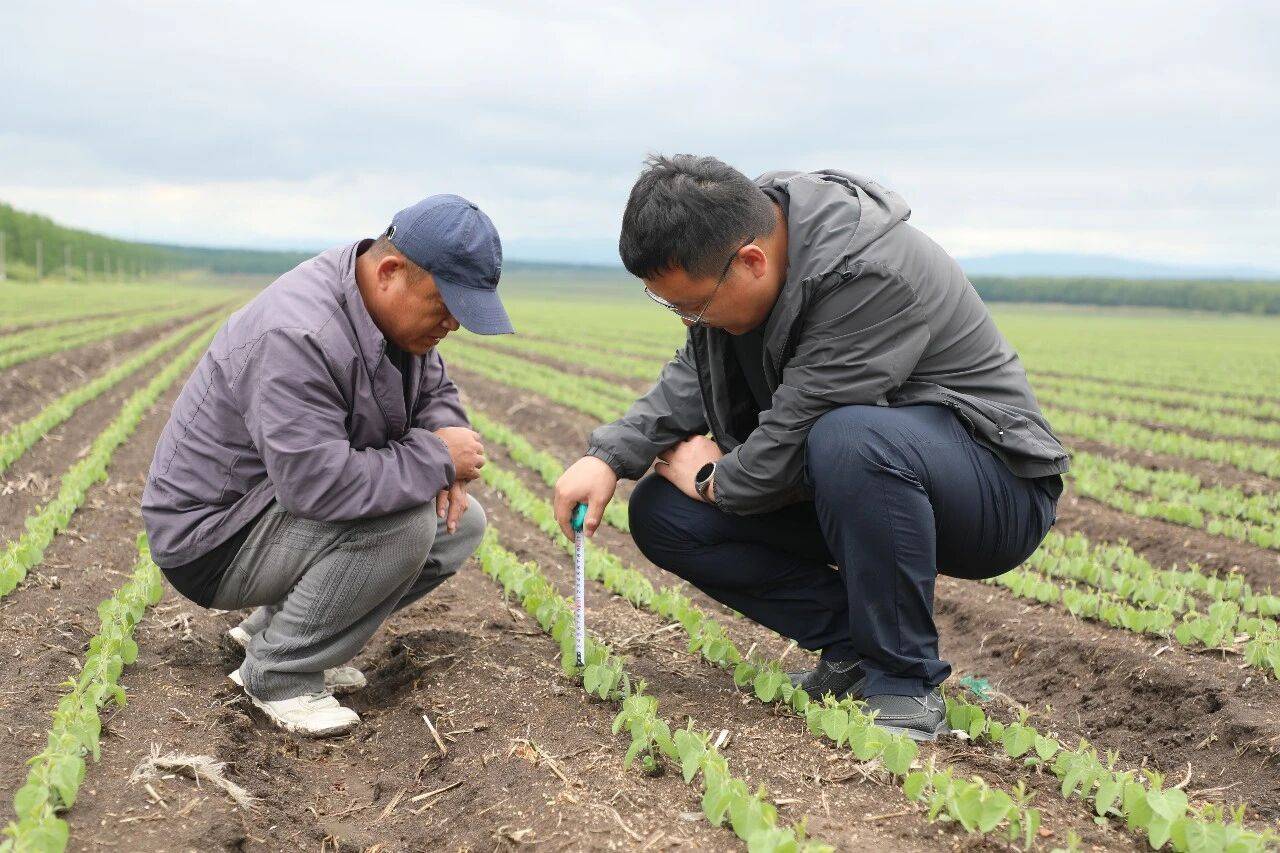
Core Viewpoint - The company has initiated a "Double Star" evaluation system to enhance agricultural management and promote high-quality development in agriculture, transitioning from administrative-driven management to precise empowerment and incentive-led transformation [1][3]. Group 1: Management System - The "Double Star" management system aims to clarify responsibilities and establish a governance structure with clear rewards and penalties, focusing on key agricultural management subjects [1][3]. - The evaluation system includes quantifiable assessment indicators related to policy implementation, technical services, field management supervision, and problem-solving effectiveness, linking empowerment outcomes directly to management personnel's performance evaluations and career advancement [3][5]. Group 2: Family Farm Evaluation - The "Star Rating" for family farms is designed to stimulate operational vitality, with a model encompassing over 30 specific indicators across eight dimensions, including seed application, standardized operations, technology conversion, green production, and yield enhancement [3][5]. - A transparent evaluation process has been established, including application, preliminary review, re-evaluation, and public announcement, ensuring fairness and allowing for internal supervision of the evaluation results [3][5]. Group 3: Implementation and Impact - Since the launch of the "Double Star" evaluation, management areas have formed special teams to promote policy understanding, achieving a 100% awareness rate among management personnel [5]. - The initiative has led to increased enthusiasm among family farms, with active participation in standardized planting techniques and technical training, significantly improving the overall standardization level of agricultural production [5][7]. Group 4: Future Plans - In 2026, the company plans to refine the "Double Star" evaluation indicators and operational mechanisms based on feedback, aiming for regularization and standardization of the management work [7]. - The company seeks to enhance agricultural management efficiency and invigorate agricultural production operations, contributing valuable practical experience to the North China Agricultural Group's agricultural sector [7].

端牢“中国饭碗”!多省份“十五五”农业规划路线图出炉
2 1 Shi Ji Jing Ji Bao Dao· 2026-01-14 12:13
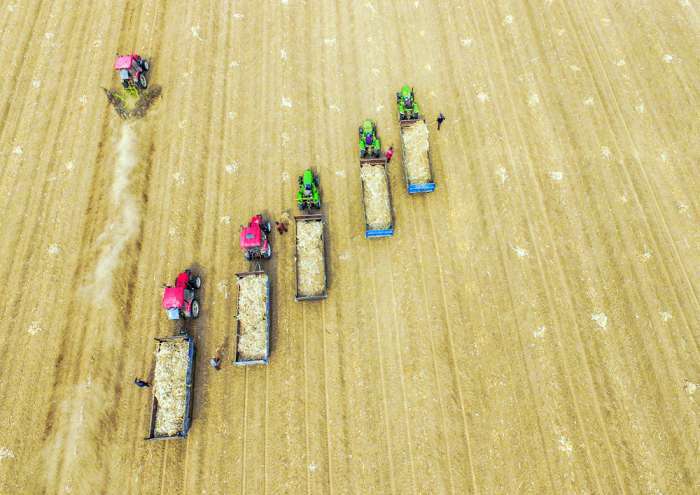
Core Viewpoint - The "14th Five-Year Plan" emphasizes strengthening food security and enhancing the supply capacity of important agricultural products, with a focus on technological innovation and land management as key strategies for agricultural development [2][3]. Group 1: Food Security and Agricultural Production - Food security is identified as a national priority, with the plan to implement a new round of actions to increase grain production capacity by 100 billion jin [3]. - Various provinces have set specific goals for grain production, such as Heilongjiang aiming for a total grain output of 1640.1 billion jin by 2025 and striving for 2000 billion jin by 2030 [3]. - Each province's plan highlights the importance of enhancing agricultural production capacity and quality, with specific tasks assigned to regions based on their agricultural strengths [3]. Group 2: Technological Innovation - Technological innovation is positioned as the core driver for improving agricultural production capacity and ensuring food security, focusing on overcoming challenges in seed technology and promoting smart agricultural machinery and big data applications [4][5]. - Provinces like Inner Mongolia and Jilin are implementing actions to revitalize the seed industry and enhance breeding technologies, while also focusing on smart machinery development [5][6]. Group 3: Differentiated Development Strategies - Different regions are encouraged to adopt differentiated development paths based on local resource endowments, with a focus on enhancing local agricultural characteristics and consumer demand [6][7]. - The plans emphasize the need for a diversified food supply system, integrating various agricultural sectors such as livestock, aquaculture, and specialty crops [7][8]. Group 4: Agricultural Industry Upgrading - Many provinces are prioritizing the upgrading of agricultural industries and the development of specialty products, with initiatives to enhance modern agricultural practices and promote local specialties [8][9]. - For instance, Shandong and Fujian are focusing on integrating agriculture with other industries and enhancing brand influence for local agricultural products [9][10]. Group 5: Infrastructure and Supply Chain - The plans call for improvements in infrastructure, such as cold chain logistics and storage facilities, to enhance the agricultural supply chain and avoid oversaturation of primary agricultural products in the market [9][10]. - Strengthening the entire agricultural value chain is essential for promoting industry clustering and ensuring efficient production and distribution [10].
种植业板块1月14日跌0.42%,神农种业领跌,主力资金净流出2.43亿元
Zheng Xing Xing Ye Ri Bao· 2026-01-14 08:44
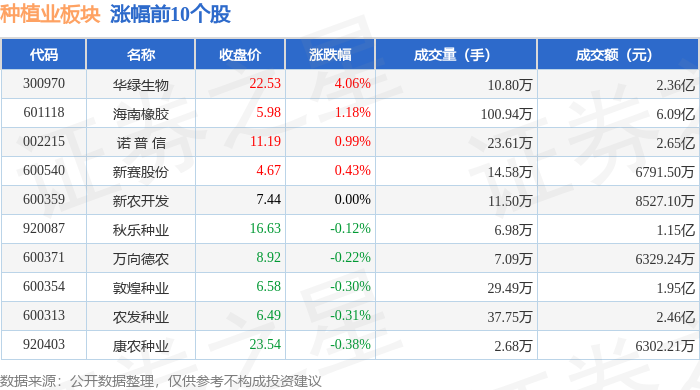
Market Overview - The planting industry sector declined by 0.42% on January 14, with Shennong Agricultural leading the decline [1] - The Shanghai Composite Index closed at 4126.09, down 0.31%, while the Shenzhen Component Index closed at 14248.6, up 0.56% [1] Individual Stock Performance - Hualu Biological (300970) saw a price increase of 4.06%, closing at 22.53 with a trading volume of 108,000 shares and a transaction value of 236 million yuan [1] - Hainan Rubber (601118) increased by 1.18%, closing at 5.98 with a trading volume of 1,009,400 shares and a transaction value of 609 million yuan [1] - Shennong Agricultural (300189) experienced a significant decline of 3.77%, closing at 6.89 with a trading volume of 2,088,600 shares and a transaction value of 1.454 billion yuan [2] Capital Flow Analysis - The planting industry sector experienced a net outflow of 243 million yuan from main funds, while retail investors saw a net inflow of 240 million yuan [2] - Notable net inflows from retail investors were observed in stocks like Hualu Biological and Hainan Rubber, while Shennong Agricultural faced significant outflows [3]


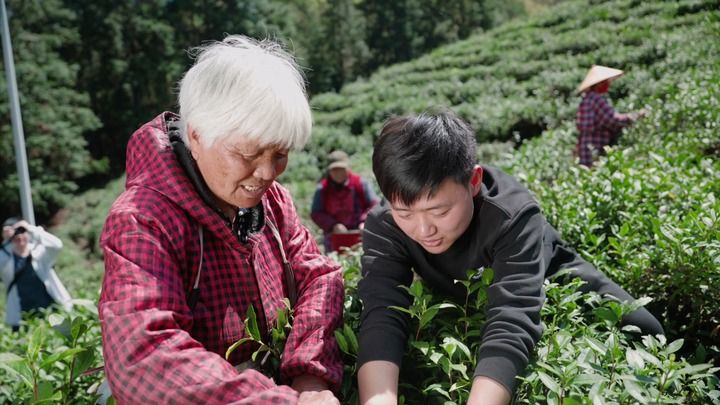
浙江浦江:青年人才返乡,乡村大变样
Xin Hua Wang· 2026-01-14 02:18
Core Insights - The article highlights the successful return of young talents to rural areas in Zhejiang Province, specifically in Pujiang County, where they are driving local economic growth through innovative agricultural practices and entrepreneurship [4]. Group 1: Individual Success Stories - Chen Jinhong, a 27-year-old tea farmer, returned to his hometown to improve the local tea industry, achieving zero pollution, zero fertilizer, and zero pesticide residue standards in his tea garden [3]. - In 2025, Chen led the sale of over 7,500 pounds of dry tea, with sales revenue increasing by 15% compared to 2024, and farmers' income rising by 10% [3]. - Xue Yuqi, a "post-00s" entrepreneur, established a live-streaming team to promote the flower industry in Wujiang Village, creating new job opportunities and generating over 300,000 yuan for the village collective in 2025 [3]. Group 2: Government Initiatives - Pujiang County has implemented measures such as "returning swarms" and "targeted recruitment" to attract young talents back to rural areas, creating a supportive ecosystem for entrepreneurship [4]. - The county has conducted 112 training and exchange activities, benefiting over 5,000 young individuals, and introduced 16 specific policies to facilitate their return [4]. - Over 6,200 young talents have successfully returned to Pujiang County, contributing to the growth of local industries such as grapes, vegetables, tea, flowers, and fragrant nuts, and increasing collective economic revenue by over 70 million yuan [4].
乳山花生基地入选全国大面积高产案例
Da Zhong Ri Bao· 2026-01-14 00:58
乳山市农业农村事务服务中心种植业推广站站长李汉燕介绍,洋村花生基地本身就是综合应用多项 新技术的示范种植基地,亩产高达五六百公斤,而2024年乳山花生平均亩产为307.28公斤。 "我们往年在普通农田推广新技术、新品种,带来的增产效果往往在10%到20%之间。洋村花生基 地这次的亩产增幅如此大,是三项核心技术集成应用的结果。"李汉燕介绍,洋村花生基地采用机械精 播技术,保障了播种的精准度与均匀度;综合应用降解地膜施用技术与ARC生物菌剂施用技术,环保 无残留且有效改良土壤微生态;水肥一体化精准调控技术实现了花生生长关键期水分和养分的按需、精 准供给。 日前,农业农村部全国农业技术推广服务中心发布《2025年大豆油菜花生大面积高产典型案例》名 单,乳山市徐家镇洋村花生基地凭借791.0公斤/亩的高产成果榜上有名,成为全国花生单产提升的标 杆。 乳山是我省的花生主产区之一。目前,全市常年种植面积27万亩左右,产量8.4万吨,产值6.7亿 元,生食花生仁出口量全国县级排名第五,花生制品出口量全国县级排名第二。"乳山大花生"先后获得 国家农产品地理标志认证、国家地理标志证明商标、全国乡村特色产品、全国名特优新农产品、 ...
绿意满棚 沙培芹菜迎丰收
Xin Lang Cai Jing· 2026-01-13 23:59
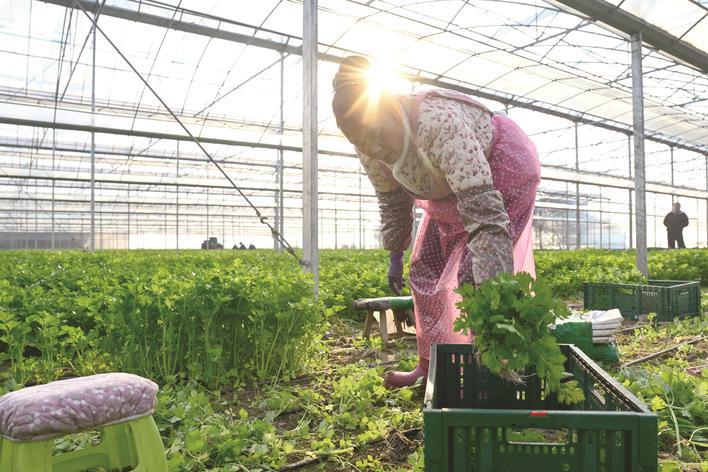
昨天,走进平湖市广陈镇浙江绿迹农业科技有限公司的温室大棚,一片绿意盎然,工人们正在收割沙地 里长好的芹菜。 (来源:南湖晚报) 转自:南湖晚报 绿迹"沙培芹菜"突破传统土壤种植的局限,以优质沙粒作为生长基质,采用专用配方营养液,通过水肥 一体化滴灌技术直输芹菜根部,做到全程不打农药。 N记者 张启帆 通讯员 陆丽君 李凤超 摄 ...
冬训赋能积极备耕
Xin Lang Cai Jing· 2026-01-13 22:56
(来源:黑龙江日报) 农场聚焦水稻育、插、管、收全链条,以技术突破破解单产提升瓶颈。育苗推广智能双氧催芽+温湿度 传感器管控,种子发芽率提至95%以上,壮苗率达100%;栽培采用宽窄行插秧模式,配套智能农机, 结合36个叶龄跟踪点实现数字化管控,无人机精准施药让病害发生率降至2%以下;施肥全覆盖测土配 方+侧深施肥,53万亩稻田按需精准用肥,实现节本增效。多举措发力下,2025年军川农场水稻最高亩 产达835公斤,培育25户示范户、3条示范带及3处核心示范区,形成可复制推广经验。 当前军川农场借冬训精进技术,围绕智慧农业设备实操、良种筛选、田间精细化管理等重点内容集中充 电,将高产经验转化为备耕硬举措,强化科技创新驱动,提升农业从业者种植水平,以技术深耕、管理 提质持续夯实粮食生产根基,筑牢粮食安全防线,为2026年农业丰产丰收、职工增收致富筑牢坚实基 础。 本报讯(杨倩 记者刘畅)近日,北大荒集团军川农场抢抓冬闲时节,复盘2025年水稻单产提升经验, 研讨智慧农业设备应用,将冬闲转化为赋能备耕的黄金期,全力为今年农业生产开好局。 水稻作为军川农场核心作物,2025年农场以"藏粮于地、藏粮于技"为指引,将水稻 ...
土壤“体检”定制“肥方”
Xin Lang Cai Jing· 2026-01-13 22:56
Core Viewpoint - The company is transforming agricultural practices from "experience-based planting" to "data-driven farming" by implementing a comprehensive approach to fertilizer management and soil analysis for the 2026 spring planting season [1][2] Group 1: Fertilizer Management and Technology - The company has developed a personalized fertilization recommendation card for farmers, enhancing their confidence in the upcoming planting season [1] - In the previous autumn harvest, the company's technicians collected 800 soil samples and conducted standardized processing and precise testing to identify nutrient deficiencies in the soil [1] - A digital model of soil nutrients was created, allowing for the optimal ratio of nitrogen, phosphorus, and potassium to be determined, resulting in over 2,800 tailored fertilization recommendations for farmers [1] Group 2: Historical Context and Impact - The company has been implementing soil testing and fertilization technology since 2007, achieving nearly 20 years of experience in this field [2] - The standardized and rational application of this technology has led to a reduction of 1 to 3 kilograms of fertilizer per acre for farmers, with an average increase of 3% in rice yield per acre [2] - The integration of digital management with fertilization practices has created an intelligent connection across the entire process from fertilization to storage, enhancing agricultural production efficiency and providing dual support for rice yield and farmer income [2]