
科学种植

Search documents
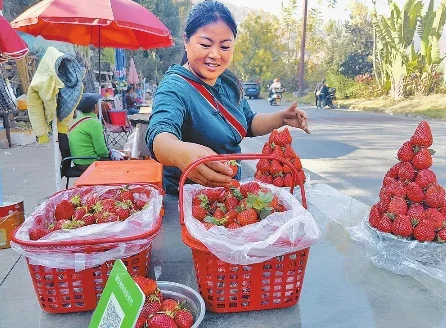
草莓红 乡村兴
Xin Lang Cai Jing· 2026-02-17 20:42
Core Viewpoint - The strawberry cultivation in Dengeng Village has become a significant source of income for local residents, leveraging new varieties and improved agricultural practices to enhance quality and yield [4][6]. Group 1: Strawberry Cultivation and Economic Impact - Dengeng Village has a history of over 20 years in strawberry cultivation, with recent advancements in farming techniques and the introduction of new varieties like "Qianmei No. 1" and "Milk Strawberry" [4]. - The total strawberry planting area in Dengeng Village has reached 120 acres, generating an annual income of 2.1 million yuan [6]. - Villagers report a net profit of 12,000 yuan per year from strawberry farming, which is significantly higher than traditional crops like corn and potatoes [3]. Group 2: Community and Tourism Development - The strawberry market has become a gathering place for residents and tourists, enhancing local tourism and providing a platform for selling agricultural products [6]. - The local government, with support from agricultural experts, has conducted training to improve the skills of strawberry farmers, leading to better quality and higher sales [4]. - The village's strategic location near tourist attractions has increased foot traffic, benefiting both the local economy and community engagement [4][6].

跟南瓜“谈心”
Xin Lang Cai Jing· 2026-02-10 00:32
Group 1 - The article highlights the transformation of agricultural practices in a village, emphasizing the shift from traditional irrigation methods to scientific management techniques, which have improved crop yield and quality [1][2] - The introduction of high-standard farmland projects has enabled local farmers to utilize modern technology, such as soil moisture sensors, leading to better water management and reduced pesticide use [1][2] - The success of local farmers, like 阿宏, is attributed to their ability to connect with external markets and utilize online platforms for selling their produce, ensuring better sales and reducing waste [2] Group 2 - The current agricultural landscape in the village is characterized by vibrant and healthy crops, indicating a significant improvement in farming practices and productivity [2] - The article describes the bustling activity during the harvest season, with farmers efficiently managing the collection and distribution of their produce, showcasing a thriving local economy [2] - The sensory details, such as the smell of the soil and the sounds of the crops, evoke a sense of connection to the land and the positive changes that have taken place over the years [3]
120.5万吨!丹东粮食产量再创历史新高
Xin Lang Cai Jing· 2026-01-14 01:02
Core Insights - The total grain production in Dandong reached a historical high of 1.205 million tons in 2025, an increase of 0.2 thousand tons or 0.7% compared to the previous year [1] - The area planted decreased slightly to 2.697 million acres, down by 3,678.9 acres year-on-year, yet the city managed to maintain grain production through various agricultural policies and initiatives [1] Group 1 - The average yield per acre increased to 893.8 jin, up by 7.8 jin from 2024 and 6.7 jin from 2023, with Donggang City achieving a yield of 1,006.3 jin per acre, exceeding the provincial average by 46.8 jin [2] - The continuous improvement in yield is attributed to strong technological support, including the implementation of the "Strong Core Action" in seed industry and promotion of scientific planting techniques [2] - Soybean planting area and production both increased, with a planting area of 9.4 thousand hectares and a production of 22,000 tons, marking a 0.5% increase from 2024 and a 13.0% increase from 2023 [2] Group 2 - The city has enhanced its disaster prevention and mitigation capabilities in response to climate change and pest risks, expanding agricultural meteorological warning services and focusing on pest control [2]

土壤“体检”定制“肥方”
Xin Lang Cai Jing· 2026-01-13 22:56
Core Viewpoint - The company is transforming agricultural practices from "experience-based planting" to "data-driven farming" by implementing a comprehensive approach to fertilizer management and soil analysis for the 2026 spring planting season [1][2] Group 1: Fertilizer Management and Technology - The company has developed a personalized fertilization recommendation card for farmers, enhancing their confidence in the upcoming planting season [1] - In the previous autumn harvest, the company's technicians collected 800 soil samples and conducted standardized processing and precise testing to identify nutrient deficiencies in the soil [1] - A digital model of soil nutrients was created, allowing for the optimal ratio of nitrogen, phosphorus, and potassium to be determined, resulting in over 2,800 tailored fertilization recommendations for farmers [1] Group 2: Historical Context and Impact - The company has been implementing soil testing and fertilization technology since 2007, achieving nearly 20 years of experience in this field [2] - The standardized and rational application of this technology has led to a reduction of 1 to 3 kilograms of fertilizer per acre for farmers, with an average increase of 3% in rice yield per acre [2] - The integration of digital management with fertilization practices has created an intelligent connection across the entire process from fertilization to storage, enhancing agricultural production efficiency and providing dual support for rice yield and farmer income [2]

让小土豆结出帮扶硕果
Xin Lang Cai Jing· 2025-12-24 20:49
Core Viewpoint - The article highlights the successful implementation of scientific potato cultivation techniques in Guizhou's Nayong County, leading to significant increases in yield and quality, driven by the support of the Hebei Provincial Committee of the Chinese Democratic League [3][4][5]. Group 1: Agricultural Innovation - The introduction of new potato varieties has resulted in an average yield of 2500 kg per mu, doubling the previous yield of 1000 to 1250 kg per mu [4][5]. - The implementation of scientific farming practices has led to a product rate exceeding 85%, significantly above market standards, with expected prices reaching twice that of traditional potatoes [4][5]. Group 2: Support and Training - The Hebei Provincial Committee has provided 100,000 yuan worth of quality seed potatoes and fertilizers to support scientific cultivation, aiming to enhance local farmers' income [4][5]. - Training programs have been established to educate farmers on scientific planting techniques, ensuring they can independently manage their crops and improve their yields [6]. Group 3: Long-term Development - Plans are in place to expand potato cultivation to 200 mu by early 2026, utilizing a model that integrates associations, cooperatives, and farmers to streamline resources and enhance production [6]. - The initiative aims not only to increase immediate yields but also to build long-term agricultural capabilities among local farmers, fostering a sustainable agricultural ecosystem [6].
种地老把式,“上学”学技术
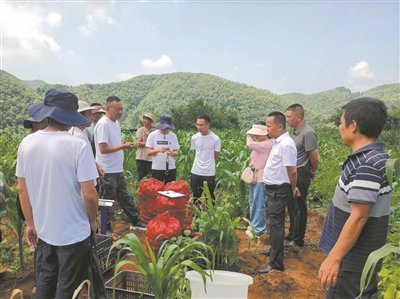
Ren Min Ri Bao· 2025-11-19 22:20
Core Insights - The article highlights the importance of modern agricultural techniques in increasing oilseed yield, as demonstrated by local farmers participating in a training program [1] Group 1: Training Program Overview - The 2025 high-quality farmer training program in Majiang County focuses on practical agricultural education, emphasizing the need for farmers to adopt scientific methods alongside traditional practices [1] - The program includes 150 participants divided into three classes: vegetable and fruit planting, animal epidemic prevention, and grain and oil class [1] Group 2: Practical Application - Farmers like Wu Shuizhi are applying newly learned techniques, such as reasonable planting density, to enhance oilseed production on their farms [1] - The training combines theoretical knowledge with hands-on practice, aiming to improve agricultural productivity in the region [1]
“良机+良技+良种”助力秋冬种按下“加速键” 端稳端牢“中国饭碗”
Yang Shi Wang· 2025-11-10 02:55
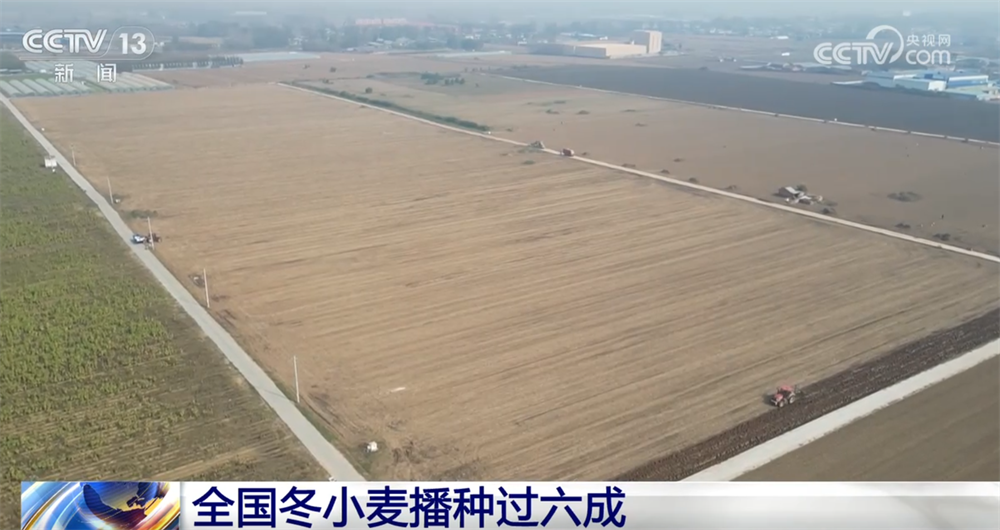
Group 1 - The core viewpoint of the article highlights the accelerated progress of autumn and winter planting in China, with over 60% of winter wheat and over 90% of winter oilseed rape already sown as of November 8 [1][5] - In the Huang-Huai-Hai region, winter wheat sowing has surpassed 60%, with specific regions like Pingdingshan in Henan experiencing a nearly one-month delay compared to last year [1] - Agricultural experts are advising farmers to select semi-winter varieties with better cold resistance and to increase sowing amounts slightly to ensure uniform seedling emergence due to the late sowing conditions [3] Group 2 - The current period is critical for oilseed rape sowing, with over 90% of the national target achieved [1] - In Hunan's Yiyang City, advanced machinery is being utilized for efficient sowing, with large-scale sowing machines capable of covering 35-40 acres per day, allowing simultaneous harvesting and sowing operations [5][7] - The integration of harvesting and sowing processes is exemplified by the seamless transition from late rice harvesting to oilseed rape sowing in Hunan [5]
秋收冬种尽“丰”景 希望的田野里一派繁忙景象
Yang Shi Wang· 2025-10-13 06:30
Group 1: Rice Harvest in Jiangxi - The mid-season rice in Jiangxi's Shangrao is experiencing a busy harvest period, with some areas showing increased yields compared to previous years due to scientific management practices [1] - Shangrao has implemented effective irrigation techniques and other agricultural practices to ensure good growth of mid-season rice despite high temperatures and low rainfall this summer [5] - The harvesting progress of mid-season rice in Shangrao has reached 80% across 2.7 million acres, with full completion expected by October 20 [5] Group 2: Soybean Harvest in Heilongjiang - Heilongjiang's Heihe City has completed over 90% of its soybean harvest across 20 million acres, aided by favorable dry weather [7] - The cooperative in Heihe has utilized strong, high-yield soybean varieties and scientific planting methods to achieve significant improvements in both quality and yield, resulting in substantial harvest benefits [9] - The city has actively promoted good seed and farming practices, along with technical guidance and machinery support, leading to an anticipated increase in soybean production this year [11] Group 3: Winter Wheat Sowing in Xinjiang - Xinjiang's Emin County is currently in the prime sowing period for winter wheat, with 100,000 acres being planted using mechanization to expedite the process [12][13] - Local agricultural teams are providing on-site technical guidance to farmers on various aspects of wheat cultivation, ensuring efficient sowing and management practices [15] - Emin County aims to stabilize planting area, increase yield, and improve quality through high-standard farmland construction and mechanized operations, with full sowing expected by the end of October [17]
乡村振兴丨黑龙江桦南:农技创新激活黑土地潜能
Ke Ji Ri Bao· 2025-09-10 08:25
Core Insights - The article emphasizes the transformative impact of technology on agriculture in Huannan County, Heilongjiang Province, showcasing various successful practices that enhance productivity and profitability [1][7]. Group 1: Technological Advancements in Agriculture - The implementation of scientific farming techniques has led to a 20% increase in chili pepper yields in Dazhangjia Village, demonstrating the effectiveness of expert guidance and structured farming practices [2][4]. - The Huannan County Agricultural Technology Promotion Center has adopted a dual approach of "offline precise guidance + online convenient services," addressing common agricultural challenges and improving farmers' knowledge [3][4]. Group 2: Value Chain Development - The introduction of an "enterprise + cooperative + farmer" model for organic sorghum cultivation has resulted in increased income for local farmers, with the potential for high-end organic products commanding premium prices [4][5]. - The establishment of a membership and order-based agricultural model allows consumers to track the entire production process, enhancing transparency and demand for high-quality products [4][5]. Group 3: Precision Agriculture Techniques - The integration of water and fertilizer through a controlled irrigation system has reduced fertilizer usage by 20% while increasing corn yields by approximately 20%, showcasing the benefits of precision agriculture [6][7]. - The use of IoT systems in rice cultivation enables consumers to monitor crop growth in real-time, providing a tailored farming experience that enhances profitability [6][7].
河北张家口:葡萄甘甜产业香
Jing Ji Ri Bao· 2025-08-16 08:11
Core Viewpoint - Zhangjiakou is rapidly developing its grape and wine industry, integrating various sectors to enhance quality and market appeal [1][4] Group 1: Grape Cultivation - Zhangjiakou has over 135,000 acres of grape cultivation, with 44 licensed wine processing enterprises and an annual processing capacity of 200,000 tons [1] - The Xuanhua District has a historical grape cultivation tradition, with the oldest vines over 600 years old, and has been recognized as a "Globally Important Agricultural Heritage" site [2] - The Jiangjiatun Modern Grape Industrial Park features 15 high-standard greenhouses covering approximately 108 acres, showcasing both traditional and modern cultivation techniques [2][3] Group 2: Scientific Research and Innovation - The Hebei Zhangjiakou National Agricultural Science and Technology Park focuses on technological innovation in the grape industry, housing key laboratories and a unique grape germplasm resource bank [3] - The park has collected 532 grape varieties and promoted 23 superior varieties, enhancing the grape industry in Zhangjiakou and surrounding areas [3] Group 3: Wine Production and Processing - The Changcheng Sanggan Winery integrates grape cultivation, wine research, production, and sales, covering an area of 208,000 square meters with a planting scale of 65,000 acres [4] - The region has established 20 innovation platforms and developed over 500 wine products, with 41 wine processing enterprises achieving an annual production capacity of 150,000 tons [4] Group 4: Tourism and Cultural Integration - The World Wine Window Exhibition Hall in Huailai County offers an immersive experience for visitors, showcasing the history and development of local wine [6] - The local government has developed a comprehensive plan to enhance the integration of grape cultivation and wine production with tourism, aiming to attract over 500,000 visitors and generate 550 million yuan in tourism revenue by 2024 [7]