Smartphones

Search documents
iQOO 15发布 首发搭载OriginOS 6.0
Zheng Quan Shi Bao Wang· 2025-10-20 13:50
Core Viewpoint - The iQOO15 smartphone has been officially launched, featuring the new AIOS-OriginOS6.0 and the fifth-generation Snapdragon 8 Supreme processor, along with enhanced gaming capabilities through a dedicated Wi-Fi gaming signal chip [1] Group 1 - The iQOO15 is the first device to utilize the AIOS-OriginOS6.0 [1] - It is powered by the fifth-generation Snapdragon 8 Supreme processor, indicating a focus on high performance [1] - The device includes a single-layer VC thermal plate, which suggests improvements in heat dissipation during intensive use [1] - A new Wi-Fi gaming signal chip has been added, enhancing the device's gaming performance [1]
荣耀CEO李健:Magic8开启AI Phone新纪元 ROBOT PHONE于2026年亮相
Guo Ji Jin Rong Bao· 2025-10-17 13:53
Core Insights - The global smartphone market in mainland China is experiencing a decline, with a projected 3% year-on-year drop in shipments by Q3 2025, indicating an ongoing adjustment phase in the industry [1] - Honor has launched its flagship Magic8 series, maintaining the same pricing strategy as the previous Magic7 series, with the standard version starting at 4499 yuan and the Pro version at 5699 yuan [1] - AI is central to Honor's new strategic narrative, with the CEO emphasizing the company's vision to become a leading AI terminal ecosystem company [1][4] Product Features - The Magic8 series is equipped with the fifth-generation Snapdragon 8 processor, showcasing significant improvements in CPU, GPU performance, and AI capabilities compared to its predecessor [1] - The series introduces the AI operating system MagicOS 10, featuring the core intelligent agent YOYO, which supports over 4000 ecological MCPs and intelligent agents, allowing for the automatic execution of 3000 scenarios [2] - The Magic8 series includes a dedicated AI button for seamless interaction with YOYO, enhancing user experience by enabling tasks like connecting to Wi-Fi or searching for product prices with simple commands [2] Future Developments - Honor has announced the upcoming AI terminal ecosystem product, the ROBOT PHONE, set to debut in 2026, which will integrate AI capabilities with robotic functionalities [2] - The evolution of smartphone technology is viewed in three stages: the iPhone era, the AI Phone represented by Magic8, and the future ROBOT PHONE [3] Retail Strategy - Honor has opened its Alpha Global Flagship Store in Shenzhen, which serves as a platform for future lifestyle experiences, co-creation with users, and collaboration with industry partners [3] - The flagship store embodies Honor's strategic transformation from a smartphone company to an AI terminal ecosystem company, aiming to connect consumers, creators, and industry partners [4]
荣耀CEO李健:Magic8开启AI Phone新纪元,ROBOT PHONE于2026年亮相
Guo Ji Jin Rong Bao· 2025-10-17 13:50
Core Insights - The smartphone market in mainland China is experiencing a 3% year-on-year decline in shipments as of Q3 2025, indicating an ongoing adjustment phase with intensified competition among leading manufacturers [1] - Honor has launched its flagship Magic8 series, maintaining the same pricing strategy as the previous Magic7 series, with the standard version starting at 4499 yuan and the Pro version at 5699 yuan [1] - AI is central to Honor's new strategic narrative, with the CEO emphasizing the company's vision to become a leading AI terminal ecosystem company [1][2] Product Features - The Magic8 series is equipped with the fifth-generation Snapdragon 8 processor, showcasing significant improvements in CPU, GPU performance, and AI capabilities compared to its predecessor [1] - The series introduces the AI operating system MagicOS 10, featuring the core intelligent agent YOYO, which supports over 4000 ecological MCPs and intelligent agents, enabling automatic execution of 3000 scenarios [2] - The Magic8 series includes a dedicated AI button for seamless interaction with the YOYO system, allowing users to perform tasks such as connecting to Wi-Fi or searching for product prices with simple commands [2] Future Developments - Honor has announced the upcoming AI terminal ecosystem product, the ROBOT PHONE, set to debut in 2026, which integrates AI capabilities with robotic functionalities for enhanced user interaction [2][3] - The evolution of smartphone technology is viewed in three stages: the first represented by the iPhone, the second by the AI Phone (Magic8), and the future direction being the ROBOT PHONE [3] Strategic Initiatives - Honor has opened its global flagship store in Shenzhen, which serves as a platform for future lifestyle experiences, co-creation with users, and collaboration with industry partners [5] - The flagship store embodies Honor's strategic transformation from a smartphone company to an AI terminal ecosystem company, aiming to connect consumers, creators, and industry partners [5]


OPPO Launches Find X9 and Find X9 Pro; Pro Satellite Edition Supports eSIM, Series Starts at ~$611 in China
Pandaily· 2025-10-17 11:02
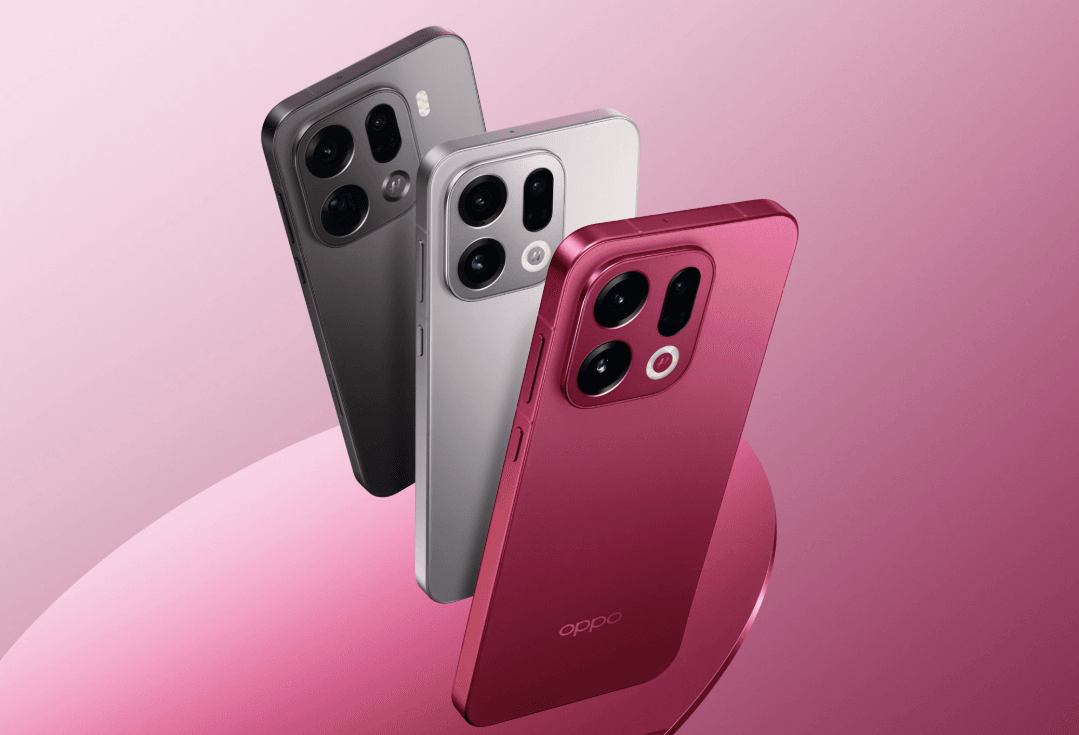
Core Insights - OPPO launched the Find X9 flagship line on October 16, 2025, featuring two models: Find X9 and Find X9 Pro, with sales starting in China on October 22, 2025. A Satellite Edition with eSIM support is expected in November [1][13]. Pricing - Find X9 is priced from RMB 4,399 (approximately $611) and Find X9 Pro starts at RMB 5,299 (approximately $736). Both models offer additional memory/storage options up to 1 TB, with the 1 TB eSIM-enabled Pro Satellite Edition launching in November [6]. Chips and Core Hardware - Both models utilize OPPO's "Chip Chain" platform, powered by MediaTek Dimensity 9500, with LPDDR5X RAM and UFS 4.1 storage. The series also incorporates OPPO's P3 display chip and Shanhai communications enhancement silicon [4]. Displays - Find X9 features a 6.59-inch OLED display with a resolution of 2760×1256, 120 Hz refresh rate, and a global peak brightness of 1,800 nits. Find X9 Pro has a 6.78-inch OLED display with a resolution of 2772×1272, 1–120 Hz LTPO, and a global peak brightness of 1,600 nits [5][7]. Cameras - Find X9 includes a 32 MP front camera and a rear triple camera setup with a 50 MP main, 50 MP ultrawide, and 50 MP inverted periscope telephoto. Find X9 Pro features a similar setup but with a 200 MP Hasselblad telephoto lens, the first mobile lens to receive Hasselblad optical certification [10][12]. Batteries and Charging - Find X9 is equipped with a 7,025 mAh "Glacier" battery, supporting 80 W wired, 50 W wireless, and 5 W reverse wireless charging. Find X9 Pro has a 7,500 mAh battery with the same charging capabilities [9][12]. Additional Features - Both models support Wi-Fi 7, NFC, IR blaster, ultrasonic fingerprint, and have IP66/IP68/IP69 dust/water resistance. They also feature stereo speakers, a quad-mic array, and a triple Wi-Fi antenna system, along with ColorOS 16 [11].

AI终端新拐点已至 自进化能力成破局关键
财联社· 2025-10-17 08:01
Core Viewpoint - The article emphasizes the transformative potential of AI-native smartphones, particularly highlighting the launch of Honor's Magic 8 series, which integrates self-evolving AI capabilities to redefine the smartphone experience and enhance user interaction with technology [1][4][7]. Group 1: AI Evolution and Market Position - The AI terminal ecosystem is seen as a pivotal point for industry transformation, with Honor's Magic 8 series introducing the concept of "self-evolving AI native smartphones" [1]. - Honor is positioned as a leader in the AI terminal field, with its advancements expected to push the industry into a new phase characterized by "Chinese definitions" [3][12]. - The self-evolution capability of AI is identified as a key competitive advantage for future AI terminals, with Honor's CEO stating it is crucial for the transition from large language models (LLMs) to artificial general intelligence (AGI) [5][9]. Group 2: Technological Innovations - The Magic 8 series features the YOYO intelligent agent, which has been upgraded to possess autonomous learning and continuous evolution capabilities, marking a significant advancement in AI interaction [7]. - The MagicGUI model, with 70 billion parameters, achieves a 91.5% accuracy rate in multi-modal deep understanding, expanding from 200 to over 3000 automated execution scenarios [7]. - Honor has established the most comprehensive and open AI service ecosystem among smartphone manufacturers, integrating over 4000 ecological intelligent agents from leading internet platforms [7][10]. Group 3: Strategic Initiatives and Financial Commitment - Honor's "Alpha Strategy" marks its transition from a smartphone manufacturer to a leading AI terminal ecosystem company, emphasizing the importance of software capabilities and ecosystem development in the AI era [9]. - The company plans to invest $10 billion (approximately 72 billion RMB) over the next five years, with R&D expenditures expected to exceed 15% of revenue [9]. - Honor's collaboration with Qualcomm aims to develop efficient edge AI model solutions, enhancing user experience and performance beyond traditional hardware capabilities [10]. Group 4: Market Performance and Growth - Honor has seen a significant rebound in market share, ranking fifth in the Chinese market due to the success of its 400 series and X70 models [13]. - In the Latin American market, Honor's shipments grew by 70% year-on-year, reaching a record 2.9 million units, securing the fourth position [13]. - The Magic 8 series is anticipated to drive new growth for Honor, with expectations of expanding market share and influencing the global smartphone competition landscape [14].

vivo X300系列今日开售,“年度影像旗舰”引发抢购
Feng Huang Wang· 2025-10-17 01:55
Core Insights - The vivo X300 and X300 Pro have officially launched, receiving widespread acclaim for their "dual 200 million pixel imaging system, lightweight design, and all-around experience" since their unveiling on October 13 [1] Group 1: Product Features - The vivo X300 series is positioned as "Zeiss 200 million pixel dual flagship," with the X300 Pro featuring a Zeiss APO 200 million super telephoto lens, ensuring stable and clear images even in dynamic scenes like concerts and sports events [2] - The X300 is equipped with a Zeiss 200 million super main camera, supporting "shoot first, compose later" functionality, combined with AI movie storyboard features to cater to a wide range of creative needs [2] Group 2: Technological Advancements - The collaboration between vivo and MediaTek has deepened, resulting in the integration of vivo's self-developed Blueprint imaging chip V3+ with the Dimensity 9500, enabling the industry-first 4K 60fps cinematic portrait video [3] - This integration not only represents a functional breakthrough but also showcases vivo's commitment to a long-term strategy of self-research and collaborative development [3] Group 3: Design and User Experience - The vivo X300 series emphasizes a blend of technology and aesthetics, achieving a "hand feel ceiling" and "flat screen aesthetic benchmark" in its design [4] - The X300 Pro features a slim 7.99mm body while housing an Ultra-level imaging module, balancing advanced imaging capabilities with a comfortable appearance [4] - The X300 focuses on being a "small flat-screen flagship" with a 6.31-inch display and a lightweight 190g body, enhancing user comfort [4] - The series runs on the restructured OriginOS 6, improving interface interaction and display smoothness, and includes second-generation semi-solid battery technology for competitive endurance [4] Group 4: Market Position - As of September 28, 2025, vivo holds over 17% market share, leading the Chinese smartphone market, and the launch of the X300 series is expected to further solidify its position [5]
Bad loan worries hit stocks — plus, spin-offs, smartphones, and health care
CNBC· 2025-10-16 18:42
Market Overview - The S&P 500 index declined on concerns regarding credit stress in the banking sector, particularly after regional bank Zions announced a $50 million write-off for two loans, leading to a nearly 12% drop in its shares [1] - Capital One and Wells Fargo, both holdings in the Club portfolio, also experienced declines of over 6% and approximately 3% respectively due to market concerns about U.S.-China trade tensions and a potential government shutdown [1] Industrials - DuPont announced details of its spinoff of Qnity Electronics, where shareholders as of October 22 will receive one share of Qnity for every two shares of DuPont on November 1, with trading for both companies starting separately on November 3 [1] - Honeywell's spinoff of Solstice Advanced Materials will see shareholders as of October 17 receive one share of Solstice for every four shares of Honeywell on October 30, with Solstice beginning separate trading under the ticker "SOLS" [1] - Honeywell plans to further spin off its aerospace business in the latter half of next year, focusing the remaining company on automation [1] Smartphones - Apple's global smartphone shipments increased by 4% year-over-year in Q3, solidifying its position as the second-largest smartphone player, while Samsung remains the leader in market share [1] - The report from Counterpoint Research highlighted that Apple's iPhone 17 series has been well received, with record-breaking pre-bookings across regions, which is positive news for Apple as it derives most of its revenue from iPhone sales [1] Health Care - Amazon One Medical expanded its pay-per-visit telehealth services to children aged 2 to 11, charging $49 for video consultations and $29 for text message consultations, with no insurance or membership required [1] - The service aims to address common children's illnesses and allows parents to renew medications like EpiPens and asthma treatments [1] - Amazon Pharmacy has also launched prescription drug kiosks in some One Medical offices, with plans for further rollout [1] Upcoming Reports - Financial companies including American Express, Truist, State Street, and Fifth Third Bancorp are set to report results before Friday's opening bell, which will provide insights into U.S. consumer health and the banking sector amidst ongoing credit concerns [1]


从万元折叠屏到消费心理学:华为阔屏战略如何撬动高净值人群?
Sou Hu Cai Jing· 2025-10-16 14:48
Core Insights - The launch of Huawei's PuraX, which features a wider screen and a higher price point, contrasts with competitors like Honor and Samsung, indicating a strategic focus on the high-end consumer market [1][7] - The global foldable smartphone market is projected to grow by 67% in 2024, with over 80% of sales in the premium segment, where Huawei holds a 47% market share [1][5] Market Dynamics - The average selling price of foldable smartphones is expected to exceed 10,000 yuan in 2024, with profit margins more than three times that of traditional smartphones [5] - The consumer base for foldable phones is predominantly high-income, with 70% of buyers earning over 1 million yuan annually, leading to higher brand loyalty compared to average consumers [5][11] Competitive Landscape - The market is polarizing, with brands like Honor and Xiaomi pushing foldable prices down to 7,000 yuan, while Huawei maintains a premium strategy with products like the Mate XT priced at 19,999 yuan and PuraX starting at 7,499 yuan [7] - Huawei's strategy is driven by a harsh reality: the traditional smartphone market is shrinking by 12% in Q4 2024, while the premium foldable segment is growing by 41% [7] Product Innovation - The PuraX's 16:10 aspect ratio significantly enhances user experience, reducing black borders by 42% and allowing for more data display in Excel, which increases productivity for business users [8] - Huawei's foldable product line is strategically layered, with the Mate XT serving high-end business needs and the PuraX addressing document processing challenges, supported by a strong patent portfolio [9] User Engagement - The Mate XT's multi-application display capabilities enhance user engagement, increasing user stickiness by three times compared to traditional models [10] - Huawei's ecosystem is designed to facilitate seamless transitions between devices, with a 78% activation rate for cross-device functionality [10] Branding and Market Positioning - The branding of Huawei's PuraX incorporates luxury elements, transforming technical specifications into social currency, appealing to high-net-worth individuals [11] - The competition in the high-end market has shifted from product features to fulfilling users' self-actualization needs, with Huawei's strategy focusing on creating aspirational products rather than just affordable options [11]
Analyst Says Apple (AAPL) Foldable Phone Won’t ‘Move The Needle’
Yahoo Finance· 2025-10-16 12:55
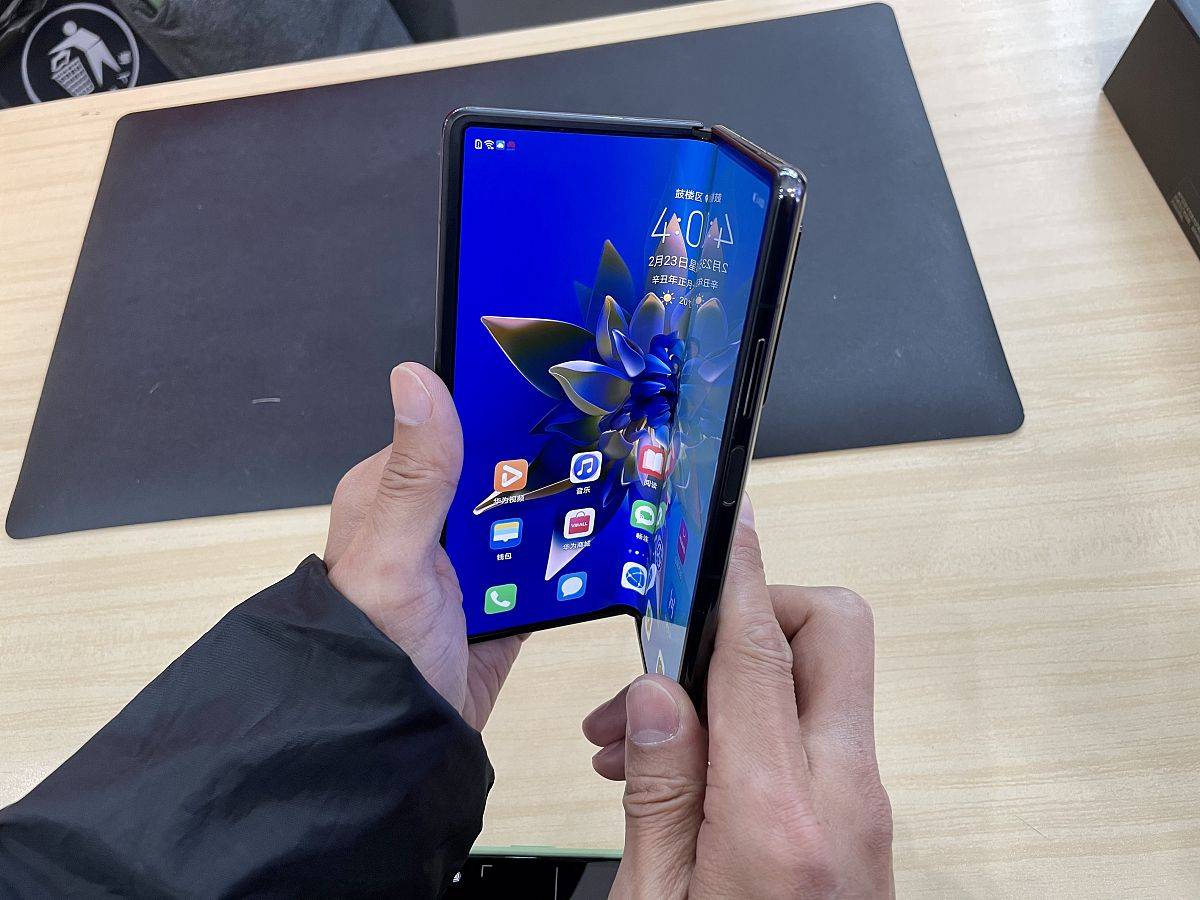
Core Insights - The smartphone industry, including Apple Inc, is experiencing a structural slowdown due to a lack of truly innovative features, with most improvements being incremental [2] - Apple's upcoming foldable phone is not expected to significantly impact sales, as it is not a new form factor and market expectations are deemed too high [1][2] - The iPhone upgrade cycle has extended to 35 months in the US, with 63% of users keeping their devices for over two years, indicating a potential decline in consumer demand for new models [3] Company Performance - Apple Inc's stock has underperformed the market, facing challenges related to innovation and competition, particularly in the AI space [4] - The company is losing its pricing edge in key markets like China, where competitors like Samsung and Xiaomi are launching advanced features [3] - Despite a strong consumer response to the latest iPhone 17, long-term stock performance remains uncertain due to competitive pressures and innovation limitations [3]

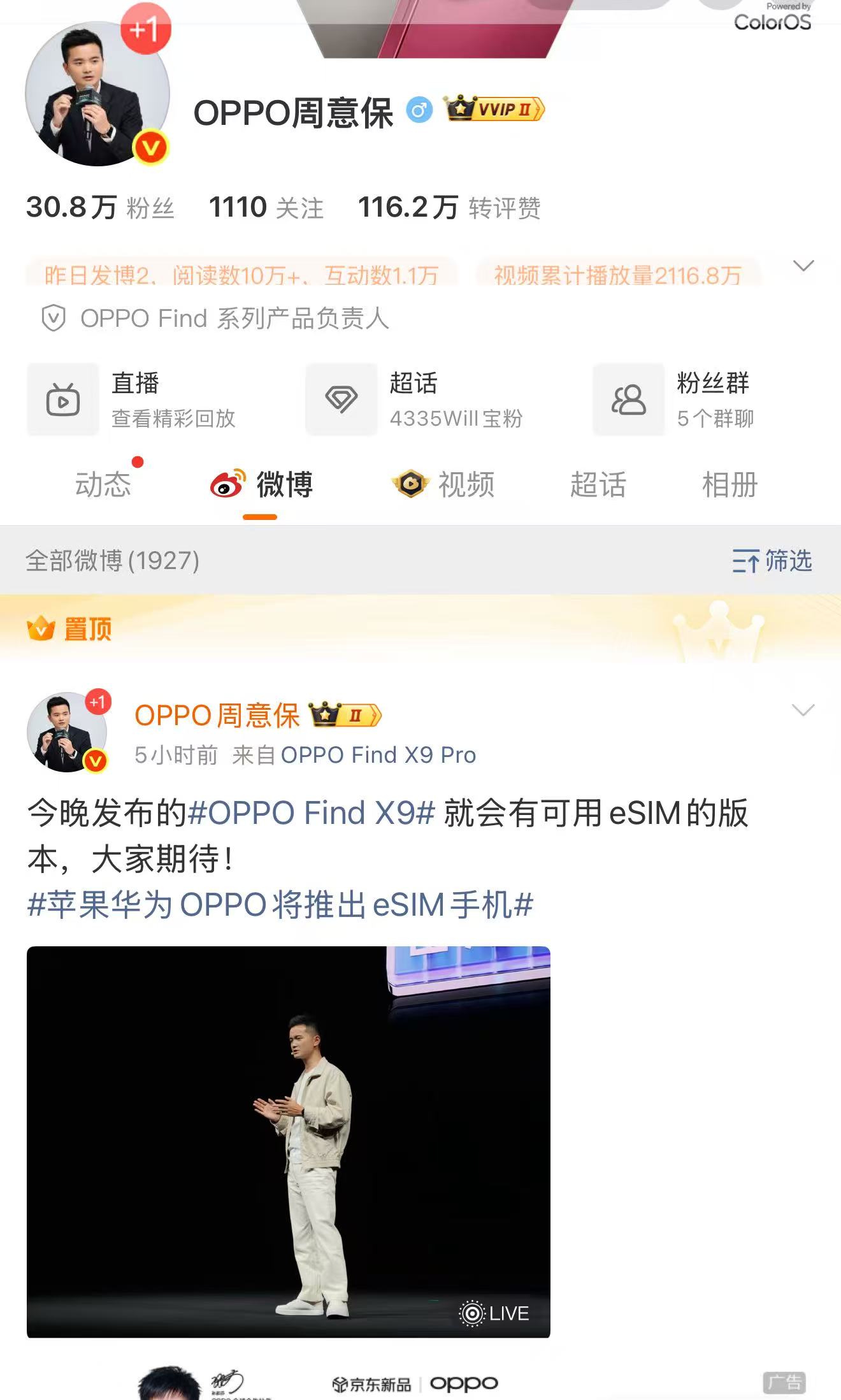
OPPO将发布首款国产eSIM手机,兼容三大运营商
Xin Lang Cai Jing· 2025-10-16 09:01
Core Viewpoint - OPPO is set to launch its new product, the OPPO Find X9, which will feature an eSIM version, marking it as the first domestic eSIM smartphone in China [1] Group 1: eSIM Technology - eSIM, or embedded SIM card, is integrated into the device's chip, eliminating the need for physical SIM cards and enhancing waterproof and dustproof capabilities [5] - China Mobile and China Unicom have received approval to conduct commercial trials for eSIM mobile services, while China Telecom has opened eSIM service in 31 provinces [5] - As of the latest update, over 193,000 users have pre-registered for China Unicom's eSIM service [5] Group 2: OPPO's Market Position - OPPO's brand loyalty is strong, with 45% of its users opting for brand-switching, ranking it second overall and first among Android brands [6] - The OPPO Find X9 series is noted for its 200-megapixel camera, which is expected to revolutionize mobile imaging quality [8] - The new flagship series will feature a battery capacity of 7000mAh, with the standard version at 7025mAh and the Pro version at 7500mAh [8] Group 3: Smartphone Market Dynamics - According to IDC, the Chinese smartphone market is projected to see a shipment of 69 million units by Q2 2025, reflecting a 4% year-on-year decline [9] - In the latest market report, Huawei leads with a shipment of 12.5 million units, followed by Vivo and OPPO with 11.9 million and 10.7 million units, respectively [9]