
博物馆

Search documents
破解预约难,“诗外”下功夫(人民时评)
Ren Min Ri Bao· 2025-09-07 22:11
Core Insights - The article discusses the increasing popularity of museums as cultural spaces and tourist destinations, highlighting the challenges of appointment difficulties and ticket scarcity [1][2][3] - It emphasizes the need for museums to adapt their operations and explore new supply options to meet the rising visitor demand, with projections indicating that 1.49 billion visitors are expected in 2024 [1] Group 1: Visitor Demand and Museum Capacity - The demand for museum visits is rising significantly, with museums becoming integrated cultural complexes that cater to diverse educational and recreational needs [1] - The limited capacity of museums leads to appointment difficulties, which is described as a "happy trouble" amidst the growing interest in cultural experiences [1][2] Group 2: Innovative Solutions for Appointment Difficulties - Museums are exploring various operational changes, such as eliminating closed days and implementing staggered closures to better accommodate visitors [2] - Extending opening hours, such as the Sichuan Sanxingdui Museum's decision to stay open until 8 PM, has proven effective in increasing daily visitor numbers [1][2] Group 3: Expanding Museum Reach - Initiatives like the "Seeing Su Yun at Home" traveling exhibition have successfully brought museum treasures to wider audiences, with 2.097 million visitors over 184 days [2] - Collaborations between different museums to share exhibits can enhance accessibility and attract more visitors [2][3] Group 4: Diversifying Museum Offerings - There is a need to activate lesser-known museums to alleviate visitor pressure on popular sites, as many smaller museums offer unique cultural experiences [3] - The total number of registered museums in China is projected to reach 7,046 by the end of 2024, indicating a vast potential for diverse cultural offerings [3]
全国文化中心建设巡礼|打造汉文化主题展示高地
Bei Jing Qing Nian Bao· 2025-09-05 10:12
#关注2025北京文化论坛#【全国文化中心建设巡礼|打造汉文化主题展示高地】#2025北京文化论坛# 作为北京地区唯一以汉代文化为主题的专题博物馆,大葆台遗址博物馆于2025年5月20日以全新面貌重 新开放。该馆2025年完成改建后建筑面积达7600平方米,展陈面积2800平方米。博物馆依托"黄肠题 凑"高等级葬制及其出土玉器、漆器、铜器、丝织品等千余件文物,系统展示汉代广阳国的政治、经济 与文化面貌。开馆三个多月,大葆台遗址博物馆已接待观众近13万人次。北京考古遗址博物馆馆长杨志 国介绍,尽管博物馆规模不大,但观众反响热烈。"我们致力于将大葆台打造为北京汉文化展示中心, 让更多人了解北京在汉代的历史地位与文化积淀。"(北京青年报记者 李晓萌 吕良璐 编辑 吕良璐) 转自:北京头条 ...
全国文化中心建设巡礼|社会化办展搭建跨域融合新桥梁
Bei Jing Qing Nian Bao· 2025-09-05 09:11
Core Insights - The "Time and Resonance - Decoding Da Vinci's Art, Technology, and Natural Rhythm" exhibition at the National Museum of Nature opened on June 5 and has attracted over 150,000 visitors, surpassing initial attendance predictions, showcasing a successful integration of nature, culture, art, and technology [1] Group 1 - The exhibition serves as a model for cross-domain integration, highlighting the collaboration between different fields [1] - The museum's collection is growing at a rate of approximately 30,000 specimens per year, with projections indicating it will reach 600,000 specimens by the opening of the new museum in 2029 [1] - There is an expectation that the collection will exceed one million specimens between 2035 and 2040, enhancing the museum's status as a cultural landmark in the southern central axis region [1]
全国文化中心建设巡礼|北京博物馆总数位居全国首位
Bei Jing Qing Nian Bao· 2025-09-05 09:11
Core Viewpoint - The construction of Beijing as a "Museum City" is a long-term strategic initiative aimed at enhancing cultural services and public engagement in the region [1] Group 1: Museum Development - As of now, there are 246 registered museums and 56 types of related institutions in Beijing, making it the city with the highest number of museums in the country [1] - The "Beijing Museum City Construction Development Plan (2024-2035)" was officially issued in early 2024, providing clear guidance for the development efforts [1] Group 2: Public Engagement and Services - The initiative to offer free access to museums has been significantly advanced, leading to a notable improvement in public service effectiveness [1] - Museums have become an essential part of the cultural life of citizens in Beijing [1]
广西首家专业古生物化石修复鉴定室亮相
Guang Xi Ri Bao· 2025-09-05 03:16
Core Insights - The establishment of the first professional paleontological fossil restoration and identification room in Guangxi fills a gap in the region's fossil restoration capabilities, providing strong support for the protection, research, and popularization of paleontological resources [1][2] Group 1: Facility Overview - The new fossil restoration and identification room is equipped with advanced technology, including a sandblasting dust-proof integrated system and a professional pneumatic pen microscopic restoration system, creating a complete chain from discovery to display [1] - This facility is currently the only professional platform in the region capable of completing the entire process from fossil cleaning and reinforcement to fine restoration [1] Group 2: Research and Restoration Capabilities - The restoration room can handle all types of fossil repairs, covering most common fossil types found in Guangxi and surrounding areas, from small insect fossils to several-meter-long dinosaur skeletons [1] - The facility aims to unlock the life history contained within ancient fossils, allowing for the revival of ancient life forms that have been dormant for millions of years [1] Group 3: Public Engagement and Education - The restoration room serves as a 'diagnostic room' for fossils and a window for the public to understand the ancient biological world [2] - Future plans include public demonstrations of the restoration process, science lectures, and educational activities for middle and primary school students to enhance public interest in fossil protection [2]
走进北京大运河博物馆文保中心 看“文物医生”的工作日常
Ren Min Ri Bao Hai Wai Ban· 2025-09-02 02:47
Core Insights - The Beijing Grand Canal Museum has transformed its previously closed artifact storage into an immersive exhibition space, allowing visitors to closely observe artifacts and access detailed information through electronic touch screens [1] - The museum's newly completed conservation center is the largest of its kind in Beijing, featuring a comprehensive restoration room that showcases the artifact conservation process through interactive experiences [1] - The conservation center emphasizes the role of conservators as "artifact doctors," providing insights into their daily work and the techniques used in the restoration of cultural relics [1] Artifact Restoration Process - Traditional painting restoration involves four main steps: cleaning, revealing, repairing, and completing [2] - The cleaning process is meticulous, utilizing various methods tailored to different stains and materials, ensuring the safe removal of accumulated dirt from the artifacts [2] - The use of a special dough made from oat flour enhances the cleaning process, providing effective dust removal without damaging the artwork [3] Technological Innovations - The integration of advanced technology in the restoration process enhances precision and safety, particularly in the critical step of revealing the artwork [3] - A newly developed biological adhesive agent allows for the safe separation of aging protective layers from the artwork, significantly reducing the risk of damage during restoration [3] - The conservation center currently focuses on the restoration of organic artifacts, with plans to expand to inorganic materials such as metals and ceramics in the future [3]

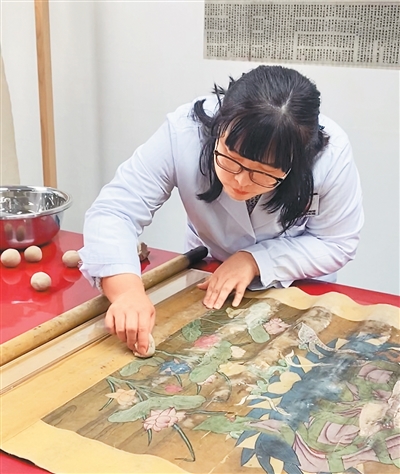
看“文物医生”的工作日常
Ren Min Ri Bao Hai Wai Ban· 2025-09-02 01:00
Core Viewpoint - The Beijing Grand Canal Museum has completed the construction of its cultural relics protection center, which features an innovative visual display and restoration area, allowing the public to engage with the relics and the restoration process in an immersive manner [2][5]. Group 1: Museum and Cultural Relics Protection Center - The museum's relics visualization storage spans 760 square meters and houses over 100 exquisite Ming and Qing dynasty furniture pieces, along with 6,000 blocks of the Qing Dynasty's "Tripitaka" woodblocks [2]. - The center is the largest of its kind in Beijing, integrating a comprehensive restoration room with display functions, enabling visitors to witness the relics' restoration process through interactive experiences [2][5]. Group 2: Restoration Techniques and Innovations - Traditional restoration involves four main processes: cleaning, separating, repairing, and completing, with the cleaning phase being particularly meticulous and labor-intensive [3]. - The use of a special dough made from oat flour and glycerin enhances the cleaning process, ensuring safety and effectiveness in dust removal without leaving residues [4]. - The introduction of a biological adhesive agent for the "revealing" process allows for the safe separation of old protective layers from the artwork, significantly improving the precision and safety of restoration efforts [4].
暑假进入尾声 南昌汉代海昏侯国遗址博物馆热度不减
Zhong Guo Xin Wen Wang· 2025-09-01 04:56
Core Viewpoint - The Nanchang Han Dynasty Haihunhou State Ruins Museum continues to attract visitors as the summer vacation comes to an end, showcasing a rich historical and cultural experience that spans over two thousand years [2][4][5][7][8]. Group 1 - The museum features a variety of artifacts, including bronze items, glass mats, horse equipment, gold ingots, and Confucius screens, which highlight the cultural significance of the Han Dynasty [2][4][5][7][8][10]. - Visitors are taking advantage of the last moments of their summer break to explore the museum and engage with its historical offerings [2][4][5][7][8].
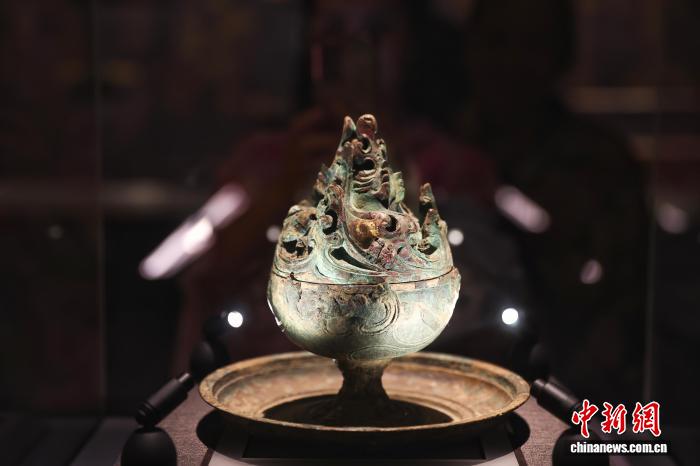
云南省博,“滇”成了我想要的样子
Jing Ji Guan Cha Bao· 2025-09-01 02:05
Core Points - The article highlights the unique and intriguing artifacts displayed at the Yunnan Provincial Museum, emphasizing their historical significance and artistic value [5][6] - The museum houses a total of 230,746 items, including 14,122 precious artifacts, categorized into six main exhibitions that cover various historical periods in Yunnan [5] - The bronze artifacts from the ancient Dian Kingdom are particularly noted for their realistic style, contrasting with the more symbolic designs of Central Plains bronze [5][6] Summary by Categories Museum Overview - Yunnan Provincial Museum is one of the first national first-class museums in China, with a collection of 230,746 items as of December 31, 2024 [5] - The museum features six main exhibitions, including "Ancient Yunnan - Prehistoric Yunnan" and "The Glory of Civilization - Bronze Age Yunnan" [5] Artifacts - The bronze artifacts from the Dian Kingdom are highlighted for their realistic representation, particularly the war scene depicted on a bronze lid, showcasing a battle between the Dian people and the Kunming [6] - The artifacts include various items from different periods, such as Neolithic pottery, bronze weapons, and exquisite Buddhist sculptures from the Tang and Song dynasties [8][9]
这座曾经的“文化荒漠”,要逆袭了
3 6 Ke· 2025-08-29 02:13
Core Viewpoint - Shenzhen aims to become a city of museums with significant national and global influence, focusing on innovative methods to showcase its development history and cultural heritage [1][2]. Group 1: Development Strategy - The "Cultural City" strategy in Shenzhen dates back to 2003, with a significant push in 2018 to implement a "Cultural Strong City" strategy, planning for ten major cultural facilities of international standard [1][2]. - The "Five-Year Plan for Museum Development (2018-2023)" emphasizes substantial investment to promote the growth of museums, aiming for Shenzhen to become a leading city in museum development with international recognition [2]. Group 2: Museum Infrastructure - Shenzhen has a diverse range of museums covering history, culture, natural science, art, and folklore, with popular institutions frequently appearing in top museum rankings [2]. - As of 2024, Guangdong Province has 402 registered museums, with Shenzhen housing 65, ranking second in the province and leading in the number of non-state-owned museums [2].