Smartphones

Search documents
机构:2025年第三季度全球智能手机市场同比增长3%
Zheng Quan Shi Bao Wang· 2025-10-14 15:26
Core Insights - The global smartphone market is projected to grow by 3% year-on-year in Q3 2025, indicating a return to growth momentum driven by the launch of several new products [1] Group 1 - The rebound in the smartphone market is attributed to strong replacement demand [1] - Multiple manufacturers are preemptively stocking channels ahead of the busy Q4 2025 [1]
国行eSIM尘埃落定,iPhone Air「下周见」
36氪· 2025-10-14 10:43
Core Viewpoint - The official announcement of the iPhone Air's launch in China marks the entry of the domestic smartphone market into the eSIM era, following the approval of eSIM services by major telecom operators [5][9]. Group 1: Product Launch - The iPhone Air will be available for pre-order on October 17 and will be fully released on October 22 [5]. - The launch was delayed due to eSIM network support issues, which have now been resolved with the approval of eSIM services by China Unicom and China Mobile [7][9]. Group 2: eSIM Technology - The iPhone Air is a fully eSIM device, eliminating the need for a physical SIM card slot, which is a significant shift in mobile communication [7]. - The approval of eSIM services by telecom operators is a milestone in their decade-long technological development in this area [9]. Group 3: Product Specifications - The iPhone Air features a thickness of 5.6mm, made from aerospace-grade titanium, and is equipped with a 6.5-inch 120Hz ProMotion display [17]. - It is powered by the new A19 Pro processor, which reportedly has three times the GPU peak performance of the A18 Pro, and supports next-generation connectivity standards like Wi-Fi 7 and Bluetooth 6.0 [17]. - The pricing for the iPhone Air is set at 7999 yuan for the 256GB version, 9999 yuan for the 512GB version, and 11999 yuan for the 1TB version [17].



Apple Hit Highest Ever Third Quarter as Global Smartphone Market Grew 3% in 3Q25 Says Omdia
Businesswire· 2025-10-14 08:01
Core Insights - The global smartphone market experienced a 3% year-on-year growth in Q3 2025, indicating a return to growth momentum driven by major product launches during the quarter [1] - The rebound in the market was supported by strong replacement demand and several vendors preparing inventories ahead of a busy Q4 2025 [1] - Samsung retained its position as the market leader for the third consecutive quarter, holding a 19% market share, bolstered by sustained volume strength [1]

“智慧大脑”“含新量”“铁杆粉丝”……透视关键词看外贸做大体量、做强结构、锻造韧性
Yang Shi Wang· 2025-10-14 06:38
Core Insights - During the "14th Five-Year Plan" period, China's foreign trade has shown resilience and growth amidst global changes, achieving significant structural improvements and enhancing its trade strength [1][3]. Trade Volume and Growth - The scale of China's goods trade has continuously expanded, surpassing $5 trillion and $6 trillion, with a projected total of $6.16 trillion in 2024, marking a 32.4% increase compared to the end of the "13th Five-Year Plan" [6]. - The service trade is expected to exceed $1 trillion for the first time in 2024, ranking second globally [8]. Trade Structure Optimization - The export share of high-tech products in goods trade reached 18.2%. Exports of "new three items" such as electric vehicles, lithium batteries, and photovoltaic products are projected to grow 2.6 times by 2024 compared to 2020 [12]. - Knowledge-intensive service trade is expected to increase by 38% from 2020 levels, with digital delivery services' import and export volume growing by nearly 40% [12]. Diversification and Resilience - China's foreign trade has become more resilient and diversified, with ASEAN being the largest trading partner for five consecutive years. China is among the top three trading partners for over 150 countries and regions [15]. - The trade volume with countries involved in the Belt and Road Initiative is projected to exceed 50% in 2024 [15]. Supply Chain and Economic Support - The industrial and supply chains in China's foreign trade have become more complete and flexible. Events like the China International Import Expo and the Consumer Goods Expo serve as bridges for international economic cooperation [17]. - China's foreign trade remains a significant contributor to global trade growth, and the Chinese economy is a key support for global economic recovery [17].

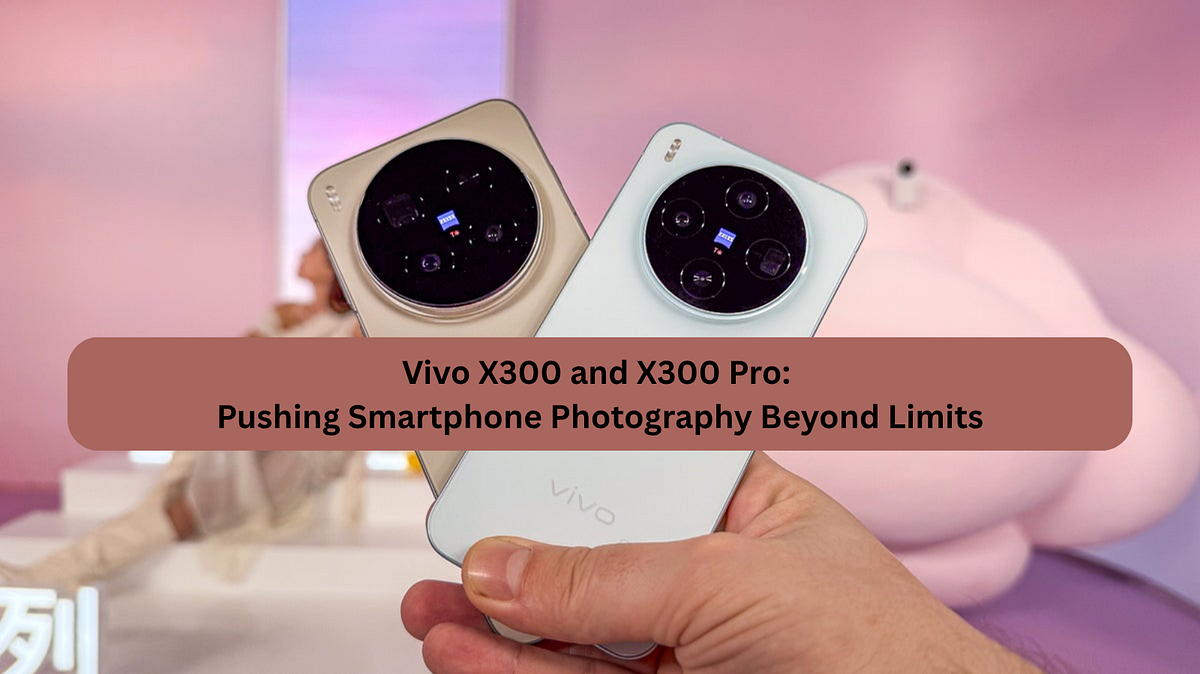
Vivo X300 and X300 Pro: Pushing Smartphone Photography Beyond Limits
Medium· 2025-10-14 06:00
Core Insights - Vivo is launching its X300 and X300 Pro flagship smartphones, enhancing its reputation in smartphone innovation and photography [1][2] Camera Innovation - Both models feature a 200-megapixel HPB imaging sensor co-engineered with Samsung, with the X300 Pro utilizing it for a telephoto lens [3] - The main camera on the X300 Pro incorporates the Sony LYT-828 sensor for improved light capture and detail rendering [5] - Both devices support 4K, 120fps, and 10-bit Log video recording, positioning them as elite options for mobile photography [5] Telephoto Extender - The telephoto extender, a 2.35x optical add-on lens, is available for both models, enhancing long-distance photography capabilities [6][7] Design and Durability - Both models are slim (under 8mm thick) and have IP68 and IP69 ratings for durability [9] - The X300 Pro has a 6,510mAh battery, while the standard model has a 6,040mAh battery, showcasing Vivo's optimization in battery technology [9] Performance - The X300 series is powered by the MediaTek Dimensity 9500 chipset, competing with Qualcomm's Snapdragon 8 Elite Gen 5 [10] - Both models support 90W wired and 40W wireless charging for quick power replenishment [10] Data Transfer - Smart Transfer app facilitates seamless data transfer between devices, enhancing user experience [11][12][13] Pricing and Availability - The X300 is priced at approximately $620, while the X300 Pro is around $745, with the telephoto extender priced separately at $180 [14] Future Developments - An X300 Ultra is anticipated in early 2026, promising advanced features [15] Overall Experience - The X300 series exemplifies Vivo's commitment to combining design, engineering, and camera technology, creating a unique user experience [18]

Apple iPhone Air Preorders To Soon Begin In China As eSIM Gets Green Light From Major Telecom Operators - Alibaba Gr Hldgs (NYSE:BABA), Apple (NASDAQ:AAPL)
Benzinga· 2025-10-14 04:16
Core Insights - Apple Inc. is set to open preorders for its new iPhone Air in China, following regulatory approval for eSIM services by major telecom operators [1][2] - The iPhone Air will be Apple's first eSIM-supported model in China, with a starting price of 7,999 yuan (approximately $1,121) [2] Telecom Regulatory Approval - China's Ministry of Industry and Information Technology has granted regulatory clearance for China Mobile, China Telecom, and China Unicom to provide trial eSIM services [2][3] - All three telecom operators are now authorized to offer eSIM connectivity on approved devices [3] Market Competition - The announcement of the iPhone Air comes amid increasing competition in China's smartphone market, with analysts predicting Huawei Technologies will surpass Apple in sales by Q2 2025 [6] - Xiaomi's budget-friendly 15S Pro is gaining traction, benefiting from strong performance and government subsidies [6] Strategic Responses - In response to competitive pressures, Apple has increased trade-in values and plans to integrate Alibaba Group's Qwen3 AI into future devices to enhance localized AI capabilities [7] - Apple's shares rose by 0.97% on Monday and are up 1.56% year-to-date [7] Stock Performance - Apple is ranked in the 73rd percentile for stock quality according to Benzinga's Edge Stock Rankings, indicating solid performance and resilience against competitors [8]

vivo发布vivo X300系列手机 四大蓝科技全面升级
Zheng Quan Ri Bao Wang· 2025-10-14 02:15
Core Insights - Vivo officially launched the new X300 series flagship smartphones, emphasizing professional imaging capabilities and comprehensive upgrades across performance, system, and design [1][2] - Vivo has maintained its position as the leading smartphone brand in China for four consecutive years, with a market share exceeding 17% as of September 28, indicating strong competitive performance in the high-end market segment [1] - The X300 series features significant upgrades, including a 200MP main camera and advanced imaging capabilities, positioning it as a potential core growth engine for Vivo [1] Performance and Technology - The X300 series establishes new standards for flagship smartphones in terms of performance, system, battery life, and display, driven by the collaboration with MediaTek on the Dimensity 9500 flagship chip and Vivo's self-developed imaging chip V3+ [2] - The series includes advanced features such as a self-developed signal amplification system, ultrasonic fingerprint recognition, IP68/IP69 protection, X-axis linear motor, and USB 3.2, contributing to its robust flagship foundation [2] - Vivo's strategy combines self-research and collaborative development, focusing on user needs and investing in core technologies to enhance user experience [2]
一条奔向用户的河流:vivo的模式启示
Nan Fang Du Shi Bao· 2025-10-13 23:13
Core Insights - The Chinese smartphone market is witnessing a significant shift, with domestic brands dominating the landscape, particularly vivo, which holds a 17.6% market share as of August 2025, maintaining its position as the top seller for four consecutive years [1][2] - Vivo's success is attributed to its diverse product range across various price segments, including the X, S, and iQOO series, rather than relying on a single blockbuster product [2] - The high-end market is increasingly competitive, with vivo's share in the 4000 yuan and above segment rising from 8.8% to 14.0%, while Apple's share dropped from 23.4% to 17% [2] Market Position - Vivo has emerged as a market leader in China, achieving a 19% market share in the first eight weeks of Q3 2025, continuing its streak as the top domestic brand for four years [2] - The combined market share of Huawei, vivo, and Xiaomi exceeds 50%, with their respective shares at 17.6%, 17.6%, and 16.4% [2] User-Centric Approach - Vivo's strategy is deeply rooted in understanding user needs, with a dedicated "image recognition team" established to translate user perceptions of beauty into technical specifications [4] - The company focuses on enhancing user experience through innovative features, such as fast autofocus and seamless cross-device collaboration, which have resonated well with users [3][5] Technological Innovation - Vivo's commitment to user feedback has led to significant advancements in imaging technology, with a focus on realistic texture and color representation, as well as user-friendly video editing capabilities [7][9] - The latest X300 series exemplifies vivo's technological evolution, integrating advanced imaging features and productivity tools tailored to various user demographics [9][10] Brand Loyalty and Word-of-Mouth - Vivo has cultivated a strong word-of-mouth reputation among users, with many choosing the brand based on positive experiences shared by peers rather than traditional advertising [6] - The brand's focus on user satisfaction and addressing specific pain points has fostered a loyal customer base, contributing to its sustained market leadership [10]
人工智能与边缘计算:从移动终端到机械领域-AI and Edge Computing_ Mobile to Machinery
2025-10-13 01:00
Summary of Key Points from the Conference Call Industry Overview - The conference call focuses on the **AI and Edge Computing** sector, particularly the transition from centralized to distributed computing models in the technology industry [5][9][17]. Core Insights - **Shift in Computing Architecture**: The tech industry is expected to transition from centralized server-based infrastructure to personal on-device AI servers, indicating a return to distributed computing [5][9]. - **Emergence of Portable AI Servers**: Personal AI servers are projected to become compact and efficient, potentially being carried in various devices such as smartphones and laptops [5][9]. - **AI Model Efficiency**: The launch of DeepSeek's distilled DeepSeek-R1 model demonstrates comparable capabilities to leading models with fewer resources, indicating a trend towards more efficient AI models [9]. - **On-Device AI Demand**: Anticipated demand for on-device AI is expected to emerge in the second half of 2025, driving changes in computing structures and semiconductor content growth [9][28]. Market Projections - **AI Smartphone Market**: AI phone shipments are projected to grow at a **78% CAGR** from 2023 to 2028, while AI PC shipments are expected to see a **28% CAGR** from 2024 to 2029 [14][28]. - **AI DRAM Demand**: Overall AI DRAM demand is expected to grow at a **75% CAGR**, reaching **331 billion pcs (1Gb eq.)** by 2028 from **35 billion pcs (1Gb eq.)** in 2024 [28]. - **AI Robotics**: On-device AI DRAM demand for robotics is forecasted to grow at a **239% CAGR** from 2024 to 2028 [28]. Technological Developments - **AI Hardware Architecture**: The evolution of AI hardware is expected to follow three phases, with significant advancements in memory integration and processing capabilities [17][20]. - **Next-Gen DRAM**: The adoption of LPDDR6 and Low Latency Wide (LLW) DRAM is anticipated to expand, enhancing the performance of edge AI devices [24][28]. Company-Specific Insights - **Samsung Electronics**: Projected total sales for 2025 are estimated at **W327.6 trillion**, with semiconductor sales expected to reach **W123.2 trillion** [30]. - **SK Hynix**: Expected total sales for 2025 are projected at **W92.4 trillion**, with DRAM sales anticipated to be **W70.8 trillion** [35]. Investment Opportunities - **Key Players**: Companies such as TSMC, SK Hynix, Nvidia, and Qualcomm are highlighted as significant contributors to the on-device AI market [29]. - **AI PC Adoption**: The penetration rate of AI PCs is expected to rise from **30% in 2024 to 98% in 2029**, driven by lower prices and compelling use cases [47]. Additional Considerations - **AI PC Features**: AI PCs are designed to handle on-device AI workloads, offering improved performance, security, and user experience compared to traditional PCs [44][48]. - **Market Dynamics**: The shift towards AI PCs is expected to create a structural change in the PC market, with a projected **6-7% CAGR** in revenue from 2024 to 2029 [44]. This summary encapsulates the key points discussed in the conference call, providing insights into the evolving landscape of AI and edge computing, market projections, and specific company forecasts.

Top 10 Trending Stock Ratings and Calls as Tom Lee Says Latest Selloff is a Buying Opportunity
Insider Monkey· 2025-10-12 21:04
Core Viewpoint - The recent market selloff, attributed to President Trump's announcement on China tariffs, is viewed as a buying opportunity by Tom Lee from Fundstrat, who suggests that the surge in VIX indicates a potential market rebound [2]. Group 1: Market Analysis - The spike in VIX, a measure of expected volatility, suggests that investors are seeking protection, which typically indicates an interim low in the market [2]. - Tom Lee anticipates that the market could be higher in the coming week, with a potential increase of 60 points [2]. Group 2: Hedge Fund Interest - Archer Aviation Inc (NYSE:ACHR) has 35 hedge fund investors, with analysts bullish on its potential in the low-altitude economy and successful prototype testing [5][6]. - Conagra Brands Inc (NYSE:CAG) has 38 hedge fund investors, with analysts noting its ability to capture low-income consumers and the growth of its frozen food segment [7][8]. - Domino's Pizza Inc (NASDAQ:DPZ) has 42 hedge fund investors, with analysts expecting a strong quarter and positive outlook for 2026 [9]. - Dutch Bros Inc (NYSE:BROS) has 44 hedge fund investors, with analysts highlighting its efficient operating model and growth strategy [9]. - Veeva Systems Inc (NYSE:VEEV) has 61 hedge fund investors, with analysts praising its strong fundamentals and significant investments in AI and CRM solutions [10][11]. - DraftKings Inc (NASDAQ:DKNG) has 66 hedge fund investors, with analysts optimistic about its position in the expanding online gaming market despite regulatory challenges [12]. - Coinbase Global Inc (NASDAQ:COIN) has 87 hedge fund investors, with analysts noting its strong position in the digital asset market and recent stock gains [13][14]. - Oracle Corp (NYSE:ORCL) has 124 hedge fund investors, with analysts concerned about pricing pressures in the cloud sector but optimistic about its growth in AI workloads [15][16]. - Netflix Inc (NASDAQ:NFLX) has 133 hedge fund investors, with analysts acknowledging potential challenges but viewing current conditions as an opportunity [17][18]. - Apple Inc (NASDAQ:AAPL) has 156 hedge fund investors, with analysts expressing concerns about its innovation cycle and market expectations [19][20].