
奢侈品行业

Search documents
卢卡・德・梅奥正式就任开云集团首席执行官
Cai Jing Wang· 2025-09-15 07:36
Group 1 - Luca de Meo officially assumes the role of CEO of Kering Group, marking a significant governance restructuring and the separation of the roles of Chairman and CEO [1][3] - The appointment was initiated on June 16, with a shareholder meeting on September 9 approving the new governance structure and compensation policy for de Meo, which includes a fixed salary of €2.2 million, a potential bonus of up to €1.21 million by 2025, and a signing bonus of €20 million [1][2] - The age limits for the Chairman and CEO positions have been extended to 80 and 70 years respectively, providing institutional support for a stable transition in management [1] Group 2 - De Meo outlined his strategic direction, focusing on deleveraging and cost reduction, with potential brand restructuring and positioning adjustments, while also expanding product and business areas [2] - Kering's financial performance showed a 16% year-on-year decline in overall revenue to €7.587 billion, with core brand Gucci experiencing a 25% drop in comparable sales, impacting overall profitability [2] - The governance change aligns with best practices for large public companies, with de Meo taking full responsibility for daily operations while François-Henri Pinault focuses on his role as Chairman [3]
金价、油价,双双下跌!
Sou Hu Cai Jing· 2025-09-12 17:15
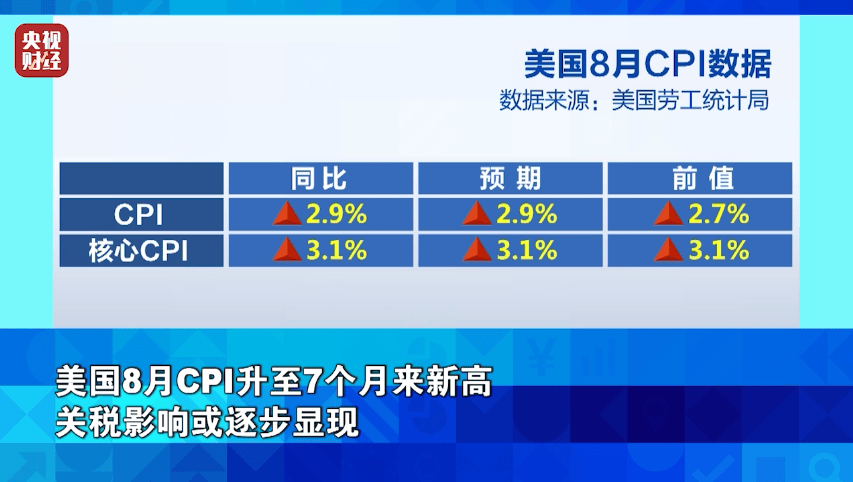
Group 1: Economic Indicators - The U.S. August Consumer Price Index (CPI) rose to 2.9% year-on-year, the highest level in seven months, up from 2.7% in the previous month [4] - The core CPI, excluding volatile food and energy prices, remained stable at a year-on-year increase of 3.1% [4] - Initial jobless claims reached 263,000, the highest level in nearly four years, prompting increased bets on potential interest rate cuts by the Federal Reserve [1][4] Group 2: Market Reactions - Following the inflation data release, traders increased their bets on at least two interest rate cuts by the Federal Reserve by the end of the year, with a possibility of three cuts [1] - The 10-year U.S. Treasury yield fell below 4% for the first time since April [1] - Major U.S. stock indices reached historical highs, with the Dow Jones Industrial Average closing up 1.36% and surpassing 46,000 points for the first time [1] Group 3: European Economic Developments - The European Central Bank (ECB) decided to keep key interest rates unchanged for the second consecutive time since June, while raising the eurozone economic growth forecast to 1.2% [7] - The ECB President indicated that the process of combating inflation in the eurozone has concluded, and trade uncertainties have significantly decreased [7] - European stock indices all rose, with the UK FTSE 100 up 0.78%, France's CAC40 up 0.80%, and Germany's DAX up 0.30% [7] Group 4: Commodity Market Trends - International oil prices fell, with light crude oil futures closing at $62.37 per barrel, down 2.04% [9] - U.S. crude oil inventories increased by 3.9 million barrels, contrary to expectations of a decrease, raising concerns about weak demand [8][9] - Gold prices experienced a slight decline, with December futures closing at $3,673.6 per ounce, down 0.23% [11]

从百元口红到千元包挂 奢侈品牌的“治愈经济学”能否抵御市场寒流?
Zhi Tong Cai Jing· 2025-09-11 07:00
Core Insights - Luxury brands are introducing more affordable products to maintain brand relevance and attract new consumer groups amid rising prices and economic pressures [1][3][5] - The launch of Louis Vuitton's beauty line, featuring high-priced items like a $160 lipstick, reflects a broader trend in the luxury sector to diversify offerings without compromising core high-end product lines [1][2] - The strategy aims to engage "aspirational consumers" who desire luxury goods but may not currently afford them, thereby expanding the customer base [1][4][5] Industry Trends - Several luxury brands, including Prada and Celine, have already ventured into the beauty sector, which is noted for its high profit margins [2][3] - The rise of "treatonomics" indicates that consumers are willing to spend on smaller luxury items even as they cut back on larger purchases [2][3] - The luxury market has faced challenges since 2022, including rising costs and consumer dissatisfaction with high prices, prompting brands to adapt their strategies [3][4] Strategic Approaches - Brands are leveraging lower-priced entry products to attract younger consumers, with the expectation that these consumers will develop brand loyalty over time [4][5] - LVMH's CFO emphasized the importance of connecting with younger generations through accessible products while maintaining high quality and brand prestige [5][6] - Balancing the introduction of lower-priced items with the expansion of high-end product lines is crucial to avoid diluting brand exclusivity [5][6] Consumer Behavior - Young consumers are increasingly focused on luxury brands, driven by cultural influence and online engagement, which is expected to support long-term demand as their purchasing power grows [4][6] - The sensitivity of "aspirational consumers" to economic conditions suggests that sustainable growth in luxury spending will depend on broader economic recovery [6]
Kering SA (PPRUY) Shareholder/Analyst Call Transcript
Seeking Alpha· 2025-09-11 01:34
Group 1 - The Kering Group held a General Meeting with key executives and board members present, including the Chairman and CEO Francois-Henri Pinault [1][2] - Luca de Meo is expected to join the Board of Directors and be appointed as Chief Executive Officer [2] - The Bureau for the General Meeting was established, with the two largest shareholders, Artémis and Amundi, represented [3] Group 2 - Eric Sandrin, the Legal Director and Corporate Secretary, was appointed as Secretary for the General Meeting [3][4] - The agenda and legal implications of the meeting were to be discussed by Eric Sandrin [4]
2025欧美葡萄酒铝罐开始大流行,贺兰山东麓还有未来吗?
Sou Hu Cai Jing· 2025-08-11 11:47
Group 1: Airline Industry - In early 2025, there were many empty seats on flights to Europe, even during the peak travel season, indicating a decrease in business travel due to a sluggish global economy [2][4] - The number of flights landing at Beijing's T3 terminal has significantly decreased, with the once-busy Frankfurt route not being restored by Lufthansa, likely due to unprofitability from reduced business passenger traffic [4][5] Group 2: Wine and Spirits Industry - LVMH's wine and spirits division saw an 8% decline in revenue and a 33% drop in operating profit in the first half of 2025, marking it as the worst-performing segment of the group [5] - Many Chinese-owned wineries in France are struggling to sell their products, with Bordeaux classified growth wines being offered at discounts of over 30%, a rare occurrence in previous years [5][7] - The trend of selling wineries at lower prices is expected to continue, as many are currently on the market at attractive prices [7] Group 3: Luxury Goods Market - In early 2025, nearly 20 luxury brands closed stores in China, with Beijing being particularly affected, as foot traffic at high-end shopping locations like SKP decreased significantly [9] - LVMH reported a 4% decline in revenue in the first half of 2025, with its fashion and leather goods segment experiencing a 7% organic revenue drop and an 18% profit decline [9] Group 4: Consumer Behavior Trends - The consumption of luxury goods, including high-end wines, is no longer seen as essential, leading to decreased sales in these categories [11] - There is a growing trend in Europe towards smaller, more affordable wine packaging, such as mini bottles and aluminum cans, reflecting a shift in consumer preferences towards cost-effective options [12][15] - The market for low-alcohol and zero-alcohol wines is expanding rapidly in Europe, while Chinese wineries lag behind in adapting to these trends [17][19] Group 5: Market Adaptation - Wineries in the Helan Mountain East region need to embrace market changes and innovate to remain competitive, as seen in successful low-cost, high-value products in other markets [21]

不敢配货了,爱马仕开始偷偷降价
36氪· 2025-08-11 09:48
Core Viewpoint - The global luxury goods industry is facing significant challenges, potentially experiencing its largest setback in 15 years, as indicated by Bain & Company. Despite this, Hermès continues to show growth, although it faces increasing difficulties in customer acquisition and reliance on leather goods [4][6]. Financial Performance - Hermès reported an 8% revenue growth to €8 billion, with all geographic regions showing growth, except for the perfume and beauty and watch sectors [4][5]. - In the first half of 2024, Hermès achieved a 15% growth, with double-digit growth across most regions, except for a slight decline in the watch sector [5]. Market Challenges - The company is struggling with the challenge of attracting new customers and is affected by the second-hand market disrupting pricing strategies. The reliance on leather goods is becoming increasingly problematic [6][20]. - The second-hand market has shown that Hermès products can sell for more than retail prices, indicating a strong demand but also a shift in consumer purchasing behavior [12][14]. Sector Performance - The leather goods sector saw a revenue increase of 12.4%, while the ready-to-wear and silk sectors experienced a decline in growth rates, with ready-to-wear growing only 5.5% compared to 15.5% the previous year [21]. - The perfume and beauty sector saw a decline of 3.8%, while the watch sector dropped by 7.9% [21]. Geographic Performance - The Americas market is becoming increasingly important for Hermès, with a 9.5% growth in the first half of 2025, while the Asia-Pacific region only grew by 1.5% [30][31]. - Growth in Japan has slowed from over 22% in 2024 to 16% in 2025, and the overall growth in the Asia-Pacific region has significantly decreased compared to previous years [30][31]. Pricing Strategy - Hermès plans to continue raising prices globally, but has already implemented a 5% price increase in the U.S. to counteract tariff impacts [28][29]. - The company is facing pressure to adjust its pricing strategy due to rising costs of raw materials, particularly in the jewelry sector [33]. Future Outlook - The importance of diversifying product lines is emphasized, as reliance on leather goods may not sustain the company in the long term. The company is looking to expand into high-end fashion to create a second growth curve [24][34]. - The decline in middle-class consumers willing to spend on entry-level products poses a risk to Hermès' customer base [36].

关税阴霾下,欧洲企业盈利意外展现韧性
Hua Er Jie Jian Wen· 2025-08-06 06:46
Core Insights - European companies' Q2 performance unexpectedly exceeded market expectations, showcasing resilience in profitability despite tariff challenges [1] - Analysts noted that while luxury goods and automotive sectors faced significant impacts, industries like finance and infrastructure performed strongly, aided by fiscal stimulus [1][5] Group 1: Industry Performance - Luxury goods companies, such as Kering and LVMH, experienced pressure due to weak demand from the U.S. market [1] - The automotive industry, particularly manufacturers like Volkswagen and Mercedes-Benz, issued warnings about the negative effects of U.S. tariffs, leading to profit forecast downgrades [2] - Financial sector performance was robust, with major banks reaching their highest stock prices since the 2008 financial crisis, driven by higher interest rates [4] Group 2: Economic Stimulus and Investment - Germany's shift from a conservative fiscal stance to large-scale infrastructure modernization and increased defense spending is providing significant economic support [5] - Analysts believe that the scale of defense spending growth in Europe is larger than initially expected, benefiting both established and startup defense companies [5] Group 3: Diverging Perspectives on Tariffs - Within the automotive sector, there are differing views on the impact of tariffs, with some executives downplaying their significance and emphasizing the need for competitive product offerings [3] - Acknowledgment of the negative news from tariffs exists, but there is a growing certainty about tariff levels, which is preferred over uncertainty [3]
爱马仕家族最大个人股东出局,140亿欧元没了说法
Hu Xiu· 2025-08-04 10:41
Core Viewpoint - The luxury goods group Hermès, valued at €210 billion, is embroiled in a shareholding controversy following the confirmation that Nicolas Puech, the former largest individual shareholder from the family, no longer holds any shares in the company [1][2]. Group 1: Shareholding Changes - CEO Axel Dumas confirmed that the company was aware of Nicolas Puech's divestment from shares, which prompted legal actions, although he expressed doubt about recovering those shares [3]. - Nicolas Puech previously held approximately 6 million shares, valued at around €14 billion [4]. - The news marks the end of a long-standing shareholding dispute but leaves many questions unanswered [5]. Group 2: Historical Context - The controversy traces back to 2010 when LVMH's chairman Bernard Arnault acquired over 20% of Hermès shares through complex financial maneuvers, leading to a legal battle between the two luxury groups [6]. - Nicolas Puech was implicated as a key figure in assisting Arnault by transferring shares to LVMH for stock swap transactions [7]. - In 2014, LVMH was penalized for failing to disclose its shareholding and was ordered to distribute its Hermès shares to shareholders, concluding a four-year conflict [8]. Group 3: Current Legal Issues - Nicolas Puech has initiated lawsuits against his financial advisor Eric Freymond, alleging mismanagement and fraud regarding his Hermès shares, which he claims have "disappeared" [13]. - A Swiss court ruled that Puech voluntarily entrusted his affairs to Freymond and failed to prove any deception, indicating that some shares were likely sold during that period [14]. - Following the court ruling, Freymond passed away, ending a 24-year partnership with Puech [15]. Group 4: Family Control and Market Implications - The Hermès family, with over 100 members, has historically maintained control through a holding company, H51, which concentrated over 50% of shares and established a 20-year joint holding agreement to prevent hostile takeovers [8]. - Puech's exit from the shareholding structure may weaken the family's control over Hermès, raising concerns about corporate governance stability [16]. Group 5: Financial Performance - Hermès reported a revenue of €3.91 billion for the second quarter, reflecting a 9% year-on-year growth at constant exchange rates, although actual growth slowed to 5.6% [18]. - The company's market value reached €248.6 billion earlier this year, surpassing LVMH, but has since dropped back to approximately €219 billion following recent financial reports [19][20].
刚刚!Prada,也“崩了”!
中国基金报· 2025-07-31 06:05
Core Viewpoint - The luxury goods growth model is being questioned as major players like Prada, LVMH, and Kering report disappointing earnings, raising concerns about the sustainability of their growth strategies [2][10]. Financial Performance - Prada Group's financial report for the first half of 2025 shows adjusted EBIT of approximately €618.5 million, a year-on-year increase of 7.55% [6]. - Net income reached about €386 million, reflecting a slight increase of 0.62% year-on-year [6]. - Retail sales net revenue grew by 10.1% year-on-year, with retail sales accounting for 89.5% of total net revenue [6]. Brand Performance - There is a stark contrast in performance between the two core brands: Prada's revenue declined in Q2, while Miu Miu experienced a significant growth of 49% [7][9]. - At fixed exchange rates, Prada's retail sales net revenue slightly decreased by 2%, while Miu Miu's retail sales net revenue surged [7]. Market Trends - All major markets reported growth: Asia-Pacific up 10.4%, Europe up 8.6%, Americas up 12.4%, Japan up 4.3%, and the Middle East showing a remarkable increase of 25.7% [7]. - Morgan Stanley noted that Prada's Q2 performance was below expectations due to a slowdown in luxury consumption among cross-border travelers, with a year-on-year sales growth rate of 6.1% compared to 12.5% in Q1 [7]. Future Outlook - Prada has issued a warning for the second half of the year regarding uncertainties in the recovery of the tourism sector, while emphasizing three certainties: maintaining a full-price sales strategy, reviewing operational efficiency quarterly, and avoiding "shortcut" growth [8]. - Miu Miu plans to expand its market share in leather goods and introduce new store experiences globally, while Prada aims to sustain growth through precise retail strategies and new store openings [9]. Industry Challenges - The luxury goods sector is facing significant challenges, potentially experiencing its largest setback in 15 years due to economic uncertainties and changing consumer sentiments, particularly among younger generations [11]. - Brands with prominent logos are struggling, while those with subtle branding, such as Loro Piana and Brunello Cucinelli, are seeing growth, indicating a shift in consumer preferences towards understated luxury [12].
开云集团第二季度营收同比下降18%
Zheng Quan Shi Bao Wang· 2025-07-30 01:04
Group 1 - The core viewpoint of the article indicates that Kering Group's second-quarter revenue decreased by 18% year-on-year, falling short of analysts' expectations of €3.77 billion, marking the fourth consecutive quarter of revenue underperformance [1] - The core brand Gucci experienced a same-store sales decline of 25% in the second quarter, consistent with the first quarter, and accounted for nearly 40% of the group's revenue [1] - Overall same-store sales for the group fell by 15% in the second quarter, a decline that exceeded the first quarter's performance [1] Group 2 - Same-store sales in North America and the Asia-Pacific region (including China) showed a slowdown in decline, with decreases of 10% and 19% respectively [1] - The Japanese market saw a significant acceleration in same-store sales decline, dropping by 29% in the second quarter, primarily due to weaker-than-expected tourism consumption [1]