
托育服务

Search documents
这项民生工程如何“从有到优”?
Xin Lang Cai Jing· 2026-01-20 18:52
●新华社记者 李恒 走进湖南省长沙县托育综合服务中心,智慧托育系统大屏实时更新着每位孩子的在园动态。宽敞明亮的 早期综合发展多功能室里,孩子们在托育师引导下,正与小伙伴一起操作益智玩具。 这个中心是我国普惠育幼服务快速发展的一个缩影。近年来,从中央到地方,一系列政策"组合拳"密集 出台,财政投入持续加大,标准规范逐步完善,正推动托育服务从"有没有"向"好不好"加速转变。 政策体系的不断完善是托育服务发展的坚实根基。国家层面将托育设施用地纳入划拨用地目录,明确托 育机构水电气热按照居民生活类价格执行;国家卫生健康委联合财政部遴选30个示范城市,中央财政补 助30亿元支持普惠托育服务发展……一系列政策让更多家庭享受到普惠托育服务,切实解决群众后顾之 忧。 入托可及,送托方便,还要托得放心。2025年12月,托育服务法草案提请十四届全国人大常委会第十九 次会议首次审议。草案将婴幼儿安全放在首位,针对这一家长和社会最关切的问题,从机构准入、人员 管理、过程监控、应急处置等环节入手,设立一系列严格制度规范,全方位守护婴幼儿安全底线,让家 长"送托无忧"。 多地积极探索创新,不断提升服务质量。例如,甘肃省丰富托育服务模式 ...


托育综合服务中心揭牌启用
Xin Lang Cai Jing· 2026-01-20 18:52
八师石河子市妇幼保健院院长曹力表示,将持续优化服务,把托育综合服务中心建成集托育服务、育儿 指导、专业人才培养于一体的综合性托育服务高地,推动落实"幼有所托,幼有善育",创造更加友好的 生育、养育环境。 本报石河子讯(全媒体记者 赵优 常驻记者 王艳 通讯员 邵博越)日前,八师石河子市托育综合服务中 心揭牌启用,标志着该师市在加快发展普惠托育服务、建设生育友好型社会方面迈上了新台阶。 据了解,该托育综合服务中心占地面积3000平方米,采用公建民营模式,由八师石河子市妇幼保健院建 设,石河子市智乐果托育园负责运营,招收0至3岁婴幼儿,设有乳儿班(6至12个月)、托小班(1至2 岁)和托大班(2至3岁),共有托位150个。园区配备感统训练室、音乐启蒙区、创意美工坊等专业功 能区域,并组建专业师资及驻点护士服务团队,通过"智慧托育"管理系统整合医疗、教育及照护资源, 积极构建"医、教、育"三位一体托育服务体系。 ...
2025年全国新增普惠性托位达到89万个
Xin Lang Cai Jing· 2026-01-19 14:04
Core Insights - The National Health Commission of China aims to increase the number of childcare spots to 4.5 per 1,000 children under three years old, with a target of adding 660,000 inclusive childcare spots by 2025, ultimately reaching 4.73 spots per 1,000 children and 890,000 new spots, exceeding initial goals [1] Group 1: Supply and Demand of Childcare Services - The number of childcare service institutions has reached 126,000, with a total of 6.66 million spots available, and city-level comprehensive childcare service centers have increased to 254, achieving a coverage rate of 61% [1] - Since the start of the 14th Five-Year Plan, the total number of childcare institutions has increased by 66,000, representing a growth rate of 110%, while the total number of spots has increased by 3.79 million, a growth rate of 132% [1] Group 2: Cost and Affordability of Childcare Services - The average price of full-day childcare has decreased by 29%, alleviating the financial burden on families [1] - Nine provinces have implemented subsidy systems for childcare services, with 1,315 counties introducing various support measures such as construction subsidies, operational subsidies, and family consumption vouchers [1] Group 3: Quality of Childcare Services - Approximately 80,000 childcare institutions have signed agreements with healthcare institutions to receive professional health guidance, establishing health growth records for enrolled children and providing health checks and growth monitoring services [2]
托举“最柔软群体”,这项民生工程如何“从有到优”?
Xin Lang Cai Jing· 2026-01-18 20:33
Core Insights - The article highlights the rapid development of inclusive childcare services in China, driven by a series of government policies and increased financial investment aimed at improving service quality and accessibility [1][2]. Policy Framework - The national policy framework includes the inclusion of childcare facility land in the allocation directory and the implementation of utility pricing for childcare institutions at residential rates [1]. - The central government has allocated 3 billion yuan to support the development of inclusive childcare services in 30 selected demonstration cities [1]. Local Innovations - Various regions are innovating to enhance service quality, such as Gansu Province's establishment of 28,300 inclusive childcare spots and Shanghai's community "Baby House" initiative aimed at achieving full coverage in neighborhoods [2]. - Chengdu is developing the "Rongyi Tuo" community smart childcare brand to promote standardized operations [2]. Financial Support and Cost Reduction - Since the 14th Five-Year Plan, nine provinces have introduced childcare service subsidy systems, with 1,315 counties implementing various support measures, leading to an average price reduction of 29% for full-day childcare services [2]. - The total number of childcare institutions in China has reached 126,000, with a total of 6.66 million childcare spots available [2]. Safety Regulations - A draft childcare service law is under review, prioritizing the safety of infants and toddlers through strict regulations on institution access, personnel management, monitoring processes, and emergency response [3]. - The law aims to enhance the development and regulation of childcare services as part of broader fertility support policies and to reduce family rearing costs [3]. Societal Impact - The ongoing improvements in childcare services are addressing public concerns about accessible and affordable childcare, reflecting the government's commitment to meeting the needs of families and enhancing population quality [3].
呵护托举“最柔软群体”,这项民生工程如何“从有到优”?
Xin Lang Cai Jing· 2026-01-18 13:19
Core Insights - The article highlights the rapid development of inclusive childcare services in China, driven by a series of government policies and increased financial investment aimed at improving service quality and accessibility [2][4][5]. Policy Framework - The national policy framework includes the inclusion of childcare facility land in the allocation directory and the implementation of utility pricing for childcare institutions at residential rates [2]. - The central government has allocated 3 billion yuan to support the development of inclusive childcare services in 30 selected demonstration cities [2]. Service Expansion and Quality Improvement - Various regions are innovating to enhance service quality, with Gansu province recognizing 28,300 inclusive childcare spots and Shanghai promoting community "baby houses" for convenient temporary care [4]. - Since the 14th Five-Year Plan, nine provinces have introduced childcare service subsidy systems, resulting in an average price reduction of 29% for full-day childcare services nationwide [4]. Infrastructure and Capacity - By 2025, the number of childcare spots per thousand people is projected to reach 4.73, with an addition of 890,000 inclusive spots, and the total number of childcare institutions is expected to reach 126,000 [5]. - There are currently 666 million childcare spots available, with 254 comprehensive childcare service centers at the city level [5]. Safety and Regulation - A draft childcare service law is under review, focusing on safety measures for infants and toddlers, including strict regulations on institution access, personnel management, and emergency response [7]. - The government aims to enhance the inclusive childcare service system, increase supply, and strengthen the regulatory framework to ensure high-quality development in the sector [7].

今年中国将新增超15万个普惠托位,“十四五”以来全国托位总数增加379万个
Jing Ji Guan Cha Wang· 2026-01-18 12:52
经济观察网从国家卫生健康委了解到,今年中国将新增普惠托位15万个以上,减轻家庭托育负担,因地 制宜提高入托率。"十四五"以来,中国托位总数增加了379万个,增幅达到132%。2025年,中国托育服 务机构达到12.6万家,托位总数达到666万个。 ...
12万个托位进街镇 广州“家门口”托育惠及更多家庭
Yang Shi Xin Wen· 2026-01-18 04:21
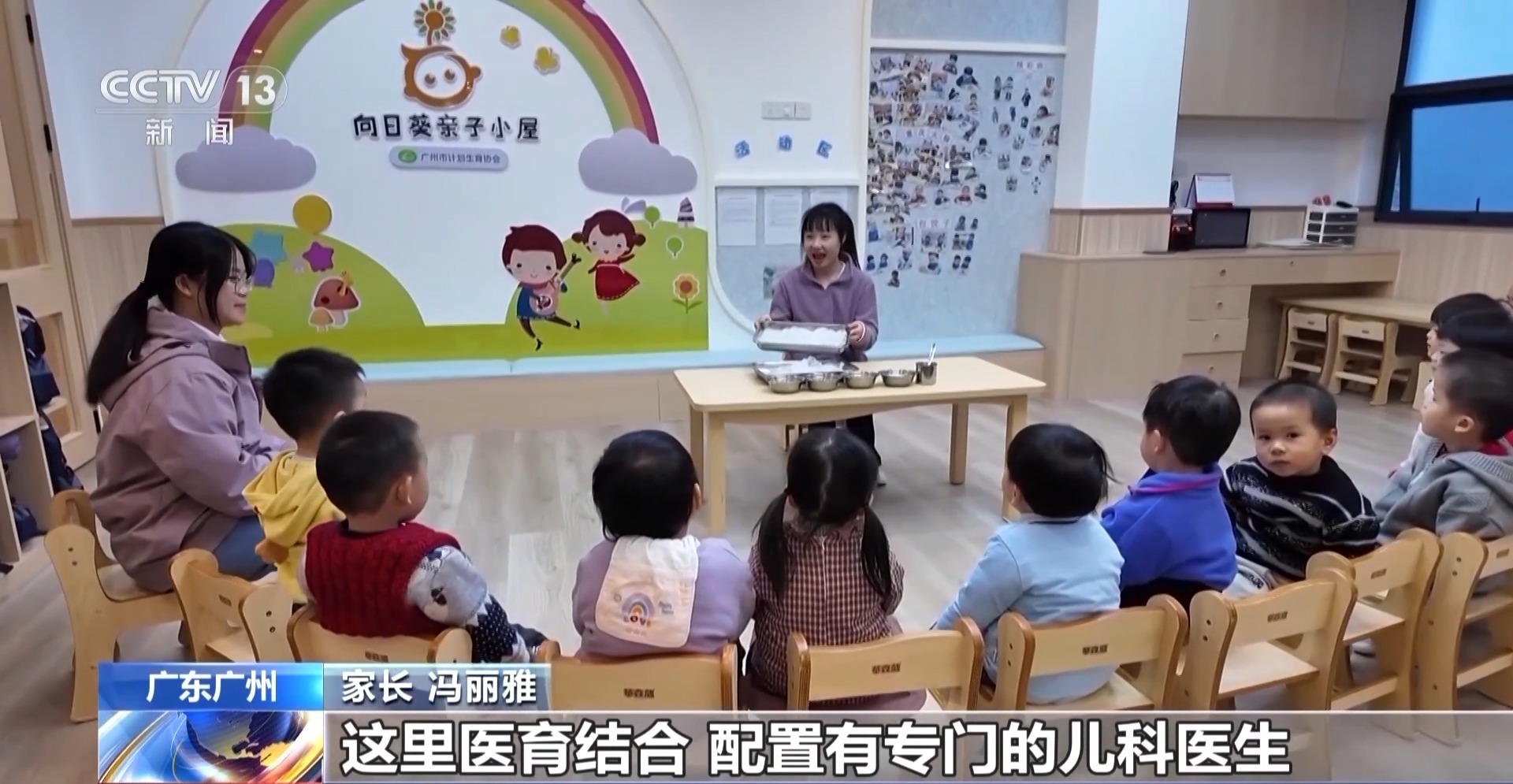
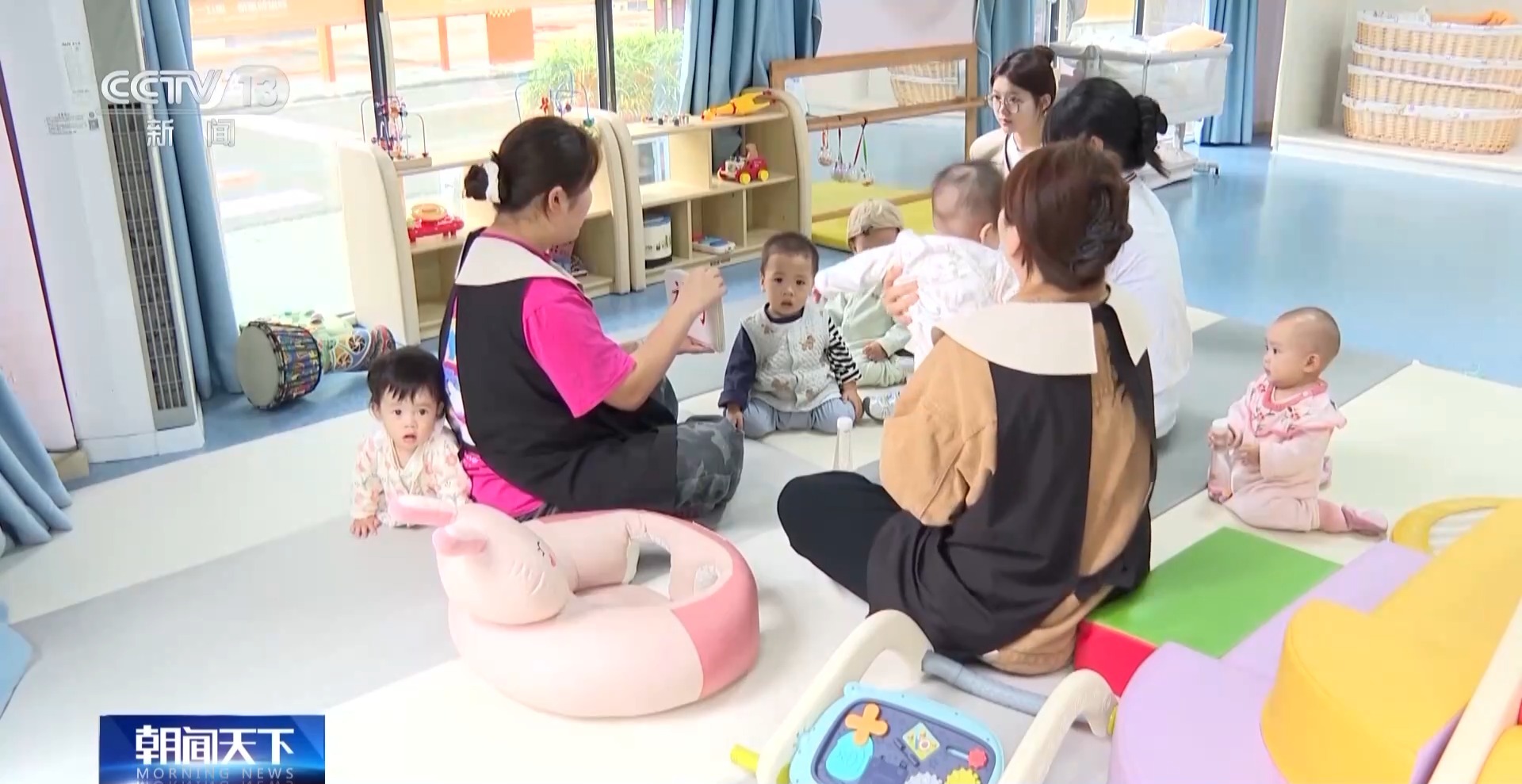
Group 1 - The core idea of the news is that Guangzhou has implemented a "one street (town) one inclusive" model for childcare services, achieving full coverage across 177 streets and towns in 11 districts, with a total of 120,000 childcare spots, 70% of which are inclusive [1] - The inclusive childcare services are benefiting more families, with specific centers like the one in Yuexiu District providing tailored programs for infants aged 6 months to 3 years, featuring specialized teachers and caregivers [1][5] - The design of the classrooms is child-centric, with furniture and facilities adapted to the developmental needs of infants, creating an environment that supports their growth [5] Group 2 - Parents have expressed satisfaction with the services, noting improvements in their children's routines and overall well-being, thanks to the integration of medical and educational resources [3][7] - The centers are equipped with pediatric doctors and customized meal plans to meet the growth requirements of the children, enhancing the overall childcare experience [3] - The operational approach emphasizes a "one-meter vision" design philosophy, ensuring that all environments are tailored to the perspective of the children [5]
@宝爸宝妈 为生养减负 真金白银“大礼包”来了
Yang Shi Wang· 2026-01-18 03:16
Economic Support - The government has implemented a personal income tax deduction policy for childcare and education for children under 3 years old, increasing the deduction standard from 1,000 yuan to 2,000 yuan per child per month [5] - Starting in 2025, a childcare subsidy system will be established, providing 3,600 yuan per year for eligible children under 3 years old, with over 80% of the 2025 subsidies already distributed [5] - National maternity insurance coverage has reached 255 million people, with nearly 95% of areas directly distributing maternity benefits to insured individuals [5] Childcare Services - There has been a significant upgrade in childcare services, with various forms of childcare facilities being established, including integrated nursery schools and community-based childcare points [8] - By 2025, the total number of childcare spots is expected to reach 6.66 million, with an average of 4.73 spots per 1,000 people [8] - The average price of full-day childcare has decreased by 29%, and 8,000 childcare institutions have partnered with healthcare providers to offer comprehensive health services for children [8] Pediatric Services - The government has expanded pediatric service availability, with 4,845 secondary and tertiary public hospitals now providing pediatric care [12] - Various regions have extended maternity leave to 158 days or more and established additional parental leave policies, enhancing support for families [12] - A supportive social atmosphere for childbirth is being fostered, with widespread participation from various sectors to promote a family-friendly society [12]
多地优化生育支持政策,年轻父母们这样说
Xin Lang Cai Jing· 2026-01-18 03:00
Core Viewpoint - The article emphasizes the importance of optimizing fertility support policies to create a family-friendly society, linking family happiness with national development [1]. Group 1: Fertility Support Policies - Various regions in China are implementing a series of policies, including childcare subsidies, universal childcare, and medical insurance reimbursements for prenatal and delivery expenses, to alleviate the financial burden of raising children [1]. - These policies aim to enhance the well-being of families and contribute to the concept of "investing in people" [1]. Group 2: Case Study - Gansu Zhangye - In Zhangye, a father received a childcare subsidy of 7,200 yuan, which significantly eased his family's financial pressure related to raising three daughters [2]. - The city has established a comprehensive service mechanism for the childcare subsidy, achieving a fund disbursement progress of 99.22% and benefiting 26,000 people [3]. Group 3: Case Study - Jilin Changchun - In Changchun, a childcare center provides affordable services, charging 800 yuan per month for management and 20 yuan daily for meals, supporting dual-income families [4][5]. - The local government offers annual subsidies of 3,600 yuan for urban areas and 2,400 yuan for other regions to promote the development of inclusive childcare services [5]. Group 4: Case Study - Guangdong Guangzhou - In Guangzhou, a new mother reported that her medical expenses for childbirth were largely covered by insurance, with reimbursements totaling 4,831.5 yuan and personal payments of only 237.6 yuan [6]. - The Guangdong government has implemented policies to ensure that maternity-related medical expenses are fully covered, with over 10,000 mothers in 2025 having out-of-pocket costs of less than 100 yuan [6][7]. - New policies will include coverage for assisted reproductive services and aim to support families facing challenges related to high-risk pregnancies [7].
全国多地优化生育支持政策——助力建设生育友好型社会
Ren Min Ri Bao· 2026-01-18 02:43
Core Viewpoint - The article emphasizes the importance of optimizing fertility support policies, linking family happiness with national development, and highlights various local initiatives aimed at easing the financial burden of child-rearing through subsidies and healthcare support [1]. Group 1: Fertility Subsidies - In Zhangye, Gansu Province, a father received a subsidy of 7,200 yuan, which significantly alleviated his family's childcare expenses, allowing them to better manage costs associated with raising three daughters [2]. - The Zhangye city has established a comprehensive service mechanism for the distribution of fertility subsidies, achieving a funding distribution progress of 99.22% and benefiting 26,000 people [3]. Group 2: Universal Childcare Services - In Changchun, Jilin Province, a childcare center offers affordable services, charging 800 yuan per month for management and 20 yuan per day for meals, supporting dual-income families who struggle with childcare [4][5]. - The Jilin government has implemented a subsidy of 3,600 yuan per year for childcare services in urban areas and 2,400 yuan in other regions, promoting the development of universal childcare services [5]. Group 3: Healthcare Support for Childbirth - In Guangzhou, a new mother reported that her medical expenses for childbirth were largely covered by insurance, with a reimbursement of 4,831.5 yuan and minimal out-of-pocket costs [7]. - The Guangdong government has introduced policies to ensure that maternity-related medical expenses are fully covered by insurance, with over 10,000 mothers in 2025 experiencing out-of-pocket costs of less than 100 yuan [7][8]. - New policies have been established to include various reproductive health services under basic medical insurance, aiming to reduce the financial burden on families facing fertility challenges [8].