
信托

Search documents
上海信托:金融向善铸初心,慈善信托绘就责任新篇
Di Yi Cai Jing· 2025-12-17 15:48
上海国际信托有限公司作为深耕金融行业四十余年的头部机构,坚守"金融向善"核心理念,将慈善公益 融入企业发展血脉。 在新时代企业社会责任体系不断完善的背景下,金融机构正以专业特长赋能公益生态。 上海国际信托有限公司(下称"上海信托")作为深耕金融行业四十余年的头部机构,坚守"金融向善"核 心理念,将慈善公益融入企业发展血脉。通过在教育启智、医疗健康和乡村振兴板块深耕近十载,上海 信托构建起系统化、可持续的公益实践体系,凭借超百单慈善信托设立经验与超2亿元公益资金募集规 模,成为金融行业践行"金融向善"、以专业力量赋能公益生态的标杆典范。 凭借对行业使命的深刻认知,上海信托将慈善信托确立为公司重要发展方向之一,实现了商业发展与社 会责任的同频共振。自2018年《慈善法》及《慈善信托管理办法》颁布实施以来,公司专门设立独立部 门统筹推进慈善信托业务,成功打造"上信上善"与"上海公益"两大公益品牌,形成了"金融资源+公益资 源"有机融合的独特发展模式。截至目前,公司累计设立慈善信托突破百单,募集资金超2亿元,在全国 24个省级行政区域落地公益项目150余个,直接及间接受益人群超500万人次,用实实在在的行动诠释了 金 ...
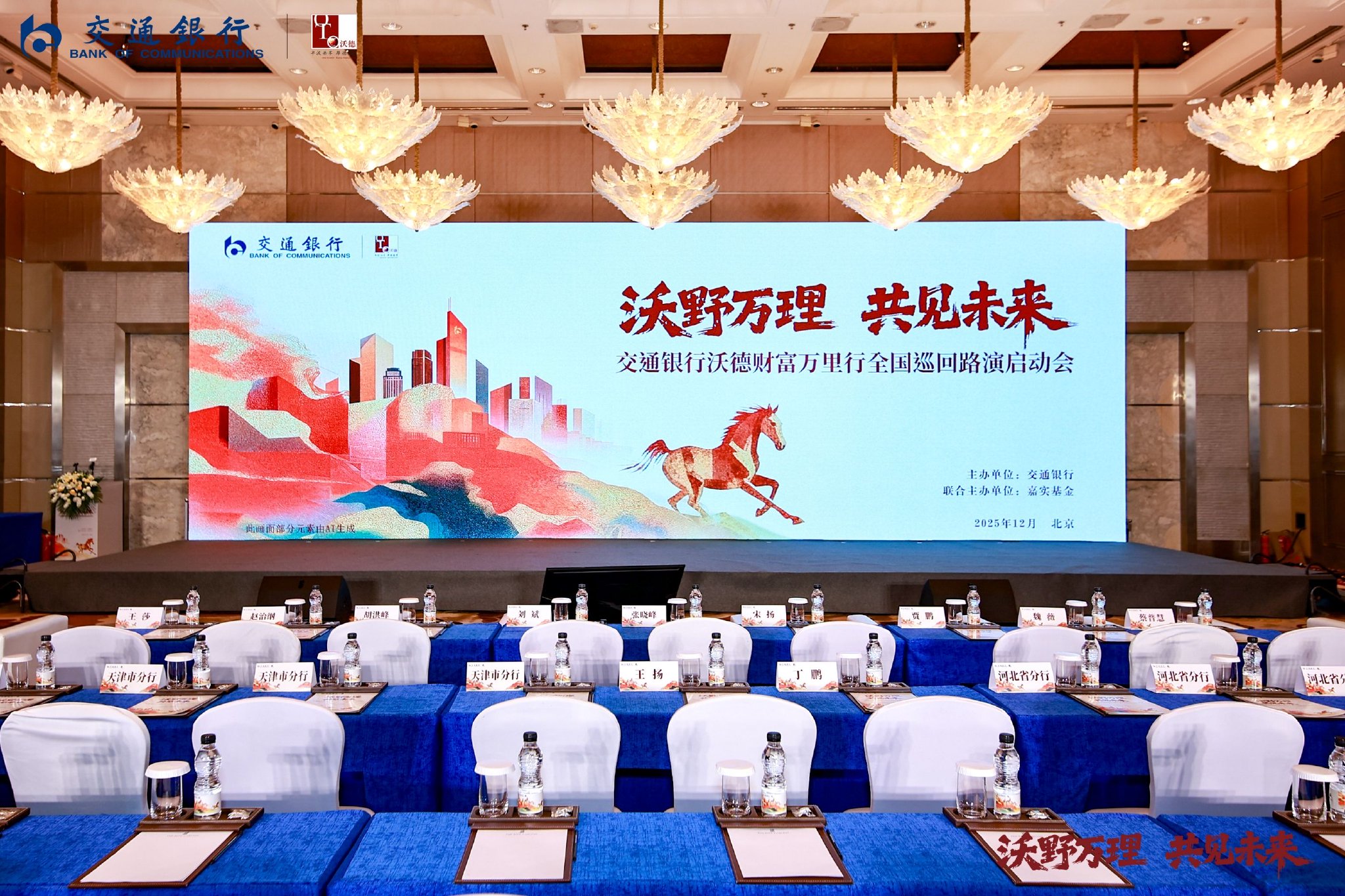
交通银行“沃德财富万里行”全国巡回路演(北京站)启航
Shang Hai Zheng Quan Bao· 2025-12-17 14:42
Group 1 - The core viewpoint of the article is that the Bank of Communications has launched a nationwide roadshow for its wealth management initiative, marking the first major promotional project following the establishment of its Wealth Management Department [1][3] - The "Wode Wealth Journey" is a significant step in the bank's reform of its wealth management business, aimed at enhancing customer service and aligning with national strategies for common prosperity [3] - The initiative is expected to expand from key regions to nationwide, reflecting the bank's commitment to improving wealth management services [3] Group 2 - Wealth management is closely linked to the financial well-being of the public, with recent government meetings emphasizing the importance of boosting domestic demand and increasing residents' income [4] - The bank's efforts in wealth management are seen as crucial for increasing residents' property income and stimulating consumption, aligning with national policy objectives [4] - The "Wode Wealth" brand, established in 2006, is set to undergo a brand upgrade as it approaches its 20th anniversary, with plans to deepen collaborations with leading asset management firms [4] Group 3 - Economic experts at the launch event expressed optimism about the Chinese equity market's performance in 2026, suggesting that there are opportunities arising from the recovery of profit expectations [5] - Current improvements in the underlying mechanisms of the economy and reduced external pressures are seen as positive indicators for long-term investment in Chinese assets [5] - The event included discussions on the role of financial institutions in serving the public, with various firms highlighting their commitment to providing stable returns and enhancing wealth management through technology [6] Group 4 - Over the next six months, the "Wode Wealth Journey" will host more than 50 events nationwide, including product strategy meetings and investment report sessions, aimed at promoting financial products that balance safety, liquidity, and returns [6] - The initiative seeks to foster a positive interaction between residents' wealth accumulation and economic development [6]


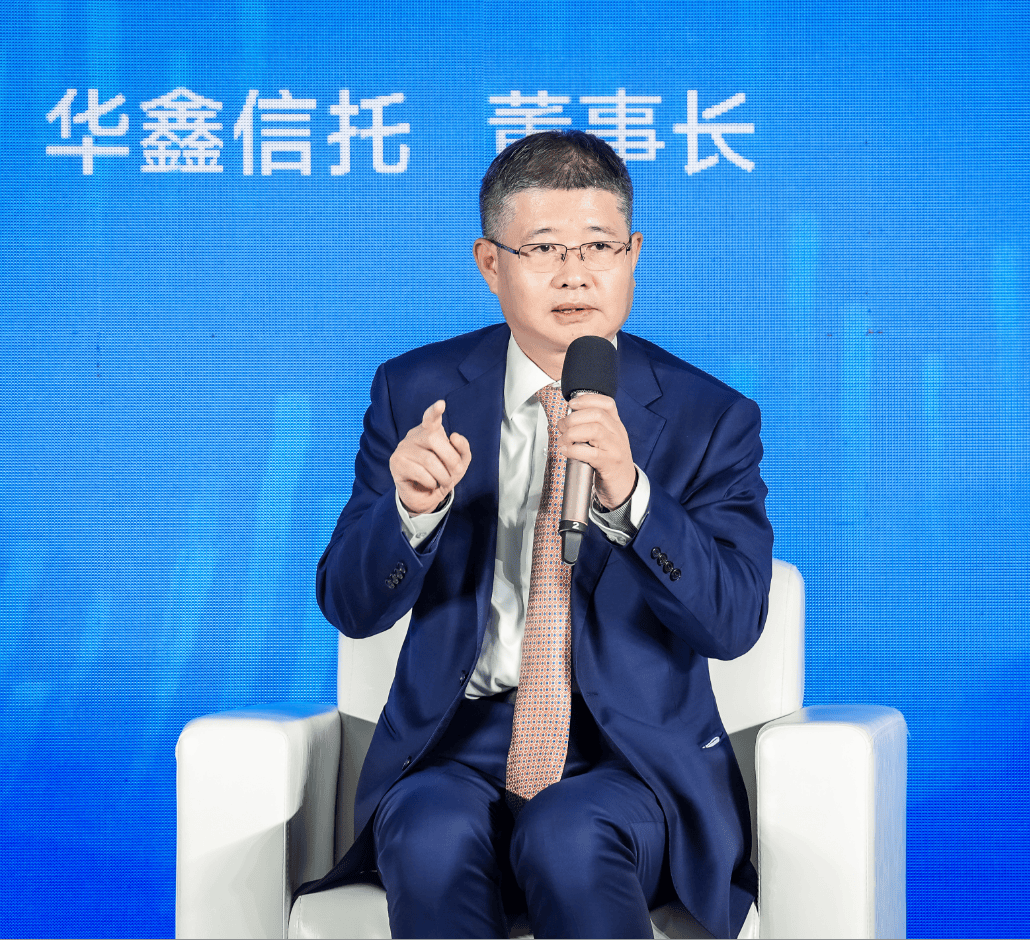
华鑫信托董事长朱勇:拥抱AI时代 耐心资本是理性选择
Sou Hu Cai Jing· 2025-12-17 09:20
谈及"耐心资本"与AI产业的关联,朱勇从风险投资规律角度分析指出,AI时代的投资遵循幂律分布,即少数项目将占据绝大部分回报。在这一逻 辑下,持有即意味着拥抱未来,过早退出反而可能错失机遇。因此,保持耐心不仅是长期主义的体现,更是在信息产业规律下的理性选择。 面对AI技术浪潮,朱勇坦言,作为传统金融机构,华鑫信托在AI领域的投资布局目前仍较小,但态度明确:"AI是未来,我们一定要拥抱AI时 代。"他呼吁,即便稳健型投资者,也应拿出少量增量资金,配置AI相关资产。 "不耐心是人的天性,耐心是我们的追求,而在AI时代,耐心还是理性。"12月16日,在2025南通投资大会暨上证多层次资本市场高质量发展大会 圆桌环节,华鑫信托董事长朱勇如是说。他围绕资产管理、风险控制与投资理念,分享了其对"耐心资本"与"AI新纪元"的深刻思考。 上证报中国证券网讯(记者 聂林浩)"不耐心是人的天性,耐心是我们的追求,而在AI时代,耐心还是理性。"12月16日,在2025南通投资大会暨 上证多层次资本市场高质量发展大会圆桌环节,华鑫信托董事长朱勇如是说。他围绕资产管理、风险控制与投资理念,分享了其对"耐心资 本"与"AI新纪元"的深刻思 ...
家办一线(12.9-12.15)| 美联储宣布降息25个基点;香港2025年上半年超级富豪增幅冠绝全球
Sou Hu Cai Jing· 2025-12-17 01:45
Group 1: Trust and Wealth Management - Shanghai Trust has completed the first nationwide full-process registration of a will trust, marking a significant advancement in China's trust registration system and enhancing the credibility and operational security of will trusts [7] - The Krefeld office of the Hermès family has established Breithorn Holding with an authorized capital of €1 billion, aiming to diversify investments beyond luxury goods and strengthen wealth protection [7] - The first "trust registration + estate manager" model has been implemented in Jinan, effectively addressing challenges in traditional real estate inheritance and providing a new low-cost, efficient wealth transfer path [7] Group 2: Economic Indicators and Financial Trends - The Federal Reserve has lowered the federal funds rate target range by 25 basis points to between 3.5% and 3.75%, marking the third consecutive rate cut since September 2024 [8] - Hong Kong's number of ultra-high-net-worth individuals surged by 22.9% to 17,215 in the first half of 2025, making it the fastest-growing region globally for wealth management [8] - China's total economic output is projected to reach approximately 140 trillion yuan in 2025, with significant contributions to global wealth growth [9][11] Group 3: Financial Reports and Market Developments - The social financing scale in China increased by 33.39 trillion yuan in the first 11 months of 2025, with a year-on-year growth rate of 8.5% [11] - The scale of ETFs in the Shanghai market has surpassed 4.1 trillion yuan, reflecting a 50% increase year-to-date [12] - Six major state-owned banks have initiated mid-term dividend distributions exceeding 200 billion yuan, reinforcing investor confidence in bank stocks [12] Group 4: Education and International Students - The UK government will impose a "international student tax" of £925 per year starting August 2028, potentially increasing tuition fees by 15%-20% [13] - The number of international students in the U.S. has reached a record high of 1,177,766 for the 2024/25 academic year, marking a 4.5% increase [13] - The number of Chinese applicants to UK undergraduate programs has risen to 36,385, with an acceptance rate of 52.8% [14]
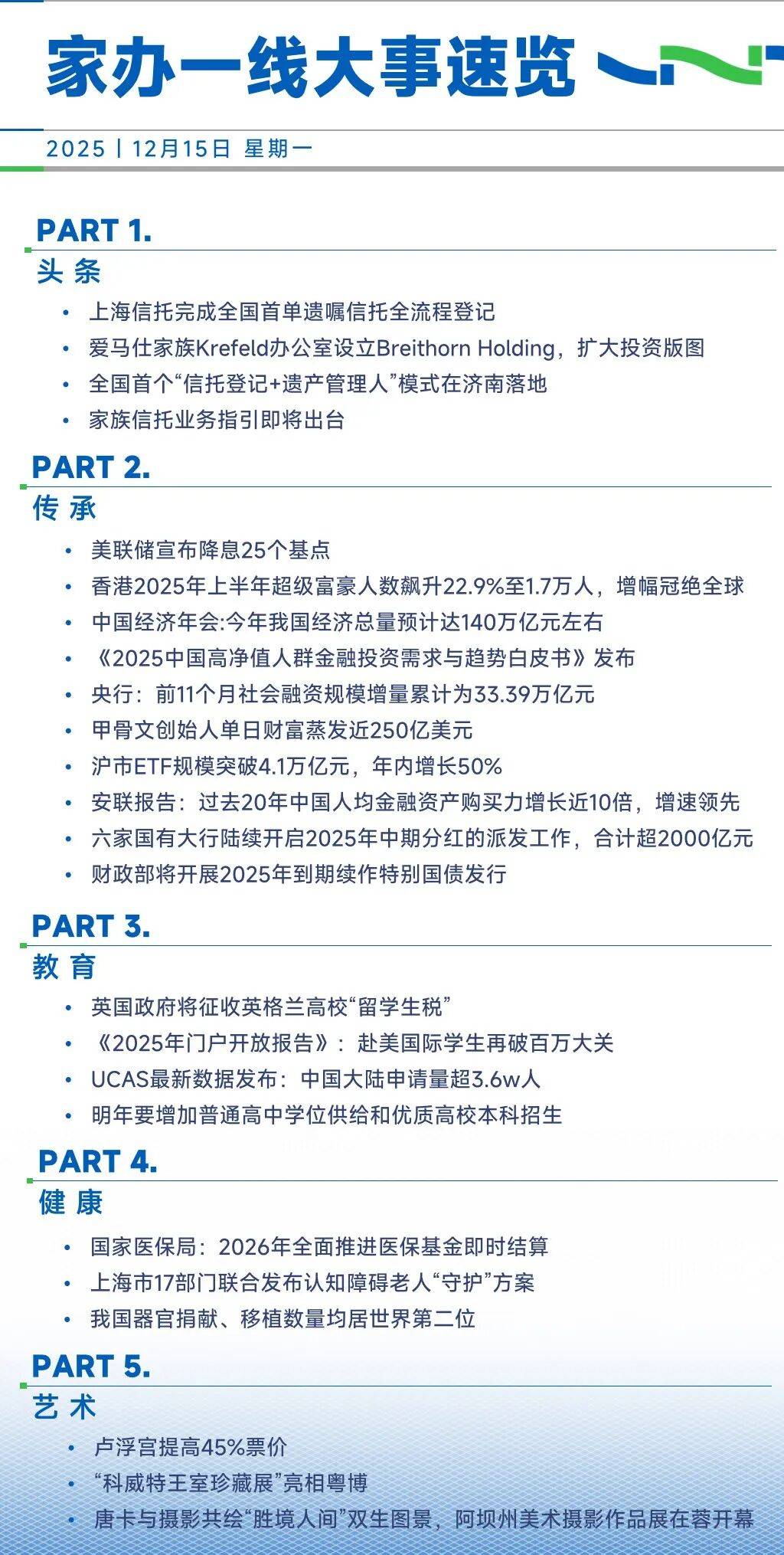
从南通好通到资本融通 金融投资各方论道耐心资本与未来产业
Shang Hai Zheng Quan Bao· 2025-12-16 18:42
Group 1 - The conference focused on the integration of capital and the real economy, aiming to establish a foundation for the co-prosperity of capital, technology, and industry to contribute to China's high-quality economic development [1] - Nantong has transformed opportunities from national strategies like the Yangtze River Economic Belt and the Yangtze River Delta integration into development advantages, establishing multiple government investment funds totaling over 120 billion yuan [2] - The city plans to embrace equity investment and build a comprehensive technology financial service system covering the entire lifecycle of enterprises, collaborating with quality investment institutions and listed companies [2] Group 2 - Experts emphasized that innovation-driven digital transformation is a trend, with technologies like artificial intelligence enhancing capabilities and creating strategic opportunities for entrepreneurs [3] - The investment community is focusing on hard technology sectors, with private equity and trust institutions expanding their roles in supporting technology innovation [4] - The conference featured discussions on investment and acquisition opportunities in the context of the 14th Five-Year Plan and the future of AI industries, highlighting the importance of long-term capital support for technology enterprises [5]
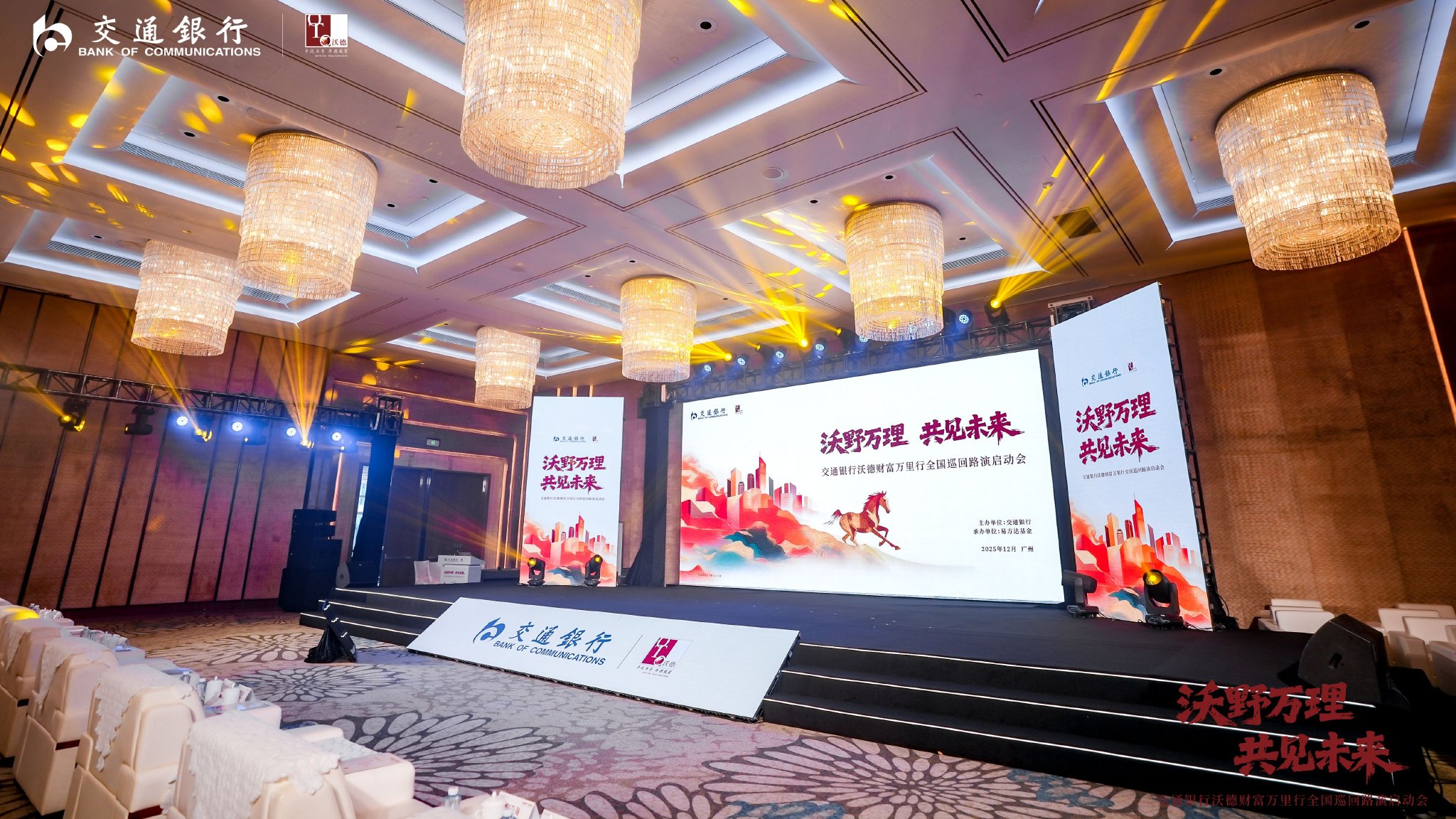
交通银行“沃德财富万里行”全国巡回路演(广州站)启动
Shang Hai Zheng Quan Bao· 2025-12-16 14:07
Group 1 - The core initiative of the Bank of Communications is the establishment of a Wealth Management Department to enhance its wealth management services and align with the national strategy for common prosperity [1][3] - The "Wode Wealth Nationwide Tour" is the first marketing project following the organizational restructuring, aiming to expand wealth management services from key regions to the entire country [1][6] - The tour will connect major economic zones including the Yangtze River Delta, Guangdong-Hong Kong-Macao Greater Bay Area, and Beijing-Tianjin-Hebei, promoting the bank's wealth management services [1][3] Group 2 - The bank's branches in the Guangdong-Hong Kong-Macao area have developed strong cross-border financial service capabilities, aiming to support the region's development as a world-class city cluster [3][6] - Experts at the event discussed macroeconomic outlooks, with insights on the long-term appreciation of the RMB against the USD due to various economic factors [4][6] - The event featured discussions on cross-border wealth management, emphasizing the need for lower account opening thresholds to facilitate global asset allocation for clients [5][6] Group 3 - The bank plans to conduct over 50 events nationwide in the next six months, including product strategy meetings and investment report sessions, to foster wealth growth and economic development [7][8] - The Hong Kong branch reported a 13% year-on-year increase in managed assets, highlighting the growing demand for offshore family trusts among clients in the Greater Bay Area [7][8] - The bank will collaborate with over 80 financial institutions to provide insights on macro trends and asset allocation strategies to clients [8]
他当选信托董事长
Zheng Quan Shi Bao Wang· 2025-12-16 14:07
近日,兴业信托披露显示,11月5日,兴业信托召开2025年第三次临时股东会、选举产生了公司第八届 董事会成员。随后,公司第八届董事会第一次会议选举产生新一届董事长及董事会各专业委员会委员与 主任委员并聘任高级管理层。至此,兴业信托顺利完成董事会换届工作。 会上,兴业信托董事长郑志明对各股东单位长期以来给予的关心和支持,对第七届董事会和高级管理层 以及全体员工为公司转型发展付出的努力,致以由衷敬意和诚挚感谢。 近年来,兴业信托面临较大的转型压力,新一届董事会担子不轻。数据显示,2024年公司营业收入49亿 元,同比增长5.8%。截至2025年10月末,兴业信托管理的信托业务规模超过7800亿元。 郑志明在会上表示,2025年,行业发展的"四梁八柱"全面筑牢,"1+N"制度体系即将全面落地。站在行 业变革进一步向纵深推进的历史节点,新一届董事会与高管团队将赓续"金融为民"的服务初心,以凝心 聚力的共识、担当作为的魄力扛起发展重任! 这意味着郑志明继续获选为公司第八届董事会董事长。2024年6月,郑志明担任兴业信托董事、董事长 的任职资格已获福建金融监管局核准。 作为兴业信托的"掌门人",郑志明在兴业银行工作多年, ...
信托首席合规官火速补位
Jing Ji Guan Cha Wang· 2025-12-16 05:35
Core Viewpoint - The establishment of Chief Compliance Officers (CCOs) in trust companies is a response to regulatory requirements and an internal need for industry transformation and stable operations, aimed at enhancing compliance governance and preventing systemic risks [3][5][8]. Group 1: Regulatory Compliance - Trust companies are required to appoint CCOs by January 1, 2026, as per the revised "Trust Company Management Measures" [3][7]. - The recent approvals for CCO positions have accelerated, indicating a shift towards compliance management as a strategic priority [4][5]. - The "Financial Institutions Compliance Management Measures," effective from March 1, 2023, mandates that financial institutions establish CCO roles at their headquarters [7][9]. Group 2: Risk Management and Internal Controls - The role of CCOs is to build a comprehensive risk control mechanism, integrating compliance checks into key business processes to identify and rectify risks early [5][8]. - The establishment of CCOs aims to address past compliance failures and enhance the transparency of trust products, thereby restoring investor confidence [6][8]. - CCOs will have the authority to veto compliance issues at critical stages such as product design and investment decisions, ensuring compliance is embedded throughout the business process [8][9]. Group 3: Industry Transformation - The appointment of CCOs reflects a broader industry shift from rapid expansion to compliance-driven growth, aligning with the need for sustainable business practices [5][8]. - Trust companies are encouraged to develop a standardized compliance framework that integrates with business operations, enhancing the overall governance structure [9]. - The focus on compliance is expected to reshape the trust industry, emphasizing its role as a fiduciary and restoring its credibility [8][9].

2025年11月金融数据点评:社融同比多增,企业债券融资规模增加
BOHAI SECURITIES· 2025-12-16 04:10
Group 1: Financing Trends - In November, social financing (社融) increased by nearly 160 billion yuan year-on-year, driven by significant growth in corporate direct financing and off-balance-sheet financing[3] - Corporate direct financing rose by over 100 billion yuan, primarily due to the expansion of the sci-tech bond market, which saw net financing of 182.3 billion yuan in November, an increase of 100 billion yuan year-on-year[15] - Off-balance-sheet financing also increased by over 100 billion yuan, largely attributed to the upcoming implementation of revised trust company regulations[15] Group 2: Loan and Deposit Dynamics - In November, RMB loans decreased by 190 billion yuan year-on-year, reflecting weak demand for loans and a supply-side contraction due to financial institutions' "anti-involution" measures[4] - Short-term loans for enterprises increased by 100 billion yuan, indicating a rise in short-term operational funding needs, while medium and long-term loans decreased by 40 billion yuan year-on-year[22] - Resident deposits showed a significant reduction, with both household and corporate deposits declining year-on-year, indicating a trend of deleveraging among residents[26] Group 3: Monetary Supply Metrics - M2 growth rate fell to 8% in November, down 0.2 percentage points from October, while M1 growth rate decreased to 4.9%, down 1.3 percentage points[26] - The decline in M1 and M2 growth rates is attributed to reduced "loan creation deposits" and limited fiscal fund injections, with non-bank financial institution deposits also showing a year-on-year decrease[26] Group 4: Future Outlook and Risks - The overall financial data for November indicates persistent weakness in private sector financing demand, with potential positive impacts from new policy financial tools expected to gradually materialize[6] - The high base effect from government bond financing is likely to continue to weigh on social financing growth, which may stabilize or slightly decline in the near term[6] - Risks include unexpected changes in the economic environment and policy adjustments that could significantly impact market financing demand and liquidity conditions[7]
告别“无红绿灯行车” 家族信托立规进行时
Zhong Guo Zheng Quan Bao· 2025-12-15 20:19
Core Insights - The family trust sector in China is poised for regulatory standardization, addressing issues like will invalidation and asset isolation, which have arisen during the peak of wealth transfer between generations [1] - The China Trustee Association has drafted a consultation document for family trust business guidelines, which is expected to clarify industry boundaries and alleviate "inheritance anxiety" [1][2] Regulatory Framework - The consultation document establishes clear entry and operational standards, linking business qualifications to regulatory ratings, requiring trust companies to suspend new family trust business if they do not meet minimum ratings [2] - Trust companies must employ at least five dedicated personnel with over three years of relevant experience to manage family trusts, promoting a workforce with financial, tax, and legal expertise [2] Investment Threshold and Market Dynamics - A minimum investment threshold of 10 million yuan is proposed, emphasizing the core attributes of "wealth protection and inheritance," which aims to eliminate borderline practices in personal account management [2] - The document aims to address industry pain points related to publicity and fees, allowing for public promotion of family trust definitions and functions [2][3] Fee Structure and Competition - The consultation document emphasizes a principle of price-quality alignment, prohibiting unfair competition practices like low-price undercutting, and provides a specific fee calculation formula to curb harmful price wars [3] - This shift from price competition to value competition is expected to enhance service quality and reduce the risk of trust invalidation for clients [3] Market Size and Client Concerns - As of the end of 2024, the family trust sector's total scale is reported to be 643.58 billion yuan, with many families hesitant to engage due to frequent inheritance disputes and a lack of public trust [4] - Client misconceptions about family trusts being mere financial products rather than long-term services pose significant challenges for trust professionals [4] Industry Challenges - The industry faces compliance risks, particularly with cross-border asset allocation under the Common Reporting Standard (CRS) and anti-avoidance rules, alongside doubts about the effectiveness of trust structures [5] - A new trend in client acquisition involves using insurance trusts as an entry point, allowing clients to experience trust functions before transitioning to family trusts [5] Future Outlook - The family trust industry is expected to enter a phase of "compliance, professionalism, and diversification," with increasing demand for personalized services from high-net-worth individuals [7] - The focus for clients will shift from fee rates to the ability of trust companies to address complex issues like equity inheritance and tax planning, as the core value of trusts transitions from "asset concealment" to "transparent governance" [7]