
化妆品

Search documents
全周期服务助力企业腾飞,上海这个区如何创新机制培育产业生态
Sou Hu Cai Jing· 2026-01-25 23:23
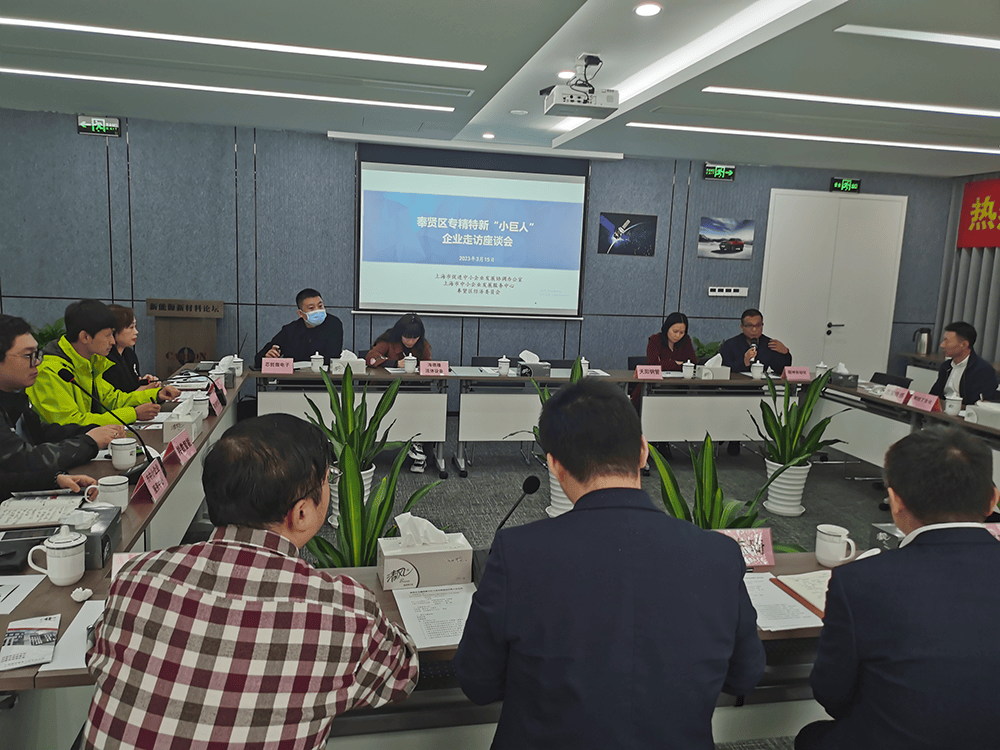
Core Insights - The article highlights the proactive and supportive role of the Fengxian District Economic Committee in facilitating business operations and development in Shanghai Fengxian, showcasing a successful model of government-business collaboration [1][3][6] Group 1: Economic Development and Support - The Fengxian District Economic Committee has established a "three-dimensional escort system" that provides tailored support throughout the entire lifecycle of enterprises, addressing individual needs based on industry and development stage [3][6] - In 2022, the industrial added value in Fengxian accounted for over 50% of GDP, with the industrial output value exceeding the set target of 250 billion yuan three years ahead of schedule [1][9] - The number of municipal-level specialized and innovative enterprises in Fengxian has reached 995, nearly five times that of the end of the 13th Five-Year Plan, indicating strong development resilience and innovation vitality [1][9] Group 2: Policy Implementation and Innovation - Since 2023, the district has introduced 22 various policies aimed at supporting different sectors, including 10 detailed policies for key industries such as cosmetics and intelligent robotics [3][6] - The introduction of a "one enterprise, one policy" service model has improved the efficiency of problem-solving for businesses, creating a closed-loop management system that enhances service delivery [3][6] - The implementation of the first national customs support policy for the cosmetics industry has significantly improved operational efficiency, allowing for a reduction in product sampling and a 53% year-on-year increase in export value for a local cosmetics company [8] Group 3: Future Outlook and Strategic Goals - The Fengxian District Economic Committee aims to continue strengthening the foundation of the real economy through more effective policy supply, dynamic institutional mechanisms, and superior enterprise services [9] - The district has successfully cultivated 280 enterprise technology centers and has been recognized as a national-level characteristic industrial cluster for cosmetics and polymer new materials, indicating a leading position in specific industrial fields [9]

天干物燥 科学护肤
Xin Lang Cai Jing· 2026-01-25 22:24
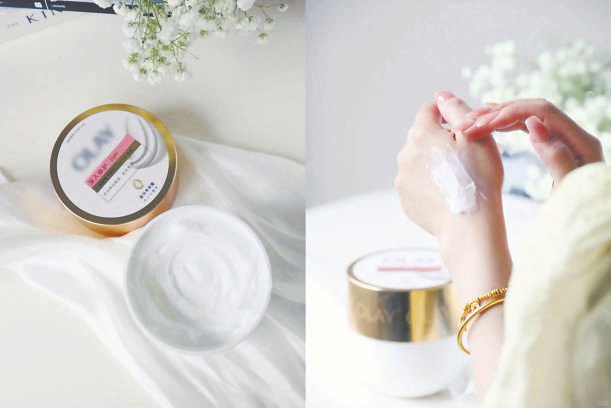
Core Viewpoint - The article emphasizes the importance of selecting appropriate body care products to combat winter skin issues, highlighting the need for effective moisturizing and barrier repair strategies in response to dry and cold conditions. Group 1: Skin Dryness and Barrier Damage - Winter skin dryness is not merely due to "lack of water," but is primarily caused by the impairment of the skin barrier function under adverse environmental conditions [3] - Low temperatures and humidity accelerate moisture loss from the skin, while reduced metabolic function and oil secretion in winter exacerbate dryness and sensitivity [3] - Common misconceptions in skin care, such as using hot water for washing and neglecting body care, can worsen skin issues [3] Group 2: Choosing the Right Products - The distinction between body lotion and body oil is crucial, as they cater to different skin types and needs [4][5] - Body lotion typically contains water, moisturizers, and oils, providing immediate hydration and forming a protective barrier, while body oil is a pure oil system that offers better moisture retention for extremely dry skin [5] - For individuals in heated or air-conditioned environments, thicker and well-penetrating body creams are recommended to effectively repair the skin barrier [5] Group 3: Key Ingredients and Recommendations - When selecting body lotion, look for ingredients like B5 panthenol, ceramides, and ectoin, which effectively repair the skin barrier and alleviate dryness [6] - The texture of the product is important; thicker creams generally provide better moisture retention than lighter lotions [6] - Pleasant scents can enhance the user experience and encourage consistent use of skin care products [6] Group 4: Winter Skin Care Strategies - Winter is an ideal time for skin whitening treatments due to reduced sun exposure; using products with niacinamide and vitamin C can effectively inhibit melanin production [7] - Additional skin care tips include moderate cleansing, adequate hydration, and maintaining indoor humidity levels between 40%-60% [8][10] - Wearing soft, breathable fabrics can prevent irritation and support skin health during winter [11]
严查商品过度包装
Xin Lang Cai Jing· 2026-01-25 22:24
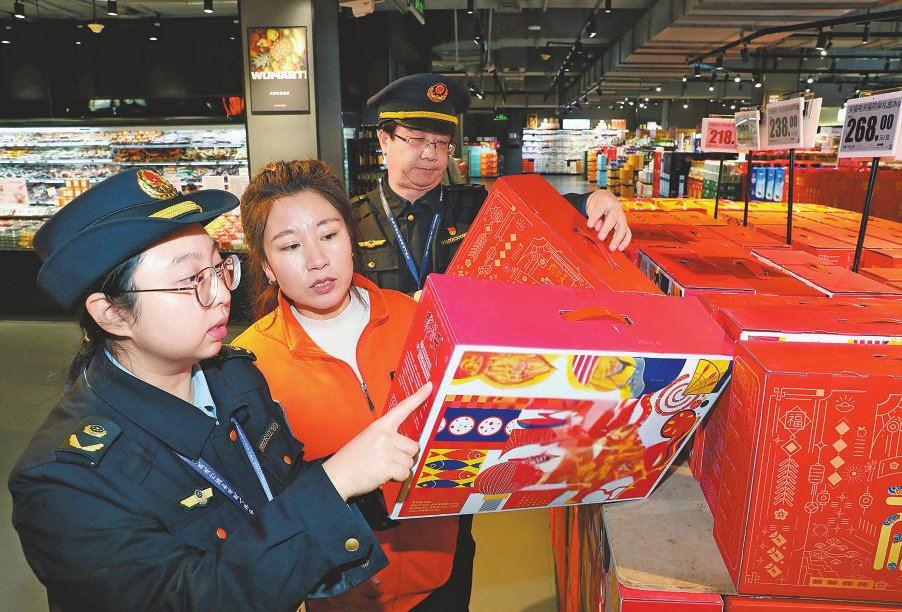
近日,北京市石景山区市场监管局聚焦礼盒、茶叶、保健食品、化妆品等重点品类,开展过度包装规范整治行动。本次行动以 大型商超等为重点场所,现场核查商品包装是否符合国家标准,严厉查处包装层数超标、空隙率过高、包装成本与销售价格比 例失衡等违法行为。 本报记者董芳忠摄影报道 (来源:中国消费者报) ...
警惕育发产品“持证”销售陷阱
Xin Lang Cai Jing· 2026-01-25 22:24
(来源:中国消费者报) 儒意旗舰店标称"药监局认证"涉嫌误导 经查询,记者未发现福建美威科技有限公司有重新注册的防脱发功效国妆特字产品,也未见其备案普通 护发品。广州御采堂化妆品有限公司虽备案了大量普通化妆品,但记者未找到与上述4款国妆特字产品 同名的产品。企查查数据显示,福建美威科技有限公司、广州御采堂化妆品有限公司法定代表人均为邵 大伟,两家企业分别于2019年7月、2017年8月创办,与网店宣传的"27年专研育发"不符。 御颜雅坊网店销售的第五款产品为捷蔻防脱育发洗发露,产品外包装标注"国妆特字G20180798",宣 称"根源防脱固发育发""脱发断发-95%修护发质+89%"。查询化妆品监管APP,显示其生产企业为广州 丽臣精细化工有限公司,对应批号已过期,备注明确逾期不得生产销售。 记者查询发现,御颜雅坊宣称为"4年老店""已拼211万+件",商品单价为7.8元至29.9元不等。该店铺店 主为广州市东山区的冯某某,其声明"个人从事零星小额交易活动(年交易额累计不超过10万元),依 法无需办理经营主体登记"。 ■本报记者 张文章 "国家药监局认证显著有效""药监局持证防脱""持证育发"……近期,一些防 ...
破圈出海 中国品牌加速登陆全球市场(国际论道)
Ren Min Ri Bao· 2026-01-25 21:23
Core Insights - Chinese brands are rapidly expanding their presence in global markets, showcasing a shift from previous challenges to a new era of growth and innovation [4][5][6] Group 1: Market Expansion - Chinese brands are increasingly establishing physical stores and local operations in various countries, enhancing brand recognition and local engagement [12] - The market share of Chinese automotive brands in Kazakhstan has surged from approximately 2% in 2020 to 34.5% in the first nine months of 2025, indicating a significant increase in their presence [7] - Chinese tea brands have successfully entered the U.S. market, with several brands expanding their operations internationally, including Southeast Asia and Europe [7] Group 2: Brand Perception and Consumer Trends - There is a notable shift in consumer attitudes towards Chinese products, particularly among younger demographics in the U.S., who are increasingly embracing Chinese technology and brands [6] - The global trust index for Chinese brands has significantly improved over the past six years, reflecting a growing acceptance and recognition of their quality and innovation [9] - Chinese brands are not only competing on price but are also focusing on quality and creativity, challenging the previous perceptions of low-quality Chinese products [10] Group 3: Innovation and Cultural Influence - Innovation is a key driver for the success of Chinese brands, with many companies emphasizing their cultural roots and unique product offerings [10][11] - The rise of Chinese brands is accompanied by a cultural wave that is reshaping global perceptions of China, with the country becoming a center for trends and creativity [14][15] - The transition from merely selling products to building ecosystems marks a significant evolution in the strategy of Chinese brands in the global market [13]

以“北方美谷”为引擎推动化妆品产业高质量发展
Xin Lang Cai Jing· 2026-01-25 18:14
Core Viewpoint - The article discusses the suggestions for promoting the high-quality development of the cosmetics industry in Shandong Province, emphasizing the need for brand enhancement, innovation collaboration, and an optimized industrial ecosystem [2][3]. Group 1: Industry Background - Shandong is a significant player in the cosmetics industry with a solid industrial foundation, but it faces challenges such as a predominance of OEM (Original Equipment Manufacturer) businesses and insufficient market influence of proprietary brands [2]. - The "Northern Beauty Valley" is a key platform for developing the beauty and health industry in Shandong, which has been gradually advancing since the issuance of relevant development opinions in 2022 [2]. Group 2: Suggestions for Improvement - Implement a "Qilu Beauty" brand enhancement project led by the government, in collaboration with industry associations and the "Northern Beauty Valley," to establish a provincial-level quality cosmetics public brand and create comprehensive admission evaluation standards [2]. - Establish a collaborative innovation center for "Northern Beauty Valley" to focus on core technologies related to Shandong's unique plant resources and marine biological activity, aiming to accelerate the transformation of research results into practical applications [2]. - Optimize the industrial development ecosystem by creating a provincial-level digital public service platform for the cosmetics industry, which would integrate various functions such as policy consultation, registration guidance, and technical support to help reduce operational costs for enterprises [3].
化妆品医美行业周报20260125:化妆品12月社零高增,Q4需求端景气度明显提升-20260125
Shenwan Hongyuan Securities· 2026-01-25 14:44
Investment Rating - The report maintains a "Positive" outlook on the cosmetics and medical beauty industry, indicating strong performance compared to the market [2]. Core Insights - The cosmetics and medical beauty sector has outperformed the market recently, with the Shenwan Beauty Care Index rising by 2.0% from January 16 to January 23, 2026, surpassing the Shenwan A Index by 0.8 percentage points [4][5]. - December 2025 saw a significant increase in social retail sales for cosmetics, reaching 38 billion yuan, with a growth rate of 8.8%, indicating robust demand even in the off-season. The overall growth rate for Q4 was 9.9%, significantly higher than the annual growth of 5.1% for 2025, driven by promotional events like Double 11 [10][17]. - The report anticipates continued high consumer demand in Q1 2026, supported by new product launches and regulatory approvals in the medical beauty sector [10]. Summary by Sections Industry Performance - The cosmetics and medical beauty sector has shown strong performance, with the Shenwan Cosmetics Index increasing by 2.6% and the Shenwan Personal Care Index rising by 4.2%, both outperforming the Shenwan A Index [4][5]. Key Company Reviews - Lin Qingxuan (2657HK) is highlighted as a benchmark in the high-end domestic skincare market, with revenue projected to grow from 690 million yuan in 2022 to 1.21 billion yuan in 2024, representing a CAGR of 32.7%. The company is expected to turn a profit of 187 million yuan in 2024, a 120% increase year-on-year [11][12]. - Langzi Co., Ltd. (002612.SZ) forecasts a net profit of 900 million to 1.05 billion yuan for 2025, reflecting a year-on-year growth of 245.25% to 302.80% [4]. - Qingsong Co., Ltd. (300132.SZ) anticipates a net profit of 130 million to 165 million yuan for 2025, with a growth rate of 137.73% to 201.74% [4]. Market Trends - The report notes that the high-end skincare market is expanding, with the market size expected to reach 218.5 billion yuan by 2029. The concept of "oil-based skincare" is becoming mainstream, driving growth in the facial oil segment, which is projected to grow at a CAGR of 42.8% from 2019 to 2024 [12][14]. - E-commerce channels are increasingly important, with Lin Qingxuan achieving a 65.4% online revenue share in H1 2025, leveraging platforms like Douyin and Tmall for growth [13]. Sales Data - In December 2025, the total retail sales of cosmetics reached 38 billion yuan, with a year-on-year growth of 8.8%. The overall retail sales for cosmetics in 2025 were 465.3 billion yuan, reflecting a 5.1% increase [17][21].



西贝获投资;半亩花田母公司冲刺IPO;华润饮料换帅
Sou Hu Cai Jing· 2026-01-25 12:30
Financing Dynamics - Xibei Restaurant Group has completed an A-round financing with investors including Taizhou Xinrongtai Investment Co., Hohhot Collective Co-Creation Enterprise Management Center, Chengdu Xunda Optoelectronics Co., and Hangzhou Zhouxuan Equity Investment Management Partnership. The financing amount has not been disclosed [3] - The registered capital of Xibei Restaurant increased from 89.902896 million yuan to 101.680175 million yuan, a growth of approximately 13.1%. The shareholder list has been updated with the new investors, leading to a corresponding decrease in the shareholding ratios of founder Jia Guolong and some existing shareholders [3] Acquisition Dynamics - L Catterton, a private equity firm backed by LVMH, has acquired a majority minority stake in French high-end perfume brand Ex Nihilo from Eurazeo. The transaction value exceeds the 29 million euros Eurazeo paid in 2024 [7] - Ex Nihilo, founded in 2013, is known for its unique fragrances and personalized services. The brand plans to reopen its flagship store in Paris in 2026 and expand into multiple cities in the U.S. [7] - China Duty-Free Group has agreed to acquire DFS's travel retail business in Greater China from LVMH and co-founder Robert Miller. This acquisition will give CTG control over DFS retail stores in Hong Kong and Macau, along with exclusive rights to the DFS brand and intellectual property [10] Listing Dynamics - Shandong Huawutang Cosmetics Co., the parent company of the brand "Banmu Huatian," has submitted an application for an IPO on the Hong Kong Stock Exchange, with CITIC Securities as the sole sponsor. The company expects revenue of 1.4989 billion yuan in 2024, a 25% increase from 1.1987 billion yuan in 2023 [12] - The funds raised from the IPO will primarily be used for brand exposure, supply chain expansion, and R&D upgrades, aiming to capture the mid-to-high-end body care market [12] Brand Dynamics - Bosideng has launched a new high-end product line "Areal" in the Galeries Lafayette Haussmann in Paris, marking its first overseas public presentation since the line's release in 2025 [15] - This event signifies Bosideng's establishment as the first Chinese down jacket brand to open a pop-up store in Galeries Lafayette, marking a significant milestone for the brand's entry into the EU market [15] Personnel Dynamics - Tiffany & Co. has appointed David Ponzo as the new Vice CEO, effective January 26, succeeding the retiring Chief Commercial Officer Gavin Haig. Ponzo previously served as Chief Commercial Officer at Louis Vuitton [17] - Nike has announced that Angela Dong, the head of Greater China, will leave the company on March 31, with Cathy Sparks taking over the position. This change is part of Nike's strategy to enhance competitiveness in the Chinese market [20] - Barry Callebaut has appointed Hein Schumacher, a former Unilever executive, as the new CEO, effective January 26. This leadership change comes as the company faces challenges in cocoa sales [23] - China Resources Beverage has announced a leadership change, with Gao Li taking over as chairman from Zhang Weitong, amid a significant decline in revenue and profit [27]



从孵化到长红:天猫升级新品全链路 开启180天长效扶持
Zheng Quan Ri Bao Wang· 2026-01-25 10:47
Core Insights - The NEWty 2026 Tmall Super New Products Festival highlighted the impressive growth of new products in 2025 and announced key support measures for high-quality new products in 2026, including six major new product awards and a special recognition for women [1][11] Group 1: Growth Data and Brand Performance - Tmall has established itself as the primary launch platform for new products, with over 16 million quality new products launched in 2025, achieving a historical high in new product scale [2] - The overall transaction growth for new products reached 34%, with over 30,000 quality new products achieving sales exceeding one million, reflecting the platform's strong incubation capabilities [2] - Notable brands shared their successful new product strategies, such as Adidas, which saw a sales increase of over 25 times through its new series and Tmall's global launch [2] Group 2: Award Recognition and Brand Innovation - Several brands received awards for their outstanding innovation and marketing performance, including Duck Duck, which achieved over 100 million in sales during Tmall Super Brand Day [3] - Talanis was recognized for its innovative children's running shoes, becoming the first children's shoe brand on Tmall to surpass 100 million in sales [3] - Mao Ge Ping's "Earth Eye Shadow" series achieved over 300 million in exposure during Tmall Super Brand Day, earning the title of "Cultural Creativity Brand of the Year" [3] Group 3: Consumer Engagement and Marketing Strategies - Disney and Shanghai Disneyland won the "Consumer Choice Brand of the Year" for their collaboration on the "Zootopia 2" movie and related experiences [4] - Xiaojia's innovative marketing strategies led to record sales during its 10th anniversary campaign, with its new product ranking first in category sales [4] - Shaoyin's collaboration with Tmall Super Brand Day resulted in a 100% year-on-year sales increase, showcasing effective marketing innovation [4] Group 4: Recognition of Industry Leaders - The Tmall Annual Business Person Award was established to honor individuals who significantly shape the Chinese consumer market, with three notable winners recognized for their contributions [7] - Gao Dekang from Bosideng, Adrian Siu from Adidas, and Jasmine Xu from Procter & Gamble were awarded for their leadership and innovation in their respective fields [7][8] Group 5: Women's Empowerment Initiatives - The festival included special awards focusing on women's empowerment, recognizing brands that integrate commercial practices with support for women's growth [9] - The "Annual Women's Power Brand" award was given to brands like Erdos Group and Estée Lauder for their initiatives supporting women's development [9] - The "Annual Women's Power Award" was awarded to Ma Xiaoyu from L'Oréal China for her efforts in promoting women's rights and empowerment in the industry [9] Group 6: Future Initiatives and Support Measures - Tmall announced its core support measures for high-quality new products in 2026, aiming to enhance resource investment and increase traffic to ensure successful product launches [11] - The platform plans to utilize algorithms to identify target audiences for new products and leverage global marketing events to boost product visibility [11]
商贸零售行业周报:老铺黄金SKP活动开启,关注春节销售超预期催化-20260125
KAIYUAN SECURITIES· 2026-01-25 09:14
Investment Rating - The industry investment rating is "Positive" (maintained) [1] Core Insights - The total retail sales in China for 2025 reached CNY 501,202 billion, with a year-on-year growth of +3.7%. December's retail sales showed a modest increase of +0.9% [25][34] - The retail sector is experiencing a gradual recovery, with service retail outperforming goods retail. Online sales are rebounding, while offline supermarkets, convenience stores, and specialty shops are performing relatively steadily [4][27] - The high-end traditional gold market is expanding, with brands like Laopu Gold gaining traction among high-net-worth consumers, supported by strong sales during promotional events [34][38] Summary by Sections Retail Sector Overview - The retail and social service indices reported increases of 2.16% and 3.20% respectively from January 19 to January 23, 2026, with the retail index ranking 16th among 31 sectors [6][15] - The jewelry sector has shown the highest growth, with an increase of 8.66% in the past week and 11.51% year-to-date [18][20] Consumer Trends - Essential consumer goods are stable, with food and oil products performing particularly well. In contrast, optional consumer goods show mixed results, with cosmetics and jewelry performing better than clothing and home appliances [31][33] - The online retail market for physical goods reached CNY 130,923 billion in 2025, growing by +5.2%, accounting for 26.1% of total retail sales [27][30] Investment Recommendations - Focus on high-quality companies in high-demand sectors driven by emotional consumption themes, particularly in gold and jewelry, with recommendations for brands like Laopu Gold, Chao Hong Ji, and Chow Tai Fook [7][41] - Emphasize offline retail companies adapting to market changes and AI-enabled cross-border e-commerce leaders, recommending companies like Yonghui Supermarket and Aiyingshi [7][39] - Highlight domestic beauty brands that innovate in emotional value and safety, recommending brands like Mao Ge Ping and Proya [7][39] - Consider differentiated medical beauty product manufacturers and expanding chain medical institutions, with recommendations for companies like Meili Tianyuan and Aimeike [7][39]