
文化产业

Search documents
云浮推出“政策包”,4大文件、35条政策举措布局文化产业赛道
Nan Fang Nong Cun Bao· 2025-08-26 08:06
Core Viewpoint - Yunfu City has launched a "policy package" consisting of four major documents and 35 policy measures aimed at developing the cultural industry sector. Group 1: Policy Overview - The "policy package" includes four key policy documents focusing on artistic creation, film industry, digital cultural new formats, and internet content creation [3][4][5][19]. - The policies are designed to support the growth of cultural enterprises and foster new cultural formats [5][9]. Group 2: Specific Policy Measures - The artistic creation policy includes 8 measures aimed at supporting local artistic creation, establishing a selection library for quality projects, and enhancing talent cultivation [20][22]. - The film industry policy consists of 15 measures that cover support incentives, industry development, service enhancement, and talent cultivation [23][25]. - The digital cultural new formats policy includes 6 measures focusing on fostering new digital cultural formats and supporting the development of online gaming and esports [26][34]. - The internet content creation policy also has 6 measures aimed at creating content clusters and promoting high-quality content creation [35][36]. Group 3: Highlights of the Policy Package - The policy package emphasizes incentives for artistic creation, offering up to 50% support for projects recognized at the national or provincial level [39]. - It aims to build platform heights by encouraging the establishment of film industry parks to attract related enterprises [43][44]. - The package highlights the importance of digital cultural new formats and aims to accelerate the construction of digital resource databases [45][46]. - It focuses on creating vertical content creation matrices to support key industry clusters and international cultural IPs [49][54]. - The policies also prioritize talent recruitment and training, including partnerships with local and regional educational institutions [56][58]. - Finally, the package aims to provide comprehensive service guarantees to empower industry development [61][63].


禹城市:以文化赋能,让社区“流量”变为经济“增量”
Qi Lu Wan Bao Wang· 2025-08-26 04:19
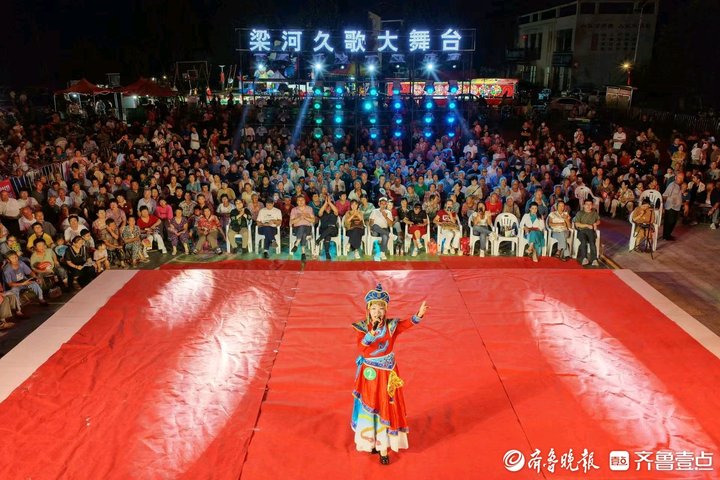
Core Viewpoint - The article highlights the successful transformation of cultural community services in Yucheng City, focusing on the establishment of the "Jiu Ge Grand Stage" and the integration of various cultural activities to enhance community engagement and economic development [3][4][7]. Group 1: Cultural Community Development - Yucheng City has upgraded its cultural practice square into a cultural academy stage, hosting talent competitions and various cultural events to promote community engagement [3][4]. - The city has invested over 2.8 million yuan to develop a three-tier cultural community and academy layout, integrating 18 artistic associations to enhance cultural offerings [6]. - A total of 1,524 cultural performances have been conducted this year, marking a nearly 50% increase compared to the previous year, showcasing the vibrant cultural scene [6]. Group 2: Economic Impact and Community Engagement - The introduction of the "Jiu Ge Grand Stage" has shifted community members from passive participants to active organizers, improving the quality of cultural services [7]. - The cultural initiatives have attracted significant attendance, with over 30,000 visitors in 30 days and online sales exceeding 700,000 yuan, demonstrating a strong economic impact [10]. - Yucheng City has launched a digital platform for cultural services, creating a one-stop service for residents and promoting various community brands, enhancing cultural engagement [9][12]. Group 3: Collaborative Efforts and Future Plans - The city encourages collaboration with local enterprises and social organizations to create a "community cultural partner" model, enhancing the sustainability of cultural initiatives [12]. - Cultural activities have generated over 2.6 million yuan in revenue this year, indicating a successful integration of culture and commerce [12]. - Future plans include replicating successful urban community experiences in rural areas, ensuring that cultural activities meet local needs and stimulate economic growth [12].
2025北京文化论坛将于9月23-24日举办
Xin Hua She· 2025-08-26 02:05
Core Points - The 2025 Beijing Cultural Forum will be held from September 23 to 24 in Beijing, co-hosted by the Central Propaganda Department, Beijing Municipal Committee, and Beijing Municipal Government [1] - The forum's permanent theme is "Inheritance, Innovation, and Mutual Learning," with the annual theme focusing on "Cultural and Technological Integration" [1] - The event aims to promote cultural prosperity and human cooperation through dialogue and exchange, aligning with Xi Jinping's cultural thoughts and the Global Civilization Initiative [1] Summary by Categories Forum Structure - The forum will include a main forum, six parallel forums, over 20 professional salons, and regular activities in the Beijing Cultural Forum's guest hall [1] - Approximately 800 domestic and international guests will be invited, including leaders from cultural units, renowned experts, representatives from world-famous cultural institutions, and industry leaders [1] Key Topics - Discussions will focus on topics such as digital empowerment of cultural heritage, technology-driven cultural originality, audiovisual industry integration, new technologies enhancing public cultural quality, innovative development of online culture, and respect for cultural diversity [1] Supporting Activities - The forum will feature important results release sessions and a cultural industry investors' conference as part of its supporting activities [1]

城市更新推动工业厂房蝶变
Nan Jing Ri Bao· 2025-08-26 02:03
Core Viewpoint - The transformation of the Nanjing People's Printing Factory into the New Industry Heritage Park represents a significant urban renewal project that aims to integrate cultural heritage with modern commercial and community spaces [1][2]. Group 1: Project Overview - The New Industry Heritage Park is located in Xuanwu District, Nanjing, and is part of the city's urban renewal plan, focusing on cultural tourism, research, exhibitions, and commerce [1]. - The original printing factory, established in 1953, was one of Nanjing's earliest printing enterprises and has undergone significant changes over the decades [1]. - The renovation strategy emphasizes "economic suitability and functional replacement," aiming to enhance the interaction between the building and the city while revitalizing the street interface [1][2]. Group 2: Design and Functionality - The project will respect the original building's structural integrity and minimize disruption to the surrounding community during the renovation [2]. - The first floor will feature daily commercial services and heritage displays, while the second and third floors will focus on heritage experience centers, integrating sales, research, and tourism [2]. - The park will include multifunctional spaces such as a heritage reception area and a small theater to provide comprehensive platforms for showcasing heritage projects [2]. Group 3: Heritage Projects and Collaborations - A variety of quality heritage projects have already been introduced, including traditional crafts like gold and silver craftsmanship, Nanjing paper-cutting, and Jinling bamboo carving [3]. - Innovative brands that blend traditional culture with modern development, such as Zhongshan and Tianwang watches, have also been attracted to the park [3].
第七届山西文博会在太原举办
Ke Ji Ri Bao· 2025-08-21 23:47
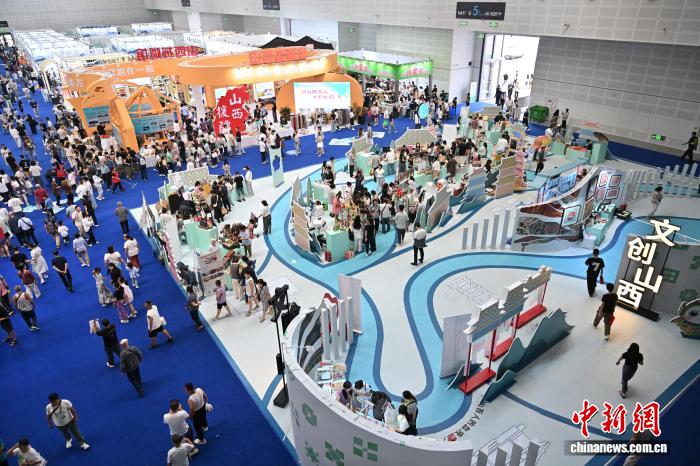
Core Points - The 7th Shanxi Cultural Industry Expo (Shanxi Wenbohui) was held in Taiyuan from the 21st to the 25th, showcasing the latest achievements in the cultural industry of Shanxi Province [1] - The expo is the largest and most influential provincial cultural exhibition in Shanxi, having been successfully held every two years since 2013 [1] - This year's event featured over 2,000 enterprises from 31 provinces, regions, municipalities, and 36 countries, indicating a significant expansion of its "circle of friends" [1] Summary by Categories - **Event Overview** - The expo adopted a "mainly offline, online simultaneously" model, achieving the largest exhibition scale in its history [1] - It was co-hosted by five organizations, including the Publicity Department of the Shanxi Provincial Committee and the Shanxi Provincial Department of Culture and Tourism [1] - **Exhibitor Diversity** - Exhibiting companies covered cutting-edge fields such as new tourism equipment, smart sports, intelligent cultural relics, and virtual reality [1] - Notable new products included robotic dogs, bionic robots, low-altitude drones, unmanned guides, and underground archaeological pods, showcasing a significant increase in technological content [1]
2000多家中外企业客商云集 第七届山西文化产业博览交易会开幕
Zhong Guo Xin Wen Wang· 2025-08-21 17:42
Core Viewpoint - The 7th Shanxi Cultural Industry Expo aims to stimulate innovation and creativity while accelerating the construction of a culturally strong province, showcasing the largest scale of participation in its history with over 2,000 enterprises from 31 provinces and 36 countries [1][3]. Group 1: Event Overview - The Shanxi Cultural Industry Expo is the largest and most influential provincial cultural exhibition in Shanxi, held biennially since its inception in 2013, and has successfully hosted seven editions [3]. - The event is co-hosted by multiple provincial departments and adopts a hybrid format of primarily offline activities with online synchronization, lasting for five days [3]. Group 2: Exhibition Features - The main venue features seven thematic exhibition halls, including comprehensive cultural industry, cultural technology, cultural consumption, and cultural trade halls, among others, with multiple sub-venues across Shanxi [5]. - A new "Cultural Creativity Shanxi" section has been introduced this year, showcasing trendy cultural products and official cultural creations that highlight Shanxi elements [5]. Group 3: Activities and Engagement - The expo includes a series of cultural activities labeled "1+3+N," which encompasses key project signings, case releases on cultural inheritance and development, and various promotional activities across the province [5]. - The event aims to provide immersive experiences and interactive formats to showcase the rich cultural heritage and innovative vitality of Shanxi [5].
中共武汉市委十四届十一次全体会议举行 牢记嘱托感恩奋进 努力在支点建设中当好龙头走在前列
Chang Jiang Ri Bao· 2025-08-19 13:33
Core Points - The meeting emphasized the importance of Wuhan's role as a strategic pivot in the high-quality development of the Yangtze River Economic Belt, as highlighted by General Secretary Xi Jinping [2][5] - The city aims to enhance its economic growth, innovation, and transformation while addressing risks and improving people's livelihoods [3][4] Group 1: Economic Development - The meeting acknowledged the positive economic recovery in Wuhan, with key economic indicators ranking among the top in sub-provincial cities [3] - Efforts are being made to stabilize industrial growth, expand investment, promote consumption, and maintain foreign trade [3][4] - Wuhan has become the second city in the country approved to build a "five-type" national logistics hub, with significant growth in import and export volumes [4] Group 2: Innovation and Industry - The city is focusing on integrating technological innovation with industrial development, enhancing the role of enterprises in innovation, and improving the service system for technology transfer [3][4] - Key industries such as automotive, steel, and chemical are undergoing transformation, while emerging sectors like AI, commercial aerospace, and low-altitude economy are rapidly growing [4][6] Group 3: Environmental and Cultural Development - The meeting highlighted the importance of ecological protection and the promotion of green development, with ongoing efforts in environmental governance and restoration [4][5] - Cultural innovation and the development of the cultural industry are prioritized, aiming to enhance the city's cultural influence and establish it as a world-renowned cultural tourism destination [4][6] Group 4: Governance and Leadership - The meeting stressed the need for strong leadership and governance, emphasizing the importance of a high-quality professional cadre team to drive development [5][8] - There is a focus on enhancing urban governance and improving public services to ensure the well-being of residents [7][9]
经营主体发展量增质提
Jing Ji Ri Bao· 2025-08-19 06:49
Group 1 - The core viewpoint of the articles highlights the stable growth of various business entities in China, with a total of 13.278 million new entities established in the first half of the year, including 4.62 million new enterprises and 8.629 million new individual businesses [1] - The increase in new private enterprises, which reached 4.346 million with a year-on-year growth of 4.6%, reflects enhanced investment confidence and an improved business environment [1] - The number of "Four New" economy enterprises, which includes new technologies, new industries, new business formats, and new models, reached 25.361 million, accounting for 40.2% of the total enterprises, indicating a shift towards high-quality economic development [2] Group 2 - The rapid growth of the cultural, sports, and entertainment sectors, with a 17.5% increase in new enterprises, is driven by rising consumer demand and the development of the cultural tourism industry [3] - Digitalization has significantly lowered production costs in the cultural sector and enhanced consumer experiences, contributing to the vitality of the cultural industry [3] - Future efforts will focus on improving market access and exit systems, promoting a unified national market, and maintaining a fair competitive environment to further stimulate business development [3]
经营主体发展量增质提 上半年全国新设1327.8万户
Jing Ji Ri Bao· 2025-08-19 00:00
Group 1 - The core viewpoint of the articles highlights the significant growth in new business entities in China, with a total of 13.278 million new entities established in the first half of the year, including 4.62 million new enterprises and 8.629 million new individual businesses [1] - The increase in new private enterprises, which reached 4.346 million, represents a year-on-year growth of 4.6%, while new foreign enterprises numbered 33,000, reflecting a 4.1% increase [1] - The "Four New" economy, which includes new technologies, new industries, new business formats, and new models, has seen a rise in the number of enterprises to 25.361 million, accounting for 40.2% of the total number of enterprises, indicating a shift towards high-quality economic development [2] Group 2 - The rapid growth of the cultural, sports, and entertainment sectors, with a 17.5% increase in new enterprises, is attributed to rising consumer demand and the development of the cultural tourism industry [3] - Digitalization has played a crucial role in revitalizing the cultural industry by reducing production costs and enhancing consumer experiences, thus driving innovation in cultural products [3] - Future regulatory focus will be on improving market access and exit systems, promoting a unified national market, and enhancing government services related to enterprises to further stimulate business development [3]
上半年新设1327.8万户——经营主体发展量增质提
Jing Ji Ri Bao· 2025-08-18 21:14
Core Insights - The number of new business entities established in China during the first half of the year reached 13.278 million, with 4.62 million new enterprises, 8.629 million new individual businesses, and 29,000 new farmers' cooperatives, indicating a stable growth trend across various business types [1] Group 1: Business Growth - The establishment of new private enterprises increased by 4.6% year-on-year, totaling 4.346 million, while new foreign enterprises rose by 4.1% to 33,000, reflecting enhanced investment confidence due to an improved business environment [1] - The growth in new enterprises suggests a trend of individual businesses transitioning into small and micro enterprises, indicating a continuous optimization in the quality of business entities [1] Group 2: Structural Optimization - The number of "Four New" (new technologies, new industries, new business formats, new models) economic enterprises reached 25.361 million by the end of June, a year-on-year increase of 6.6%, accounting for 40.2% of the total number of enterprises [2] - The rise in "Four New" enterprises is linked to the enhancement of new productive forces and technological innovation, contributing to high-quality economic development [2] Group 3: Cultural Industry Growth - The cultural, sports, and entertainment sectors saw a remarkable growth rate of 17.5% in new enterprises during the first half of the year, leading all sectors of the national economy [2] - The increase in consumer demand for cultural and entertainment services is attributed to the development of the cultural tourism industry and the promotion of a strong cultural nation [3] Group 4: Future Directions - The market regulatory authority plans to focus on the development needs of business entities, improve market access and exit systems, and enhance the overall market environment to stimulate business vitality [3]