农产品种植与加工

Search documents
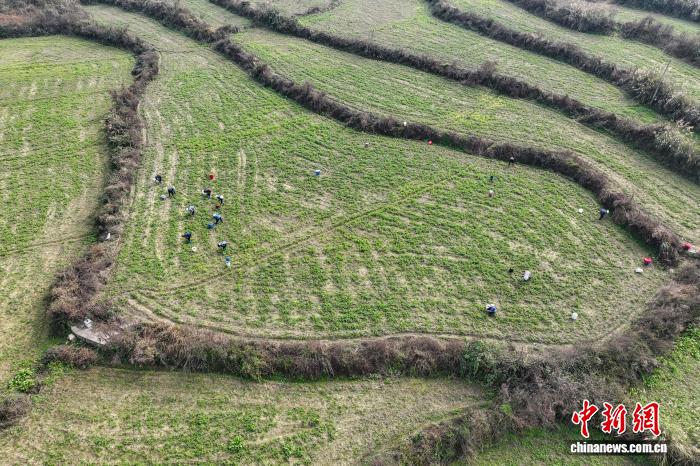
(乡村行·看振兴)福建明溪:一根淮山“链”出富民产业
Zhong Guo Xin Wen Wang· 2026-01-19 05:56
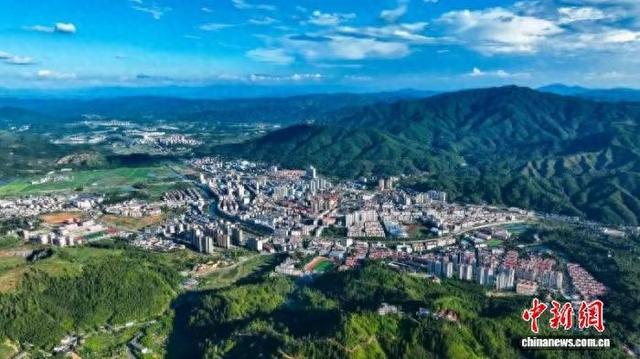
Core Viewpoint - The article highlights the development of the yam industry in Mingxi County, Fujian Province, emphasizing its role in rural revitalization and economic growth through cooperative farming and value-added processing [2][3]. Group 1: Industry Development - Mingxi County is recognized as the "Hometown of Chinese Yam," with local authorities promoting yam cultivation as a key industry for rural revitalization [2]. - The yam planting area in the region has reached over 1,000 acres, generating an annual output value of 20 million yuan [2]. - The establishment of the "Green Source Fruit and Vegetable Professional Cooperative" has facilitated the promotion of quality seedlings and technical support for farmers [2]. Group 2: Economic Impact - Farmers in the region, such as Chen Fugeng, anticipate significant income from yam cultivation, with projections of 70,000 yuan from 6 acres by 2025 [2]. - The cooperative model has transformed individual farming efforts into collective development, benefiting over 200 households in the area [2][3]. - Collaborations with local food processing companies have led to the production of yam-based products, enhancing the economic benefits for farmers [3]. Group 3: Marketing and Sales - The village has established long-term partnerships with local companies to purchase approximately 4,000 pounds of yam annually, contributing over 100,000 yuan to villagers' income [3]. - Efforts to expand sales channels include leveraging e-commerce platforms and live streaming to market "Lion Rock Yam" and its processed products to broader regions [3].

田间珍品邂逅都市橱窗
Nan Jing Ri Bao· 2026-01-19 02:39
Group 1 - The event "Urban-Rural Encounter" showcased local high-quality agricultural products at BHG Supermarket in Nanjing, marking the first time these products entered a high-end retail space [1] - Nanjing Deji Plaza achieved a sales figure of 24.5 billion yuan, ranking it as the top single-store shopping mall globally for the first time in 2024 [1] - The collaboration between BHG Supermarket and local producers aims to establish a long-term sales area for Nanjing's agricultural products, enhancing their market presence [1] Group 2 - The rice brand Mingwen Kaijian, produced by Nanjing Zhongxinli Planting Cooperative, emphasizes quality through scientific cultivation and full-process tracking by local notaries [2] - The first batch of agricultural products entering BHG Supermarket includes over 80 selected items from 20 local producers, catering to high consumer quality demands [2] - The initiative aligns with the goal of enhancing the brand influence of local agricultural products and supports the elevation of Nanjing's agricultural brand value [2] Group 3 - The promotion of Nanjing's high-quality agricultural products in commercial spaces is seen as an effective way to ensure farmers produce quality goods, achieve good prices, and provide consumers with great taste [3] - Nanjing has focused on developing a modern urban agriculture model, creating a comprehensive agricultural brand system to enhance product value and market competitiveness [3] - The city has established 567 green food brands and 132 organic food brands, with over 700 products certified under the "two products and one standard" initiative, indicating a strong emphasis on quality [3]
常慈山海协作扩产增效
Xin Lang Cai Jing· 2026-01-18 17:24
Group 1 - The core idea of the news is the establishment of a cooperative model for the cultivation and processing of loofah fibers in Changshan County, which aims to enhance local farmers' income and promote economic development in the region [1][2][3] Group 2 - The cooperative, Changshan Fruit and Vegetable Professional Cooperative, has initiated a strategic partnership with Ningbo Jie Zhe Daily Necessities Co., Ltd. to create a loofah fiber industry park, starting from 2022 [1] - The new cultivation model involves farmers managing the planting, the cooperative ensuring price guarantees for the harvest, and the village collective investing in land and infrastructure [1] - Currently, over 800 acres of loofah fibers are being cultivated by farmers, with profits shared equally between the cooperative and the farmers [2] - The project has expanded to Qing Shi Town, with nearly 340 acres of loofah fibers planted, and the cooperative has invested in necessary infrastructure [2] - The expected annual comprehensive income from the project in Qing Shi Town is projected to exceed 900,000 yuan [2] - By 2025, the total output value of loofah fibers in New Chang Township and Qing Shi Town is estimated to reach 8 million yuan, with farmers receiving 4 million yuan [3] - The cooperative plans to further expand the planting area in 2026, aiming to create a scale effect and establish loofah fibers as a significant source of income for local residents [3]
兰州百合“身价”调查:零售端走俏 种植端承压
Xin Lang Cai Jing· 2026-01-18 01:56
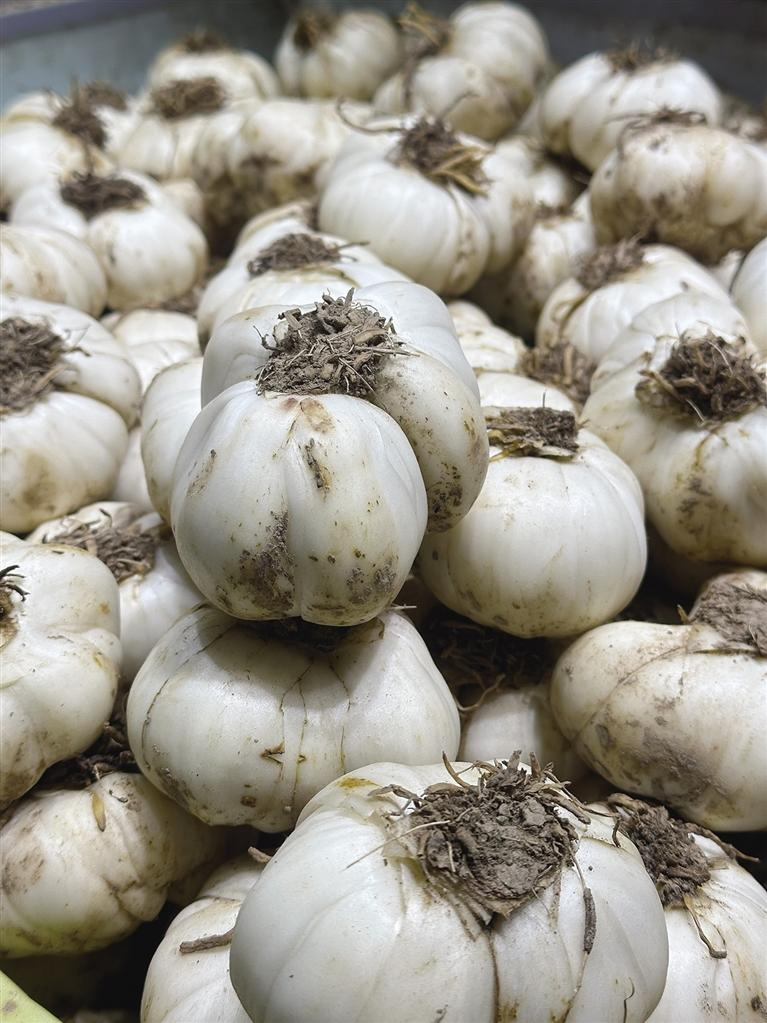
Market Overview - Lanzhou lily, as a representative agricultural product of "Guanwei," is gaining popularity as a festive item ahead of the Spring Festival, with stable retail prices and increased sales of gift boxes and dried products [3][4]. Pricing Trends - Fresh lily prices are categorized by size: large at 60 yuan per jin, medium at 50 yuan, and small at 45 yuan, with large prices increasing by 3 to 5 yuan compared to last year due to limited supply [4]. - Dried lily prices range from 120 to 180 yuan per jin, with a significant increase in demand as they are easier to store and have versatile uses [4]. Processing Sector - Processing companies are adjusting their pricing strategies; for instance, the price of 48-pack lily slices has been reduced by 10 to 20 yuan due to market saturation, although stable sales ensure overall profitability [7]. - Product innovation is being pursued, such as the introduction of "Lanzhou Sweet Lily Soup," which is marketed as a convenient, ready-to-eat option, receiving positive market feedback [7]. Production Challenges - The price fluctuations are rooted in the production sector, where the purchase price ranges from 22 to 48 yuan per jin, remaining stable compared to last year, but overall production is declining, particularly for high-quality single bulbs [9]. - Long-term continuous cropping has led to soil degradation and increased disease rates in lily bulbs, which is identified as a critical bottleneck for sustainable industry development [9]. - A newly established lily research center is focusing on detoxification technology, aiming to produce 1 million detoxified seedlings annually and reduce the growth cycle from 6 years to 3 years, which could enhance yield and stabilize quality [9].
走进中国乡村|贵州豌豆尖“掐”出千万元产值
Zhong Guo Xin Wen Wang· 2026-01-16 03:24
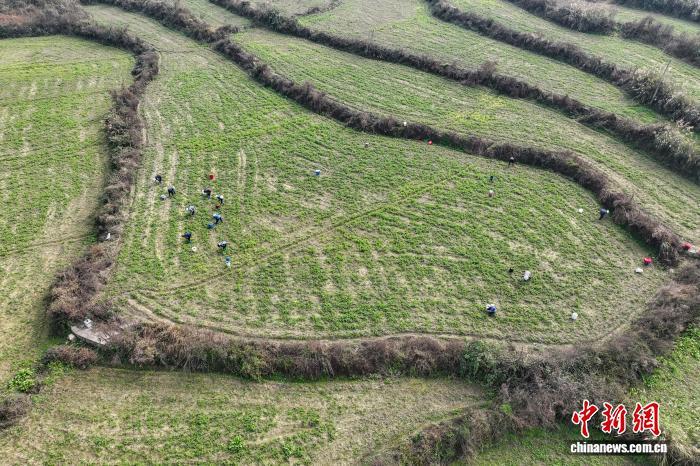
Core Viewpoint - The article highlights the successful development of the pea shoots industry in Guizhou Province, particularly in Longli County, showcasing its economic impact and the establishment of a complete industrial chain from planting to sales [1][3]. Group 1: Industry Overview - The pea shoots industry in Baytanhhe Town has a long history and is recognized as the "Hometown of Pea Shoots in China" with a planting area of over 8,000 acres and an annual output value exceeding 48 million yuan [3]. - The growth cycle of pea shoots is short, allowing for harvesting just 20 days after planting, with a harvesting period extending from October to March of the following year [3]. - The highest market price for pea shoots can reach 320 yuan per kilogram, indicating strong demand in major markets such as Beijing, Shanghai, Guangdong, and Hong Kong [1]. Group 2: Economic Impact - The development of the pea shoots industry has created a complete industrial chain that includes planting, harvesting, processing, packaging, and sales, significantly contributing to local employment and income [3][4]. - The average income from planting pea shoots is approximately 6,500 yuan per acre, with projections indicating that by 2025, the per capita disposable income in the village could exceed 21,000 yuan [6]. - The industry has provided stable employment opportunities for local villagers, with individuals able to earn up to 100 yuan per day through harvesting activities [6]. Group 3: Business Model - The local government has adopted a "company + cooperative + large growers + farmers" model to promote the development of the pea shoots industry [3]. - A grower named Luo Ying has established a fine processing enterprise and created a four-level grading system for pea shoots to meet diverse market demands [4]. - The "豆贝" (Doubei) variety, which is the most prized part of the pea shoots, is sold at prices up to 100 yuan per kilogram and has become a popular product in the market [6].
让小农户更好对接大市场:陆丰“社村”合作走出甘薯全链升级新路子
Nan Fang Nong Cun Bao· 2026-01-15 14:02
Core Viewpoint - The article discusses the innovative "cooperative village" model in Lufeng, which aims to enhance the sweet potato industry by integrating various stages of the supply chain, from seedling production to processing and sales, thereby improving quality and efficiency [4][24]. Group 1: Industry Overview - Lufeng is a core area for sweet potato cultivation in Guangdong, with over 200,000 acres planted and an annual output value of nearly 3 billion yuan [8]. - The sweet potato industry has faced challenges such as inconsistent seed quality, weak processing capabilities, low product value, and high reliance on direct sales, which limits price resilience [8][9]. - The "cooperative village" model aims to address these issues by organizing farmers, enhancing their market resilience, and sharing the benefits of industry growth [9][24]. Group 2: Cooperative Model Implementation - The Lufeng Cooperative Agricultural Development Company was established through collaboration between local village collectives and the Guangdong Tianhe Agricultural Company, focusing on "order agriculture + comprehensive social services" [9]. - The cooperative model has already covered 37 administrative villages and established three comprehensive service stations, leading to significant income increases for both farmers and village collectives [11][24]. Group 3: Seedling Production and Quality Improvement - A detoxified seedling center has been established to ensure high-quality seedlings, addressing the previous shortage of reliable seed sources [14][16]. - The center employs a three-tiered model for seedling production, with a capacity of 500,000 seedlings per season, aiming to produce 35 million commercial seedlings by 2026 [16][19]. Group 4: Processing and Value Addition - A new sweet potato commercialization processing center has been set up, capable of processing 30 tons of sweet potatoes daily, which includes washing, sorting, and sugarization processes [21][22]. - This center aims to enhance product value and extend shelf life, potentially doubling the market price compared to direct sales [23][24]. Group 5: Future Plans and Goals - By 2027, the cooperative model aims to cover 52 villages and develop 30,000 acres of sweet potato order planting, creating a comprehensive ecosystem that includes detoxified seedlings, standardized planting, processing, and brand marketing [24]. - The initiative is expected to provide a replicable model for rural revitalization and economic integration, contributing to the broader "Hundred-Thousand Project" for rural development [24].

贵州豌豆尖“掐”出千万元产值
Zhong Guo Xin Wen Wang· 2026-01-15 09:27
Core Insights - The article highlights the economic success of pea shoots cultivation in Guizhou, generating significant income for local farmers and contributing to rural revitalization [1] Group 1: Economic Impact - The pea shoot industry in Baytanhhe Town has an annual output value exceeding 48 million yuan, with a planting area of over 8,000 acres and a single-season yield of 1,000 kg per acre [3] - The highest market price for pea shoots can reach 320 yuan per kilogram, indicating strong demand in major cities like Beijing, Shanghai, Guangdong, and Hong Kong [1][3] - The cultivation of pea shoots has created job opportunities for over 80 local villagers, enhancing their income stability [4][6] Group 2: Cultivation and Processing - Pea shoots have a short growth cycle, allowing for harvesting just 20 days after planting, with a picking season from October to March [3] - The cultivation process has evolved into a complete industry chain, including planting, harvesting, processing, packaging, and sales [3] - A grading system has been established to enhance the quality of pea shoots, categorizing them into four grades for better market alignment [4] Group 3: Community Benefits - The average income from pea shoot cultivation is approximately 6,500 yuan per acre, with projected per capita disposable income in 2025 expected to exceed 21,000 yuan [6] - The local community has embraced pea shoots as a key driver for economic growth, with the industry being referred to as a "golden shoot" for villagers [3][6]
四年攻关培育兼顾产量与口感的良种 旱碱麦的逆袭
Jing Ji Ri Bao· 2026-01-14 06:06
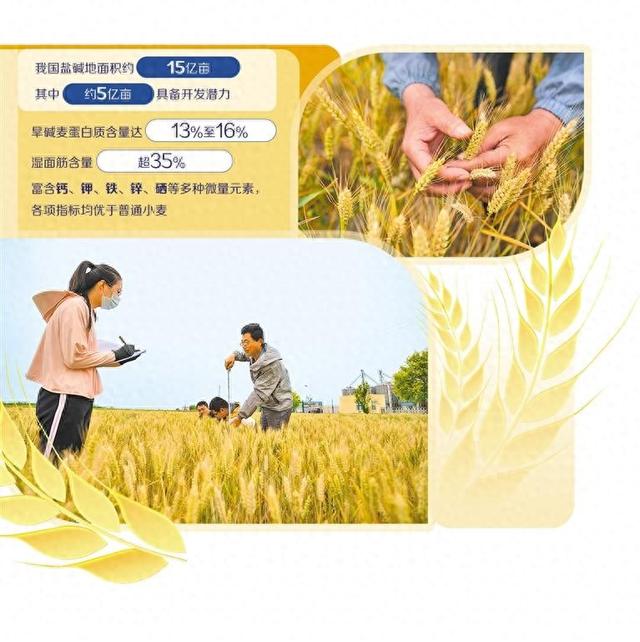
Core Viewpoint - The development and promotion of drought-resistant saline-alkali wheat (drought-alkali wheat) is crucial for utilizing saline-alkali land in China, enhancing food security, and meeting the growing demand for high-quality food products [1][5]. Group 1: Agricultural Significance - Drought-alkali wheat can grow in saline-alkali environments, which cover approximately 1.5 billion acres in China, with about 500 million acres having development potential [1]. - The promotion of drought-alkali wheat is expected to revitalize saline-alkali land resources and expand arable land, playing a strategic role in ensuring national food security [1]. Group 2: Research and Development - Since 2022, scientists from the National Wheat Industry Technology System have been conducting systematic research on saline-alkali land improvement and drought-alkali wheat breeding, successfully developing several high-quality varieties suitable for saline-alkali conditions [1][4]. - Ongoing research aims to analyze the mechanisms behind the aroma compounds in drought-alkali wheat, providing insights for breeding and processing to enhance flavor and quality [4]. Group 3: Market Potential and Consumer Demand - Drought-alkali wheat products have received positive consumer feedback for their unique flavor and nutritional benefits, with protein content ranging from 13% to 16% and wet gluten content exceeding 35% [3]. - The market for drought-alkali wheat products is expanding, with companies reporting annual growth rates of 10% to 20% in product sales since 2012 [3]. - Companies are planning to expand their market reach and increase production capacity to meet rising demand, indicating a supply shortage [4]. Group 4: Future Outlook - The integration of research, education, and industry is expected to lead to breakthroughs in breeding, planting, and processing technologies for drought-alkali wheat, enhancing both yield and quality [5]. - The continued development of high-end and diversified products will cater to consumer preferences for quality food, while also maximizing the potential of saline-alkali land for agricultural production [5].
旱碱麦的逆袭
Jing Ji Ri Bao· 2026-01-14 02:16
Core Viewpoint - The development and promotion of drought-resistant and salt-tolerant wheat (drought-saline wheat) is crucial for utilizing saline-alkali land in China, which has significant implications for food security and agricultural sustainability [1][5]. Group 1: Agricultural Significance - China has approximately 1.5 billion acres of saline-alkali land, with about 500 million acres having development potential, making the promotion of drought-saline wheat vital for revitalizing these resources [1]. - The national wheat industry technology system has initiated systematic research since 2022, focusing on improving saline-alkali land and breeding drought-saline wheat, resulting in several high-quality varieties suitable for saline-alkali conditions [1][4]. Group 2: Product Quality and Consumer Acceptance - Drought-saline wheat has unique flavor characteristics, with consumers praising its rich taste and texture, which is attributed to the plant's ability to adapt to saline-alkali stress [2][3]. - The protein content of drought-saline wheat ranges from 13% to 16%, with wet gluten content exceeding 35%, and it is rich in essential trace elements, making it nutritionally superior to regular wheat [3]. Group 3: Market Potential and Industry Growth - The market response to drought-saline wheat products has been positive, with companies reporting annual sales growth of 10% to 20% since entering the market in 2012 [3]. - Companies are expanding their production capacity and product offerings, aiming to meet increasing consumer demand and enhance the value chain through deeper processing and product diversification [4].
旱碱麦的逆袭——四年攻关培育兼顾产量与口感的良种
Xin Lang Cai Jing· 2026-01-13 23:59
Core Viewpoint - The development and promotion of drought-resistant wheat (旱碱麦) in saline-alkali land is crucial for enhancing food security in China, as it can effectively utilize approximately 500 million acres of potentially cultivable saline-alkali land [3][8]. Group 1: Agricultural Significance - Drought-resistant wheat is a special variety that thrives in saline-alkali conditions, requiring no irrigation and exhibiting low pest incidence, making it a natural green crop [3]. - China has about 1.5 billion acres of saline-alkali land, with 500 million acres having development potential, highlighting the strategic importance of promoting drought-resistant wheat cultivation [3]. - The National Wheat Industry Technology System has been conducting research since 2022 to improve saline-alkali land and develop superior drought-resistant wheat varieties, enhancing yield and flavor [3][8]. Group 2: Market Demand and Consumer Preferences - Drought-resistant wheat products have received positive consumer feedback for their unique flavor and nutritional benefits, aligning with the shift in public dietary preferences towards healthier and higher-quality food [5][6]. - The protein content of drought-resistant wheat ranges from 13% to 16%, with wet gluten content exceeding 35%, making it nutritionally superior to regular wheat [6]. Group 3: Industry Growth and Future Prospects - Companies involved in drought-resistant wheat processing have seen annual sales growth of 10% to 20%, indicating increasing market acceptance and demand [6]. - The ongoing research into the flavor compounds of drought-resistant wheat is expected to enhance product quality and consumer experience, supporting the entire supply chain from cultivation to processing [7]. - Future advancements in breeding, planting, and processing technologies are anticipated to further improve yield and product quality, contributing to food security and sustainable agricultural development [8].