
林果业

Search documents
新疆喀什用核桃串起七十二亿元全产业链
Zhong Guo Chan Ye Jing Ji Xin Xi Wang· 2025-08-13 00:55
Core Insights - The walnut industry in Kashgar, Xinjiang, has developed into a comprehensive value chain, contributing significantly to local income and economic growth [1][2][3][4] Group 1: Industry Overview - Kashgar region has the largest walnut planting area in Xinjiang, covering 2 million acres and producing over 430,000 tons annually, with a total industry output value of 7.2 billion yuan [1] - The walnut processing sector has established a robust matrix of leading enterprises, producing high-value-added products such as snacks, dairy drinks, essential oils, and protein powder, with an annual processing volume of 180,000 tons and a value exceeding 2.5 billion yuan [1] - The region's walnut industry has created over 18,000 stable jobs through processing and related activities [1] Group 2: Technological Advancements - The Kashgar region is enhancing its walnut industry through technological empowerment, collaborating with various agricultural research institutions to innovate in key areas such as variety selection, cultivation techniques, and product development [4] - The establishment of research institutes focused on walnut industry innovation aims to inject strong technological momentum into the sector [4] Group 3: Economic Impact - In Yecheng County, each farmer owns an average of 1.5 acres of walnut trees, with walnut income accounting for 30% of their total income, benefiting over 350,000 people involved in walnut production, processing, and sales [3] - The county has supported the establishment of 14 walnut production and processing enterprises, including one national-level leading enterprise and two regional leading enterprises, fostering a model that connects production, processing, and sales [3] Group 4: Market Expansion - Kashgar has built a regional walnut trading market with an annual transaction volume exceeding 100,000 tons, leveraging its strategic location to export over 16,000 tons of walnut products to countries like Russia, Turkey, and Kazakhstan [4] - The region has developed multiple sales platforms to enhance market integration, facilitating the sale of 40,000 tons of walnuts annually [4]
河北赞皇 山地农业储绿富农
Jing Ji Ri Bao· 2025-08-11 23:09
Core Viewpoint - Zanhua County is transforming its agricultural landscape by focusing on mountain agriculture, developing high-efficiency and specialized agricultural practices, and integrating ecological and economic benefits [1][2][3]. Agricultural Development - Zanhua County has created 66 beautiful villages, accounting for 33% of all villages, and has been recognized as a national key ecological function area and a model county for greening [1]. - The county has cultivated over 10 varieties of specialty economic fruit trees, with a total area of 1 million mu (approximately 666.67 thousand acres) and a total output value of nearly 2.9 billion yuan (approximately 0.43 billion USD) [3]. Crop Specialization - The county has shifted from traditional crops like wheat and corn to high-value crops such as cherries, with Baijiatian Village becoming a renowned cherry-producing area, attracting around 5,000 visitors daily during the harvest season [2]. - Other villages are also exploring suitable crops, such as chestnuts, grapes, and apples, based on local soil and climate conditions [2]. Industry Transformation - The traditional jujube industry is being revitalized by converting jujube trees to sour jujube, with 5,000 mu (approximately 3,333 acres) of demonstration bases established [4]. - The sour jujube planting area has reached 230,000 mu (approximately 153.33 thousand acres), with annual income per mu increasing from 4,000 yuan (approximately 600 USD) for jujubes to 20,000 yuan (approximately 3,000 USD) for sour jujubes [4]. Brand Development - Zanhua County launched the "Zanhua Sour Jujube" regional public brand in 2023, enhancing brand construction and leading to an annual processing capacity of 300,000 tons of sour jujubes and an output value exceeding 5 billion yuan (approximately 0.75 billion USD) [5]. - The county has over 300 specialized sour jujube companies and more than 1,100 processing households, employing over 10,000 people [5]. Tourism Integration - The county is developing tourism around its agricultural products, with initiatives like the grape wine resort project and the Chinese Bee Museum, which has attracted over 12,000 students for educational experiences [6][8]. - In 2024, Zanhua County received 5.62 million tourists, generating a total tourism expenditure of 6.54 billion yuan (approximately 0.98 billion USD), with a significant increase in visitor numbers and spending during the May Day holiday [8].
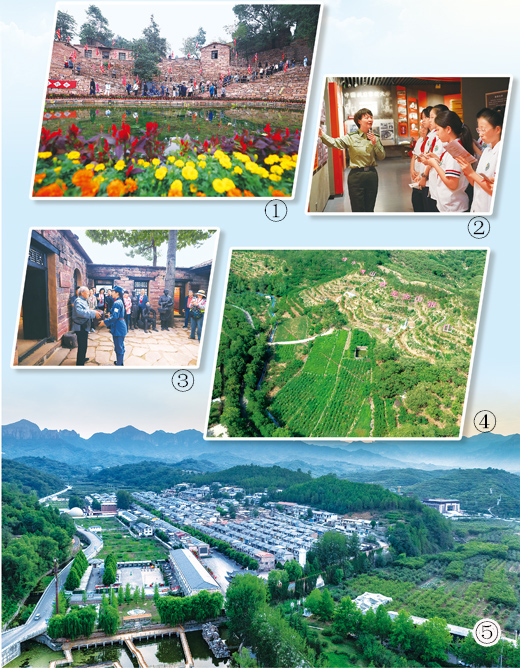
“红”“绿”交织 幸福“靠山”(乡情村貌)
Ren Min Ri Bao Hai Wai Ban· 2025-08-06 22:47
Core Viewpoint - The article highlights the transformation of Qian Nanyu Village from a barren land to a green and prosperous community, emphasizing the integration of red revolutionary culture and green ecological development as a model for sustainable growth [5][10][17]. Group 1: Historical Significance - Qian Nanyu Village is historically significant as it was the site of the Chinese People's Anti-Japanese Military and Political University, where over 200,000 military and political cadres were trained during the war [6][7]. - The village has a memorial and a museum dedicated to the Anti-Japanese University, which serves to educate visitors about its historical importance and the struggles faced during that era [8][9]. Group 2: Ecological Development - The village has achieved a remarkable 90.7% forest coverage and 94.6% vegetation coverage, earning it the title of "the greenest place in Taihang Mountain" [5][10]. - A comprehensive plan was implemented to transform the barren land into a green area, involving extensive tree planting and soil conservation efforts, which included 126 million labor hours and significant community involvement [10][11]. Group 3: Economic Transformation - The village has diversified its economy by integrating agriculture with tourism, leading to an expected total income of over 200 million yuan in 2024, with per capita income reaching 18,600 yuan [19]. - The introduction of modern agricultural techniques has significantly increased the yield and quality of local produce, such as chestnuts, with export rates rising from 64% to 97% [14][15]. Group 4: Community Engagement and Tourism - Approximately 80% of families in the village are involved in eco-tourism and agritourism, contributing to the local economy and enhancing community engagement [19]. - The village has developed various tourist attractions, including eco-parks and historical sites, which have drawn increasing numbers of visitors, thereby boosting local businesses [18][19].

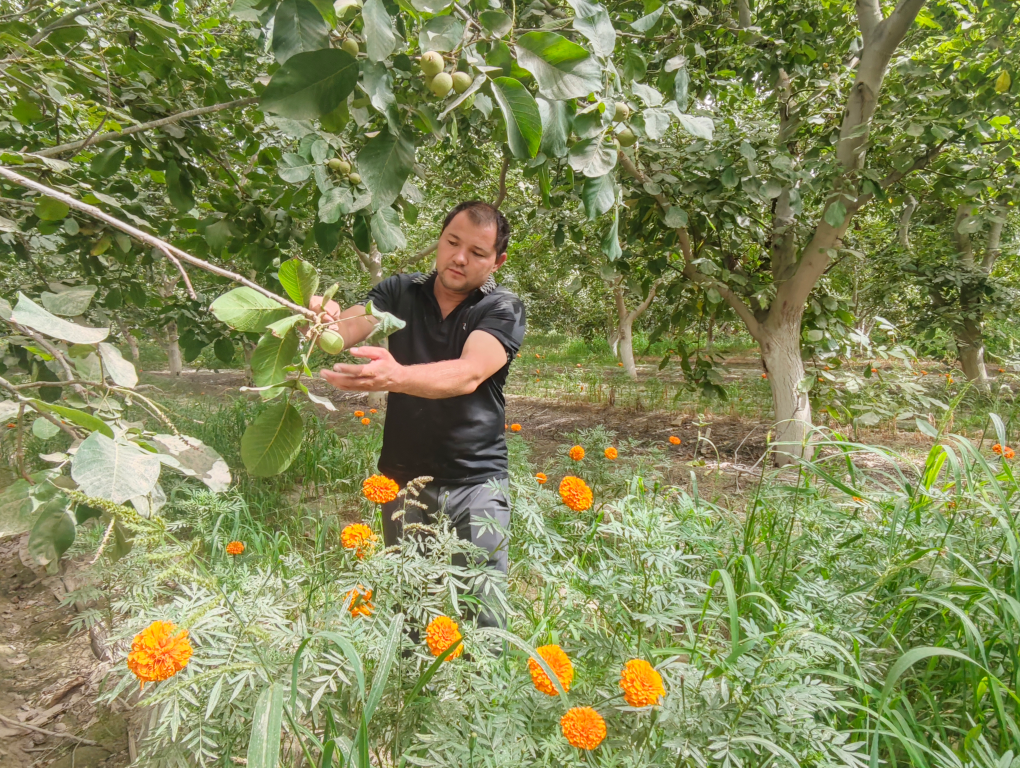
“金果果”鼓起果农“钱袋子”——新疆喀什核桃产业发展见闻
Xin Hua Wang· 2025-07-28 17:10
Industry Overview - The walnut industry in Kashgar, Xinjiang, is a significant contributor to local farmers' income, with many farmers experiencing increased profits from walnut cultivation [1][2] - The total planting area for walnuts in Kashgar has reached 202,000 acres, with an annual production of 433,000 tons, accounting for 34.69% and 42.75% of Xinjiang's total walnut area and production, respectively [2] Agricultural Practices - The introduction of the "Wen 185" walnut variety has led to an average yield of over 200 kg per acre, with stable market prices since its promotion in 2015 [2] - Local agricultural experts are actively assisting farmers with irrigation and pest control, contributing to improved walnut harvests [2] Processing and Value Addition - The introduction of 35 walnut processing enterprises in Kashgar has resulted in the development of various processed walnut products, significantly increasing the industry's value [3] - The annual processing output value of the walnut industry in Kashgar exceeds 2 billion yuan, with innovative products like yogurt probiotic walnut kernels achieving sales of 1.5 million yuan [3] Market Expansion - Kashgar has successfully expanded both domestic and international markets, with 15 export companies exporting nearly 30,000 tons of walnuts annually [3] - The ongoing construction of a 10 million yuan walnut deep processing production line in Yecheng County indicates a strong commitment to enhancing the walnut industry [5]
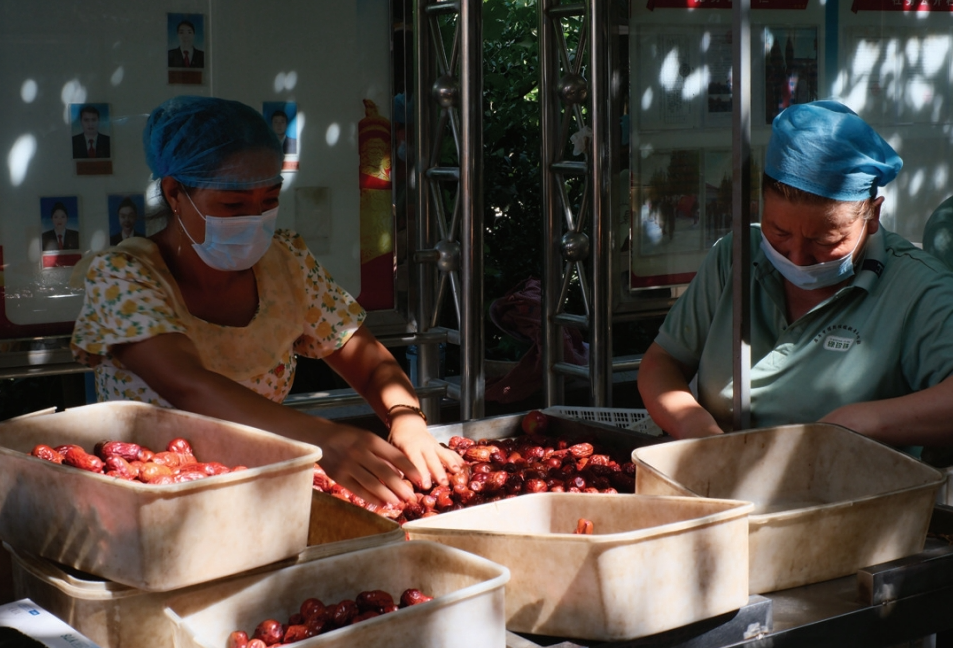
媒体新疆行 助力“新”发展
Xiao Fei Ri Bao Wang· 2025-07-22 02:46
Group 1 - The core theme of the news is the promotion of Xinjiang's development through the "Media Xinjiang Tour" initiative, highlighting the region's achievements in various industries, particularly in agriculture and e-commerce [1] - Xinjiang's fruit industry, particularly in Aksu, is a key driver for local economic growth, with a total planting area of 21 million acres and a projected fruit production of 14 million tons in 2024 [5][18] - The Aksu region is recognized for its diverse fruit production, including apples, walnuts, and apricots, and is developing a complete industrial chain from planting to processing and sales [5][18] Group 2 - The Bostan Cooperative in Aksu has established a comprehensive walnut processing system, including automated sorting and cold chain storage, enhancing product quality and market reach [6][7] - The cooperative's online sales strategy, under the "Silk Road Kiz" brand, has seen significant success, with over 146,000 products sold through WeChat and a growing presence on platforms like Taobao and Douyin [13][14] - In 2024, the cooperative's sales of walnut-related products exceeded 5,600 tons, generating over 60 million yuan in revenue, demonstrating the effectiveness of e-commerce in expanding market access [14] Group 3 - The cooperative has created job opportunities for local residents, employing 148 poverty alleviation households and impacting nearly 30,000 farmers in the surrounding area [16] - The Chinese government emphasizes the importance of agricultural industrialization and value-added processing to increase farmers' income, as outlined in recent policy documents [17][18] - Aksu's fruit processing capacity is projected to reach 1.54 million tons in 2024, with a focus on enhancing product quality and expanding market access [18]
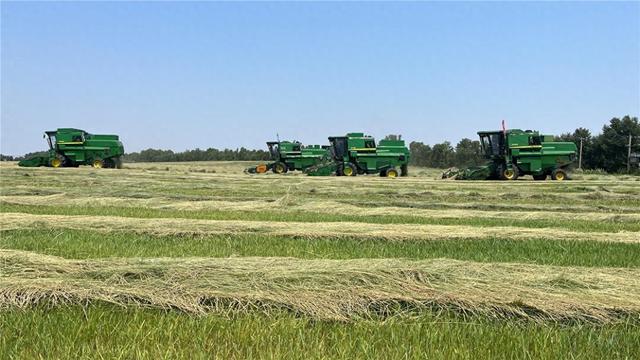
绿水青山和金山银山的“双向奔赴”
Nei Meng Gu Ri Bao· 2025-07-13 12:45
Core Viewpoint - The article highlights the successful transformation of the Kairu County in Tongliao City from desertified land to a thriving ecological and economic region through the cultivation of sheep grass and other sustainable agricultural practices [3][4][10]. Group 1: Ecological Transformation - Kairu County has successfully harvested over 60,000 acres of sheep grass, which serves as a nutritious feed for livestock and contributes to ecological restoration efforts across the country [1][3]. - The area has seen a significant increase in sheep grass cultivation, reaching 200,000 acres with a dry grass yield of 120,000 tons, promoting stable growth in ecological tourism and livestock industries [3][4]. - The region has invested over 40 billion yuan in ecological construction, effectively managing 2.066 million acres of severely desertified land, marking a historic shift from "desert encroachment" to "green recovery" [4]. Group 2: Economic Development - The average benefit from sheep grass cultivation is approximately 1,500 yuan per acre, showcasing the economic viability of ecological restoration efforts [3]. - The "Saiwai Red" apple, developed over 20 years, has become a key economic crop, with a planting area of 320,000 acres and an annual output value of 600 million yuan [6][7]. - The introduction of various ecological industries, including medicinal plants and specialty fruit bases, has led to an annual output value of 800 million yuan from the medicinal plant sector alone [7]. Group 3: Sustainable Practices - The integration of renewable energy projects with desertification control, such as wind and solar power, is being implemented across 164,000 acres, contributing to new economic growth points in the region [9]. - The development of eco-tourism has attracted over 2 million visitors annually, generating an output value of 1.6 billion yuan, emphasizing the dual benefits of ecological and economic growth [10].
新疆疏附:林果产业“双轨”升级助农增收
Xin Hua She· 2025-06-30 06:06
Core Insights - The transformation of the fresh apricot industry in Shufu County, Xinjiang, is driven by improved logistics, processing capabilities, and e-commerce, leading to a significant shift from dried apricot production to fresh fruit sales [2][3] Group 1: Industry Changes - The introduction of a processing industry chain through Guangdong's aid has enabled the rapid transportation of fresh apricots to major cities within 48 hours [2] - The ratio of dried apricots to fresh apricots has shifted from 9:1 in 2021 to 6:4, indicating a growing market for fresh apricots [2] - The local agricultural technology company has facilitated a direct sales model, reducing spoilage and enhancing market access for farmers [2][3] Group 2: Economic Impact - Farmers are experiencing increased income, with fresh apricot prices reaching 15 yuan per kilogram compared to 30 yuan for dried apricots, leading to higher overall revenue [2][3] - The expected production for this year is 60,000 tons from 60,000 acres of apricot orchards, showcasing the scale of the industry [3] - The shift towards fresh fruit sales is contributing to rural revitalization and economic development in the region [3]
科特派“妙手回春” 老果园甜蜜升级
Ke Ji Ri Bao· 2025-06-25 01:00
Core Viewpoint - The article highlights the innovative agricultural practices implemented by a team led by Shi Lianhui in Mengyin County, Shandong Province, focusing on organic fertilizer production and waste management to enhance fruit yield and quality while reducing costs [1][4]. Group 1: Organic Fertilizer Production - Shi Lianhui's team has established over 100 organic fertilizer production points in Mengyin County, processing more than 800,000 tons of agricultural waste annually, which has reduced organic fertilizer costs by 80% and increased annual income by over 1,000 yuan per mu in local orchards [1][4]. - The team developed a method to ferment discarded fruits and livestock waste into liquid microbial fertilizer, significantly lowering production costs to around 400-500 yuan per ton compared to over 10,000 yuan for market alternatives [3][4]. Group 2: Agricultural Waste Management - Mengyin County generates 450,000 tons of waste branches and 1,150,000 tons of livestock manure annually, providing ample raw materials for organic fertilizer production [3][4]. - The local agricultural community faced challenges in waste disposal, particularly after a severe hailstorm damaged fruit crops, leading to an accumulation of unusable produce and excess livestock waste [2][3]. Group 3: Economic and Quality Benefits - The use of self-made organic fertilizers has led to a 25% increase in fruit quality and a significant improvement in soil conditions, with some farmers reporting a fruit sugar content exceeding 20 degrees [4][5]. - Farmers have expressed initial skepticism about the effectiveness of organic fertilizers due to high market prices, but successful demonstrations have led to increased adoption of self-made fertilizers, resulting in high-quality fruit production [5].
河北迁西发展板栗产业——绿了山间富了乡亲
Jing Ji Ri Bao· 2025-06-07 21:58
Core Insights - The article highlights the successful development of the chestnut industry in Qianxi County, Hebei Province, through scientific management and innovative practices, leading to increased quality and yield of chestnuts [1][2][3] Group 1: Industry Development - Qianxi County has planted 750,000 acres of high-quality chestnuts, producing over 80,000 tons annually, with fresh chestnut sales exceeding 900 million yuan, and the total output value of the chestnut industry surpassing 2.5 billion yuan [1][4] - The county has implemented a "mountain green, people rich" model, integrating ecological construction with local livelihoods, resulting in over 1.6 million acres of mountain greening [2][3] Group 2: Technological Innovation - Qianxi County collaborates with research teams for variety selection, cultivation management, and product development, promoting 220,000 grafting experiments of new chestnut varieties [3] - The county has established a 100-acre chestnut variety nursery in partnership with the Chinese Academy of Forestry, collecting 128 superior varieties and selecting two high-yield, quality varieties for demonstration [3] Group 3: Value Chain Enhancement - The county has improved the chestnut industry value chain by utilizing tree pruning waste for mushroom production, generating over 700 tons of fresh mushrooms annually and benefiting over 160 local producers [3] - Qianxi County has developed over 30 deep-processed chestnut products, with a processing capacity of over 3,000 tons annually, sold through both physical stores and online platforms [3][4]