
消费金融

Search documents
批量转让 低至0.17折!消金公司加速甩卖不良资产
Guo Ji Jin Rong Bao· 2025-09-27 04:18
Core Viewpoint - The consumer finance companies are accelerating the disposal of non-performing assets, indicating a trend towards market-oriented resolution of bad debts in the industry [1][6]. Group 1: Non-Performing Asset Transfer - In September, nine licensed consumer finance companies, including Ant Consumer Finance and Zhongyin Consumer Finance, have announced personal non-performing loan transfers, characterized by "large volume and low price" [1][2]. - Zhongyin Consumer Finance is particularly active, planning to transfer a batch of non-performing loans with an outstanding principal and interest of 527 million yuan, involving 4,674 borrowers, with an average overdue period of approximately 1,920 days [1][3]. - The transfer prices for these non-performing loans are significantly discounted, with Zhongyin's recent transfer starting at only 562,000 yuan, representing a discount as low as 0.17 [1][3]. Group 2: Market Dynamics - The market for non-performing asset transfers has seen a substantial increase, with the total transaction volume for personal business reaching 37.04 billion yuan in the first quarter of 2025, marking a year-on-year growth of 760% [2]. - The structure of the transferred assets shows that personal consumer loans account for 72.4% of the total, followed by credit card overdrafts at 14% and personal business loans at 13.5% [2]. - The trend of low-priced sales of non-performing assets has become the norm, driven by increased supply and a cautious assessment of asset quality by buyers, leading to lower offers [4]. Group 3: Future Outlook - As the scale of non-performing assets continues to grow, more consumer finance companies are expected to join the ranks of those transferring bad loans [5]. - The industry is encouraged to enhance marketing efforts and leverage financial technology to reduce operational costs and improve profitability [5][7]. - The ongoing trend of transferring non-performing loans reflects a strategic shift towards managing post-loan asset quality and mitigating potential risks, while also aligning with regulatory pressures to address bad asset management [6][7].
东北证券张超越:八部门力推数字消费,共筑美好生活新图景
Sou Hu Cai Jing· 2025-09-27 03:27
Core Viewpoint - The recent "Guiding Opinions on Vigorously Developing Digital Consumption to Co-create a Better Life in the Digital Age" outlines 14 specific tasks aimed at enhancing digital consumption, which is projected to reach 23.8 trillion yuan in 2024, accounting for 44.2% of total consumer spending that year [1][2]. Group 1: Digital Consumption Transformation - Digital consumption is evolving from traditional online shopping to a comprehensive ecosystem that includes digital products, services, content, and channels [2][3]. - The shift from traditional consumption to digital consumption is a strategic response to the challenges faced by conventional markets, such as saturation in the automotive sector and difficulties in the restaurant industry [2][3]. Group 2: Supply and Service Innovations - The guiding opinions emphasize a multi-dimensional supply system, promoting the upgrade of hardware products to smart home solutions and innovative service models like AI in healthcare [4][5]. - The policy supports new retail channels, including instant retail and social e-commerce, aiming for urban-rural coverage and efficiency improvements [4][5]. Group 3: Market Participants and Support - The strategy encourages large enterprises to establish innovation partnerships and supports the development of e-commerce parks, while also providing foundational support for small and medium-sized enterprises [5][6]. - Financial backing is proposed to alleviate the financing challenges faced by small businesses, particularly in rural areas [5][6]. Group 4: Infrastructure and Logistics - The guiding opinions stress the importance of building a robust infrastructure for digital consumption, including smart districts and enhanced logistics systems [6][7]. - Upgrades in payment systems and the expansion of digital currency acceptance are also highlighted to improve user experience [6][7]. Group 5: Societal and Economic Impact - The policy aims to enhance public welfare by addressing issues like the digital divide for the elderly and promoting rural e-commerce [7][8]. - Long-term value creation in the financial market is anticipated through innovative consumption finance products, with potential investment opportunities in sectors like AI and digital culture [7][8]. Group 6: Future Outlook and Challenges - The transformation in digital consumption is expected to reshape economic structures and individual lifestyles, with a clear development path outlined in the guiding opinions [8]. - Challenges such as data security and privacy protection need to be addressed for effective policy implementation, requiring collaboration between government and enterprises [8].

鱼跃医疗:持有重庆蚂蚁消费金融有限公司4.990%股权
Zheng Quan Ri Bao Wang· 2025-09-26 12:40
Core Viewpoint - Yuyue Medical (002223) currently does not hold shares in Ant Group but owns a 4.990% stake in Chongqing Ant Consumer Finance Co., Ltd [1] Company Summary - Yuyue Medical has clarified its investment status regarding Ant Group, confirming no shareholding [1] - The company maintains a minority stake in Chongqing Ant Consumer Finance Co., Ltd, indicating a strategic partnership or investment interest in the financial sector [1]

宫永媛获批任建信消费金融总裁
Bei Jing Shang Bao· 2025-09-26 12:40
Core Points - The Beijing Financial Regulatory Bureau has approved the appointment of Gong Yongyuan as the director and president of Jianxin Consumer Finance Co., Ltd [1] Company Summary - Jianxin Consumer Finance Co., Ltd has received regulatory approval for a new leadership position, which may influence its strategic direction and operational performance [1]
幸福消金获批增资至10亿元
Bei Jing Shang Bao· 2025-09-26 12:40
Group 1 - The core point of the article is the approval of an increase in registered capital for Hebei Happiness Consumer Finance Co., Ltd. by the Hebei Financial Regulatory Bureau [1] - The registered capital will be increased by 363 million RMB, changing from 637 million RMB to 1 billion RMB [1]
鱼跃医疗:目前公司持有重庆蚂蚁消费金融有限公司4.990%股权
Mei Ri Jing Ji Xin Wen· 2025-09-26 11:29
Core Viewpoint - The company does not hold shares in Ant Group but has a 4.990% stake in Chongqing Ant Consumer Finance Co., Ltd [2] Group 1 - The company responded to an investor inquiry regarding its stake in Ant Group and its collaboration with Alibaba and Alipay [2] - The company confirmed it does not own shares in Ant Group [2] - The company holds a minority stake in Chongqing Ant Consumer Finance Co., Ltd [2]

批量转让,低至0.17折!消金公司加速甩卖不良资产
Guo Ji Jin Rong Bao· 2025-09-26 10:57
Core Viewpoint - Consumer finance companies are accelerating the disposal of non-performing assets, indicating a trend towards market-oriented resolution of bad debts in the industry [1][5][8]. Group 1: Non-Performing Asset Transfer - In September, nine licensed consumer finance companies, including Ant Consumer Finance and Zhongyin Consumer Finance, have announced personal non-performing loan transfers, characterized by "large volume and low price" [1][3]. - Zhongyin Consumer Finance is particularly active, planning to transfer a batch of non-performing loans with an outstanding principal and interest of 527 million yuan, involving 4,674 borrowers, with an average overdue period of approximately 1,920 days [1][4]. - The transfer prices for these non-performing loans are significantly discounted, with Zhongyin's recent transfer starting at 562,000 yuan, equating to a discount of only 0.17 [1][4]. Group 2: Market Dynamics - The market for non-performing asset transfers has seen a substantial increase, with the total transaction volume for personal business reaching 37.04 billion yuan in the first quarter of 2025, marking a year-on-year growth of 760% [3]. - The structure of the assets being transferred shows that personal consumer loans account for 72.4% of the total, followed by credit card overdrafts at 14% and personal business loans at 13.5% [3]. - The trend of low-priced sales of non-performing assets has become commonplace, driven by increased supply and a buyer's market, leading to lower recovery expectations [5][8]. Group 3: Future Outlook - As the scale of non-performing assets continues to grow, it is expected that more consumer finance companies will join the ranks of those transferring bad loans [7]. - Companies are encouraged to enhance their marketing efforts and leverage financial technology to reduce operational costs and improve profitability [7][9]. - The ongoing trend of transferring non-performing loans reflects a strategic shift towards managing post-loan asset quality and mitigating potential risks, while also aligning with regulatory pressures to address bad asset management [8][9].
河北幸福消费金融获批增资至10亿元
Zheng Quan Shi Bao Wang· 2025-09-26 08:42
Core Insights - The National Financial Supervision Administration of Hebei has approved an increase in registered capital for Hebei Xingfu Consumer Finance from 637 million to 1 billion yuan, representing an increase of 363 million yuan [1] Company Summary - Hebei Xingfu Consumer Finance's registered capital will rise from 637 million yuan to 1 billion yuan following regulatory approval [1]
新规落地在即,中邮消金、海尔消金公开合作机构名单
Guan Cha Zhe Wang· 2025-09-26 00:55
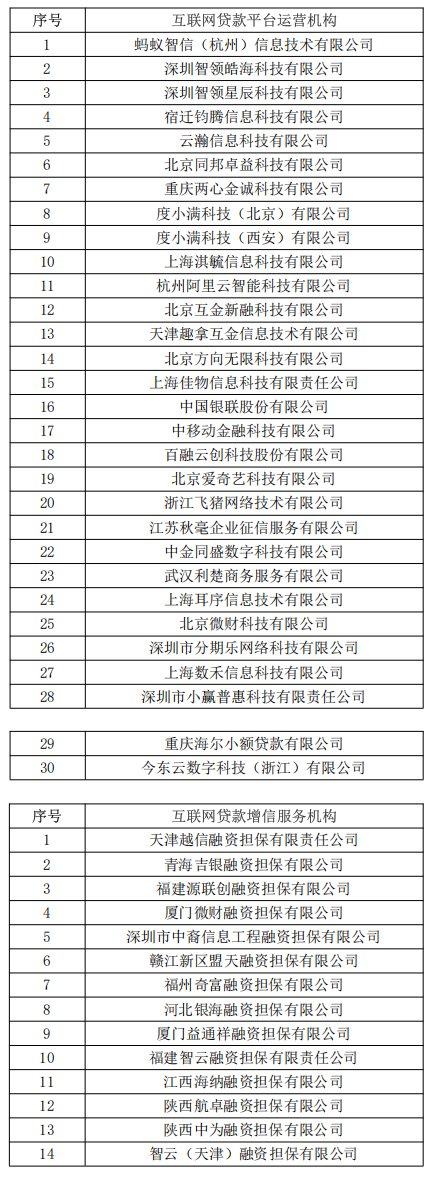
Core Viewpoint - Both Zhongyou Consumer Finance and Haier Consumer Finance have publicly disclosed their lists of cooperative institutions in response to regulatory requirements, highlighting their partnerships with major internet companies for internet loan services [1][5]. Group 1: Zhongyou Consumer Finance - Zhongyou Consumer Finance announced a total of 30 internet loan platform operating institutions, including major players like Ant Group, Douyin, JD.com, Meituan, and Du Xiaoman [1]. - The company also listed 14 internet loan credit enhancement service institutions as part of its compliance with regulatory disclosure requirements [1]. Group 2: Haier Consumer Finance - Haier Consumer Finance disclosed a total of 67 cooperative institutions, which also include major internet companies such as Ant Group, Douyin, and JD.com [5]. - Among these, there are 36 financing guarantee companies and 1 insurance company included in the partnership list [5]. Group 3: Regulatory Context - The announcement follows a directive from the National Financial Supervision Administration, which mandates that commercial banks manage platform operating institutions and credit enhancement service institutions through a list system, effective from October 1 [9]. - The directive requires banks to disclose these lists via official websites and mobile applications, ensuring timely updates and prohibiting partnerships with institutions not on the list [9].
京东白条升级分期免息等多项服务
Zheng Quan Ri Bao Wang· 2025-09-25 12:12
Group 1 - The core viewpoint of the article highlights the upgrades to JD's BaiTiao service, which now includes interest-free installment plans, deferred payment options, and trade-in services to meet diverse consumer needs [1] - As of September 2025, JD BaiTiao has reached nearly 300 million consumers, over 2 million industrial merchants, and more than 100 financial institutions, continuously expanding its service experience of "consume first, pay later, real-time approval, and flexible installments" [1] - The cumulative interest-free subsidies provided to users by JD BaiTiao, in collaboration with financial institutions and merchants, have reached over 10 billion yuan [1] Group 2 - The introduction of interest-free installments has significantly boosted product conversion rates, with an average increase of over 32% [1] - In regions such as Beijing, Guangdong, and Jiangsu, the BaiTiao service has helped merchants achieve an average transaction volume increase of over 2.5 times following the expansion of 3C digital products [1]
