资本市场服务

Search documents
证监会严打财务造假开出亿元罚单
Bei Jing Shang Bao· 2025-09-15 13:07
Core Viewpoint - The recent stringent regulatory measures by the China Securities Regulatory Commission (CSRC) against companies involved in financial fraud, such as *ST Dongtong and Yili Clean Energy, signal a "zero tolerance" approach to protect investors and enhance market integrity [1][2][3] Group 1: Regulatory Actions - The CSRC has imposed significant fines, often in the hundreds of millions, on companies for financial misconduct, indicating a strong regulatory stance [1][2] - The regulatory framework emphasizes severe penalties for financial fraud, market manipulation, and other illegal activities, aiming to deter such behaviors and protect investor interests [1][3] Group 2: Market Impact - The enforcement of strict regulations is expected to lead to a decline in low-quality stocks, as companies are discouraged from engaging in fraudulent activities [1][3] - A more robust regulatory environment enhances investor confidence, encouraging long-term investment and value-driven strategies [3] Group 3: Corporate Governance - Companies are increasingly focusing on improving governance standards and operational quality to regain investor trust and ensure compliance with regulations [3] - The responsibilities of intermediaries and corporate executives are being reinforced, promoting a culture of accountability and risk management [3]

沟通促信任 质量增信心——四川辖区2025年投资者网上集体接待日及半年度报告业绩说明会成功举办
Quan Jing Wang· 2025-09-15 05:36
深圳市全景网络有限公司副总经理佟牧表示,作为人民日报社属企业和多层次资本市场综合服务平台,全景自2008年首创"集体接待日"以来,在各地证监 局和上市公司协会的指导下,已成功举办了420余场次地区集体接待日活动,上市公司参与超2.1万家次,累计提问数超100万条,累计回复数近73万条。 下一步,全景将继续深化服务,坚持与四川资本市场同频共振、深度融合,持续优化自身的业务平台和服务体系,搭建高效便捷的沟通桥梁,助推四川资 本市场实现更高质量发展。 必须看到,集体接待日活动既是半年业绩的"成绩单"发布会,更是深化投资者信任的"交流会"。 9月12日,"沟通促信任 质量增信心"四川辖区2025年投资者网上集体接待日及半年度报告业绩说明会在全景路演成功举办。 为贯彻执行国务院《关于加强监管防范风险推动资本市场高质量发展的若干意见》、认真落实《国务院办公室厅关于进一步加强资本市场中小投资者合法 权益保护工作的意见》文件精神,推动上市公司切实做好投资者关系管理工作,提升规范运作和市值管理水平,四川省上市公司协会联合全景网特举办本 次"沟通促信任,质量增信心"四川辖区2025年投资者网上集体接待日及半年度报告业绩说明会。 ...
股权激励系列之一 | 股权激励与赴港上市2.0:董事长和高管应当关注的六大法律问题
3 6 Ke· 2025-09-15 02:27
Core Viewpoint - Equity incentives are crucial for attracting and retaining talent, as well as driving company growth, especially for companies preparing to list in Hong Kong. Companies must be aware of potential pitfalls and adopt a rigorous and professional approach to design and implement equity incentive plans [1][3]. Group 1: Trends in Equity Incentives for Chinese Companies - The prevalence of equity incentive plans among Chinese companies listed in A-shares, Hong Kong, and U.S. markets is on the rise, with 109 companies in Hong Kong announcing such plans in 2024, of which 82% are red-chip companies and 18% are H-shares [4]. - The focus of companies has shifted towards operational efficiency and cash flow accumulation, leading to a more cautious and refined approach to implementing incentive plans [4]. Group 2: Common Issues in Equity Incentives - Six main issues are identified, including mismatched incentive tools, foreign exchange registration requirements, shareholding structure design, high tax burdens, disclosure requirements, and cross-border incentive disputes [3]. - Companies often lack clarity on the granting mechanisms, exercise processes, and tax obligations related to equity incentives, which can lead to significant risks and costs [7]. Group 3: Mismatched Incentive Tools - Companies using the red-chip model often confuse equity incentives with stock options, overlooking other tools such as restricted stock and virtual stock, which can have different legal, financial, and tax implications [8]. - The choice of incentive tools can significantly impact the company's success and the tax burden faced by employees, potentially leading to costs in the hundreds of millions [8][9]. Group 4: Foreign Exchange Registration Issues - Companies must comply with the foreign exchange registration requirements for domestic residents holding shares in offshore companies, which can be cumbersome and costly if not managed properly [15][16]. - There are misconceptions about the necessity of registration for employees holding a small percentage of shares, which can lead to legal violations [16]. Group 5: Tax and Financial Implications - The tax burden from equity incentives can be substantial, with personal income tax rates reaching up to 45% upon exercising stock options, which can deter employee motivation [18][19]. - Companies must consider the financial impact of equity incentives on their financial statements, as share-based payments can significantly affect reported expenses and cash flow [21]. Group 6: Solutions and Best Practices - The use of equity incentive trusts (ESOP Trusts) can help mitigate tax burdens and streamline management processes for equity incentives [22][23]. - Companies should ensure that all legal documents related to equity incentives are meticulously prepared to avoid potential litigation and disputes in the future [27][30]. Group 7: Disclosure and Regulatory Compliance - Companies must disclose their equity incentive structures and related financial data to the Hong Kong Stock Exchange during the listing process, as failure to provide satisfactory information can delay the listing [25][26]. - The complexity of equity incentive plans necessitates thorough communication with legal, tax, and financial teams to ensure compliance with regulatory requirements [26].


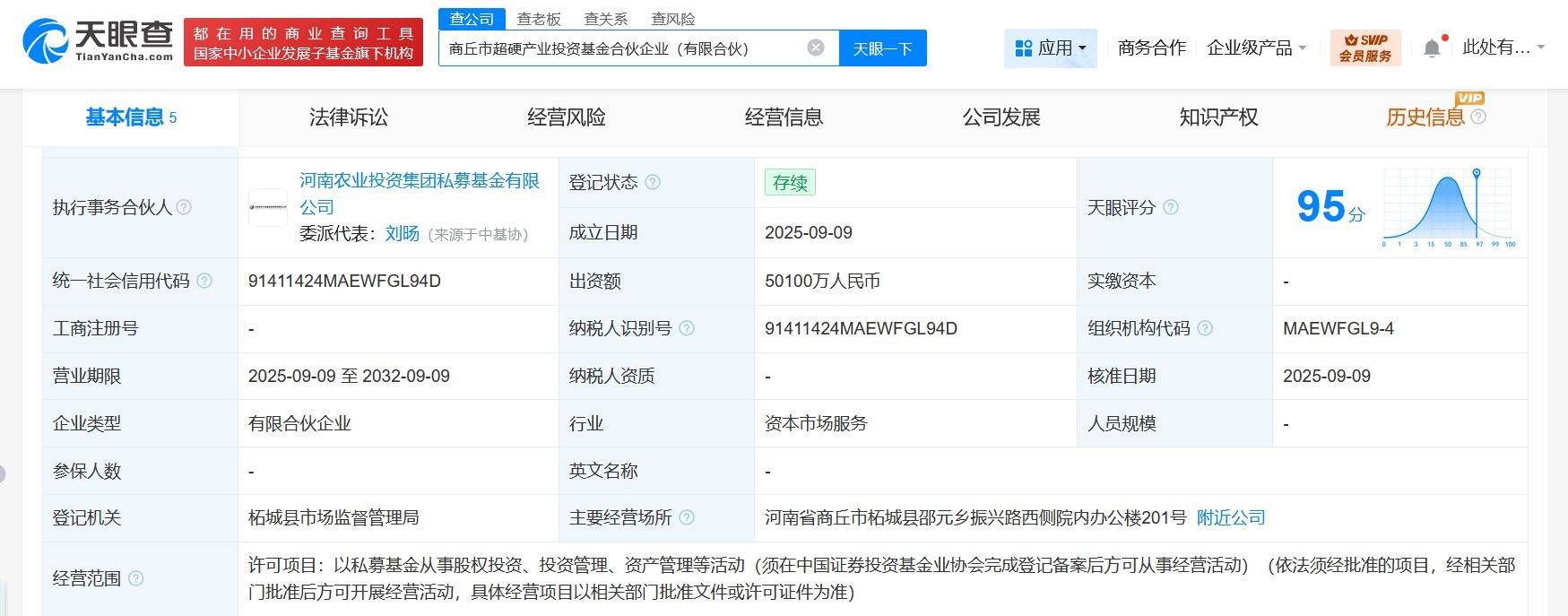
商丘市成立超硬产业投资基金,出资额5.01亿
Sou Hu Cai Jing· 2025-09-15 01:25
Core Points - A new investment fund named Shangqiu Superhard Industry Investment Fund Partnership (Limited Partnership) has been established, with a total investment of 501 million RMB [1] - The fund is managed by Henan Agricultural Investment Group Private Fund Co., Ltd., and its primary activities include private equity investment, investment management, and asset management [1] - The fund's partners include Shangqiu Development Investment Group Co., Ltd., Zhecheng Gaofa Investment Group Co., Ltd., and Henan Agricultural Investment Group Private Fund Co., Ltd. [1] Company Information - The fund is registered with the Zhecheng County Market Supervision Administration and has a business term from September 9, 2025, to September 9, 2032 [1] - The fund's unified social credit code is 91411424MAEWFGL94D, and it is currently in a state of existence [1] Industry Information - The fund operates within the capital market services industry, focusing on private equity and asset management activities [1] - The establishment of this fund indicates a growing interest in private equity investments in the region, particularly in the superhard materials sector [1]
时报观察丨亿元罚单频现 从严监管铲除财务造假“毒瘤”
Zheng Quan Shi Bao· 2025-09-15 00:26
法律之网越织越密,涉刑公告明显增多,行、民、刑立体化追责正在重塑市场生态。特别是对那些退市 后仍被追责的企业主体加大追责力度,彻底打破了部分市场主体"退市即免责"的幻想,形成强大威慑。 这正是推动资本市场规范稳健发展,保护中小投资者合法权益的良方。 责编:李丹 近日,证监会出重拳打击上市公司违法违规,一叠罚单落下,特别是过亿元罚单的出具,向资本市场更 多参与主体敲响警钟。对于涉及财务造假、信息披露违法违规的主体和个人,监管部门始终坚持零容 忍,维护市场秩序,净化市场空气,严监严管是资本市场监管的主旋律。 从违法违规事实来看,有的公司财务造假劣迹斑斑,有的公司信息披露存在误导性陈述,有的公司实控 人违规占资隐瞒不报……损害投资者利益,势必会付出沉重的代价。今年以来,已有多家公司被行政处 罚,其中5家公司收到过亿元罚单,均和财务造假相关。这些罚单正是证监会持续严监严管的缩影,这 背后是监管部门铲除侵蚀市场根基"毒瘤"的坚决态度、破除财务造假利益链条的坚定决心。 为坚决打击和遏制重点领域财务造假,监管部门通过年报审阅、现场检查、舆情监测、投诉举报、大数 据建模分析等多元化渠道发现财务造假线索,密切跟进系统性、团伙型 ...
时报观察丨亿元罚单频现 从严监管铲除财务造假“毒瘤”
证券时报· 2025-09-15 00:02
今年以来,已有5家公司收到过亿元罚单,均和财务造假相关。 近日,证监会出重拳打击上市公司违法违规,一叠罚单落下,特别是过亿元罚单的出具,向资本市场更多 参与主体敲响警钟。对于涉及财务造假、信息披露违法违规的主体和个人,监管部门始终坚持零容忍,维 护市场秩序,净化市场空气,严监严管是资本市场监管的主旋律。 从违法违规事实来看,有的公司财务造假劣迹斑斑,有的公司信息披露存在误导性陈述,有的公司实控人 违规占资隐瞒不报……损害投资者利益,势必会付出沉重的代价。今年以来,已有多家公司被行政处罚, 其中5家公司收到过亿元罚单,均和财务造假相关。这些罚单正是证监会持续严监严管的缩影,这背后是 监管部门铲除侵蚀市场根基"毒瘤"的坚决态度、破除财务造假利益链条的坚定决心。 点击关键字可查看 潜望系列深度报道丨 股事会专栏 丨 投资小红书 丨 e公司调查 丨 时报会客厅 丨 十大明星私募访谈 丨 特斯拉,突传利好! 丨 中美在西班牙马德里开始举行会谈 丨 2连板牛股:股票异常波动期间,存 在减持回购账户股票情形! 丨 周末利好!福建,重磅部署! 丨 300280,明起复牌!进入退市整理 期 丨 罗永浩:西贝的事情可以告一段落了 ...
摩根士丹利:港股估值吸引力凸显,国际投资者加速回流
Huan Qiu Wang· 2025-09-14 02:52
Core Insights - The Hong Kong capital market is experiencing a strong recovery this year, driven by continuous inflow of southbound funds, the return of international investors, and a surge in listings of quality innovative companies [1] Group 1: Market Dynamics - Southbound funds have accumulated to approximately $129 billion this year, surpassing the total for the previous year, with an average daily trading volume exceeding $30 billion, nearly doubling year-on-year [1] - The valuation discount of H-shares relative to A-shares is narrowing, indicating a revaluation of Hong Kong stocks by the market [1] Group 2: Investment Trends - The trading volume of dual-listed companies in Hong Kong has risen to 36%, indicating a shift of funds from U.S. stocks back to Hong Kong stocks [1] - Investors are increasingly favoring direct investments in Hong Kong stocks to mitigate geopolitical risks and seize opportunities for the revaluation of Chinese assets [1] Group 3: International Investor Engagement - There has been a significant increase in foreign participation in new stock projects facilitated by Morgan Stanley, with strong interest from sovereign funds and long-term capital [1] - Many international investors believe that despite the recovery in valuations of leading Chinese companies, Hong Kong stocks still present numerous undervalued quality targets compared to U.S. stocks [1] Group 4: Structural Changes in the Market - The influx of southbound and foreign capital is leading to profound changes in the structure of the Hong Kong stock market, with a shift in funds from traditional financial and real estate sectors towards new economy sectors [1] - The investment logic of international investors is transitioning from "passive tracking" to "active exploration," with innovative companies that possess global competitiveness becoming core beneficiaries [1]

中国动力:终止发行可转换公司债券及支付现金购买资产并募集配套资金
Xin Lang Cai Jing· 2025-09-12 11:13
Core Viewpoint - The company has decided to terminate the issuance of convertible bonds and withdraw its application for cash asset purchases and related fundraising, as approved in a board meeting scheduled for September 12, 2025 [1] Group 1 - The company and its independent financial advisor, CITIC Securities Co., Ltd., have submitted a request to withdraw the application documents to the Shanghai Stock Exchange [1] - The Shanghai Stock Exchange has decided to terminate its review of the company's related matters [1]

深圳南山战新投成立新兴产业投资合伙企业
Sou Hu Cai Jing· 2025-09-12 05:01
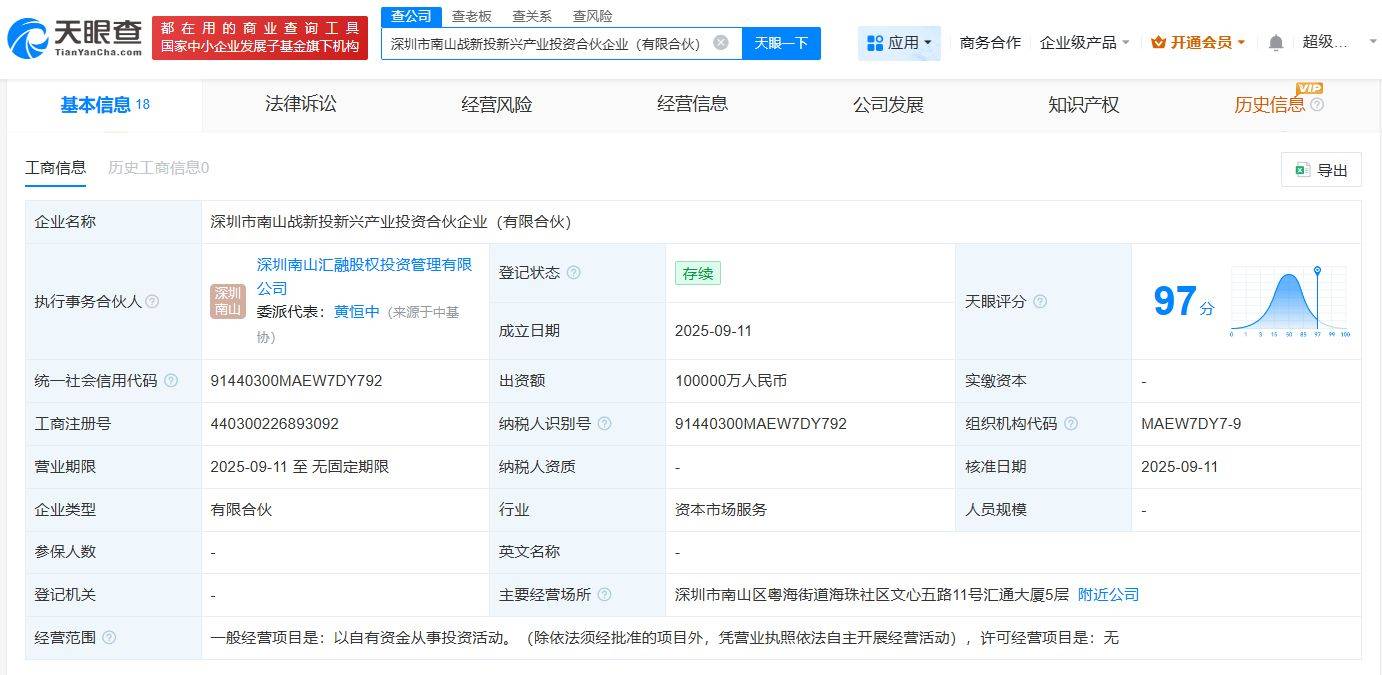
天眼查工商信息显示,近日,深圳市南山战新投新兴产业投资合伙企业(有限合伙)成立,执行事务合伙人为深圳南山汇融股权投资管理有限公司,出资额 10亿人民币,经营范围为以自有资金从事投资活动。合伙人信息显示,该合伙企业由深圳市南山战略新兴产业投资有限公司、深圳南山汇融股权投资管理有 限公司共同出资。 | | 更公司 都在用的商业查询丁目 | 查老板 查关系 查风险 | | | | | --- | --- | --- | --- | --- | --- | | | 深圳市南山战新投新兴产业投资合伙企业(有限合伙) 3 国家中小企业发展子基金旗下机构 | | 天殿一下 | 一起目· | 武容会作 企业级产 | | 基本信息 18 | 法律诉讼 | 经营风险 | 经营信息 | 公司发展 | 知识产 | | 工商信息 历史 商信息0 | | | | | | | 企业名称 | 深圳市南山战新投新兴产业投资合伙企业(有限合伙) | | | | | | 执行事务合伙人 2 | 深圳南山汇融股权投资管理有限 公司 深圳 ESTI 委派代表:黄恒中(来源于中基 | 登记状态 ⑦ | 存续 | | 天眼评分 2 | | | 协) | ...
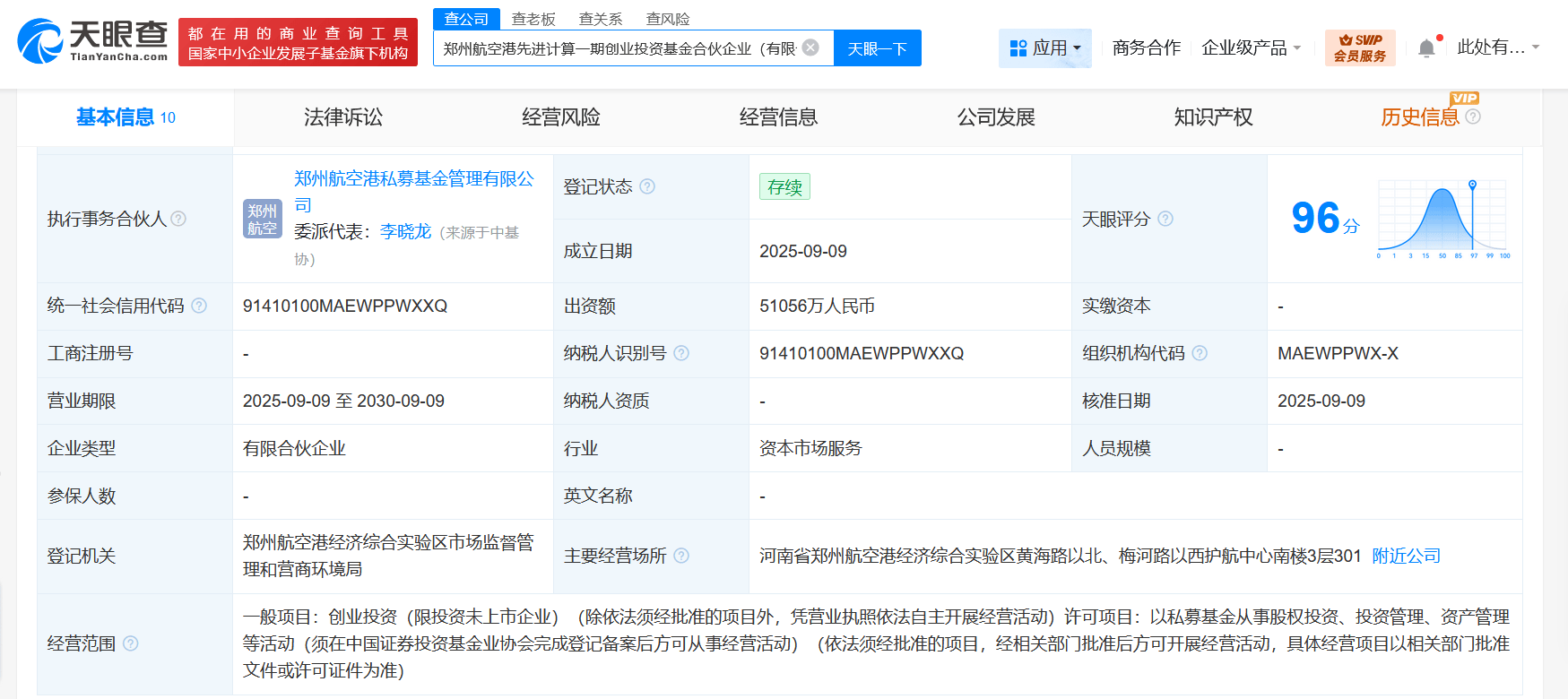
郑州航空港先进计算一期创业投资基金成立 出资额约5.1亿
Sou Hu Cai Jing· 2025-09-11 07:11
Group 1 - Zhengzhou Airport Advanced Computing Phase I Venture Capital Fund Partnership has been established with a total investment of approximately 510 million RMB [1][2] - The fund is managed by Zhengzhou Airport Private Fund Management Co., Ltd., focusing on venture capital, private equity investment, investment management, and asset management [1][2] - Key partners in the fund include Oriental Pearl (600637), Yancheng Yuntai Twenty Phase Emerging Industry Venture Capital Fund Partnership, and Qingdao Kailian Tuoguang Venture Capital Fund Partnership [1][3] Group 2 - Oriental Pearl has announced its participation in the establishment of the new fund, indicating a strategic shift towards high-tech and advanced computing industries [1][3] - The fund's operational scope includes venture capital investments limited to unlisted companies, subject to regulatory approvals [2][3] - The fund's partners have varying ownership stakes, with Oriental Pearl holding approximately 49.95% [3]