
港股估值修复

Search documents
一月港股市场跟踪:交投热情维持高位,多重因素利好ADT抬升
East Money Securities· 2026-03-26 07:07
Investment Rating - The report maintains a "Strong Buy" rating for the non-bank financial sector, indicating a positive outlook for investment opportunities in this area [2]. Core Insights - The Hong Kong stock market is experiencing a significant increase in trading activity, with the average daily turnover (ADT) reaching 272.3 billion HKD in January 2026, marking a year-on-year increase of 89% and a quarter-on-quarter increase of 46.4% [5][15]. - The total market capitalization of Hong Kong stocks reached 50.8 trillion HKD by the end of January 2026, reflecting a year-on-year growth of 43.6% and a quarter-on-quarter growth of 7.1% [5][15]. - The price-to-earnings (PE) ratio of the Hang Seng Index stood at 11.77 times as of January 31, 2026, placing it in the 89.15th percentile over the past five years, indicating a gradual recovery from previous undervaluation [5][21]. - The influx of southbound capital has significantly increased, with net inflows reaching 1.4 trillion HKD in 2025 and over 150 billion HKD in 2026, enhancing the pricing power of mainland investors [5][41]. - The IPO market in Hong Kong is showing signs of recovery, with 119 IPOs in 2025 raising a total of 127.9 billion HKD, and 13 IPOs already completed in January 2026 [5][15]. Summary by Sections 1. ADT Performance Review - The Hong Kong stock market has seen a notable increase in trading activity, with ADT reaching 272.3 billion HKD in January 2026, a significant increase from previous periods [15]. - The growth in ADT is attributed to both an increase in total market capitalization and turnover rate, indicating a robust market environment [15]. 2. Valuation Improvement and Market Capitalization - The valuation of Hong Kong stocks is gradually recovering, with the Hang Seng Index's PE ratio improving significantly, reflecting a narrowing of the AH premium to near six-year lows [5][21]. - The overall profitability of Hong Kong stocks is expected to grow, with a projected 9.06% increase in net profit to 5.39 trillion HKD in 2024 [5][40]. 3. IPO Activity and Market Dynamics - The IPO market is revitalizing, with a substantial number of new listings and a diverse pipeline of companies awaiting listing, particularly in technology and new consumption sectors [5][15]. - The A+H listing model is gaining traction, with a notable increase in the number of companies pursuing dual listings [5][15]. 4. Southbound Capital Inflows - Southbound capital's share in the market is increasing, contributing to a higher turnover rate and overall market activity [5][41]. - The daily average turnover from southbound trading reached 1.2 billion HKD in January 2026, maintaining a significant proportion of the overall market activity [5][41]. 5. Derivatives Market Growth - The derivatives market is experiencing record trading volumes, with innovative products being introduced to meet market demands [6][15].

港股情绪彻底回暖?恒指2%拉升背后,真正推手竟是它?
Sou Hu Cai Jing· 2026-02-23 12:26
Group 1: Macro Policy - The expectation of a "slowing rate hike" by the Federal Reserve is the biggest catalyst for liquidity in the Hong Kong stock market [5] - The weakening of the US dollar alleviates funding pressure, and the downward space for Hong Kong dollar interest rates opens up [6] Group 2: Fund Flows - Southbound funds have shown a consistent net inflow over the past three months, indicating a strong buying sentiment towards undervalued Hong Kong stocks [8] - Foreign capital has shifted from a "wait-and-see" approach to a "tentative return," with increased allocations in technology and high-dividend sectors [10] Group 3: Sector Rotation - The semiconductor sector has seen significant gains, particularly with companies like Hua Hong Semiconductor rising over 4%, driven by strong demand for valuation recovery [12] - Continuous promotion of domestic substitution policies in the semiconductor industry provides a stable foundation for growth [14] - Positive signals from leading companies' earnings reports indicate a recovery in market conditions, with improved capacity utilization and stable demand [16] Group 4: Technology Stock Valuation Recovery - The recovery of technology stock valuations depends on sustained liquidity improvement, potential earnings turning points, and stable policy expectations [18][19][21] - The valuation recovery is viewed as a phased process, particularly for sectors like semiconductors, internet platforms, and software services, which still have upward potential [21]


港股“估值底”吸引资金逆势布局,南方基金旗下恒生科技ETF南方(520570)上涨1.14%,连续4日实现净流入
Xin Lang Cai Jing· 2026-02-09 05:32
Core Viewpoint - The Hang Seng Technology ETF (520570) has seen significant inflows and positive performance, indicating a recovery in the Hong Kong stock market, particularly in the technology sector, following recent corrections [1][2]. Group 1: Market Performance - As of February 9, 2026, the Hang Seng Technology ETF (520570) rose by 1.14% with a turnover of 2.76%, amounting to 75.36 million yuan [1]. - The Hang Seng Technology Index components, including Huahong Semiconductor, JD Health, and SMIC, experienced gains of 4.79%, 4.31%, and 3.48% respectively [1]. - Southbound funds have consistently flowed into the Hong Kong stock market, with net inflows recorded for seven consecutive trading days as of February 6, 2026 [1]. Group 2: Fund Inflows - Southbound funds achieved a net buying amount exceeding 56 billion yuan in the week from February 2 to 6, marking the highest weekly inflow since late September of the previous year [1]. - On February 6, the net buying amount reached a recent high of 22.206 billion yuan, with the last three trading days seeing net purchases exceeding 10 billion yuan each [1]. Group 3: Investment Outlook - China Galaxy Securities suggests that the valuation attractiveness of Hong Kong stocks has increased following recent corrections, with expectations of a rebound in the market around the Chinese New Year [2]. - The technology sector remains a key focus for medium to long-term investments, with reduced valuation pressure and potential for recovery [2]. - The Hang Seng Technology Index includes the top 30 Hong Kong-listed companies highly related to technology themes, representing major players in sectors such as internet, fintech, cloud computing, e-commerce, and digital business [2].
有产品已提前结幕!本周新发基金32只:广发易方达等27家公司竞技 电池、AI、医药、黄金赛道全览
Xin Lang Cai Jing· 2026-02-03 11:30
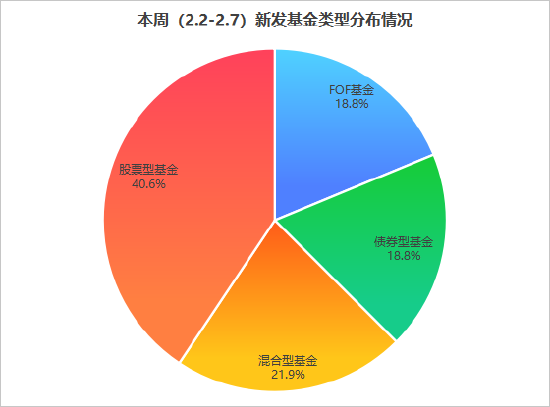
Core Viewpoint - The new fund issuance market experienced a peak with 32 new products launched for subscription, involving 27 fund companies, providing diverse investment options for investors [1][12]. Group 1: Fund Types - 14 new equity funds were launched, focusing on high-growth sectors such as batteries, AI, healthcare, and more, with several products tracking Hong Kong Stock Connect indices, indicating institutional optimism about valuation recovery in Hong Kong stocks [3][14]. - 7 new mixed funds were introduced, emphasizing balanced asset allocation between stocks and bonds, with most having a low subscription threshold of 1 yuan, catering to individual investors [5][16]. - 6 new bond funds were launched, with 5 adopting a "fixed income plus" strategy, enhancing returns by including equity assets, while the remaining one is a pure bond fund [7][18]. - 6 new FOF (Fund of Funds) products were introduced, all with a 3-month holding period and a low subscription threshold of 1 yuan, reflecting a trend towards diversified asset allocation [10][21]. Group 2: Subscription Details - The subscription period for some equity funds is relatively short, with certain products open for only a few days, while others extend until the end of February or early March, allowing flexibility for investors [3][14]. - Most new funds have low entry points, with many mixed and bond funds starting at 1 yuan, making them accessible to a broader range of investors [5][7]. - Key products include those with specific industry focuses, such as the 泰信消费精选A targeting domestic consumption and the 广发医疗创新精选A focusing on healthcare [5][16]. Group 3: Performance Benchmarks - The performance benchmarks for the new funds vary, with equity funds often linked to indices like the 中证电池主题指数 and the 上证科创板人工智能指数, while bond funds typically reference comprehensive bond indices [4][20]. - The mixed funds also have diverse benchmarks, combining equity indices with bond indices to provide a balanced performance metric [6][17].
港股复盘 | 港股缩量调整 中国太平逆势大涨创新高
Mei Ri Jing Ji Xin Wen· 2026-01-19 08:49
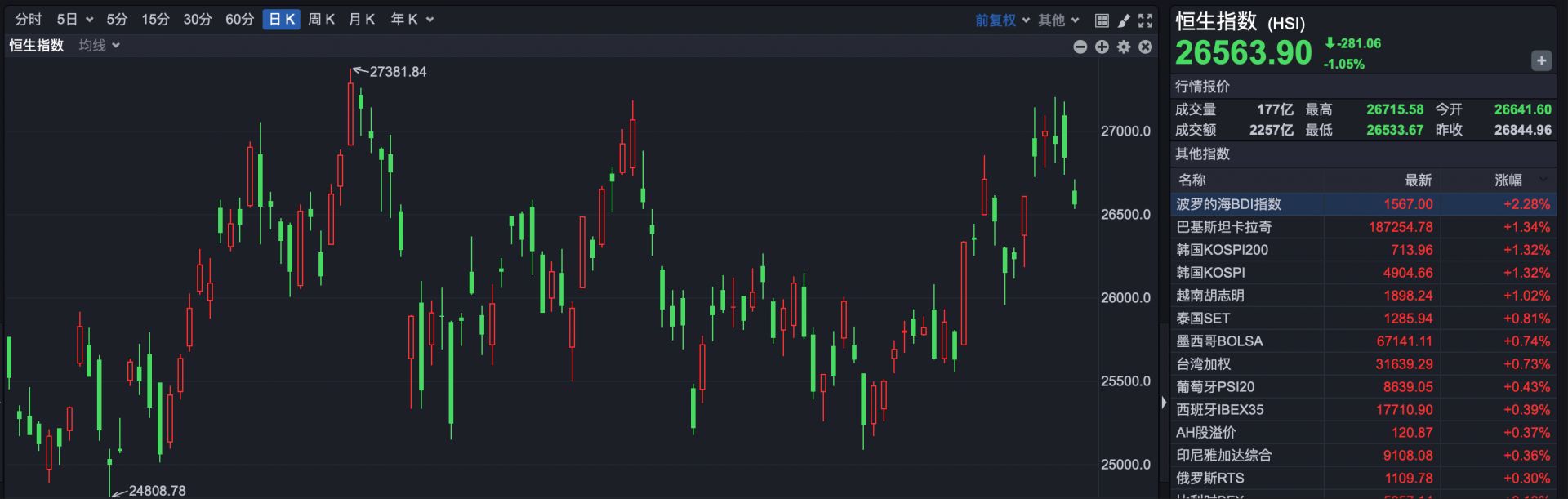
Market Overview - The Hong Kong stock market experienced a decline, with the Hang Seng Index closing at 26,563.90 points, down 281.06 points, a decrease of 1.05% [1] - The Hang Seng Tech Index closed at 5,749.98 points, down 72.20 points, a decrease of 1.24% [2] - Trading volume in the market was 225.7 billion HKD, continuing to shrink compared to the previous Friday [1] Company Focus - China Taiping (HK00966) saw a significant increase of over 6%, reaching its highest stock price since April 2019 [3] - The company announced that its annual profit attributable to shareholders is expected to increase by approximately 215% to 225% by the end of 2025, compared to the previous year [5] - The expected profit for the fiscal year 2024 is 8.432 billion HKD, attributed to improved net investment performance and a one-time impact from new corporate income tax policies introduced by the Chinese tax authorities [5] - JPMorgan's report indicated that small and medium-sized insurance stocks outperformed the market last year, with an average price increase of about 58%, reflecting growing optimism about emerging life insurance demand and macroeconomic recovery [5] - JPMorgan upgraded China Taiping's rating from "Underweight" to "Overweight," raising the target price from 9.4 HKD to 30 HKD based on confidence in the company's underwriting resilience and earnings growth visibility [5] Sector Performance - The technology sector saw more declines than gains, with Bilibili down over 6%, Alibaba down over 3%, and Kuaishou down over 2% [5] - Airline stocks performed well, with China Eastern Airlines rising over 9% [5] - Wind power stocks also showed strong performance, with Dongfang Electric up over 6% [5] - The biopharmaceutical sector experienced widespread declines, with WuXi Biologics down over 4% [5] - Cryptocurrency-related stocks faced significant declines, with OKLink down over 5% [5] Capital Flow - Southbound funds recorded a net purchase of over 2.2 billion HKD in Hong Kong stocks by the market close [6] Market Outlook - Guotai Junan Securities believes that as the domestic economy recovers and major overseas economies shift to accommodative monetary policies, H-shares will further highlight their valuation advantages [8] - The firm anticipates that ongoing reforms and improvements in the capital market will inject sustained vitality into the Hong Kong stock market, with liquidity expected to improve significantly by 2026 [8] - Tianfeng Securities maintains a cautiously optimistic mid-term outlook for the Hong Kong market, suggesting a focus on value stocks with growth potential, particularly in the technology and consumer sectors [8]

港股开盘:恒指涨0.64%、科指涨0.94%,科网股及创新药概念股走高,有色金属板块活跃
Jin Rong Jie· 2026-01-16 01:32
Market Overview - The Hong Kong stock market opened higher on January 16, with the Hang Seng Index rising by 0.64% to 27,094.85 points, the Hang Seng Tech Index increasing by 0.94% to 5,883.37 points, and the National Enterprises Index up by 0.68% to 9,330.22 points [1] - Major technology stocks mostly rose, with Alibaba up by 2%, Tencent Holdings increasing by 0.8%, and JD.com down by 0.52% [1] - The automotive sector opened higher, with BYD rising over 1%, and the innovative drug concept stocks generally increased, with Juzhi Bio rising over 3% [1] Company News - China Southern Airlines (01055.HK) reported an 11.89% year-on-year increase in passenger capacity input for December 2025, with a passenger turnover increase of 11.20% and a seat occupancy rate of 84.05%, down by 0.53 percentage points [2] - China Metallurgical Group (01618.HK) signed new contracts worth RMB 1,113.6 billion in 2025, a decrease of 10.8% year-on-year, with overseas contracts increasing by 1.9% to RMB 94.88 billion [2] - Zhong An Online (06060.HK) reported a total insurance premium income of approximately RMB 35.643 billion for 2025, an increase of 6.66% year-on-year [3] - Chongqing Steel (01053.HK) issued a profit warning, expecting a net loss of RMB 2.5 billion to RMB 2.8 billion for 2025, compared to a net loss of RMB 3.196 billion in the previous year [3] - Luk Fook Holdings (00590.HK) reported strong performance in Q3, with retail value, retail income, and same-store sales increasing by 26%, 17%, and 15% respectively [3] - Nine Dragons Paper (01836.HK) reported a 0.8% year-on-year increase in unaudited consolidated revenue for Q4 2025, totaling USD 388.6 million, with a cumulative annual revenue increase of 1.5% to USD 1.5678 billion [3] Corporate Actions - Tencent Holdings (00700.HK) repurchased 1.017 million shares for HKD 636 million at prices between HKD 619 and HKD 632 [5] - Xiaomi Group (01810.HK) repurchased 3.9 million shares for HKD 148 million at prices between HKD 37.86 and HKD 37.92 [6] - Sunny Optical Technology (02382.HK) repurchased 1.2 million shares for HKD 79.0126 million at prices between HKD 65.25 and HKD 66.45 [7] Institutional Insights - Tianfeng Securities noted that the Hong Kong stock market has a rebound foundation supported by valuation repair and sentiment improvement, but upward elasticity and sustainability are constrained by multiple factors [8] - Open Source Securities highlighted the approval from the China Securities Regulatory Commission to increase the minimum margin ratio for financing securities purchases from 80% to 100%, maintaining a positive outlook on the brokerage sector [8] - CITIC Securities reported a hot IPO market in Hong Kong for 2025, with high-quality projects and significant investor enthusiasm for new listings [9]

2026年以来南向资金持续流入机构人士:港股有望震荡上行
Zhong Guo Zheng Quan Bao· 2026-01-13 20:46
Core Viewpoint - The southbound capital flow into the Hong Kong stock market reached a record net inflow of 1,404.84 billion HKD in 2025, continuing into 2026 with a cumulative net inflow of 41.296 billion HKD as of January 13, 2026, contributing to a strong performance in the Hong Kong stock market [1][2]. Group 1: Southbound Capital Flow - In 2025, southbound capital was the largest incremental funding source for the Hong Kong stock market, with a total net inflow of 1,404.84 billion HKD, setting a record for annual net inflow [1]. - As of January 13, 2026, southbound capital continued to increase, with a cumulative net inflow of 41.296 billion HKD in just seven trading days, with six of those days showing net inflows [2]. - The number of shares held by southbound capital reached 5,643.75 billion shares as of January 12, 2026, an increase of 6.39 million shares since the beginning of 2026, with a total market value of 6.33 trillion HKD [2]. Group 2: Market Performance - The Hang Seng Index, Hang Seng China Enterprises Index, and Hang Seng Technology Index saw cumulative increases of 4.75%, 4.17%, and 6.41% respectively since the beginning of 2026 [4]. - Over 80% of the constituent stocks in the Hang Seng Index have risen, with notable increases in stocks such as Alibaba Health, WuXi Biologics, and JD Health, all exceeding 20% [4]. - The healthcare, materials, and conglomerates sectors led the market with increases of 15.46%, 12.86%, and 7.62% respectively, while only the telecommunications sector saw a decline of 0.49% [4]. Group 3: Valuation and Future Outlook - The rolling price-to-earnings ratio of the Hang Seng Index increased to 12.27 times as of January 13, 2026, up from 11.77 times at the beginning of 2026 [5]. - Analysts predict that the Hong Kong stock market will benefit from domestic policies and external economic conditions, with expectations of a second round of valuation recovery and further earnings growth in 2026 [6]. - Key investment themes include technology innovation, cyclical industries, and consumer sectors, with a focus on AI-related sectors, healthcare, and resource commodities [7].
港股开盘 | 恒指低开0.59% 银行股走强 招商银行涨近1%
智通财经网· 2026-01-08 01:40
Group 1 - The Hang Seng Index opened down 0.59%, while the Hang Seng Tech Index fell by 0.44%. Bank stocks strengthened, with China Merchants Bank rising nearly 1%, while the non-ferrous metals sector weakened, with China Aluminum dropping over 2%. Tech stocks were sluggish, with Alibaba and Baidu both declining by more than 1% [1] - CITIC Securities believes that due to the internal "14th Five-Year Plan" catalyst and external major economies' "fiscal + monetary" dual easing, the Hong Kong stock market is expected to welcome a second round of valuation repair and further earnings recovery by 2026. It suggests focusing on technology, healthcare, resource products, essential consumer goods, paper, and aviation sectors [1] - Everbright Securities indicates that with domestic policy efforts and a weaker US dollar, the Hong Kong stock market may continue to experience a volatile upward trend. The overall profitability of the Hong Kong market is relatively strong, and assets in the internet, new consumption, and innovative pharmaceuticals are relatively scarce. Despite several months of consecutive gains, the overall valuation remains low, making long-term allocation cost-effective [1] - Dongwu Securities believes that the Hong Kong stock market is entering a volatile upward phase, emphasizing the need to maintain dividends as a base and seize the technology growth market in the first half of the year. Potential incremental funds from southbound investments will continue to increase allocation to value dividends. Considering valuations and the AH comparison perspective, southbound funds will generally increase allocation to Hong Kong tech growth stocks, although the tech market will still be influenced by overseas interest rate cuts and US tech market trends, requiring dynamic observation [1] Group 2 - Industrial Securities suggests actively going long, as the Hong Kong stock market is expected to start a spring offensive led by the Hang Seng Tech Index. In the medium term, the bull market in Hong Kong stocks will continue into 2026, with earnings and liquidity likely to drive the market. Changes in risk appetite may present a pattern of "rise first, then fall, and rise again" [2] - In the first quarter of 2026, the risk appetite for Hong Kong stocks is expected to "rise first" [2]


港股收评:恒指跌0.94%、科指跌1.49%,科网股、券商股及石油股走低,医药板块尾盘走高
Jin Rong Jie· 2026-01-07 08:15
Market Performance - The Hong Kong stock market opened lower and continued to decline, with the Hang Seng Index closing down 0.94% at 26,458.95 points [1] - The Hang Seng Technology Index fell by 1.49% to 5,738.52 points, while the National Enterprises Index decreased by 1.14% to 9,138.75 points [1] - Major technology stocks experienced declines, with Alibaba down 3.25%, Tencent down 1.26%, and JD.com down 1.3% [1] - The pharmaceutical sector saw gains, with Rongchang Bio rising over 12% and 3SBio increasing over 7% [1] - Brokerage stocks were weak, with Guotai Junan International dropping over 5% [1] - Oil stocks led the declines, with CNOOC down 3% [1] - Automotive stocks also weakened, with NIO falling over 3% [1] Company Updates - Yadea Holdings (01585.HK) expects a net profit of no less than RMB 2.9 billion for 2025, up from RMB 1.27 billion in the previous year, driven by increased sales of electric two-wheelers and optimized product structure [2] - Poly Property Group (00119.HK) anticipates a cumulative contract sales amount of approximately RMB 50.2 billion for 2025, a decrease of 7.38% year-on-year [3] - Sunac China (01918.HK) projects a cumulative contract sales amount of about RMB 36.84 billion for 2025, down 21.85% year-on-year [4] - Gemdale Corporation (00535.HK) expects a cumulative contract sales total of approximately RMB 10.696 billion for 2025, a decrease of 47.33% year-on-year [5] - Greentown Management Holdings (09979.HK) estimates new construction project management fees for 2025 to be RMB 9.35 billion, a year-on-year increase of about 0.4% [6] - Yuexiu Property (00123.HK) has acquired a land parcel in Shanghai's Pudong New Area for RMB 2.561 billion [7] - Jiufang Zhitu Holdings (09636.HK) has completed the acquisition of 100% of JF Financial and its core information systems [8] - Weimob Group (02013.HK) is collaborating with Taobao Flash Sale to create an integrated local retail solution [8] - Dali Pu Holdings (01921.HK) has officially become a qualified supplier for Saudi Aramco [9] - Xiehe New Energy (00182.HK) has successfully completed a secondary listing on the Singapore Stock Exchange [10] - Bokan Vision Cloud-B (02592.HK) has submitted a clinical trial application for the new drug CBT-009 [11] - Yingtong Holdings (06883.HK) has established a partnership with the Italian high-end fragrance brand CULTI to strengthen its distribution network in China [11] Institutional Insights - CITIC Securities suggests that Hong Kong stocks may experience a second round of valuation recovery and performance revival in 2026, recommending focus on technology, healthcare, resource products, consumer staples, paper, and aviation sectors [12] - Everbright Securities indicates that domestic policy initiatives and a weaker US dollar may lead to continued upward movement in Hong Kong stocks [12] - Dongwu Securities believes that Hong Kong stocks are entering a period of upward fluctuation, emphasizing the importance of dividends as a foundation [12] - Industrial Securities recommends actively buying, anticipating a spring rally led by the Hang Seng Technology Index, with a bullish outlook for the Hong Kong market in 2026 [12]
港股开盘 | 恒指高开0.09% 科网股活跃 快手涨超5%
智通财经网· 2026-01-05 01:34
Group 1 - The Hang Seng Index opened up 0.09%, and the Hang Seng Tech Index rose by 0.33%, with notable activity in tech stocks such as Kuaishou increasing over 5% and Alibaba rising over 1% [1] - The non-ferrous metals sector showed strength, with China Aluminum rising over 1%, and Baidu Group increasing nearly 1% as the company plans to spin off its Kunlun Chip business for an IPO on the Hong Kong Stock Exchange [1] Group 2 - Everbright Securities believes that the overall profitability of the Hong Kong stock market is relatively strong, with scarce assets in internet, new consumption, and innovative pharmaceuticals. Despite several months of continuous increases, the overall valuation remains low, indicating high long-term cost-effectiveness for allocation [1] - CITIC Securities projects that by 2026, the Hong Kong stock market may experience a second round of valuation recovery and further performance revival, benefiting from internal "14th Five-Year Plan" catalysts and external fiscal and monetary easing from major economies [1] - Guolian Minsheng Securities anticipates that the first half of 2026 will be favorable for the Hong Kong stock market due to a weak domestic economic recovery, ongoing Federal Reserve easing, and continued industrial catalysts. There is a projected incremental space of HKD 630 billion to HKD 1,050 billion for southbound funds, with passive index funds and insurance capital having relatively larger space [1]
