
储能

Search documents
智光电气又签大合同了!2.1亿元合同助力储能版图扩张
中关村储能产业技术联盟· 2026-02-13 05:34
Group 1 - The core viewpoint of the article highlights the significant achievements of Zhiguang Energy in securing large orders for energy storage systems, totaling over 1.2 billion yuan within a short period, showcasing market confidence in their technology [2] - Zhiguang Energy confirmed participation in the 14th International Energy Storage Summit and Exhibition (ESIE 2026), which will take place from March 31 to April 3, 2026, in Beijing [3] - The company signed a procurement contract worth 210.4 million yuan with China Electric Power Construction Group Hebei Electric Power Survey and Design Institute, indicating strong backing from a reputable state-owned enterprise [2] Group 2 - The recent contracts are expected to positively impact Zhiguang Electric's financial status for 2026 and beyond, reinforcing its leading position in the large-scale energy construction and power system market [2]


规则在变,赢家重排:解析2025储能产业十大关键节点
中关村储能产业技术联盟· 2026-02-13 05:34
Group 1 - Inner Mongolia has surpassed California to become the world's largest regional energy storage market by 2025, driven by strong demand from large-scale wind and solar projects, indicating China's competitive advantage has expanded from manufacturing to large-scale project delivery and grid integration capabilities [4][6] - The energy storage sector is transitioning to a fully market-oriented era, with the National Development and Reform Commission and the National Energy Administration implementing new market rules that will shift energy storage operations from fixed arbitrage to algorithm-driven trading, enhancing revenue opportunities [6][7] - The release of the first national policy on virtual power plants marks a new phase of market-oriented development, with clear targets for capacity growth, indicating that user-side energy storage will increasingly participate in diversified trading for additional revenue [7][8] Group 2 - Chinese companies are accelerating overseas capacity layout to navigate stringent trade barriers in Europe and the US, shifting from merely exporting products to exporting capabilities, which enhances their global supply chain influence [10][11] - The mainstream energy storage cell specifications are evolving from 300Ah+ to 500Ah and 600Ah levels, leading to a surge in demand for large-capacity cells while smaller cell production is declining, indicating a shift in market competition towards system longevity and safety [11][12] - Grid-forming energy storage is becoming a standard requirement for large-scale renewable energy bases, with specific performance criteria set for stability, indicating a transition of energy storage from auxiliary equipment to critical stability components [13][14] Group 3 - AI technology is becoming a core driver for enhancing the value of energy storage assets, with applications in safety, trading, and operational efficiency, marking a shift towards a "software-defined" era in the industry [14][15] - The price of lithium carbonate has rebounded significantly, rising from approximately 60,000 yuan/ton to 120,000 yuan/ton within the year, indicating a shift in the cost structure of the industry and increasing pressure on downstream enterprises [15][17] - The implementation of mandatory national safety standards for electrochemical energy storage systems is raising safety thresholds, leading to a shift from reactive to proactive safety measures, which may accelerate the exit of less capable manufacturers from the market [19][20] Group 4 - A notable trend in the capital market is the "listing wave" in Hong Kong, with leading companies like CATL and others planning or executing listings, reflecting a revaluation of their global compliance and delivery capabilities [21][23] - This wave of listings not only signifies global capital's recognition of Chinese energy storage leaders but also highlights the need for stringent information disclosure and risk narratives to meet international investor scrutiny [23]
未知机构:继电芯后储能系统集采价格传导亦超出预期地顺利华电12GWh集采均价达055-20260213
未知机构· 2026-02-13 02:35
继电芯后储能系统集采价格传导亦超出预期地顺利,华电12GWh集采均价达0.55元/Wh【中信建投电新·储能】 ➡事件: 近日华电12GWh储能系统开标,平均报价达到0.55元/Wh,较此前明显上涨,反映储能系统成本传导也较为顺利。 ➡报价较为集中,"自杀式"报价不成为主流 本次招标共59家企业参与投标,平均报价0.55元/Wh,中位数0.54元/Wh,其中32家企业报价集中在 继电芯后储能系统集采价格传导亦超出预期地顺利,华电12GWh集采均价达0.55元/Wh【中信建投电新·储能】 ➡事件: 近日华电12GWh储能系统开标,平均报价达到0.55元/Wh,较此前明显上涨,反映储能系统成本传导也较为顺利。 ➡报价较为集中,"自杀式"报价不成为主流 本次招标共59家企业参与投标,平均报价0.55元/Wh,中位数0.54元/Wh,其中32家企业报价集中在0.52-0.56元/Wh 之间,仅有一家低于0.5元/Wh,反映各家企业对成本的认识趋于一致,自杀式内卷不成为主流。 ➡较此前储能系统集采价格有明显上涨 25年8月中能建25GWh储能系统集采中,2h储能系统平均入围报价0.45元/Wh,4h储能系统平均入围报价0 ...

国内储能篇-政策催化下独立储能放量-关注-十五五-电费收支平衡与顶层电价机制
2026-02-13 02:17
Summary of the Conference Call on Independent Energy Storage in China Industry Overview - The conference call focused on the independent energy storage sector in China, highlighting the impact of national policies on the market dynamics and growth potential of the industry [2][3][14]. Key Points and Arguments 1. **National Capacity Pricing Mechanism**: A nationwide independent energy storage capacity pricing mechanism has been introduced, clarifying market expectations for 2026 and stimulating demand across the industry chain. However, provincial implementation details and peak-valley price differences will significantly affect storage profitability [2][3][14]. 2. **Renewable Energy Demand**: The demand for renewable energy consumption is substantial, with an expected addition of 250 GW of wind and solar capacity over the next five years, leading to a resource adjustment gap of approximately 300-350 GW, which corresponds to a required storage capacity of 250-300 GWh for 4-hour systems [2][4][11][12]. 3. **Electrochemical Storage Dominance**: Electrochemical storage, primarily using lithium batteries, accounts for over 95% of the market. As of Q3 2025, the total electrochemical storage capacity reached 80 GW (189 GWh), with a projected annual increase of 170-180 GWh [2][5][6]. 4. **Independent Storage Growth**: Independent storage has become the main type of new installations, with its share increasing significantly. The average duration of these systems is 2.3 hours, with many new projects featuring 4-hour systems. Utilization efficiency is higher for independent storage compared to renewable energy pairing, with some regions exceeding 1,000 hours of utilization [2][3][7]. 5. **Profitability Shift**: The profitability model for independent storage is shifting from a rental market to a combination of capacity pricing, spot market arbitrage, and auxiliary service frequency regulation revenues. The national capacity pricing policy has clarified the commercial model, with capacity compensation now accounting for 20-30% of revenues [2][3][7][14]. 6. **Regional Variations in Profitability**: The internal rate of return (IRR) varies significantly by region, with areas like Inner Mongolia benefiting from high subsidies and substantial peak-valley price differences. In contrast, coastal regions may not see as favorable economic conditions despite the capacity pricing policy [3][7]. 7. **Impact on Other Energy Sources**: The growth of independent storage is beneficial for renewable operators, as the cost of auxiliary services is primarily borne by the benefiting parties. However, the current market structure for these services is not fully mature, necessitating attention to the growth of wind and solar installations and changes in electricity pricing [8][10]. 8. **Future Projections**: The expected growth in storage capacity is anticipated to be sustained over the next five years, with a focus on the need for additional storage to accommodate the increasing renewable energy output. The projected annual gap remains around 60-70 GW [11][12]. 9. **Investment Recommendations**: Investors are advised to focus on large storage manufacturers, lithium-ion sector stocks, and Hong Kong-listed wind power operators, as the market dynamics evolve with the new pricing policies [3][14]. Additional Important Insights - The transition to a more structured capacity pricing model is expected to enhance the overall profitability of the energy storage sector, but ongoing monitoring of regional price differences and installation growth will be crucial for assessing long-term investment opportunities [3][14]. - The integration of peak-shaving costs into the spot market is anticipated to improve the overall profitability of green electricity, indicating a shift in how energy pricing and storage interact in the market [9].
当航天级精度遇见万亿级市场:中国技术集团一场关于技术信仰的资本叙事
Zhi Tong Cai Jing· 2026-02-13 01:17
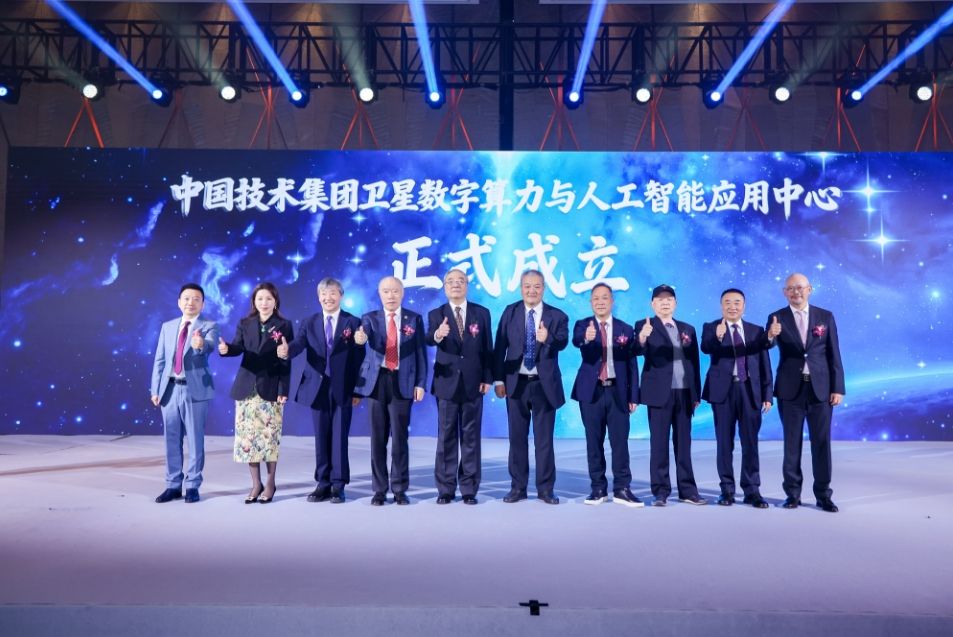
Core Viewpoint - China Technology Group is accelerating its transformation from a satellite industry focus to a comprehensive development model integrating aerospace, energy storage, and precision manufacturing, marking a significant strategic shift in its operations [1][4]. Group 1: Strategic Developments - The company held a major signing event with seven strategic partners, outlining a development path that emphasizes "aerospace empowerment, energy storage foundation, and intelligent manufacturing upgrade" [1]. - The unveiling of the Satellite Digital Computing and AI Application Center signifies the company's transition from a satellite data provider to a satellite digital computing service provider [1][2]. - The relocation of the headquarters from Hong Kong to Guangzhou is part of a broader strategy to solidify its national operational hub [1]. Group 2: Technological Integration - The integration of satellite remote sensing, communication, and edge computing capabilities will provide real-time, AI-driven solutions for urban governance, power grid scheduling, and flexible manufacturing [2]. - The collaboration in the aerospace titanium materials sector aims to apply high-purity titanium alloy technology to energy storage equipment and lightweight components for electric vehicles, addressing key material bottlenecks [3]. Group 3: Energy Storage Breakthroughs - The company has signed contracts for significant energy storage projects, including a 400MW/800MWh project in Dezhou and a 500MW/2GWh project in Cangzhou, adopting a full-chain model of investment, EPC, and operation [4]. - These projects represent a shift from being a technology solution provider to an active project operator, participating directly in asset operation and revenue sharing within the new power system [4]. Group 4: Market Response - The company's stock price has shown a steady increase, rising by 30.3% over the past three months, reflecting market recognition of its transformation achievements [5]. - Despite a currently low price-to-earnings ratio, the potential for valuation recovery is anticipated as the company continues to optimize its revenue structure [5]. Group 5: International Recognition - The release event garnered international attention, with former Serbian President Boris Tadic acknowledging the company's role in global industrial cooperation and the potential for breakthroughs in its "technology going global" strategy [6]. - The alignment of hard technology with national strategy is seen as a significant certainty in navigating global capital markets [6].
当航天级精度遇见万亿级市场:中国技术集团(01725)一场关于技术信仰的资本叙事
智通财经网· 2026-02-13 01:15
Core Insights - The company, China Technology Group, is transitioning from a focus on satellite technology to a broader strategy encompassing green energy, smart manufacturing, and digital infrastructure, marking a significant shift in its operational focus [1][3] - The recent press conference highlighted the establishment of a satellite digital computing and AI application center, which signifies the company's evolution from a satellite data provider to a satellite digital computing service provider [3][5] - The company has formed strategic partnerships in three key areas: aerospace titanium materials, precision manufacturing, and energy storage, indicating a comprehensive approach to integrating advanced technologies into various sectors [4][5] Strategic Developments - The company has relocated its headquarters from Hong Kong to Guangzhou, reinforcing its position as a national operational hub and reflecting its ambition to build a comprehensive national technology brand [3] - The establishment of a joint venture focused on carbon-based flexible sensors positions the company at the forefront of next-generation human-machine interaction and industrial IoT technologies [4] - The company has signed contracts for significant energy storage projects, indicating its shift from a technology solution provider to an active project operator in the new energy sector [5] Market Impact - The company's stock has shown a steady increase, with a 30.3% rise over the past three months, reflecting market recognition of its transformation efforts [6] - The company's current low price-to-earnings ratio suggests potential for valuation recovery as new projects are implemented and revenue structures are optimized [6] - The international recognition of the company's initiatives, including comments from former Serbian President Boris Tadic, underscores its growing influence in global industrial cooperation [8]
海博思创王劲松:AI赋能储能别做“表面功夫”,决策型技术才是破局关键
Zhong Guo Neng Yuan Wang· 2026-02-13 01:13
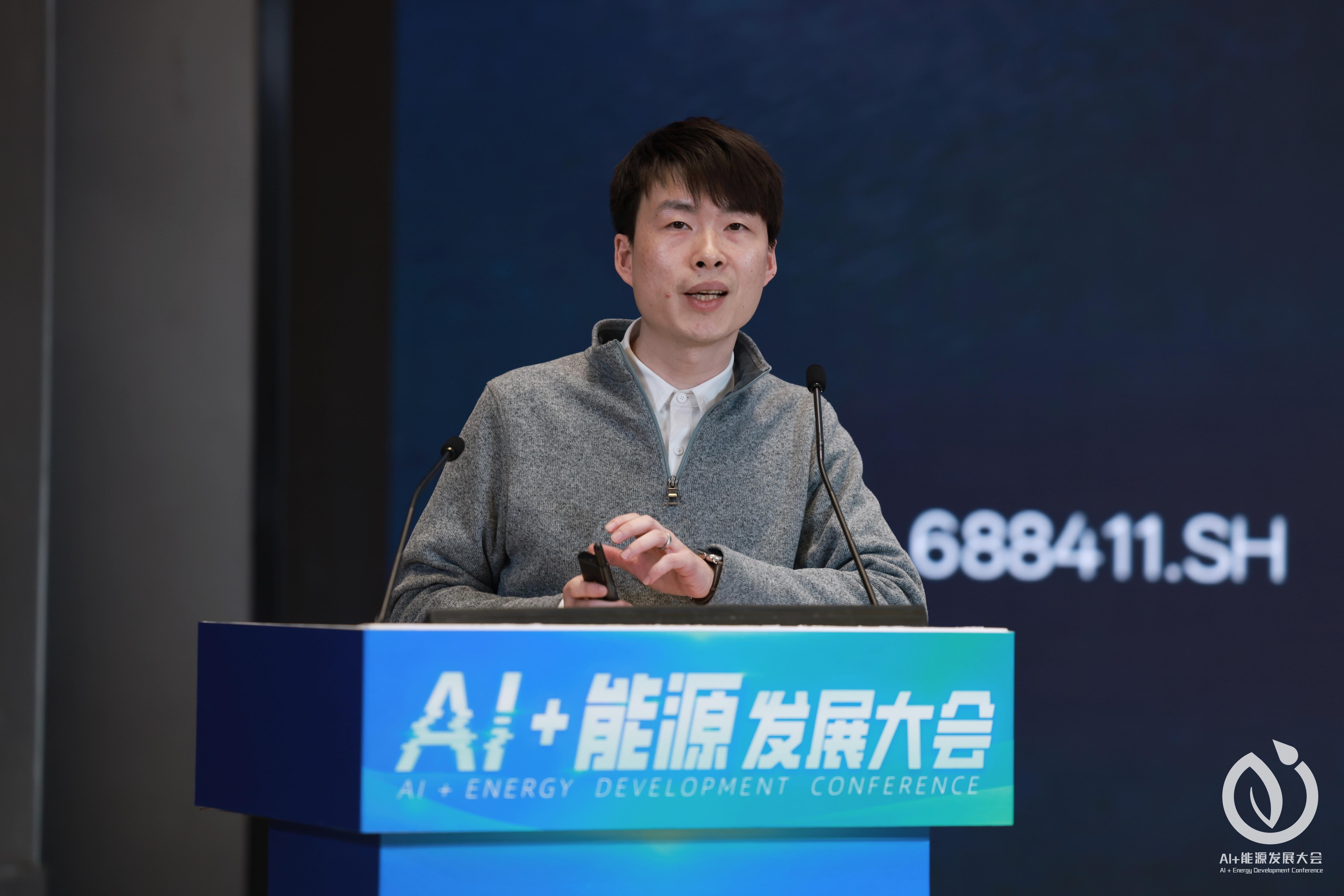
Core Insights - The "AI + Energy Development Conference" held in Beijing focused on exploring new paths and opportunities for the integration of AI and the energy industry, attracting over 300 representatives from government, energy companies, and experts [1] - Wang Jinsong, Chief Scientist of AI at Beijing Haibo Sichuang Co., emphasized the current limitations of AI applications in the energy sector, particularly in power and energy storage, where AI is primarily used for basic reporting and predictive maintenance rather than fully leveraging its potential [5] Industry Challenges - Wang identified five core pain points in the current application of AI in the energy storage sector: 1. Insufficient data quality and credibility hindering precise decision-making 2. High safety and operational standards in energy storage and grid sectors demanding rigorous AI output 3. Complexity of energy storage systems making AI solutions challenging 4. Balancing the cost of high-end AI models with their application value 5. Lack of clear decision-making hierarchies in AI, making it difficult to adapt to various energy storage and grid integration needs [6] Solutions and Innovations - To address these challenges, Wang proposed a "full-process, multi-scenario, and implementable" AI empowerment solution, highlighting Haibo Sichuang's transition from equipment supplier to power station operator, with significant projects like the 1GWh and 7.4GWh independent energy storage stations serving as practical examples [7] - The company has developed over 400 health indicators covering various levels of energy storage systems, optimizing operations to exceed industry averages, achieving a 20% reduction in auxiliary power consumption and a 3.5% improvement in overall performance [7] - Wang emphasized that AI empowerment in energy storage is not merely a single technology application but a comprehensive system that connects data seamlessly from the ground to the cloud, covering the entire chain from R&D to operation [8] Future Outlook - The future of AI in the energy storage sector is expected to play a more critical role in decision-making, with Haibo Sichuang committed to deepening the integration of AI and energy, accumulating practical experience to address industry pain points and promote more efficient, stable, and economically viable energy storage solutions [8]
用技术创新打开增量空间 长时储能解码能源未来
Xin Lang Cai Jing· 2026-02-13 00:18
Core Viewpoint - The energy storage industry is transitioning from "scale expansion" to "value reconstruction," driven by the rigid demand from new energy consumption and AI data centers, while facing challenges such as high costs and technological competition [1][7]. Group 1: Cost Reduction Strategies - The goal of achieving a storage cost of 0.1 yuan per kWh is not solely due to a single technological breakthrough but requires a collaborative innovation across the entire supply chain, including cells, systems, manufacturing, and services [2][9]. - The development of ultra-large battery cells is a key economic foundation, with a clear iterative path from 1175Ah to 1300Ah, resulting in over 30% reduction in system components and more than 50% cost reduction in key power components compared to traditional cells [3][10]. - Long-duration energy storage systems are essential for efficiency improvements, with optimized algorithms saving nearly 40 million yuan in electricity costs over a 25-year lifespan for a 1 GWh system [3][11]. - Extreme intelligent manufacturing supports cost control, with a 45% reduction in unit manufacturing costs at the Shandong base, enhancing both capacity and quality [3][11]. Group 2: Integrated Solutions and Market Expansion - The company has transformed from a equipment provider to an integrated solution provider, offering comprehensive solutions from project planning to operation, addressing core pain points such as deployment efficiency and space requirements [4][12]. - The promotion of long-duration energy storage solutions is seen as a key to breaking the cycle of price competition, potentially expanding market capacity from hundreds of GWh to 150 TWh, allowing companies to focus on innovation [5][12]. - The company’s lithium-sodium collaborative solution is designed to meet the growing energy storage demand in AI data centers, with projections indicating over 300 GWh of demand in this sector by 2030 [5][12]. Group 3: Future Technology and Global Strategy - The company predicts that lithium iron phosphate batteries will remain the mainstream technology in the next five years, while lithium-sodium collaboration will become common in ten years [6][13]. - The company has achieved mass production of sodium-ion batteries, which complement lithium batteries in extreme environments and power support scenarios, providing a resource-secure backup solution [6][13]. - The Texas factory has commenced local production, with Europe and Australia identified as key markets for expansion, leveraging grid-level system solutions and localized service networks to build competitive advantages [6][14].
全国统一电力市场体系建设 为相关产业带来发展机遇
Xin Lang Cai Jing· 2026-02-12 22:59
Core Viewpoint - The State Council has issued the "Implementation Opinions on Improving the National Unified Electricity Market System," aiming to establish a basic national unified electricity market system by 2030 and fully complete it by 2035 [1][5]. Group 1: Key Progress and Goals - Significant progress has been made in building the national unified electricity market system, with a goal to achieve a preliminary establishment by 2025 [1][5]. - The construction of the national unified electricity market system has been ongoing for several years, focusing on addressing key bottlenecks such as barriers between regional power grids and inter-provincial obstacles [2][6]. Group 2: Barriers and Solutions - Major barriers to the establishment of the unified electricity market include institutional obstacles, technical bottlenecks, and differences in market rules [2][6]. - Reforms are needed to shift from local protectionism to a unified national approach, accelerate the development of key technologies like smart grids and ultra-high voltage transmission, and unify market rules to ensure fair competition [2][6]. Group 3: Market Dynamics and Renewable Energy - The reform emphasizes the participation of renewable energy in market transactions, with a focus on integrating wind and solar power into the electricity market by 2025 [3][7]. - The introduction of green electricity and green certificate mechanisms will provide pathways for renewable energy to compete fairly in the market, enhancing the efficiency of energy consumption and system operation [3][7]. Group 4: Industry Impact - The establishment of a national unified electricity market will benefit various sectors, including power generation companies, grid companies, and the energy storage industry [4][8]. - Power generation companies will gain broader market access and improved operational efficiency, while grid companies will find new opportunities in network construction and maintenance [4][8]. - The energy storage industry will become increasingly important in addressing the intermittency of renewable energy, entering a phase of rapid development [4][8].
艾诺斯发布2026财年Q1业绩 战略重组与储能业务成焦点
Jing Ji Guan Cha Wang· 2026-02-12 16:29
Core Insights - The company reported a net sales of $893 million for Q1 of fiscal year 2026, representing a 5% year-over-year growth. Adjusted earnings per share were $2.08, also up by 5% [1] Strategic Initiatives - The company is implementing a strategic restructuring named "Energize," which includes optimizing the organizational structure by reducing 11% of non-productive employees, expected to save $80 million annually [2] Performance Outlook - Management indicated that short-term performance is impacted by tariff uncertainties, but improvements are anticipated starting from Q2. The focus will be on whether the Q2 financial report meets growth expectations, particularly from the energy storage and lithium battery technology segments [3] Business and Technology Development - The company aims to accelerate growth by focusing on energy storage and lithium battery technology. Future tracking will involve order acquisition, R&D investment, and market expansion progress [4] Financial Condition - The first quarter free cash flow was -$32 million, primarily due to seasonal factors and increased inventory. Management expects improvement in subsequent quarters [5]
