电信运营

Search documents
消费维权不知道找谁?这五大正规投诉渠道请收好
Xin Lang Cai Jing· 2025-12-16 08:25
在日常生活中,无论是网购遇到假货、外卖吃到异物,还是服务体验不满意,很多消费者在面对消费纠 纷 【下载黑猫投诉客户端】时,第一反应往往是茫然:"我要投诉该去哪里?"实际上,我国已经建立 了较为完善的消费维权体系,提供了多种正规、有效的投诉渠道。掌握这些途径,不仅能帮助您维护自 身权益,还能在维权过程中节省时间和精力。 一、官方投诉渠道:最权威的维权选择 官方渠道由政府主管部门设立,具有最高的权威性和法律效力,是解决严重侵权问题的首选。 1. 全国12315平台 这是国家市场监督管理总局主办的官方投诉举报平台,覆盖全国所有消费领域。您可以通过其官 方网站、手机APP、微信小程序或支付宝小程序等多种方式提交投诉。12315平台的特点在于:投 诉信息会直接转交到被投诉企业所在地的市场监管部门处理,对于查实的违法行为,监管部门可 以依法进行行政处罚。适合处理涉及产品质量、价格欺诈、虚假宣传等较为严重的消费纠纷。 2. 12345政务服务便民热线 很多地区已将12315热线整合到"12345"政务服务便民热线中。拨打12345电话,您可以咨询或反映 包括消费纠纷在内的各类民生问题。接线员会根据您的问题类型,将工单转派到 ...
智通港股通持股解析|12月16日
智通财经网· 2025-12-16 00:37
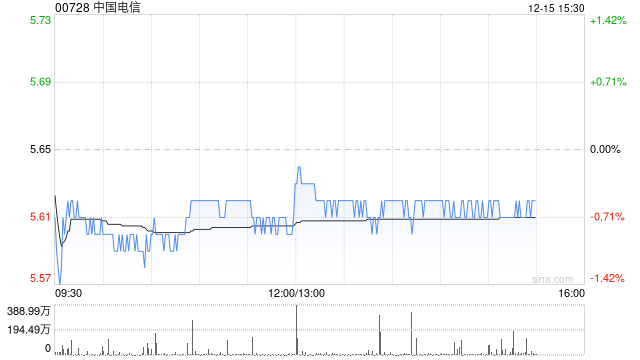
根据2025年12月15日披露数据,中国电信(00728)、绿色动力环保(01330)、大眾公用(01635)位 居港股通持股比例前3位,分别为72.41%、70.03%、69.99%。此外,小米集团-W(01810)、招商银 行(03968)、美团-W(03690)在最近有统计数据的5个交易日内,持股额增幅最大,分别为+21.69亿 元、+19.12亿元、+10.96亿元;盈富基金(02800)、中芯国际(00981)、中国海洋石油(00883)在最 近有统计数据的5个交易日内,持股额减幅最大,分别为-15.25亿元、-9.34亿元、-7.82亿元。 具体数据如下(交易所数据根据T+2日结算): 1、港股通最新持股比例排行(前20名) | 公司名称 | 持股数量 | 最新持股比例 | | --- | --- | --- | | 中国电信(00728) | 100.50亿股 | 72.41% | | 绿色动力环保(01330) | 2.83亿股 | 70.03% | | 大眾公用(01635) | 3.74亿股 | 69.99% | | 凯盛新能(01108) | 1.70亿股 | 68.03% | | 天津 ...




中国联通(600050.SH):联通创投参与出资诚通科创(江苏)基金
Ge Long Hui· 2025-12-15 14:02
Group 1 - China Unicom (600050.SH) announced that Unicom Venture Capital participated in the investment of the Chengtong Science and Technology Innovation (Jiangsu) Fund, which is a corporate fund [1] - Unicom Venture Capital subscribed for 100 million yuan in fund shares, accounting for 10% of the total fund [1] - The total transaction amount is 100 million yuan, with the funding sourced from Unicom Venture Capital's own funds [1]

中国联通(600050.SH)下属公司拟出资10亿元参投诚通科创(江苏)基金
智通财经网· 2025-12-15 13:10
Core Viewpoint - China Unicom (600050.SH) announced that its wholly-owned subsidiary, Unicom Innovation and Entrepreneurship Investment Co., Ltd. (referred to as "Unicom Venture Capital"), has invested 1 billion yuan in the Chengtong Science and Technology Innovation Investment Fund (Jiangsu) Co., Ltd. [1] Investment Details - The investment amount is 1 billion yuan [1] - The fund primarily focuses on sectors such as new materials, high-end equipment manufacturing, new generation information technology, new energy, life health, and nuclear-related fields [1] - The fund also targets strategic emerging industry clusters and future industries that are key to development in Jiangsu Province [1]
中国联通:联通创投拟出资10亿元参与诚通科创(江苏)基金 基金主要投向新材料、核相关等领域
Mei Ri Jing Ji Xin Wen· 2025-12-15 13:01
Core Viewpoint - China Unicom (600050.SH) announced that its wholly-owned subsidiary, Unicom Venture Capital, plans to invest 1 billion yuan in the Chengtong Science and Technology (Jiangsu) Fund, acquiring a 10% stake in the fund [1] Group 1 - The fund primarily targets investments in new materials, high-end equipment manufacturing, new generation information technology, new energy, life health, and nuclear-related fields [1] - The fund also focuses on strategic emerging industry clusters and key future industries that are prioritized for development in Jiangsu Province [1]
中国联通:联通创投参与出资诚通科创(江苏)基金 交易总额10亿元
Xin Lang Cai Jing· 2025-12-15 13:00
Core Viewpoint - China Unicom announced its investment in the Chengtong Science and Technology Innovation (Jiangsu) Fund, acquiring a 10% stake with an investment of 100 million yuan [1] Group 1: Investment Details - The total transaction amount is 100 million yuan, sourced from China Unicom's own funds [1] - The investment represents 0.5% of the company's audited net assets as of the end of 2024, but does not exceed 5% [1] - The transaction is classified as a related party transaction under the Shanghai Stock Exchange listing rules [1] Group 2: Approval Process - The transaction requires approval from the company's board of directors, the audit and risk committee, and independent directors, but does not need to be submitted for shareholder approval [1] - The company has completed its internal review process for the transaction [1]
中国联通:下属公司10亿元参与认购诚通科创(江苏)基金
Zheng Quan Shi Bao Wang· 2025-12-15 12:57
Core Viewpoint - China Unicom announced that its wholly-owned subsidiary, Unicom Innovation and Entrepreneurship Investment Co., Ltd., will invest 1 billion yuan in the Chengtong Science and Technology Innovation (Jiangsu) Fund, focusing on strategic emerging industries and future industries supported by Jiangsu Province [1] Investment Details - The investment amount is 1 billion yuan, which is approximately 142 million USD [1] - The fund will primarily invest in sectors such as new materials, high-end equipment manufacturing, new generation information technology, new energy, life health, and nuclear-related fields [1] - The investment aligns with Jiangsu Province's strategic support for emerging industry clusters and key future industries [1]
中国电信接待9家机构调研,包括中金公司、华泰证券、摩根士丹利等
Jin Rong Jie· 2025-12-15 10:43
2025年12月15日,中国电信披露接待调研公告,公司于12月4日接待中金公司、华泰证券、摩根士丹 利、中银国际、农银国际等9家机构调研。 公告显示,中国电信参与本次接待的人员共8人,为投资者关系部总经理王立宾,市场部副总经理沈骏 祥,财务部副总经理吴晶,云网发展部副总经理毛东峰,科技创新部副总经理史凡,资本运营部副总经 理唐旭,天翼云科技有限公司副总经理朱丽,中电信人工智能科技(北京)有限公司副总经理、总法律顾 问张雪红。调研接待地点为广州。 据了解,中国电信将推动"云改数转"向"云改数转智惠"战略升级,重点从四方面挖掘战新业务价值:全 面拥抱下一代人工智能,将其置于战略核心,推动自身流程重塑及对外赋能;聚焦网络、云及云网融合 等四大根技术与七大战新领域,加大投入形成标志性成果,提升关键技术自主可控能力;基础业务稳健 与战新业务突破并举,打造云网融合新型基础设施;推动产业数字化业务价值提升,促进AI与行业场 景融合及解决方案升级。同时,公司已全面启动"十五五"规划编制,将重点发力战略升级、未来产业布 局、科技创新能力强化、国际业务拓展、资本开支向战新领域倾斜等方向,坚定"科技型、服务型、安 全型"定位。 在 ...

中国移动发布“6G传输系统原型样机1.0”
Huan Qiu Wang· 2025-12-15 09:21
Core Insights - China Mobile has officially released the "China Mobile 6G Transmission Technology White Paper" and the "China Mobile 6G Transmission System Prototype 1.0" [1] Group 1: White Paper Overview - The white paper outlines China Mobile's vision for 6G transmission networks, focusing on the transition from "connection" to "beyond connection" [2] - It emphasizes the integration of three key elements: "dynamic intelligence, multi-dimensional collaboration, and all-domain security" to construct an integrated 6G intelligent collaborative transmission network architecture [2] - The proposed architecture includes four layers: business perception layer, collaborative transmission packet layer, collaborative transmission channel layer, and collaborative transmission medium layer [2] Group 2: Prototype System Features - The "China Mobile 6G Transmission System Prototype 1.0" serves as a core carrier for the concepts outlined in the white paper, validating three core capabilities [2] - The first capability is business perception-driven intelligent connection, which can accurately identify traffic characteristics and dynamically deploy transmission strategies to avoid resource waste [2] - The second capability is distributed dynamic channel control, which quickly establishes agile transmission channels for high-dynamic business scenarios, significantly improving response speed [2] - The third capability is multi-dimensional channel collaborative transmission, which meets the latency coordination requirements among multiple business streams, ensuring efficient parallel transmission of various services [2] - The release of the prototype marks a significant step from theoretical research to system validation, laying a crucial foundation for future technological iterations and industry collaboration [2]


信达证券:中国电信属较优质的派息股选择 评级为“买入”
Xin Lang Cai Jing· 2025-12-15 07:31
信达证券发布研报称,中国电信(00728)2025年前三季度集团收入与利润均实现温和增长,但第三季 度盈利增速略有放缓。旗下天翼云业务处于新旧动能转换期,通用云计算收入增速下降,但智能算力相 关收入前三季度同比大幅增长62.3%。展望未来,政府推动科技创新的政策或鼓励政企客户采用AI相关 云计算,为天翼云带来机遇。推荐评级为"买入"。 信达证券主要观点如下: 2025年第三季度盈利保持温和增长 2025年前三季度,集团收入同比小幅上升0.6%,其中服务收入同比增长0.9%;EBITDA同比增长4.2%, 股东应占利润同比增长5.0%。单计第三季度,集团收入同比小幅下跌0.9%,其中服务收入同比增长 0.5%;EBITDA同比增长2.4%,股东应占利润同比增长3.6%。第三季度盈利增长略有放缓,主要受宏观 经济影响。 2025年天翼云处于新旧动能转换阶段,收入增速放缓 信达证券主要观点如下: 2025年第三季度盈利保持温和增长 集团在第三季度财报中未披露旗下天翼云的收入。2025年上半年,天翼云收入为573亿元人民币,同比 增长3.8%,增速较以往有所放缓。对此,管理层表示,全球云计算行业正处于新旧动能转换的关 ...