
Semiconductors

Search documents
Arm’s New Gambit: Building Chips to Challenge the AI Titans
Investing· 2026-03-27 06:59
Core Viewpoint - Arm Holdings has made a significant strategic shift by launching its first in-house silicon product, the Arm AGI CPU, which has led to a surge in its stock price and market capitalization, indicating a new growth trajectory for the company [1][2][3]. Group 1: Strategic Shift - The introduction of the Arm AGI CPU marks Arm's transition from a licensing model to manufacturing its own chips, allowing it to capture the full revenue potential of its products [4][5]. - This pivot positions Arm to compete directly in the data center market, traditionally dominated by Intel and AMD, by addressing the critical issue of energy consumption in AI applications [6][12]. Group 2: Market Validation and Partnerships - Arm's partnership with Meta Platforms as the lead partner and co-developer of the AGI CPU provides significant technological validation and a guaranteed order book, reducing commercial launch risks [7][10]. - Additional commitments from industry leaders like OpenAI and Cloudflare enhance the product's credibility and encourage broader adoption within the software and hardware ecosystems [8][9]. Group 3: Financial Outlook - Arm's leadership has set a long-term revenue target of $15 billion annually by 2031 for its new silicon business, indicating a transformative potential for its financial profile [11]. - Analysts have begun to revise their outlooks positively, with firms like Guggenheim and Raymond James raising price targets and ratings, reflecting newfound confidence in Arm's growth prospects [14][15].




Exclusive: Huawei's new AI chip find favour with ByteDance, Alibaba which plan to place orders, sources say
Reuters· 2026-03-27 06:53
Core Insights - Huawei's new AI chip, the 950PR, has received positive feedback during customer testing, with major tech companies like ByteDance and Alibaba planning to place orders [1][4] - The 950PR chip is designed to be more compatible with Nvidia's CUDA software system, addressing previous adoption challenges faced by Huawei's Ascend 910C chip [3][9] - Demand for AI inference computing in China is increasing as the tech sector shifts focus from model development to real-world applications [10] Company Developments - Huawei plans to ship approximately 750,000 units of the 950PR chip this year, with mass production expected to begin next month [4] - The 950PR chip is priced at around 50,000 yuan ($6,900) for the standard version and 70,000 yuan for a premium version with faster HBM memory [7] - The new chip is expected to enhance the ability of Chinese tech firms to migrate their models from Nvidia's software system, which has been widely used [9] Industry Context - The launch of the 950PR comes at a challenging time for Nvidia in China, as many of its AI chips face sales restrictions due to U.S. government concerns [5] - The approval of Nvidia's H200 chips by Chinese authorities remains uncertain, impacting the competitive landscape for AI chips in the region [6]


Broadcom (AVGO) Powers the AI Boom — Bullish despite the Pullback
Yahoo Finance· 2026-03-27 06:50
Core Insights - Broadcom is a critical player in the AI infrastructure market, providing essential components that support the growth of artificial intelligence technologies [1][2] - Despite a recent stock decline of over 24% from December 2025 highs, Broadcom's stock has increased by more than 62% in the past year, indicating strong underlying performance [1] - The company's involvement in custom AI silicon, high-speed networking, and infrastructure software is deepening as hyperscalers expand their capabilities [1] Custom AI Infrastructure - Broadcom is not merely benefiting from AI trends but is becoming a vital supplier in the custom AI infrastructure market, particularly through its application-specific integrated circuits (ASICs) [2][3] - The company has established itself as a preferred partner for hyperscalers seeking alternatives to standard computing solutions, which is indicative of long-term revenue potential tied to extensive product cycles and customer reliance [3] Networking Capabilities - Broadcom's networking business, which includes switches, digital signal processors (DSPs), and interconnect technologies, is crucial for managing large data flows within AI clusters [4][5] - As AI systems become more complex, the need for efficient networking solutions is increasing, positioning Broadcom's products as integral to the architecture of scalable AI systems [6] Market Positioning - The company believes that copper connectivity remains efficient for certain applications, suggesting that the market may be underestimating the longevity of its current product offerings [7] - This perspective indicates that Broadcom has additional time to capitalize on its existing connectivity solutions before a full transition to optical technologies occurs [7]

【买卖芯片找老王】260327 华邦/ADI/飞索半导体/扬杰/安世/风华/罗姆/村田
芯世相· 2026-03-27 06:48
Core Viewpoint - The article discusses the challenges of managing excess inventory in the semiconductor industry, highlighting the financial burden of storage and capital costs associated with unsold materials, while promoting a service that facilitates quick transactions for surplus stock [1][9]. Group 1: Inventory Management - A significant amount of excess inventory, specifically 100,000 units, is causing financial strain due to monthly storage and capital costs of at least 5,000, leading to a potential loss of 30,000 if held for six months [1]. - The company offers a platform, "Chip Superman," which has served 22,000 users, to help sell excess inventory quickly, often completing transactions within half a day [9][10]. Group 2: Inventory Listings - The article lists various semiconductor components available for sale, including brands like Winbond, Infineon, and Micron, with quantities ranging from 1,728 to 576,000 units across different models [4][5][6]. - Specific components include Winbond's W25Q16JVBYIQ with 90,000 units and Micron's MT25QL256ABA1EW9 with 5,760 units, showcasing a diverse inventory [4][5]. Group 3: Demand for Components - The article also includes a request for specific components, indicating ongoing demand in the market, such as 12,000 units of Infineon's TDA22594A and 20,000 units of ST's LSM6DSOTR [7]. - This demand reflects the dynamic nature of the semiconductor market, where certain components are sought after, indicating potential investment opportunities [7]. Group 4: Warehouse and Quality Control - The company operates a 1,600 square meter smart warehouse with over 1,000 models and a total inventory of 50 million chips, valued at over 100 million [8]. - Each component undergoes quality control checks in an independent laboratory, ensuring reliability for customers [8].

Intel and AMD Stocks Rise on CPU Price Hike Reports
Investing· 2026-03-27 06:48
Core Insights - Intel and AMD stocks have surged significantly due to credible reports of impending price hikes for their central processing units (CPUs), with Intel rising over 7% and AMD more than 6% in a single day [1][2] Market Dynamics - The price increases are indicative of a fundamental shift in the technology supply chain, where semiconductor designers are gaining negotiating power over large-scale PC and server vendors, marking the end of an era where vendors held significant leverage [2][4] - The demand for computational power, particularly driven by the AI arms race, is creating a structural change in the market, leading to a supply squeeze that affects the availability of processors across all segments [3][4] Company Strategies - AMD is leveraging its pricing power to enhance its position in the data center market, with a reported revenue surge of over 39% year-over-year and a gross margin of approximately 51.5% [6][7] - The price hikes for AMD are expected to directly increase margins and free cash flow, providing resources for further investment in its GPU lineup to compete with NVIDIA [7][8] - Intel's price increases are crucial for its turnaround strategy, providing necessary funding for its IDM 2.0 initiative aimed at regaining manufacturing leadership and establishing a foundry business [9][10] Long-term Outlook - The re-emergence of pricing power among semiconductor designers is seen as a durable catalyst for both Intel and AMD, supporting a bullish outlook for their stocks [12] - Upcoming earnings calls are anticipated to provide insights into gross margin expansion, with a focus on AMD's ability to maintain momentum in the data center market and Intel's execution of its foundry roadmap [13]

Chinese universities with military links bought Super Micro servers with restricted AI chips
Reuters· 2026-03-27 06:16
Core Viewpoint - Four Chinese universities, including two linked to the People's Liberation Army (PLA), purchased Super Micro servers equipped with restricted AI chips over the past year, despite U.S. restrictions on advanced processor sales to China [1][4]. Group 1: Purchases and Restrictions - The U.S. has been banning the sale of certain Nvidia chips, such as the A100, to China since 2022 due to concerns about enhancing military capabilities [2]. - Chinese universities have previously acquired restricted chips in servers from Super Micro and other manufacturers, raising concerns among U.S. lawmakers, especially regarding institutions linked to the PLA [4]. - Two additional universities, including one with military ties, sought to purchase similar Super Micro servers, although it remains unclear if these purchases were successful [6]. Group 2: Legal and Political Context - Three individuals associated with Super Micro were charged with smuggling at least $2.5 billion worth of U.S. AI technology to China, although the company claims it was a victim of an elaborate scheme [3]. - Following the indictments, U.S. senators urged the Commerce Secretary to pause all export licenses for advanced Nvidia AI chips and server systems to China and Southeast Asia intermediaries [5]. - The Trump administration had previously approved the sale of Nvidia's H200 chips to China under certain conditions, but there have been no confirmed sales yet [10]. Group 3: Implications and Concerns - Critics express concerns that sales of U.S. AI chips to China could accelerate military research and development, potentially enhancing China's weapons design and military capabilities [11]. - Beihang University and Harbin Institute of Technology, both linked to the PLA and on a U.S. export blacklist, have procured Super Micro systems with multiple Nvidia A100 chips [12][13].


Micron Stock: Did the AI Memory Leader Just Peak?
The Motley Fool· 2026-03-27 04:30
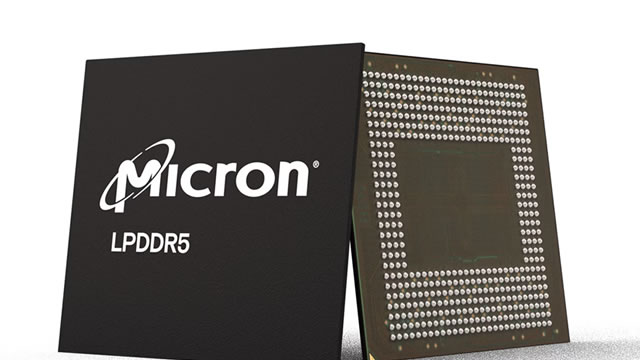
Core Viewpoint - Micron's stock has experienced a significant decline of 23% following a strong earnings report, driven by concerns over the sustainability of the memory boom, geopolitical tensions, and emerging competition from new technologies [1][2]. Company Performance - Micron reported a remarkable increase in revenue, tripling its revenue and nearly increasing net income by 10 times, yet the stock has seen a decline due to its previous high valuation, with a market cap exceeding $500 billion before the drop [3][5]. - The company is projected to achieve revenue of $33.5 billion in the third quarter, up from $23.9 billion in the second quarter, with adjusted earnings per share expected to rise to approximately $19.15 from $12.20 [6]. Market Dynamics - The memory sector is characterized by cyclical trends, with historical patterns indicating that stock peaks often precede profit plateaus [9]. - The introduction of Google's TurboQuant technology poses a potential risk to Micron, as it may enhance AI storage efficiency and reduce memory requirements [2]. Future Outlook - Analysts predict continued profit growth for Micron over the next several quarters, with expectations of earnings per share reaching $58 this year, resulting in a forward price-to-earnings ratio of just 6 [11]. - The current sell-off may be viewed as part of the inherent volatility in the memory sector, and if profit growth persists, a rebound in Micron's stock is anticipated [12].

超760万元奖金悬赏,谁能徒手重构 DeepSeek 与 Kimi 的性能底层?
AI科技大本营· 2026-03-27 04:12
Core Viewpoint - The article discusses the launch of the 2026 online hackathon: AMD E2E Model Speedrun Global Challenge, aimed at optimizing the performance of large-scale models in response to increasing demands for low latency and high throughput in AI applications [2][12]. Group 1: Event Overview - The hackathon is organized by AMD in collaboration with GPU MODE, offering a total prize pool of $1.1 million [2]. - The competition consists of two phases: a preliminary round and an end-to-end final exam, with significant rewards for participants [8][12]. Group 2: Competition Structure - In the preliminary round, the top 10 winners will each receive $10,000 and a ticket to the finals [8]. - Participants must optimize three core GPU kernels: MXFP4 MoE, MLA Decode, and MXFP4 GEMM, with maximum scores of 1500, 1250, and 1000 points respectively [10]. Group 3: Performance Metrics - The competition emphasizes performance metrics, requiring participants to exceed official baseline scores to be eligible for points [10]. - The scoring formula is based on the ranking of participants, with a geometric mean of all benchmark cases determining the final score [10]. Group 4: Final Competition - The final competition will distribute a total of $1 million in cash prizes, with participants able to compete in two tracks: DeepSeek-R1-0528 (FP4+MTP) and Kimi K2.5 1T (FP4) [12]. - The top teams from the preliminary round will gain access to AMD's flagship computing clusters for a month to maximize model performance [12]. Group 5: Key Dates - The preliminary round runs from March 7 to April 7, with a critical countdown for participants to optimize their models [16]. - The final competition will take place from April 8 to May 16, culminating in a global awards ceremony on May 19 [17].

AI算力狂飙的下一站:Micro LED CPO
TrendForce集邦· 2026-03-27 04:09
Core Viewpoint - The Micro LED Co-Packaged Optics (CPO) technology is gaining significant attention as a next-generation short-distance optical interconnect solution, driven by the increasing demand for AI computing power and the limitations of traditional copper cabling [2][3][4]. Group 1: AI Computing and Interconnect Challenges - The emergence of Micro LED CPO addresses the challenges posed by the exponential growth in AI computing power, particularly in intelligent computing clusters and data centers [2]. - According to a white paper by China Mobile, the parameter scale of intelligent computing clusters is expected to grow by 400 times every two years, while chip computing power will increase by three times in the same period [2]. - In contrast, the speed of computer interconnects is only expected to increase by 1.4 times every two years, creating a significant bottleneck in communication efficiency [2]. Group 2: Transition from Copper to Optical Interconnects - The demand for high-speed data transmission in data centers is leading to a shift from traditional copper cabling, which has reached its limits in terms of speed, power consumption, and physical space [3][4]. - The industry is actively seeking to transition to optical interconnect technologies, with Micro LED CPO positioned as a promising alternative due to its potential for high bandwidth and low power consumption [3][4]. Group 3: Understanding CPO and Micro LED CPO - CPO technology integrates optical engines directly with computing chips on the same substrate, significantly reducing the distance for electrical signal transmission from centimeters to millimeters, thus enhancing interconnect bandwidth density and reducing power consumption by approximately 50% [5][10]. - TrendForce predicts that the penetration rate of CPO in AI data center optical communication modules will grow annually, potentially reaching 35% by 2030 [6]. Group 4: Advantages of Micro LED CPO - Micro LED CPO offers unique advantages, including a "wide and slow" architecture that allows for high-density two-dimensional arrays, enabling parallel data transmission through numerous low-speed channels [12][13]. - The energy efficiency of Micro LED CPO is significantly higher, with energy consumption as low as 1 to 2 pJ/bit, compared to over 10 pJ/bit for traditional copper cabling, thus alleviating heat dissipation and operational costs in data centers [13]. - Micro LED technology supports high bandwidth density exceeding 1 Tbps/mm², making it suitable for the demanding data transfer requirements of GPU clusters [13]. Group 5: Global Industry Landscape for Micro LED - The Micro LED technology is attracting investments and collaborations from various companies, including Mojo Vision and Marvell, as well as domestic players like BOE and Sanan Optoelectronics, indicating a robust interest in the development of Micro LED optical interconnect solutions [15][16][17]. - Companies are forming strategic partnerships to enhance their capabilities in Micro LED technology, focusing on low-power, high-bandwidth optical interconnect modules suitable for intelligent computing centers [18][20]. Group 6: Future Outlook - Despite the promising potential of Micro LED optical interconnect technology, challenges remain in scaling from laboratory development to mass production [23]. - Analysts predict that small-scale commercial applications of this technology could be realized between 2026 and 2027, marking a significant milestone in the evolution of data center architectures [23].
Arm Holdings Stock Soars As Company Targets $15 Billion In Annual Sales From New In-House Chip
Yahoo Finance· 2026-03-27 03:31
Core Viewpoint - Arm Holdings Plc shares are experiencing significant growth following the announcement of aggressive sales targets for its new in-house chip, aiming for $15 billion in annual sales within five years [1][2][3]. Group 1: Sales Targets and Financial Projections - Arm Holdings announced plans to sell its own AGI CPU chips, with Meta Platforms Inc as the first major customer [2]. - The company expects the new chip to generate approximately $15 billion in annual sales within five years, which would exceed current operational sales [3]. - When combined with existing business sales, Arm anticipates achieving $25 billion in annual sales within the next five years, with earnings projected to grow to around $9 per share [3]. Group 2: Product Specifications and Development - The new chip will feature up to 136 cores and consume 300 watts of electricity, developed in response to customer demand [4]. - Taiwan Semiconductor Manufacturing Co is set to produce the chips for Arm [4].