
Robotics

Search documents
“AI+机器人”领军企业极智嘉深度融入国家战略,加速建设具身智能生态
Ge Long Hui· 2026-02-04 08:20
大会期间,极智嘉与梅卡曼德、遨博、中关村机器人、罗克韦尔自动化、中国银行等产业链企业与机构 代表分享实践与观点,释放出产业各方携手推动智能机器人技术与应用纵深发展的积极信号。 业内人士指出,本次极智嘉总部揭牌暨具身智能机器人产业生态的成功举办,标志着一个以具身智能机 器人为核心,汇聚全球智慧、贯通产业链条的创新生态,正在雄安新区这片热土上蓬勃兴起,智创未 来。 以"雄安新程・智创未来"为主题的极智嘉总部揭牌暨具身智能机器人产业生态大会今日在雄安举行。极 智嘉与雄安新区、雄安集团、中国银行等相关方领导及机器人产业链企业代表等近百位嘉宾齐聚现场, 共同见证极智嘉总部揭牌,共筑机器人产业协同发展新格局。 极智嘉总部正式揭牌,标志着公司深度融入雄安新区国家战略,开启以雄安为全新起点、赋能全球智能 物流发展的新篇章,并推动AI+机器人技术发展与商业应用的双重突破,加速从全球仓储机器人领军 者,转型为具身智能产业生态的引领者。 依托雄安集聚的顶尖算力、多元场景与产学研网络,极智嘉将获得更充沛、低成本的算力资源与实体应 用场景支持,有望大幅降低研发的边际成本,还将进一步加速具身智能基础模型算法的研发和训练,扩 大机器人数据 ...

大洋集团(1991.HK)AI机器人战略正式开启,工业底蕴与数字人技术释放智能潮玩商业价值
Sou Hu Wang· 2026-02-04 07:53
Core Viewpoint - The strategic partnership between Ocean Group Holdings Limited and Consciousness Foundation Ltd. aims to develop the "Silicon Buddy" AI companion robot under the X-Mart brand, marking a significant advancement in the company's Web 4.0 strategy by transitioning AI technology from virtual digital humans to physical smart hardware [1][4]. Group 1: Strategic Partnership - The collaboration is a key move in Ocean Group's transformation from traditional manufacturing to a Web 4.0 digital ecosystem builder, with clear division of roles and complementary strengths to accelerate the development and market launch of AI robotic products [2][4]. - Ocean Group will leverage its core competencies to provide comprehensive AI technology support and a mature smart hardware supply chain, including multi-modal interaction algorithms, emotional perception systems, and backend data platform development [2][3]. - Consciousness Foundation Ltd. will contribute its established consumer product design team and global sales channels, responsible for the creative design, terminal operations, and market promotion of the AI robot, ensuring rapid product scaling with existing order resources [2][3]. Group 2: Technological and Industrial Foundation - Ocean Group has a solid foundation with 30 years of experience in silicone core component manufacturing, creating an integrated production system and global supply chain capabilities essential for smart hardware mass production [3]. - The company initiated AI technology research and development in 2023, forming a specialized AI digital division that has established a core barrier in the AI digital human field, validating its self-developed data-asset-value (DAT) model in various sectors [3]. - The integration of digital human multi-modal interaction and emotional recognition technologies into physical robots completes the industrial loop for the company's AI technology deployment [3]. Group 3: Market Potential and Future Plans - The global digital economy is entering an AI-driven industrial upgrade cycle, with the AI smart hardware market experiencing explosive growth, making this partnership a crucial step for Ocean Group to break traditional business boundaries and implement its Web 4.0 strategy [4]. - The collaboration is expected to facilitate rapid product monetization and assist the company in accelerating its transformation into an AI smart hardware and digital ecosystem enterprise [4]. - Future plans include leveraging the joint venture to promote the global rollout of X-Mart robots and exploring the integration of AI robots with Real World Asset (RWA) tokenization, thereby broadening the value boundaries and enhancing the company's core competitiveness and long-term profitability [4].

创投月报 | 东方富海:四只新基金合募6.3亿 1月投资活跃度创近一年新高
Xin Lang Cai Jing· 2026-02-04 07:21
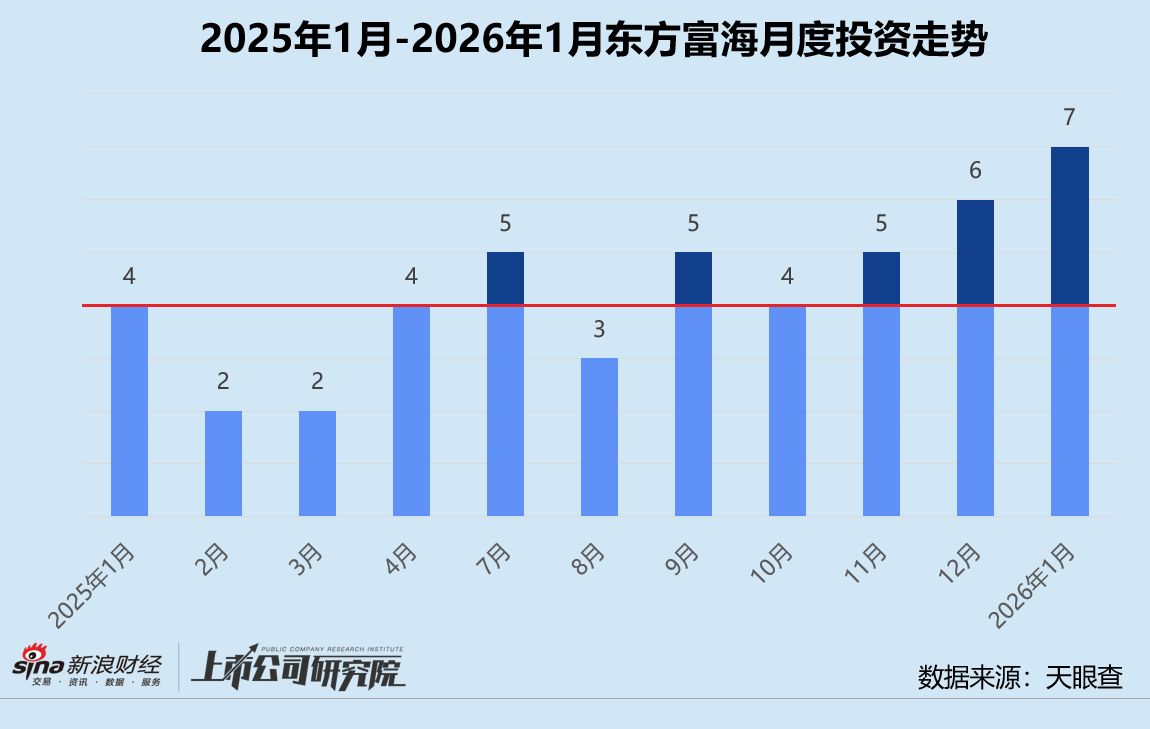
Core Insights - In January 2026, the number of newly registered private equity and venture capital fund managers decreased by 62.5% year-on-year and month-on-month, with a total of 8 new registrations [1][13] - The total number of newly filed private equity and venture capital funds was 548, a decrease of 20.6% compared to December 2025, but a significant increase of 66.1% compared to January 2025 [1][13] - The domestic primary market saw 644 equity investment events in January 2026, with a total disclosed investment amount of approximately 52.999 billion yuan, reflecting a year-on-year increase of 2.1% and a 55.5% increase compared to the same month in 2025 [1][13] Investment Trends - The average single investment amount in January 2026 was approximately 82.296 million yuan, showing a year-on-year increase of 52.5% and a month-on-month increase of 6.0% [1][13] - The investment activities of Dongfang Fuhai, a prominent investment institution, included 7 disclosed equity investment events in January 2026, marking a 75.0% increase compared to the same month in 2025 and a 16.7% increase from December 2025 [3][16] - Dongfang Fuhai's investment strategy involves 80% of funds allocated to early and growth-stage companies, focusing on A and B rounds, while 20% is directed towards mature companies [2][15] Sector Focus - In January 2026, Dongfang Fuhai's investments were heavily concentrated in the artificial intelligence and manufacturing sectors, each accounting for 42.9%, together exceeding 85% of total investments [7][21] - The institution's investment strategy reflects a focus on hard technology and industrial upgrades, particularly in the integration of artificial intelligence and manufacturing, aligning with national strategic and industrial transformation trends [7][21] Geographic Distribution - Dongfang Fuhai's investments are primarily concentrated in Shanghai and Shenzhen, with over 70% of the invested companies located in these economically active regions [9][23] - The institution is also expanding its investment footprint into Sichuan and Anhui, indicating a strategy that extends from the Yangtze River Delta and Pearl River Delta into potential growth areas in central and western China [9][23] Notable Investment Case - The humanoid robot company LimX Dynamics announced a successful B round financing of 200 million USD, with participation from multiple investors including Dongfang Fuhai [12][25] - LimX Dynamics focuses on developing full-size general-purpose humanoid robots and has created several innovative products, leveraging core technologies in hardware design, motion control, and intelligent systems [12][25]

苏州灵猴机器人获超亿元融资!机器人ETF (562500)尾盘回升
Mei Ri Jing Ji Xin Wen· 2026-02-04 07:08
Group 1 - The Robot ETF (562500) is currently experiencing a low-level consolidation, with a recent price of 1.064 yuan, down 0.840% from the opening price, but the decline has narrowed during the day [1] - Among the 66 constituent stocks tracked by the ETF, 46 have declined, but the overall decline is moderate, with no significant drop dragging down the index. Notable declines include Ruishun Technology, Lide Harmony, and Kuaike Intelligent, each down over 3%, while Keri Technology rose over 5% [1] - The trading volume of the Robot ETF reached 866 million yuan, with a turnover rate of 3.50%, indicating moderate trading activity [1] Group 2 - The Robot ETF (562500) is the only robot-themed ETF in the market with a scale exceeding 20 billion yuan, covering various segments such as humanoid robots, industrial robots, and service robots, allowing investors to easily access the entire robot industry chain [2] - Following the adjustment of constituent stocks, the humanoid robot content in the index tracked by the Robot ETF has increased to nearly 70%, successfully removing underperforming stocks and including quality stocks that have performed well, achieving a "retain the strong, remove the weak" strategy [2]
清华研发柔性数字存算芯片取得突破!机器人ETF(562500)低位整理,科瑞技术逆势领涨
Mei Ri Jing Ji Xin Wen· 2026-02-04 06:00
(文章来源:每日经济新闻) 截至13:42,机器人ETF(562500)午后维持低位区间整理。最新价报1.053元,较开盘价下跌1.772%。 持仓股方面,该ETF跟踪的成分股共66只虽58只走跌,但整体跌势温和,涨跌幅均相对有限,昊志机 电、绿的谐波、昊志机电下跌超4%,无标的出现深跌拖累。科瑞技术大涨超6%,盈峰环境、柏楚电子 上涨形成一定支撑。流动性层面,机器人ETF(562500)成交额达6.36亿元,换手率2.56%,成交活跃 度适中。当前指数低位整理期间承接稳固,且有核心标的领涨形成支撑,回调无极端走弱迹象,可把握 此次低吸机会,小仓位分批补仓降低持仓成本,等待盘面后续回弹修复。 机器人ETF(562500)是全市场唯一规模超两百亿的机器人主题ETF,成分股覆盖人形机器人、工业机 器人、服务机器人等多个细分领域,帮助投资者一键布局机器人上中下游产业链。 消息方面,2月2日消息,清华大学任天令团队及合作者研发的"FLEXI柔性数字存算芯片"取得技术突 破,相关成果发表于国际期刊《自然》,填补了高性能柔性AI计算芯片的技术空白。该芯片通过架构 与制造工艺协同优化,突破"存储墙"性能限制,可在低成本、低 ...

Elon Musk Says Tesla's Optimus Can Build Civilization On Any Planet In Future: 'The First Von Neumann Machine' - Tesla (NASDAQ:TSLA)
Benzinga· 2026-02-04 05:45
Tesla Inc. (NASDAQ:TSLA) and SpaceX CEO Elon Musk says that the Optimus humanoid robot can build civilizations on distant planets in the future.First Von Neumann MachineOn Monday, user Ryan Dahl took to the social media platform X to share his views on SpaceX announcing the xAI merger, also sharing that the company eventually plans to launch 1TW of AI compute per year. "Is this how von Neumann probes start?"Responding to Dahl, Musk, on Tuesday, shared that it was possible. "Optimus will be the first Von Neu ...


今年春晚,机器人继续扭秧歌,还是炒菜做饭?
Xin Lang Cai Jing· 2026-02-04 05:27
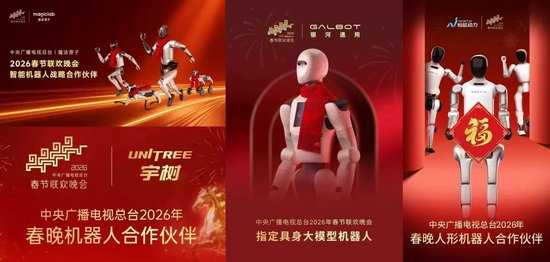
Core Viewpoint - The collaboration of multiple robotics companies with the 2026 Spring Festival Gala is expected to enhance brand visibility and facilitate future financing opportunities for these companies [1][3][16]. Group 1: Company Developments - Four robotics companies, including MagicLab, Galaxy General, Yushu Technology, and Songyan Power, have announced partnerships with the Central Radio and Television General Station for the 2026 Spring Festival Gala [1][13]. - Yushu Technology's development accelerated significantly after its performance at the 2025 Spring Festival Gala, completing a C-round financing of several hundred million yuan with a valuation of 12 billion [4][16]. - In 2025, Yushu Technology reported a 220% year-on-year increase in industrial robot orders, with contract amounts exceeding 1.2 billion yuan [4][16]. - Yushu Technology's actual shipment of humanoid robots exceeded 5,500 units in 2025, with over 6,500 units produced [6][18]. Group 2: Industry Trends - The competition among robotics companies to appear on the Spring Festival Gala began in November 2025, driven by the success of Yushu Technology's previous performance [3][16]. - The industry is shifting focus from demonstration robots to those that enhance efficiency, cost optimization, and process improvement, with a prediction that by 2026, 60% of medium to large robotics projects will involve collaborative operations of multiple robot types [22][23]. - The expectation is that robots will showcase new skills beyond traditional performances, potentially including practical applications in household tasks [20][21]. Group 3: Market Impact - The participation of multiple robotics companies in the Spring Festival Gala is anticipated to increase their exposure and attract capital attention, making financing easier [6][12]. - The event is seen as a significant opportunity for brand building and increasing order volumes for participating companies [3][11]. - The robotics industry is expected to evolve from simple entertainment functions to practical applications, enhancing the overall market landscape [22][23].
商用清洁机器人行业报告 | 全球与中国市场现状及未来发展趋势
QYResearch· 2026-02-04 04:01
Core Viewpoint - The commercial cleaning robot market is rapidly evolving, driven by advancements in technology and increasing demand for automation in various sectors, including healthcare, retail, and public spaces [2][13]. Group 1: Product Features and Development - Commercial cleaning robots are designed for autonomous navigation and obstacle avoidance, utilizing technologies such as LiDAR and AI visual recognition [2]. - The robots can perform integrated cleaning tasks on hard surfaces and are capable of operating 24/7, significantly reducing labor costs and addressing workforce shortages [2]. - The development timeline shows a progression from semi-automated machines in the 1990s to fully autonomous robots with advanced navigation and cleaning capabilities by 2023 [4][5]. Group 2: Market Size and Growth - The global market for commercial cleaning robots is projected to reach approximately $522 million by 2024, with a compound annual growth rate (CAGR) of about 10.90% from 2020 to 2024 [8]. - By 2031, the market size is expected to approach $1.046 billion, with a CAGR of 11.27% from 2025 to 2031 [8]. - The Asia-Pacific region, particularly China, dominates the market, accounting for 35.67% of global sales in 2024 [8][10]. Group 3: Industry Drivers and Opportunities - Rising labor costs in developed countries are pushing companies to adopt robots to reduce long-term labor expenses [13]. - The post-pandemic era has seen a surge in demand for high-frequency, contactless cleaning in public spaces such as hospitals and shopping malls [13]. - Technological advancements, including fast-charging and long-lasting batteries, are enhancing operational efficiency and reducing the need for human intervention [13]. Group 4: Competitive Landscape - Major players in the market include companies like Gaoxian Robotics, Tennant, Softbank, Ecovacs, and Pudu Robotics, which collectively hold a market share of 52.78% in 2024 [10]. - The competition is expected to intensify in China over the coming years as more companies enter the market [10]. Group 5: Policy and Regulatory Environment - The Chinese government is increasingly integrating cleaning robots into urban management and public service frameworks, recognizing them as essential components of smart infrastructure [15][16]. - There is a push for standardization in the industry, with various safety and operational standards being developed to ensure the reliability and effectiveness of cleaning robots [16].

10米/秒! 浙大发布全球跑得最快的人形机器人
Hang Zhou Ri Bao· 2026-02-04 03:36
事实上,人形机器人创新研究院研发团队已在2025年1月发布四足机器人"黑豹",以超10米/秒的速 度创下全球四足机器人最快奔跑纪录。此次将技术积累延伸至人形机器人领域,再次展现研发团队在运 动控制方面的持续创新能力,也为机器人未来在应急响应、工业作业等场景的应用提供了新的可能性。 近日,浙江大学杭州国际科创中心人形机器人创新研究院正式发布全尺寸人形机器人Bolt。该机器 人以10米/秒的奔跑速度,成为目前全球跑得最快的全尺寸人形机器人。该成果标志着我国在人形机器 人高速运动与控制领域取得重要突破。 接下来,研发团队将进一步优化Bolt人形机器人系统,推动其在服务、制造等领域的落地应用,为 人形机器人产业发展提供新的技术范本。 人形机器人Bolt身高175厘米、体重75公斤,其命名灵感来源于短跑传奇"飞人"博尔特(Usain Bolt)。 ...
科瑞技术逆势大涨超8%!机器人ETF(562500)低位整理
Mei Ri Jing Ji Xin Wen· 2026-02-04 03:23
Group 1 - The Robot ETF (562500) opened with a slight dip but maintained a stable low-range consolidation, currently priced at 1.057 yuan, down 1.399% from the opening price [1] - Among the 66 constituent stocks tracked by the ETF, 54 experienced declines, but the overall downturn was moderate, with no significant drops; notable declines included Haozhi Electromechanical and Green Harmony, both down over 3%, while Keri Technology surged over 8% [1] - The trading volume for the Robot ETF reached 419 million yuan, with a turnover rate of 1.69%, indicating moderate trading activity [1] Group 2 - Guolian Minsheng Securities recommends focusing on humanoid robot industry segments that possess cross-scenario and cross-form capabilities, highlighting the potential for higher beta in a non-converged technology landscape [2] - The Robot ETF (562500) is the only robot-themed ETF in the market with a scale exceeding 20 billion yuan, covering various sub-sectors including humanoid robots, industrial robots, and service robots, facilitating investor access to the entire robot industry chain [2] - Following the adjustment of constituent stocks, the humanoid robot content in the index tracked by the Robot ETF has increased to nearly 70%, successfully removing underperforming stocks and incorporating quality candidates, achieving a "retain the strong, remove the weak" strategy [2]


