
仓储

Search documents
9月中国仓储行业运行向好恢复
Zhong Guo Xin Wen Wang· 2025-10-10 11:03
Core Insights - The Chinese warehousing industry showed signs of recovery in September 2023, with the warehousing index rising to 49.6%, an increase of 0.3 percentage points from the previous month [1] - The new orders index and employee index increased by 1.5 percentage points and 3.6 percentage points, respectively, indicating a positive trend in business activity [1] - Despite the recovery, the end-of-period inventory index fell below 50%, suggesting that the industry is still in a destocking phase with cautious inventory replenishment [1] Group 1 - The warehousing index for September 2023 is 49.6%, reflecting a slight recovery in warehousing activities [1] - The new orders index returned to the expansion zone, indicating improved business activity due to reduced weather impacts and the arrival of the traditional peak season [1] - The average warehousing index for the third quarter was 49.7%, showing a 0.9 percentage point increase compared to the same period last year, highlighting the industry's resilience against short-term shocks [1] Group 2 - Looking ahead to the fourth quarter, business confidence is strong, with the business activity expectation index at 54.5%, remaining in the expansion zone [2] - The employee index rose to 52%, indicating increased optimism among businesses regarding future prospects [2] - Various economic stabilization policies, including new fiscal subsidies, are expected to boost economic activity and drive demand for warehousing services in the upcoming months [2]
从仓储、航运、软件等多领域亮眼“成绩单” “数”读经济韧性与活力
Yang Shi Wang· 2025-10-10 04:05
Group 1: Warehouse Index and Business Activity - In September, China's warehouse index rose to 49.6%, an increase of 0.3 percentage points from the previous month, indicating a slight recovery in warehouse business activities [3][5] - The new orders index reached 51%, up 1.5 percentage points from last month, signaling a strong demand for warehouse services, particularly in non-ferrous metals, mineral products, and pharmaceuticals [5] - The facility utilization rate index stood at 51%, with high utilization rates observed in steel, non-ferrous metals, agricultural products, and cotton [5] Group 2: International Air Cargo Routes - As of September 30, 2025, a total of 169 new international air cargo routes have been opened in China, with 17 routes added in September alone, resulting in over 46 round-trip flights per week [6][9][12] - The route structure includes 81 routes to Asia, 66 to Europe, 15 to North America, 3 to Oceania, 2 to South America, and 2 to Africa [11] Group 3: Software and Information Technology Sector - In the first eight months of 2025, software business revenue reached 96,409 billion yuan, reflecting a year-on-year growth of 12.6%, with total profits increasing by 13% [16] - Software exports amounted to 404.4 billion USD, showing a growth of 6.4% [16] - The software product revenue accounted for 21.9% of the total industry revenue, while information technology services contributed nearly 70% [18] Group 4: Small and Medium Enterprises (SMEs) - In the first eight months of 2025, the added value of industrial SMEs grew by 7.6%, outpacing large enterprises by 3.3 percentage points, particularly in specialized and innovative SMEs [21] - The export index for SMEs was 51.9% in August, indicating continuous expansion for 17 months [23] - SMEs are increasingly focusing on innovation, with R&D expenses for specialized "little giant" enterprises accounting for 5.4% of their revenue [25]

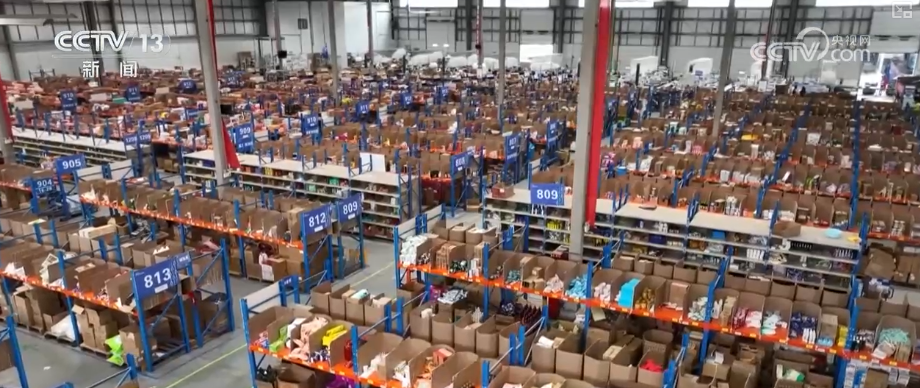
区域市场差异化发展特征
Sou Hu Cai Jing· 2025-10-04 09:16
Group 1: Cloud Warehouse Market in China - The cloud warehouse market in China shows significant regional development differences influenced by economic levels, industrial structures, and infrastructure conditions [1] - The national high-standard warehouse stock reaches 168 million square meters, primarily concentrated in the eastern coastal regions, with Jiangsu, Zhejiang, and Guangdong having the highest stock [1] - The Beijing-Tianjin-Hebei city cluster has a vacancy rate of 28.56% and a rental price of 21.91 yuan per square meter per month, facing dual pressures of inventory and insufficient demand [1] - The Yangtze River Delta city cluster has a vacancy rate of 25.42% and effective rent of 25.71 yuan per square meter per month, benefiting from rental price reductions [1] - The Pearl River Delta city cluster stands out with a low vacancy rate of 6.12% and effective rent of 35.24 yuan per square meter per month, but may face future de-stocking pressure due to high supply [1] - The Central Yangtze River and Chengdu-Chongqing city clusters have lower vacancy rates of 13.33% and 8.91%, respectively, with relatively low rental levels [1] Group 2: Global Cloud Warehouse Market - The global cloud warehouse market exhibits clear regional differentiation, with North America and Europe having high maturity levels, led by companies like Amazon FBA and SAP [2] - The Asia-Pacific market is characterized by an "China technology + local infrastructure" model due to the e-commerce boom, with 60% of cloud warehouse solutions in Southeast Asia provided by Chinese companies [2] - The African region is still exploring digitalization, with Kenya's Jumia improving inventory turnover by 60% after adopting Alibaba's cloud warehouse management system, but facing limitations due to insufficient electricity infrastructure and low automation equipment penetration below 10% [2] - These regional differences provide diverse options for companies to adopt differentiated cloud warehouse strategies based on business layout and market demand [2]
南非经济保持增长势头
Jing Ji Ri Bao· 2025-09-18 21:59
Economic Growth - South Africa's GDP grew by 0.8% in Q2 2025, marking the strongest growth quarter in nearly two years, indicating robust economic momentum [1][5] - The growth follows a slight increase of 0.1% in Q1 2025, demonstrating a continuation of positive economic trends [1] Sector Performance - Key sectors such as manufacturing, mining, and trade led the supply-side growth, while household consumption and reduced imports contributed to demand-side growth [2] - Manufacturing output increased by 1.8%, driven by the automotive, petroleum, chemicals, rubber, and plastics sectors [2] - Mining output rose by 3.7%, the fastest growth since Q1 2021, with platinum group metals, gold, and chrome contributing significantly [2] - The trade, accommodation, and food services sectors grew by 1.7%, reaching the highest level since Q1 2022 [2] - Agriculture continued its positive trend with a third consecutive quarter of growth, supported by increased horticultural and livestock activities [2] Consumer Activity - Household consumption has shown consistent growth for five consecutive quarters, with a 0.8% increase in Q2 2025, fueled by spending in dining, hospitality, clothing, and insurance [2][4] - The retail trade, automotive trade, and food and beverage sectors also experienced growth, contributing positively to the overall economic performance [4] Challenges and Declines - Despite the overall growth, there were declines in demand for alcoholic beverages and housing-related services, as well as a drop in wholesale trade [3] - The construction sector contracted for the third consecutive quarter, with a decline of 0.3%, and transportation, storage, and communication sectors also saw a decrease of 0.8% [3] - Fixed capital investment fell by 1.4%, marking a third consecutive quarter of decline [3] Government Response and Outlook - The South African government views the Q2 2025 economic data as a sign of resilience amid global trade challenges, emphasizing the effectiveness of policies aimed at stimulating growth and supporting local industries [4][5] - Economic analysts predict a moderate acceleration in South Africa's economy, despite the low growth rate, indicating an overall improving trend [5]
青海青甘川陆港基地生态科技有限责任公司成立 注册资本50万人民币
Sou Hu Cai Jing· 2025-09-17 17:36
Core Viewpoint - A new company named Qinghai Qinggan Chuan Land Port Base Ecological Technology Co., Ltd. has been established with a registered capital of 500,000 RMB, focusing on various agricultural and food-related services [1] Company Overview - The legal representative of the company is Liu Xinyu [1] - The registered capital of the company is 500,000 RMB [1] Business Scope - The company’s business activities include livestock sales, poultry acquisition, retail of edible agricultural products, wholesale and retail of fresh meat, and internet sales of pre-packaged food [1] - Additional services include catering management, personal internet live streaming, general cargo warehousing (excluding hazardous chemicals), and primary processing of agricultural products [1] - The company is also involved in the production, sales, processing, transportation, storage, and other related services of agricultural products [1] - Other activities include the purchase and sale of traditional Chinese medicine (excluding Chinese medicine pieces), sales of agricultural by-products, vegetable planting (excluding rare and precious varieties), grass planting, and flower planting [1] Licensing and Permits - The company is authorized to engage in various licensed activities such as livestock breeding, food management, food production, grain processing, and accommodation services [1] - Specific projects require approval from relevant authorities before operations can commence [1]
8月份中国仓储指数为49.3% 后市预期向好
Zheng Quan Ri Bao Wang· 2025-09-05 12:58
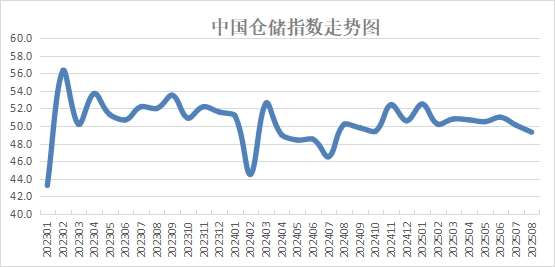
Core Viewpoint - The China Warehousing Index fell to 49.3% in August 2025, indicating a contraction in the warehousing sector due to extreme weather and seasonal demand fluctuations for certain commodities [1] Group 1: Index Performance - The Warehousing Index dropped by 0.8 percentage points from July, marking a return to the contraction zone after nine months of expansion [1] - The New Orders Index decreased to 49.5%, down 0.5 percentage points from July, with mixed performance across different commodities [1] - The Ending Inventory Index remained stable at 50%, but decreased by 1 percentage point from July [2] Group 2: Demand and Supply Chain Dynamics - The average inventory turnover index and business activity expectation index increased by 0.4 percentage points and 2.5 percentage points, respectively, indicating a potential recovery in market demand [2] - Despite the decline in new orders, ending inventory, and employee indices, the average inventory turnover index remains below 50, reflecting a sluggish warehousing demand and slower supply chain turnover [2] - Analysts expect that with the end of extreme weather and upcoming holidays, there may be a release of pent-up demand in the warehousing sector, leading to a more stable and positive operational trend [2]
中国物流与采购联合会:8月中国仓储指数为49.3% 较上月回落0.8个百分点
智通财经网· 2025-09-05 10:50
Core Viewpoint - The China Storage Index for August 2025 has dropped to 49.3%, indicating a decline in industry performance after nine months of expansion, primarily due to seasonal factors affecting demand and inventory turnover [1][3]. Group 1: Demand and Employment - The new orders index decreased to 49.5%, reflecting a reduction in business demand and a decline in new order quantities [3]. - The employment index fell to 48.4%, indicating a decrease in workforce numbers within the industry [3]. Group 2: Inventory and Turnover - The average inventory turnover index is at 48.9%, remaining below the neutral mark of 50, suggesting slowed turnover rates due to adverse weather and weak terminal demand [3]. - The ending inventory index is at 50%, down by 1 percentage point from the previous month, indicating stable inventory levels despite reduced turnover [3]. Group 3: Business Confidence and Future Outlook - The business activity expectation index rose to 54.8%, showing increased optimism among enterprises regarding future market conditions [3]. - With the end of adverse weather and upcoming holidays, there is an expectation for a recovery in storage business demand, potentially leading to a more stable and positive industry performance [3].
8月中国仓储指数为49.3% 环比微落0.8个百分点
Zhi Tong Cai Jing· 2025-09-05 10:41
Core Insights - The China Warehousing Index for August 2025 is at 49.3%, a decrease of 0.8 percentage points from the previous month, indicating a contraction in the warehousing sector [1] - Factors such as extreme weather and the off-season for certain commodities have led to insufficient demand for warehousing services, contributing to the decline in the index [1] - Despite the overall decline, the business activity expectation index has risen significantly, suggesting optimism for future demand as seasonal factors change [1] Index Summaries - The new orders index stands at 49.5%, down 0.5 percentage points from last month, with various sectors showing mixed results; non-ferrous metals, machinery, and pharmaceuticals have indices above 50%, while steel, food, and daily necessities are below 50% [1][2] - The ending inventory index is at 50%, a decrease of 1 percentage point, with steel, non-ferrous metals, and machinery having indices above 50%, while minerals, food, home appliances, and daily necessities are below 50% [2] - The average inventory turnover index is at 48.9%, an increase of 0.4 percentage points, with minerals and pharmaceuticals above 50%, while steel, non-ferrous metals, and home appliances are below 50% [2] - The enterprise employee index is at 48.4%, down 2.1 percentage points, indicating a reduction in workforce levels in the sector [2] - The business activity expectation index is at 54.8%, an increase of 2.5 percentage points, reflecting increased confidence among businesses regarding future operations [2]

8月中国仓储指数为49.3% 后市预期向好
Zhong Guo Xin Wen Wang· 2025-09-05 06:25
Core Insights - In August, China's warehousing index stood at 49.3%, a decrease of 0.8 percentage points from the previous month, indicating a contraction in the sector [1] - The business activity expectation index showed a significant recovery, rising to 54.8%, reflecting increased confidence among enterprises regarding future market conditions [1] Index Breakdown - The average inventory turnover index and business activity expectation index increased by 0.4 percentage points and 2.5 percentage points, respectively, compared to the previous month [1] - Conversely, the new orders index, ending inventory index, and enterprise employee index declined, with decreases ranging from 0.5 percentage points to 2.1 percentage points [1] Market Analysis - The decline in the warehousing index is attributed to recent extreme weather and the off-season for certain bulk commodities, leading to insufficient demand for warehousing services [1] - Despite the overall pressure on the industry, the recovery in the business activity expectation index suggests a more optimistic outlook for the future, particularly with the end of adverse weather conditions and upcoming holidays expected to boost consumer demand [1]
8月份中国仓储指数为49.3% 后市预期保持乐观
Yang Shi Xin Wen· 2025-09-05 00:25
Core Viewpoint - The China Logistics and Purchasing Federation reported a decline in the warehouse index for August, influenced by adverse weather and seasonal factors, but the business activity expectation index shows optimism for future demand recovery [1] Summary by Categories Warehouse Index - The warehouse index for August is 49.3%, a decrease of 0.8 percentage points from the previous month [1] - The new orders index has declined, particularly in steel warehousing, which saw a significant drop due to seasonal market conditions [1] Demand and Inventory - The food warehousing new orders index has remained below 50% for two consecutive months [1] - Weather conditions have affected the efficiency of inbound and outbound operations, leading to a slowdown in goods turnover, although inventory levels remain stable, providing a foundation for future demand recovery [1] - Notably, there has been a significant increase in non-ferrous metal inventory [1] Future Outlook - The business activity expectation index for August is 54.8%, an increase of 2.5 percentage points from the previous month, indicating a rise in optimism among businesses [1] - Experts predict that with the end of adverse weather and the upcoming Mid-Autumn and National Day holidays, outdoor construction activities will resume, and consumer spending will be boosted, leading to a concentrated release of warehousing demand and a potential recovery in the industry [1]