高新技术产业

Search documents
江苏“十四五”地区生产总值连跨三个万亿元台阶
Zhong Guo Xin Wen Wang· 2025-12-10 10:52
江苏"十四五"地区生产总值连跨三个万亿元台阶 中新网南京12月10日电 (记者 徐珊珊)10日,江苏省政府举行首场"高质量完成'十四五'规划"系列主题新 闻发布会。会上公布,"十四五"以来,江苏地区生产总值连跨三个万亿元台阶。 美丽江苏彰显更绿底色。五年来,江苏在全国率先上线省级产品碳足迹公共服务平台。可再生能源装机 规模历史性超过煤电,成为第一大电源。PM2.5浓度连续四年达国家环境空气质量二级标准,长江干流 江苏段水质连续七年保持Ⅱ类。 编辑:王永乐 广告等商务合作,请点击这里 五年来,江苏消费拉动经济增长的基础性作用持续增强,社会消费品零售总额稳居全国前列。投资关键 作用更好发挥,江苏五年共实施超1600个省重大项目。轨道上的江苏加快建成,从南京坐高铁到省内所 有设区市不超过两个小时,长三角核心区(沪宁杭)已形成"一小时高铁圈"。 产业创新取得更大突破。五年来,江苏区域创新能力跃升至全国第二,全社会研发投入强度已经达到创 新型国家和地区中等水平。全省高新技术企业数量较"十三五"末增长超70%。制造业高质量发展指数连 续五年全国领先,高新技术产业产值占规上工业产值比重突破50%,国家先进制造业集群数量居全 ...
聚焦| 怎样理解推动创新资源向企业集聚
Xin Lang Cai Jing· 2025-12-09 13:36
(来源:西藏工商联) 新华社北京12月2日电 《中共中央关于制定国民经济和社会发展第十五个五年规划的建议》提出:"推 动创新资源向企业集聚"。这是促进科技创新和产业创新深度融合、强化企业科技创新主体地位的现实 需要。 推动创新资源向企业集聚,目的是通过促进人才、资金、技术、数据、平台等创新要素集聚,推动企业 成为技术创新决策、研发投入、科研组织和成果转化的主体,提升企业创新能力和竞争力。近年来,我 国通过政策引导、机制创新、创新生态优化,促进人才、资金、技术等创新要素加速向企业流动,培育 了一批核心技术能力突出、创新能力强的科技领军企业和高新技术企业,引领带动产业向全球价值链高 端攀升,有力推动传统产业转型升级、新兴产业和未来产业发展壮大。 第一,强化企业主导的产学研协同创新。支持企业与高校、科研院所密切合作,促进高校、科研院所面 向产业需求共同凝练科技问题,围绕企业需求联合开展科研攻关、协同培养科技人才。推动企业与高 校、科研院所共建实验室、中试平台等科技创新平台基地,共同开展技术熟化、试验验证与成果转化, 强化研用贯通。支持科技领军企业牵头联合产学研用各方、产业链上下游企业组建创新联合体,健全风 险共担、 ...
菏泽:深入实施创新驱动发展战略,推进科技创新与产业创新融合
Qi Lu Wan Bao· 2025-12-05 03:15
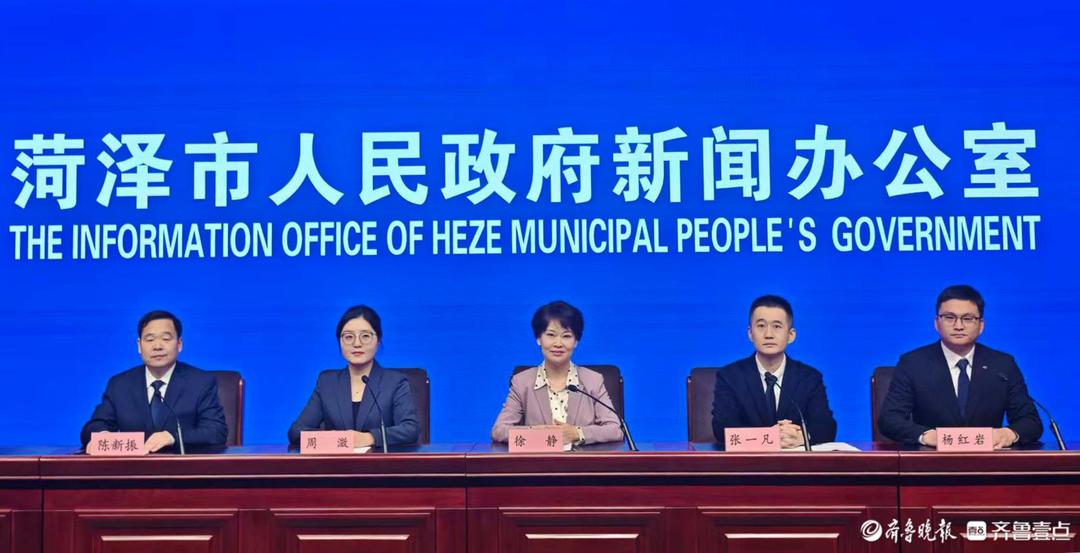
Core Viewpoint - The news highlights the significant advancements in technology innovation and development in Heze City during the "14th Five-Year Plan" period, emphasizing the integration of technological and industrial innovation to support high-quality economic growth [1][4]. Group 1: Major Changes in Technology Management - The establishment of the Heze Municipal Science and Technology Committee enhances the unified leadership of technology work, coordinating major strategic tasks and policies across the city [3]. Group 2: Investment and Innovation Capacity - R&D expenditure has significantly increased, with a growth rate leading the province for two consecutive years, reaching 1.47% of GDP, an increase of 0.72 percentage points since 2020 [4]. - The innovation platform system has improved, with 4 provincial key laboratories and over 400 municipal key laboratories established, along with 3 provincial and 200 municipal technology innovation centers [4]. - The high-level talent pool has expanded, with 7 overseas experts included in national talent programs and over 30 leading industry talents recruited [4]. Group 3: Support for R&D Projects - Over 2,000 national and provincial technology plan projects have been implemented, securing nearly 600 million yuan in project funding [5]. - The city has organized annual technology innovation breakthrough projects, with several approved as major provincial projects [5]. Group 4: Growth of High-Tech Industries - By the end of 2024, high-tech industries are expected to account for over 42% of the total industrial output, an increase of 4.27 percentage points since 2020 [6]. - The number of high-tech enterprises is projected to exceed 600, doubling since the beginning of the "14th Five-Year Plan," while the number of technology-based SMEs has increased 4.3 times since 2020 [6]. - Significant technological achievements have been recognized, with two projects nominated for provincial science and technology awards, marking a major breakthrough for Heze [6]. Group 5: Optimizing the Innovation Environment - The city has intensified efforts to mobilize and guide technology innovation, holding annual technology conferences and organizing various technology activities to foster a strong innovation atmosphere [7]. - Policies supporting small and micro enterprises have been implemented, with over 60 million yuan allocated for high-tech enterprise upgrades and more than 1,000 companies receiving R&D subsidies [8]. - The financial support for technology transfer has been enhanced, with over 2 billion yuan in loans for technology transfer projects [8]. Group 6: Development in Agriculture and Social Technology - The city has established various agricultural technology parks and has achieved significant advancements in agricultural innovation, including the approval of new wheat varieties [10]. - Major biomedical projects have been successfully implemented, contributing to health innovation [10]. - Efforts in ecological and environmental technology have been made, promoting green and low-carbon enterprises [10]. Group 7: Domestic and International Technology Cooperation - Numerous technology cooperation activities have been organized, establishing stable partnerships with over 120 universities and research institutions [11]. - Several technology cooperation bases and innovation centers have been established, facilitating collaborative projects and technology transfer [12]. Group 8: Future Directions for Technology Innovation - The city aims to enhance strategic technology capabilities, focusing on key technology breakthroughs and accelerating technology transfer to overcome industrial bottlenecks [13]. - There is a commitment to strengthen the role of enterprises in technological innovation and to cultivate a robust ecosystem for high-tech enterprises [13]. - Continuous reforms in the technology system will be pursued to stimulate innovation and entrepreneurship [14]. - The establishment of a first-class technology innovation ecosystem is a priority, focusing on service systems, financial environments, and intellectual property protection [14].


国务院:同意萧山临江高新技术产业开发区更名为杭州钱塘高新技术产业开发区
Xin Lang Cai Jing· 2025-12-04 11:25
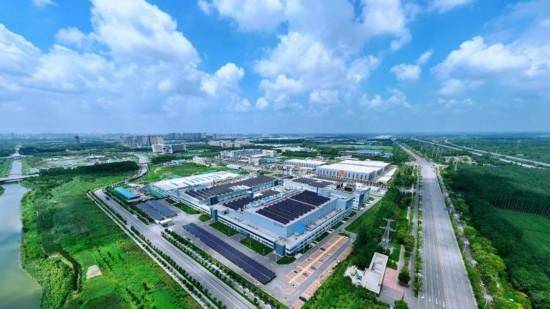
据中国政府网12月4日消息,国务院向浙江省人民政府发布批复,同意萧山临江高新技术产业开发区更 名为杭州钱塘高新技术产业开发区。 据中国政府网12月4日消息,国务院向浙江省人民政府发布批复,同意萧山临江高新技术产业开发区更 名为杭州钱塘高新技术产业开发区。 ...
金融为科技创新注入强大动能
Jin Rong Shi Bao· 2025-12-04 02:03
Core Insights - The emphasis on accelerating high-level technological self-reliance and strength is a significant deployment in the "14th Five-Year Plan" proposal, highlighting the importance of financial support for technological innovation [1] Group 1: Financial Support for Technology Enterprises - Financing difficulties for small and medium-sized technology enterprises, especially startups, are a long-standing issue due to high technical barriers, significant upfront investments, long return cycles, and insufficient traditional collateral [1] - The development of technology finance aims to solve the funding challenges faced by technology enterprises, providing comprehensive financial services throughout their lifecycle [1] Group 2: Focused Investment - Financial resources are being directed towards high-tech industries, strategic emerging industries, and future industries, which are key areas for shaping new development momentum and competitive advantages [2] - As of September 2025, the proportion of new technology loans accounted for 30.5% of total new loans, with the loan balance for technology SMEs reaching 3.6 trillion yuan, a year-on-year increase of 22.3%, outpacing the overall loan growth by 15.8 percentage points [2] Group 3: Diverse Financial Channels - Financial institutions are developing specialized products and services such as intellectual property pledge financing and equity-linked loans to cater to the characteristics of technology enterprises [2] - By September 2025, the signed amount for loans related to technological innovation and technological transformation reached 2.6 trillion yuan, with 1.1 trillion yuan disbursed [2] Group 4: Collaborative Ecosystem - A multi-party collaborative technology finance service ecosystem is gradually improving, with banks, insurance, and capital markets working together to create a better development environment for technological innovation [3] - Since the launch of technology insurance, over 10 trillion yuan in risk protection has been provided, supporting 3,600 innovative application projects [3] - By September 2025, 277 entities in the interbank bond market had issued technology innovation bonds totaling 669.1 billion yuan, demonstrating effective risk-sharing and cost reduction [3]
学习规划建议每日问答丨怎样理解推动创新资源向企业集聚
Xin Hua Wang· 2025-12-02 12:20
推动创新资源向企业集聚,目的是通过促进人才、资金、技术、数据、平台等创新要素集聚,推动企业 成为技术创新决策、研发投入、科研组织和成果转化的主体,提升企业创新能力和竞争力。近年来,我 国通过政策引导、机制创新、创新生态优化,促进人才、资金、技术等创新要素加速向企业流动,培育 了一批核心技术能力突出、创新能力强的科技领军企业和高新技术企业,引领带动产业向全球价值链高 端攀升,有力推动传统产业转型升级、新兴产业和未来产业发展壮大。 第一,强化企业主导的产学研协同创新。支持企业与高校、科研院所密切合作,促进高校、科研院所面 向产业需求共同凝练科技问题,围绕企业需求联合开展科研攻关、协同培养科技人才。推动企业与高 校、科研院所共建实验室、中试平台等科技创新平台基地,共同开展技术熟化、试验验证与成果转化, 强化研用贯通。支持科技领军企业牵头联合产学研用各方、产业链上下游企业组建创新联合体,健全风 险共担、利益共享的运行机制。强化企业创新决策权,建立健全由企业牵头凝练提出国家科技计划中产 业应用导向项目的形成机制,推动科技创新成果直接应用于产品,提高企业的市场竞争力。 新华社北京12月2日电 《中共中央关于制定国民经济和 ...
海南这五年:三亚发展能力能级实现新跨越
Zhong Guo Xin Wen Wang· 2025-12-02 08:44
三亚深化改革开放实现新高度。推行"一枚印章管审批"新模式,行政审批服务效率大幅提升。跨境电 商、大宗商品交易等开放型经济新业态加快发展,外贸持续提档升级。打开第五航权客货两运新局面, 成功举办多个国际级农业科技大会,三亚国际影响力和感召力持续提升。 海南这五年:三亚发展能力能级实现新跨越 中新网三亚12月2日电 (张月和)三亚市委常委、常务副市长陈景进2日在三亚市"十四五"时期经济社会发 展成就新闻发布会上说,"十四五"时期,三亚全市社会经济实现高质量发展,发展能力能级实现新跨 越。 陈景进说,从当前来看,三亚市主要经济指标稳步增长,2024年地区生产总值(GDP)首次突破千亿大 关,2025年前三季度GDP达到720.1亿元,2021年至2024年间年均增长5.5%,经济综合实力进一步增 强。 随着海南自贸港封关日益临近,三亚7个封关运作项目已建设完成,"二线口岸"查验设施顺利通过国家 验收,8个反走私综合执法站、3个海警工作站进驻运行,压力测试工作有序开展。以"零关税、低税 率、简税制""五自由便利一安全有序流动"为特征的核心政策落地见效。 编辑:董文博 广告等商务合作,请点击这里 本文为转载内容,授权事 ...
一批减负“账单”公布:山东全年预计减轻企业负担4000亿元左右
Sou Hu Cai Jing· 2025-11-29 01:44
Group 1 - The 14th National Policy Promotion Week aims to reduce enterprise burdens in areas such as raw materials, logistics, and energy, with an expected reduction of approximately 400 billion yuan in Shandong province this year [1] - Shandong has implemented a series of innovative policies focusing on "optimizing the environment, reducing burdens, increasing vitality, and strengthening services," achieving full coverage of enterprise-related fee directories at provincial, municipal, and county levels [1] - A special action to rectify irregular enterprise charges has resulted in 208 cases being filed, with refunds totaling 5.91 million yuan and fines amounting to 12.629 million yuan [1] Group 2 - Shandong has integrated inspection items across multiple departments for the same enterprise, allowing for more efficient inspections [3] - A dual notification mechanism for "administrative penalties + credit restoration" has been established, helping 13,000 entities restore credit in nearly 40,000 cases in the first three quarters [3] - The number of enforcement cases and fines has decreased by 15.4% and 19.7% respectively, with 21,000 cases of reduced or waived penalties amounting to 930 million yuan [3] Group 3 - Shandong is shifting from "enterprises finding policies" to "policies finding enterprises," utilizing platforms to identify and push policies to key sectors like technology innovation and manufacturing [4] - Tax incentives for technology innovation amount to 70.96 billion yuan, while manufacturing tax incentives total 84.14 billion yuan [4] - Social security fee reductions have saved enterprises 20.38 billion yuan in the first three quarters, alleviating labor cost pressures, especially for small and micro enterprises [4] Group 4 - Shandong has established a three-dimensional cost reduction system focusing on logistics, regulations, and financing [6] - Policies such as differentiated highway tolls and discounts have led to a total toll reduction of 8.22 billion yuan [6] - A credit report system has replaced 52 types of proof documents, saving 14.52 million hours and reducing costs by 730 million yuan [6] Group 5 - The "Ruqi Help" service platform has been created to transition from passive responses to proactive empowerment for enterprises [7] - A closed-loop mechanism for problem collection and resolution has achieved a 99.5% resolution rate for enterprise requests [7] - The upgraded "Ru Hui Tong" policy service platform has gathered 1,051 policies, facilitating online fund disbursement of 8.43 billion yuan, benefiting 21,000 enterprises [7]
辽宁火炬新型工业化院在沈揭牌
Liao Ning Ri Bao· 2025-11-29 01:02
目前,我省拥有8家国家高新区、6家省级高新区、1.3万家高新技术企业以及超4万家科技型中小企 业,创新主体总量位居东北地区首位,高新区已成为全省创新主阵地。 11月27日,由省工业和信息化厅与工业和信息化部火炬高技术产业开发中心东北中心举办的辽宁省 高新区创新发展大会暨辽宁火炬新型工业化院揭牌仪式在沈阳举行。 辽宁火炬新型工业化院将联合工信部火炬中心东北中心与大连理工大学经济管理学院、东北大学工 商管理学院,整合国家级平台资源与高校研究成果,打造集研究、服务、赋能于一体的高端枢纽平台, 明确新型产业管理与决策研究智库、产业生态创新赋能平台、协同创新网络枢纽与高端人才培养服务平 台三大核心定位;围绕建设数智决策与战略研究体系、创新服务与数智化转型赋能体系、产业赋能体 系、省域协同体系四大建设任务,为全省高科技产业园区建设、科技型企业发展、产业科技创新生态构 建提供有力支撑。 ...
高新企业批量“摘牌” 从数量扩张转向质量深耕
Zheng Quan Shi Bao· 2025-11-28 22:58
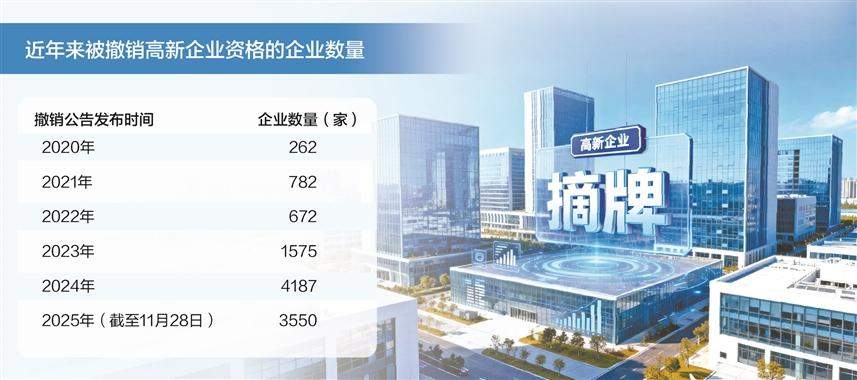
证券时报记者 胡敏文 国家高新技术企业资质,是科技企业发展进程中的"硬核背书",它不仅是技术实力的象征,更与政策扶持、市场竞争 力紧密挂钩。 近年来,我国科技创新活力持续释放,高新技术企业队伍不断壮大,2024年数量已超50万家。与此同时,一批不合格 企业正加速出清。企查查显示,近两年有超7000家国家级高新技术企业(下称"高新企业")的资格被撤销。2025年以来, 全国被撤销高新企业资格的企业数量已超过3500家,其中还出现了上市公司的身影。 究竟是什么原因导致了高新企业的"摘牌"潮?被撤销高新企业资格后,企业会面临哪些实际经营影响? 高新企业资格撤销激增 高新企业资格撤销并非新鲜事。根据高新技术企业认定管理工作网披露的信息,取消高新企业资格的公告最早可追溯 至2009年,当年公告显示有6家企业被撤销资格。2013年起,监管力度逐步加强,但整体上被撤销资格的企业数量依旧较 少。 据企查查数据,2022年我国高新企业总数已近40万家,同期被撤销高新企业资格的企业为672家。2023年高新企业资 格撤销规模增至1575家,2024年达到4187家。截至2025年11月28日,年内已有3550家企业被撤销高新企业 ...