
消费金融

Search documents
鼎柏2025年第四期个人消费贷款ABS完成簿记建档,发行总额15亿元
Jing Ji Guan Cha Wang· 2025-08-23 04:45
Group 1 - The core viewpoint of the article is the successful issuance of "Dingbai 2025 Year Fourth Phase Personal Consumption Loan Asset-Backed Securities" by Henan Zhongyuan Consumer Finance Co., Ltd. and China Foreign Economic and Trade Trust Co., Ltd. on August 21 [1] - The total issuance scale of this ABS is 1.5 billion RMB, which includes three types: Priority A, Priority B, and Subordinated [1] - The Priority A tranche has an issuance scale of 1.102 billion RMB with a coupon rate of 1.78% and a maturity date expected on August 26, 2026 [1] - The Priority B tranche has an issuance scale of 96 million RMB with a coupon rate of 1.95% and a maturity date expected on September 26, 2026 [1] - The Subordinated tranche has an issuance scale of 302 million RMB with no coupon rate and an expected maturity date on May 26, 2027 [1]
乐信上涨2.13%,报6.7美元/股,总市值11.27亿美元
Jin Rong Jie· 2025-08-22 13:52
Core Insights - Lexin (LX) opened with a 2.13% increase, trading at $6.70 per share, with a total market capitalization of $1.127 billion as of August 22 [1] - As of June 30, 2025, Lexin reported total revenue of 6.692 billion RMB, a year-on-year decrease of 2.78%, while net profit attributable to shareholders reached 942 million RMB, reflecting a significant year-on-year increase of 119.95% [1] Company Overview - Lexin Holdings Ltd. is a leading new consumption service platform in China, focusing on technological innovation to create new consumption methods [1] - The company has developed a new consumption service ecosystem centered around its installment consumption brand Fenqile and membership-based service brand Lekar, aimed at enhancing consumer experience and business value [1] Business Segments - Lexin's main business segments include: - Fenqile Mall, a quality installment shopping platform - Lekar APP, a membership-based consumption service platform - Dingsheng Technology, a financial technology open platform - Juzi Finance, a network lending information intermediary service platform - Lexin Wealth, a wealth management service brand targeting the new middle class [1]

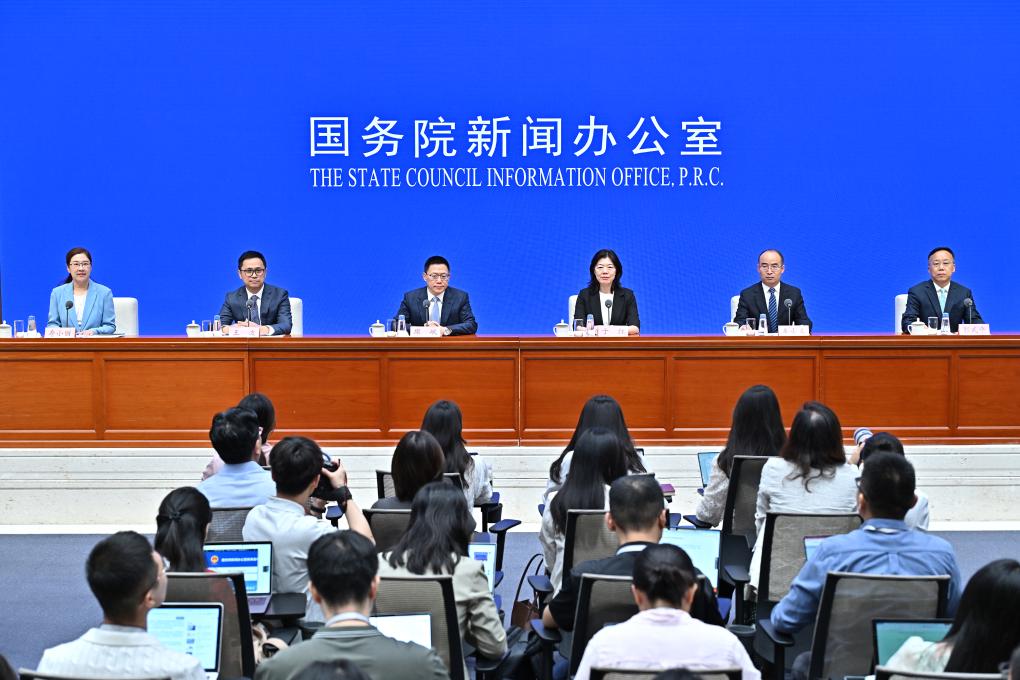
权威解读丨财政金融齐发力,两项贷款贴息政策激发消费潜能
Xin Hua Wang· 2025-08-22 08:29
Core Viewpoint - The implementation of personal consumption loan interest subsidy policies aims to stimulate consumer spending and enhance domestic demand through financial and fiscal collaboration [1][3]. Group 1: Policy Details - The personal consumption loan interest subsidy policy will be effective from September 1, 2025, to August 31, 2026, allowing residents to receive a subsidy of 1% per year on eligible personal consumption loans, with a maximum subsidy not exceeding 50% of the loan contract interest rate [3][5]. - Each borrower can receive a total interest subsidy of up to 3,000 yuan, corresponding to eligible cumulative consumption of 300,000 yuan during the policy execution period [7]. Group 2: Impact on Financial Institutions - Major banks, including Agricultural Bank of China, Bank of China, and China Construction Bank, have committed to implementing the interest subsidy for qualifying personal consumption loans starting September 1, 2025, without charging any service fees [9]. - The policies are expected to lower the cost of consumer credit for residents and reduce financing costs for service industry operators, thereby encouraging sustained production and operations [5][9]. Group 3: Expert Insights - Experts suggest that the synergy between monetary and fiscal policies can be further enhanced, and the interest subsidy policies can be coordinated with existing initiatives like the "national subsidy" for replacing consumer goods and service consumption loans to maximize their effectiveness in boosting consumption [9].

中行获批受让中银消金股权 距主要出资人要求仍差“临门一脚”
2 1 Shi Ji Jing Ji Bao Dao· 2025-08-21 05:17
Core Viewpoint - The recent approval by the Shanghai Regulatory Bureau allows China Bank to acquire additional shares in China Bank Consumer Finance Co., Ltd. (中银消金), increasing its stake to 47.98%, but the company still does not meet the new regulatory requirement for major shareholders [1][3]. Shareholding Structure - China Bank's stake in 中银消金 will rise to 47.98% after acquiring 3.558% from Shenzhen Bode Innovation Investment Co., Ltd. and 1.617% from Beijing Sequoia Shengyuan Management Consulting Co., Ltd. [1][3] - As of the end of 2024, 中银消金's registered capital is 15.14 billion yuan, with China Bank holding 42.80% directly and 13.23% indirectly through 中银卡司 [2][3]. - The current shareholding structure includes six shareholders, with China Bank as the largest shareholder, followed by 百联集团 and 陆金发 [2]. Regulatory Compliance - The new Consumer Finance Company Management Measures require that major shareholders hold at least 50% of the total capital, which 中银消金 does not currently meet [3][4]. - The increase in the minimum shareholding requirement aims to ensure that major shareholders actively support and take responsibility for the company [4]. Financial Performance - In the first half of 2025, 中银消金 reported revenue of 3.681 billion yuan, a year-on-year increase of 2.8%, and a net profit of 150 million yuan, recovering from a loss of 306 million yuan in the same period last year [6]. - The net profit of 中银消金 has been declining from 632 million yuan in 2022 to 60 million yuan in 2024, primarily due to asset quality issues and increased credit impairment losses [7]. Business Model Transition - 中银消金 is shifting its business model from primarily offline to a hybrid model with a focus on online operations [5][8]. - The proportion of online business in terms of loan balance increased from 52.24% in 2022 to 72.84% by the end of 2024, with online loan issuance reaching 93.72% of total loans [8]. - The company is enhancing its online offerings through partnerships with internet platforms and developing self-operated products like "好客贷" and "中银消费钱包" [8]. Offline Business Challenges - 中银消金's offline business is expanding through regional centers, with 24 centers established by the end of 2024, but faces challenges due to weakened repayment capabilities among offline customers [9]. - The company is working on transforming its offline business by targeting lower-risk customer segments and improving customer relationship management [9].

消费金融公司“生态圈”新变化:贴息入围 股权调整 版图拓展
Jin Rong Shi Bao· 2025-08-21 01:49
近一段时间,消费金融行业新动向不断。 从政策层面来看,《个人消费贷款财政贴息政策实施方案》(以下简称《实施方案》)的发布备受 市场瞩目。其中,有4家持牌的消费金融公司纳入个人消费贷贴息经办机构,分别是重庆蚂蚁消费金融 有限公司、招联消费金融股份有限公司、兴业消费金融股份公司以及中银消费金融有限公司(以下简 称"中银消金")。 "将4家头部消费金融公司纳入首批贴息经办金融机构名单,是《实施方案》的一大亮点,将更好地 发挥消费金融公司扁平灵活、触达深入等专业优势。"招联首席研究员、上海金融与发展实验室副主任 董希淼说。 一系列动作的背后,是这家老牌消费金融机构在行业变局中的主动调整,也是行业发展分化的一个 缩影。 作为"老四家"持牌消费金融公司,中银消金、北银消金、捷信消金和锦程消金历经15年行业迭代与 市场洗牌,走上了不同的发展轨迹。 首家外商独资的消费金融公司捷信消金如今已改头换面,由京东控股并于今年5月正式更名为京东 消金。中银消金通过股权调整进一步巩固大股东主导地位,借助股东资源整合优势拓宽"线上+线下"服 务边界。北银消金曾一度受困于战略、风控与资本等方面的短板,转型承压、规模收缩,但经过一系列 业务剥 ...
消费金融公司优服务促消费
Jing Ji Ri Bao· 2025-08-20 23:09
Group 1 - The Ministry of Finance, the People's Bank of China, and the Financial Regulatory Administration have issued the "Implementation Plan for Fiscal Subsidies for Personal Consumption Loans," which includes several consumer finance companies as loan processing institutions [1] - The inclusion of five additional personal consumption loan institutions indicates regulatory recognition of the role of consumer finance companies in personal consumption loans and reflects the growing importance of new citizens as a consumer group [1] - Consumer finance companies are responding positively to the plan, with institutions like Zhaolian Consumer Finance and Industrial Bank Consumer Finance committing to actively implement the fiscal subsidy policy to stimulate market vitality [2] Group 2 - Consumer finance companies are becoming a vital force in driving consumption, with their asset scale and loan balance projected to reach 1.384859 trillion yuan and 1.345603 trillion yuan respectively by the end of 2024 [3] - The industry is encouraged to adapt to new trends in consumer credit, optimize products and services, and reduce the cost of personal consumption loans while enhancing application processes [3] - There is a focus on leveraging big data analysis for precise marketing to identify consumer potential and match consumer needs effectively [3]
个贷不良处置逻辑重塑: 告别“死磕”催收 开启“短跑”模式
Zhong Guo Zheng Quan Bao· 2025-08-20 22:18
Core Insights - The trend of short-term bad loan transfers is increasing, with many loans entering the transfer stage with overdue days less than one year, contrasting with the industry norm where overdue days often exceed 1000 days [1][2] Group 1: Bad Loan Transfer Trends - The average overdue days for bad loans being transferred has significantly decreased, with some loans having overdue days as low as 93 days [2] - The report from the Silver Registration Center indicates that the proportion of personal consumption bad loans is continuously increasing, with a shift towards shorter overdue periods [2][9] - The average discount rate for assets overdue for less than one year is 12.6%, compared to only 1.8% for assets overdue for more than five years, highlighting the financial incentive for banks to expedite the transfer of shorter overdue loans [4] Group 2: Reasons for Accelerated Transfers - Financial institutions are motivated to accelerate bad loan transfers to reduce internal pressure on bad loan ratios and improve cash flow [4][6] - The rising proportion of non-litigation assets in bad loan transfers is contributing to the faster disposal of bad loans, as litigation processes are lengthy and costly [2][4] - The operational costs associated with collecting overdue loans are significant, prompting banks to seek quicker resolutions through asset transfers [5][6] Group 3: Industry Professionalization - The acceleration of bad loan transfers is leading to a more professional and rational division of labor within the industry, with specialized Asset Management Companies (AMCs) taking on the management of bad assets [7][8] - AMCs are employing more flexible and diverse methods for handling bad loans, which can include principal reductions to facilitate borrower debt relief [7][8] - The Silver Registration Center anticipates continued growth in the bad loan transfer market, with more participants expected to join, enhancing the overall efficiency of asset management [9]
个贷不良处置逻辑重塑:告别“死磕”催收 开启“短跑”模式
Zhong Guo Zheng Quan Bao· 2025-08-20 20:17
Core Insights - The trend of shortening the disposal cycle for personal non-performing loans (NPLs) is becoming evident, with many loans entering the transfer stage with overdue days of less than one year [1][2][3] Group 1: Trends in Non-Performing Loan Transfers - Guangzhou Rural Commercial Bank's recent announcement highlighted a personal NPL transfer project with an average overdue period of only 211.63 days, contrasting with the industry norm where overdue days often exceed 1000 [1] - Since August, several NPL transfer projects have been reported with overdue days around 300 or even shorter, indicating a shift towards shorter overdue periods [1] - Consumer finance companies are also reducing the disposal cycle for personal NPLs, with some projects showing average overdue days as low as 93 [2] Group 2: Factors Driving Accelerated NPL Disposal - Financial institutions are motivated to expedite NPL transfers to improve risk management efficiency and reduce collection costs, as shorter overdue periods typically lead to higher asset valuations [3][4] - The average discount rate for assets overdue for less than one year is 12.6%, compared to only 1.8% for those overdue for over five years, emphasizing the financial incentive for quicker disposals [3] Group 3: Challenges in NPL Collection - The collection process for personal loans is resource-intensive due to the high number of small loans and the dispersed nature of borrowers, leading to significant operational costs [4] - Regulatory pressures and the rise of "anti-collection" practices complicate the collection process, making it more challenging for banks to recover overdue loans [4] Group 4: Professionalization of NPL Management - The acceleration of NPL transfers is fostering a more specialized and rational division of labor within the industry, with Asset Management Companies (AMCs) playing a crucial role in managing these assets [5][6] - AMCs are increasingly involved in the bulk transfer of personal NPLs, providing flexible and diverse solutions for asset management [6] Group 5: Future Outlook for NPL Transfers - The market for NPL transfers is expected to continue evolving, with more participants likely to enter the space, enhancing the overall efficiency of asset recovery [7] - There are suggestions to expand the pilot scope for bulk transfer of NPLs to include secured loans, which could provide additional channels for risk mitigation [7]
乐信上涨2.08%,报6.39美元/股,总市值10.75亿美元
Jin Rong Jie· 2025-08-20 17:31
Core Insights - Lexin (LX) experienced a 2.08% increase in stock price, reaching $6.39 per share, with a trading volume of $12.25 million and a total market capitalization of $1.075 billion [1] Financial Performance - As of June 30, 2025, Lexin reported total revenue of 6.692 billion RMB, a year-on-year decrease of 2.78% [1] - The company achieved a net profit attributable to shareholders of 942 million RMB, reflecting a year-on-year increase of 119.95% [1] Business Overview - Lexin Holdings Limited is recognized as a leading new consumption service platform in China, focusing on technological innovation to create new consumption methods [1] - The company has developed a new consumption service ecosystem centered around its installment consumption brand, Fenqile, and its membership-based service brand, Lekar [1] - Lexin's primary business segments include: - Fenqile Mall, a quality installment shopping platform - Lekar APP, a membership-based consumption service platform - Dingsheng Technology, a financial technology open platform - Juzi Finance, an online lending information intermediary service platform - Lexin Wealth, a wealth management service brand targeting the new middle class [1]
贴息入围、股东增持、新业获批......这些金融机构在忙啥?
Jin Rong Shi Bao· 2025-08-20 12:23
Group 1 - The consumer finance industry is experiencing significant changes, particularly with the introduction of the "Implementation Plan for Personal Consumer Loan Financial Subsidy Policy," which includes four licensed consumer finance companies as subsidy processing institutions [1] - The four companies included are Chongqing Ant Consumer Finance, Zhaolian Consumer Finance, Industrial Bank Consumer Finance, and Bank of China Consumer Finance [1] - The inclusion of these leading consumer finance companies is expected to leverage their advantages in flexibility and deep market reach [1] Group 2 - Currently, there are no specific operational details or timelines established for the implementation of the subsidy policy, as companies are in the process of reviewing related policies and maintaining communication with local regulatory authorities [2] - The consumer finance companies are actively adjusting their strategies in response to industry changes [3] Group 3 - Bank of China Consumer Finance has undergone significant changes in its shareholding structure, with the Bank of China set to increase its stake to 47.98% following the acquisition of shares from other investors [4] - This adjustment positions Bank of China Consumer Finance closer to the regulatory requirement for major shareholders [4] Group 4 - In addition to shareholding changes, Bank of China Consumer Finance has appointed new independent directors and executives, reflecting proactive adjustments in a changing industry landscape [5] - The company is part of a group of established consumer finance firms that have taken different paths amid market evolution, with some firms like JD Consumer Finance undergoing rebranding and ownership changes [5] Group 5 - Regional consumer finance companies are also expanding their business operations, with Sichuan Weipin Fubang Consumer Finance seeking to broaden its business scope by obtaining approval for fixed-income securities investment [7] - Similarly, Ping An Consumer Finance has been approved to engage in credit asset securitization, enhancing its financing capabilities and optimizing asset-liability management [7] Group 6 - The ongoing policy benefits are driving innovation and service upgrades in the consumer finance sector, with a shift in macroeconomic policy focus towards balancing consumption and investment [8] - Consumer finance institutions are encouraged to adopt collaborative approaches to create a new ecosystem that integrates financial services with various sectors such as e-commerce, healthcare, education, and tourism [8]