
种植业

Search documents
种植业板块12月18日涨0.03%,众兴菌业领涨,主力资金净流出1.36亿元
Zheng Xing Xing Ye Ri Bao· 2025-12-18 09:07
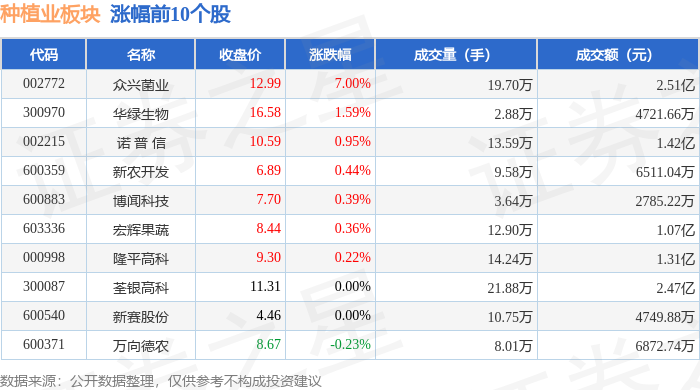
从资金流向上来看,当日种植业板块主力资金净流出1.36亿元,游资资金净流出53.9万元,散户资金净 流入1.37亿元。种植业板块个股资金流向见下表: 以上内容为证券之星据公开信息整理,由AI算法生成(网信算备310104345710301240019号),不构成投资建议。 证券之星消息,12月18日种植业板块较上一交易日上涨0.03%,众兴菌业领涨。当日上证指数报收于 3876.37,上涨0.16%。深证成指报收于13053.98,下跌1.29%。种植业板块个股涨跌见下表: ...


海南自贸港全岛封关,哪些方向将受益?
天天基金网· 2025-12-18 08:49
Core Viewpoint - The article discusses the official launch of the Hainan Free Trade Port's full island closure on December 18, which is expected to create a special customs regulatory area and implement a policy of "one line open, two lines controlled, and free within the island" [5][6]. Group 1: Policy Implications - The "one line open" policy allows for more freedom and convenience for people, capital, goods, and data from foreign countries and regions to enter Hainan [6]. - The "two lines controlled" policy means that special policies applicable only within Hainan will be managed by mainland policies when elements enter the mainland [6]. - The closure is anticipated to optimize the development environment for the private economy and stimulate investment activity, providing clear development opportunities for multiple industries [6]. Group 2: Beneficiary Industries - Industries such as import-export trade, international shipping, and logistics will directly benefit from customs facilitation and tax incentives [7]. - The tourism, hotel, exhibition, cultural entertainment, and healthcare sectors are expected to expand due to visa-free and tax-free policies, attracting more international visitors [7]. - High-end manufacturing and technology sectors, including biomedicine and digital economy, will benefit from zero tariffs and low tax rates, reducing R&D costs and attracting businesses [7]. Group 3: Investment Opportunities - The closure is seen as a significant opportunity for the trade sector and will help Hainan accelerate its development as an international tourism consumption center [7]. - Stakeholders in the tourism industry, including scenic spots, hotels, and travel retailers, are expected to benefit in the long term [7]. - Areas such as duty-free shopping, cross-border finance, and international shipping are projected to present investment opportunities post-closure [7].





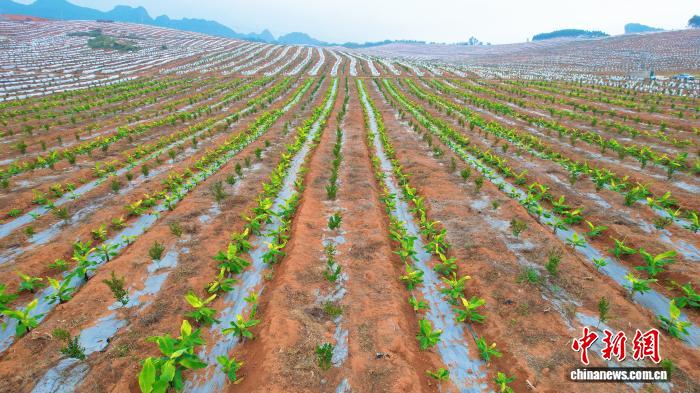
(乡村行·看振兴)广西乡村“长短结合”解锁林地增收密码
Zhong Guo Xin Wen Wang· 2025-12-17 23:44
Core Viewpoint - The article discusses the innovative agricultural model in Guangxi, China, where the combination of oil tea and banana cultivation is being explored to enhance land productivity and income during the oil tea's growth period [2][4]. Group 1: Agricultural Innovation - The oil tea industry faces challenges such as high initial investment and long maturation periods, prompting the need for alternative income sources during the "waiting period" of oil tea growth [2][4]. - The introduction of banana cultivation alongside oil tea allows for immediate income generation, as bananas can be harvested within a year, alleviating financial pressure during the oil tea's early growth stages [4][7]. - The model creates a beneficial cycle where the banana trees' lifecycle complements the oil tea's growth, maximizing land use and productivity [4][5]. Group 2: Resource Management - The integrated water and fertilizer management system enhances resource efficiency, benefiting both crops and reducing overall management costs [4][7]. - The banana trees help maintain soil moisture, creating a favorable environment for oil tea seedlings, which improves their survival rates during dry seasons [7]. - The combined cultivation approach has shown to increase the average annual comprehensive income per acre compared to single crop cultivation [5]. Group 3: Future Prospects - The local government aims to replicate and promote this agricultural model in suitable areas to optimize agricultural structures and enhance rural income [2][5]. - The initiative is part of a broader strategy to achieve sustainable rural revitalization and improve the livelihoods of local communities [2][5].
科技让种植规模挣脱人力束缚(念念有余)
Zheng Quan Shi Bao Wang· 2025-12-17 15:51
Core Insights - The article discusses the transformation in agricultural practices due to modern technology, particularly in irrigation and management efficiency, allowing for larger cultivation areas without the constraints of manual labor [1][2]. Group 1: Technological Advancements - The introduction of drip irrigation technology has significantly increased the efficiency of water usage, allowing one person to manage up to 1,600 acres of farmland, which was previously limited by manual labor constraints [2]. - The use of drones and smart machinery has revolutionized planting and crop management, enabling precise application of fertilizers and pesticides, thus improving overall productivity and reducing labor dependency [2]. Group 2: Historical Context and Challenges - Historically, agricultural practices were limited by manual labor, with an average of two acres managed per person, leading to underutilization of land and inefficient farming methods [1]. - Past experiences highlighted the challenges of labor management, where reliance on hired workers often resulted in poor productivity and mismanagement of resources, leading to financial losses for farmers [3]. Group 3: Impact on Agricultural Practices - The advancements in technology have not only improved management capabilities but have also revitalized land transfer and large-scale farming, attracting investments and skilled labor into the agricultural sector [3]. - The ability to implement modern agricultural techniques has enabled farmers to expand their operations, as seen in the case of a large-scale farmer in Xinjiang managing over 30,000 acres [3].
种植业板块12月17日跌1.02%,神农种业领跌,主力资金净流出6461.84万元
Zheng Xing Xing Ye Ri Bao· 2025-12-17 09:00
以上内容为证券之星据公开信息整理,由AI算法生成(网信算备310104345710301240019号),不构成投资建议。 从资金流向上来看,当日种植业板块主力资金净流出6461.84万元,游资资金净流入2423.13万元,散户 资金净流入4038.71万元。种植业板块个股资金流向见下表: 证券之星消息,12月17日种植业板块较上一交易日下跌1.02%,神农种业领跌。当日上证指数报收于 3870.28,上涨1.19%。深证成指报收于13224.51,上涨2.4%。种植业板块个股涨跌见下表: | 代码 | 名称 | 收盘价 | 涨跌幅 | 成交量(手) | 成交额(元) | | --- | --- | --- | --- | --- | --- | | 002772 | 众兴菌业 | 12.99 | 7.00% | 19.70万 | 2.51亿 | | 300970 | 华绿生物 | 16.58 | 1.59% | 2.88万 | 4721.66万 | | 002215 | 诺普信 | 10.59 | 0.95% | 13.59万 | 1.42亿 | | 600359 | 新农开发 | 6.89 | 0.44% ...

(乡村行·看振兴)广西农民廖其智转型记:从掌勺大厨到“掌数据”新农人
Zhong Guo Xin Wen Wang· 2025-12-17 08:56
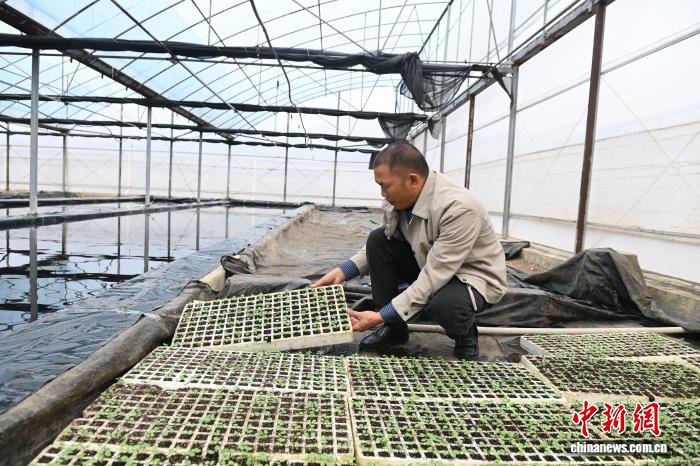
(乡村行·看振兴)广西农民廖其智转型记:从掌勺大厨到"掌数据"新农人 中新网广西贺州12月17日电 题:广西农民廖其智转型记:从掌勺大厨到"掌数据"新农人 中新网记者蒋雪林 冬日午间,广西贺州市钟山县公安镇廖屋村的田野,仍是一片忙碌景象。公安镇廖屋村党总支书记、村 委会主任廖其智俯身察看新试种的菜苗,"这是板蓝根菜心,正在试种阶段。"他专注地检查着幼苗长 势。不远处,工人们正将清晨采摘的蔬菜打包装车,十余小时后,这批新鲜菜心将出现在广州等地的超 市货架上。 为带动更多村民共同发展,廖其智创办了种植专业合作社,创新推出多种合作模式。目前合作社已发展 社员121户,管理土地面积超过6000亩,涵盖蔬菜、优质稻、马蹄等多种作物。合作社每年发放的劳务 报酬超过2200万元,让村民在家门口就能获得稳定收入。 合作社的发展也吸引了年轻人回流。村民周艳红2019年从广东打工回乡后,在合作社引导下种植了50多 亩柑橘,还建起了养鸡场。村民廖桉保则办起了年出栏2万只的肉鸡养殖场。廖其智的儿子如今也选择 回乡参与合作社管理,毕业于重庆大学的儿媳也加入了经营管理团队。"年轻人带来新理念,他们尝试 的电商销售模式取得了不错效果。"廖 ...
农业生产绿色化,2025年以来烟台市新获证绿色食品33个
Qi Lu Wan Bao· 2025-12-17 06:49
Core Viewpoint - Yantai City is actively promoting green transformation in agriculture during the "14th Five-Year Plan" period, focusing on ecological priority and sustainable development, achieving significant results in both ecological and economic value [1] Group 1: Green Development Measures - Yantai has implemented green low-carbon production technologies and cultivated circular agriculture models, enhancing ecological agriculture [1] - The city has achieved over 90% coverage of soil testing and fertilization techniques, with an increase of 580,000 acres in integrated water and fertilizer application, exceeding the target by 55.9% [1] - A comprehensive green pest control system has been developed, covering 5.498 million acres, significantly reducing pesticide usage [1] Group 2: Agricultural Resource Utilization - Continuous efforts are being made to promote the resource utilization of agricultural waste, achieving a straw utilization rate of 96.08%, a waste film recovery rate of 94.29%, and a livestock manure utilization rate of 92.5% [2] - These initiatives effectively address agricultural non-point source pollution [2] Group 3: Quality Improvement in Agriculture - Yantai has made substantial progress in improving agricultural quality, with a stable monitoring pass rate of 98% for agricultural product safety [2] - Since 2025, the city has gained 33 new green food certifications and one new national specialty agricultural product, with a total of 270 "three products and one standard" products, including 231 green foods and 9 organic products [2]
低温雨雪冰冻等灾害天气影响农业生产 应急管理部门提醒这样应对
Zhong Guo Xin Wen Wang· 2025-12-17 06:10
低温雨雪冰冻等灾害天气影响农业生产 应急管理部门提醒这样应对 中新网12月17日电 17日,应急管理部举行冬季安全知识发布会,通报近期安全防范工作部署,介绍冬 季有关安全知识。低温雨雪冰冻等灾害天气对农业生产有很大影响,也会带来一定的安全风险,湖北省 荆门市应急管理局防汛抗旱科科长吕垚在会上介绍做好安全防护和突发险情应对的方法。 吕垚表示,低温雨雪冰冻天气不仅会给农业生产带来不利影响,还会威胁农业设施和田间作业安全。她 结合一线的工作实践,从安全防护和险情应对两个方面,给大家介绍几点比较实用的办法。 一方面要做好提前防护,一定要赶在冰雪到来之前。一是大棚加固要"抓要害"。钢架大棚重点检查焊接 点、连接件和地脚螺栓,及时进行紧固或补焊;对于竹木大棚及时更换掉老化、开裂的材料,加密拉 杆,必要时加设立柱支撑。同时抓紧修补棚膜、清理干净杂物,确保棚顶坡度不小于25°,便于积雪滑 落。比如,荆门漳河新区的草莓基地,在去年暴风雪来临之前,350亩大棚都加设了临时支撑,并且及 时调整了棚顶坡度,使得积雪顺利滑落,没有出现积雪压塌大棚的情况。 二是设施维护要"顾细节"。田间灌溉管道可以缠裹保温棉或草绳防止冻裂,田间电线线路 ...
多家机构看好养殖业2026年上半年触底反转
Mei Ri Jing Ji Xin Wen· 2025-12-17 02:51
Group 1 - The core viewpoint is that the pig farming industry is expected to experience a potential reversal in 2026, driven by policy guidance and market losses leading to accelerated capacity reduction, which lays the foundation for pig prices to stabilize and rise [1] - Major institutions, including Dongfang Securities and Zhongtai Securities, believe that 2026 will mark an upward turning point for agriculture, with livestock and planting sectors expected to gain momentum sequentially [1] - The livestock sector is anticipated to hit bottom in the first half of 2026, influenced by high capacity bases, efficiency improvements, ongoing bottom-fishing activities, and low grain prices, indicating a complex and prolonged reversal process [1] Group 2 - The Agricultural 50 ETF (516810.SH) passively tracks the CSI Agricultural Theme Index (000949.CSI), which is more balanced and comprehensive compared to other livestock and grain indices, covering livestock (39.98%), agricultural chemicals (18.99%), feed (12.19%), and planting (8.63%) [2] - The current overall valuation of the agricultural index (PE-TTM) is 19.56 times, which is in the bottom 12.05% range over the past decade, indicating a significant undervaluation and attractive cost-performance ratio [2]


生猪板块高开回落!商务部正式宣布对欧盟进口猪肉反倾销
Mei Ri Jing Ji Xin Wen· 2025-12-17 02:45
Group 1 - The Shanghai Composite Index opened lower, with strength in the non-ferrous and communication sectors, while sub-sectors like lithium mining and liquid-cooled servers led the gains [1] - The Ministry of Commerce announced that starting from December 17, 2025, anti-dumping duties will be imposed on imported pork and pork by-products from the EU, citing substantial damage to the domestic industry and a causal relationship between dumping and substantial damage [1] - The pig farming sector is being closely monitored by multiple institutions as a potential reversal sector, driven by policy guidance and market losses leading to accelerated capacity reduction, setting the stage for a price rebound in 2026 [1] Group 2 - The Agricultural 50 ETF passively tracks the CSI Agricultural Theme Index, which is more balanced and comprehensive compared to other livestock and grain indices, covering 39.98% in livestock, 18.99% in agrochemicals, 12.19% in feed, and 8.63% in planting [2] - The overall valuation of the agricultural index (PE-TTM) is 19.56 times, positioned in the extremely undervalued range at the 12.05% level over the past decade, indicating strong cost-effectiveness [2] - According to insights from Dongfang Securities and Zhongtai Securities, 2026 is expected to be an upward turning point for agriculture, with livestock and planting sectors set to gain momentum sequentially, and the livestock sector likely to hit bottom in the first half of 2026 [2]