
家具制造业

Search documents
慕思健康睡眠股份有限公司关于公司为全资子公司提供担保的公告
Shang Hai Zheng Quan Bao· 2025-08-07 18:19
Group 1 - The company provided a guarantee for its wholly-owned subsidiary, Mosi International Holdings Limited, to meet its financing needs, with a total guarantee amount not exceeding RMB 4 billion [2][5] - The internal decision-making process for the guarantee was approved in meetings held on April 24, 2025, and May 16, 2025, by the board of directors and the annual general meeting [2][3] - The guarantee is within the approved limit and does not require additional internal decision-making procedures [3] Group 2 - Mosi International Holdings Limited, established on October 13, 2017, is a wholly-owned subsidiary of the company, with a registered capital of RMB 100 million [4] - The company holds 100% equity in Mosi International, which has a good credit status and is not a defaulter [4][5] - The guarantee provided by the company covers all debts incurred by Mosi International under the credit agreement with China Everbright Bank [5] Group 3 - The total amount of guarantees provided by the company to its wholly-owned subsidiaries after this guarantee will be RMB 1.68 billion, accounting for 37.19% of the company's audited net assets for 2024 [5] - The balance of guarantees to wholly-owned subsidiaries will be RMB 1.0406115 billion, accounting for 23.03% of the company's audited net assets for 2024 [5] - As of the announcement date, the company and its wholly-owned subsidiaries have no guarantees provided to entities outside the consolidated financial statements, nor any overdue debts related to guarantees [5] Group 4 - The company has initiated a share repurchase plan to address its equity distribution issue, with a total repurchase amount between RMB 12 million and RMB 24 million [7][8] - As of July 18, 2025, the company has repurchased 4,265,977 shares, accounting for 1.07% of the total share capital before the repurchase [8][9] - The company plans to complete the capital reserve transfer to increase share capital by August 21, 2025, to meet listing conditions [10][11]
雅艺科技股价小幅下跌 公司回应借壳上市传闻
Jin Rong Jie· 2025-08-07 17:39
Core Viewpoint - Yayi Technology's stock price closed at 22.61 yuan on August 7, reflecting a decrease of 0.88% from the previous trading day, with a total market capitalization of 2.058 billion yuan and a price-to-earnings ratio of 207.83 times [1] Company Overview - Yayi Technology specializes in the design, production, and sales of outdoor leisure furniture and products, including outdoor fire pits, gas stoves, and dining tables and chairs [1] - The company's products are primarily sold in overseas markets, particularly in North America and Europe [1] - Yayi Technology is associated with several concept sectors, including decoration and renovation, Zhejiang sector, micro-trading stocks, and outdoor camping [1] Market Activity - On August 7, the trading volume for Yayi Technology was 9,229 lots, with a transaction amount of 21 million yuan [1] Corporate Communication - In response to investor inquiries on the interactive platform, Yayi Technology stated that there are currently no plans to list the robot and artificial intelligence companies in which it holds stakes through a backdoor listing [1]
慕思股份:公司对全资子公司的担保总额为人民币16.8亿元
Sou Hu Cai Jing· 2025-08-07 13:53
每日经济新闻 每经AI快讯,慕思股份(SZ 001323,收盘价:32.05元)8月7日晚间发布公告称,本次担保后,公司对 全资子公司的担保总额为人民币16.8亿元,占公司2024年度经审计净资产的比例为37.19%;公司对全资 子公司的担保余额为人民币约10.41亿元,占公司2024年度经审计净资产的比例为23.03%。 (记者 曾健辉) 免责声明:本文内容与数据仅供参考,不构成投资建议,使用前请核实。据此操作,风险自担。 2024年1至12月份,慕思股份的营业收入构成为:家具制造业占比98.56%,其他业务占比1.44%。 截至发稿,慕思股份市值为127亿元。 每经头条(nbdtoutiao)——时速21万公里,外星探测器伪装成彗星将"攻击"地球?哈佛知名教授:建 议全球建立"宇宙防御系统"!中国专家:并无明显异常 ...
浙江永强下属公司拟在印尼设立子公司 推进东南亚地区产能布局
Zheng Quan Ri Bao Wang· 2025-08-07 13:12
Core Viewpoint - Zhejiang Yongqiang is expanding its global production capacity by establishing a subsidiary in Indonesia, which will enhance its operational efficiency and market reach in Southeast Asia [1][2]. Group 1: Company Expansion - Zhejiang Yongqiang has announced the establishment of PT JJD Outdoor Products Indonesia with a registered capital of 230 billion Indonesian Rupiah, where Singapore Yongqiang holds 99% and Germany Yongqiang holds 1% [1]. - The new subsidiary will focus on overseas capacity investment and international trade, integrating its operational results into Zhejiang Yongqiang's consolidated financial statements [1]. - The company has been actively investing in Southeast Asia, with previous investments including a subsidiary in Thailand with a registered capital increase to 25.2 million Thai Baht [2]. Group 2: Market Strategy - The company aims to optimize its production capacity in Southeast Asia, leveraging Indonesia's strategic location and market potential to enhance its influence in the region [1]. - Zhejiang Yongqiang's products primarily target developed markets in Europe and North America, with a gradual increase in emerging markets [2]. - The company is committed to adjusting its capacity layout, with existing operations in Vietnam and ongoing preparations for a factory in Thailand [2]. Group 3: Industry Insights - Investment in Southeast Asia is expected to lower production costs and diversify production bases, mitigating risks associated with external uncertainties and reducing reliance on single markets [3]. - Establishing production bases in Southeast Asia is a crucial step for Zhejiang Yongqiang's globalization strategy, enhancing the efficiency and flexibility of its global supply chain [3].

退市警示下:*ST亚振五倍上涨与四次停牌拉锯战
2 1 Shi Ji Jing Ji Bao Dao· 2025-08-07 10:30
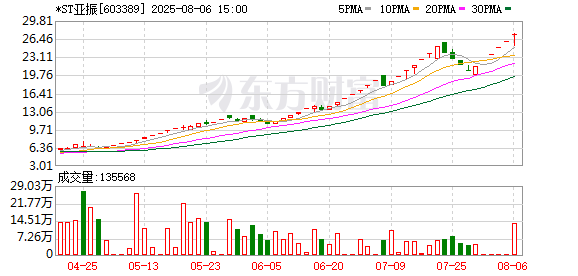
即便成为了交易所的重点监控对象,*ST亚振的股价走势依旧强势。 21世纪经济报道 记者董鹏 本周前三个交易日,该公司连续涨停、收盘价格涨幅偏离值累计达到12%,触发股票交易异常波动标 准。 为此,8月7日*ST亚振进行第四次停牌核查,而此前该公司已经分别于今年6月、7月因为股票交易异常 波动进行过三次停牌核查。 密集停牌核查,对应着公司可观的股价涨幅。如果从今年4月的4.45元的年内低点算起,*ST亚振在短短 四个月时间里股价已经升至27.41元,区间涨幅达到515.96%。 然而,*ST亚振股价上涨的基础却不牢靠。 一方面公司的退市风险尚未解除。 另一方面,公司计划收购的广西锆业科技有限公司(下称"广西锆业")只是一家选矿企业,这对于年均 亏损1亿元的上市公司帮助较为有限。 而在经过多次停牌,市场仍不见降温的背景下,*ST亚振的停牌核查时间由此前最长的不超过5个交易 日,进一步延长至不超过10个交易日。 "可能存在市场情绪过热,非理性炒作情形。"*ST亚振称,公司郑重提醒广大投资者,公司股价可能存 在短期涨幅较大后下跌的风险,请投资者务必充分了解二级市场交易风险,切实提高风险意识,理性决 策、审慎投资。 难 ...
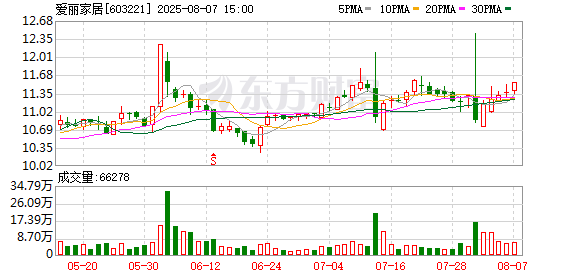
爱丽家居:董事、高级管理人员计划减持公司股份合计不超过约26万股
Mei Ri Jing Ji Xin Wen· 2025-08-07 09:25
Core Viewpoint - Aili Home's revenue composition for the year 2024 shows a significant reliance on the furniture manufacturing sector, which accounts for 99.61% of total revenue, indicating a focused business model in this industry [1]. Group 1: Revenue Composition - In 2024, Aili Home's revenue from the furniture manufacturing industry constitutes 99.61% of total revenue, while other business segments contribute only 0.39% [1]. Group 2: Shareholder Actions - As of the announcement date, several board members of Aili Home plan to reduce their shareholdings due to personal financial needs, with a total of up to 260,000 shares, representing 0.108% of the total share capital [3]. - The planned share reduction will occur within three months after the announcement, and the number of shares to be reduced will be adjusted if there are any changes in the company's share structure during this period [3]. - The board members involved in the reduction include the Vice General Manager and other directors, with each holding a small percentage of the total shares [3].


再次停牌核查!*ST亚振今日起因股票交易异常波动停牌
Xin Jing Bao· 2025-08-07 03:05
新京报贝壳财经讯8月6日,*ST亚振(603389)发布公告称,公司将就股票交易情况进行核查。经申 请,公司股票于8月7日开市起停牌,自披露核查公告后复牌,预计停牌时间不超过10个交易日。 公告显示,*ST亚振股票于8月4日、8月5日、8月6日连续三个交易日内日收盘价格涨幅偏离值累计达到 12%,属于股票交易异常波动;公司股票于7月30日至8月6日收盘价格涨幅偏离值累计达到33.92%。公 司股票短期涨幅与同期上证指数、家具制造业存在严重偏离。*ST亚振表示,经公司自查,公司目前生 产经营活动正常;市场环境或行业政策没有发生重大调整、内部生产经营秩序正常,不存在应披露而未 披露的重大信息。 值得注意的是,此次已是*ST亚振年内第四度停牌核查。此前6月12日、6月27日,7月16日,*ST亚振也 曾因股票交易异常波动而进行停牌核查。 ...

【财经早报】000627筹划重大事项 今起停牌
Zhong Guo Zheng Quan Bao· 2025-08-06 23:41
Group 1: Company News - *ST Tianmao announced that its controlling shareholder is planning significant matters related to the company, leading to a stock suspension starting August 7, expected to last no more than 2 trading days [6] - *ST Yazhen's stock will be suspended from trading starting August 7 due to abnormal price fluctuations, with a cumulative increase of 33.92% from July 30 to August 6 [6][7] - Xianhe Co. plans to invest approximately 11 billion yuan in a new integrated high-performance paper-based material project in Sichuan, with an expected annual output value of about 5.15 billion yuan after the first phase [6] - Hehua Co. announced a change in its actual controller due to the transfer of 100% equity of its controlling shareholder, with a total transaction price of 692 million yuan [8] - Fenzhong Media intends to acquire 100% equity of New潮传媒 for 8.3 billion yuan, which will become a wholly-owned subsidiary [8] Group 2: Industry News - The People's Bank of China has 283.2 billion yuan of 7-day reverse repos maturing today, indicating ongoing liquidity management in the financial market [2] - The National Development and Reform Commission and the National Energy Administration have issued basic rules for electricity market measurement and settlement, effective from October 1, marking a significant step towards a unified national electricity market [2] - The China Photovoltaic Industry Association is soliciting opinions on the draft amendment to the Price Law, focusing on price behavior norms and regulatory mechanisms [3]





罕见!停牌核查 最长10个交易日!
Zheng Quan Shi Bao Wang· 2025-08-06 14:41
*ST亚振再度停牌核查,停牌时间最高可达10个交易日。 不过与此前三次停牌核查不同的是,*ST亚振本次停牌时间上限为10 个交易日,此前三次停牌核查的时间分别为3个交易日、5个交易日、3个交易日。 据记者不完全统计,在停牌核查事项中,预期停牌时间上限达10个交易日的情况在今年比较罕见,去年则有正丹股份、同达创业等少数股票触发此类情 形。近期较为显眼的"15倍股"上纬新材,停牌核查时间也仅三个交易日。 回溯*ST亚振本轮股价异动原因,*ST亚振在今年5月完成实际控制人变更,由高伟、户美云、高银楠变更为吴涛。同时,*ST亚振在8月宣布拟向海南锆钛 购买其持有的广西锆业51.00%的股权。考虑到公司已被实施退市风险警示,上述动向让投资者产生*ST亚振业绩反转的期待。 对此,*ST亚振反复强调,经自查,公司目前生产经营活动正常,主营业务未发生重大变化。吴涛及其一致行动人暂无在未来12个月内改变公司主营业务 或者对公司主营业务做出重大调整的计划。现金收购事项能否取得审批、以及获得相关审批的时间尚存在一定的不确定性。 8月6日,*ST亚振(603389)再度宣布进入停牌核查。这是6月以来*ST亚振的第四次停牌核查,但是最 ...
*ST亚振: 关于股票交易异常波动风险提示暨停牌核查的公告
Zheng Quan Zhi Xing· 2025-08-06 11:38
证券代码:603389 证券简称:*ST 亚振 公告编号:2025-069 亚振家居股份有限公司 本公司董事会及全体董事保证本公告内容不存在任何虚假记载、误导性陈述 或者重大遗漏,并对其内容的真实性、准确性和完整性承担法律责任。 重要内容提示: ? 证券停复牌情况:适用 因重大事项,亚振家居股份有限公司(以下简称"公司")的相关证券停牌情 况如下: 停牌 公司股票交易连续三个交易日内日收盘价格涨幅偏离值累计达 12%,根据《上 海证券交易所交易规则》的相关规定,属于股票交易异常波动的情形。 证券代码 证券简称 停复牌类型 停牌起始日 停牌终止日 复牌日 期间 ? 公司股票于 2025 年 8 月 4 日、5 日、6 日连续三个交易日内日收盘价格涨幅偏 离值累计达到 12%,属于股票交易异常波动。 ? 公司股票于 2025 年 7 月 30 日至 8 月 6 日收盘价格涨幅偏离值累计达到 33.92%。 公司股票短期涨幅与同期上证指数、家具制造业存在严重偏离。为维护投资者利 益,公司将就股票交易情况进行核查。经申请,公司股票自 2025 年 8 月 7 日开市 起停牌,自披露核查公告后复牌,预计停牌时间不超过 ...