产能出海

Search documents
安克创新20260329
2026-03-30 05:15
Summary of Anker Innovations Conference Call Company Overview - **Company**: Anker Innovations - **Industry**: Consumer Electronics, specifically focusing on small appliances and energy storage solutions Key Points Financial Performance and Projections - **Q3 2025 Performance**: Underperformed due to small appliance recalls and delays in UV printer shipments, with a revenue guidance for 2026 set at 60-70 billion RMB, a significant increase from 45-50 billion RMB in 2025 [2][8] - **Crowdfunding Success**: The UV printer confirmed 300 million RMB in crowdfunding revenue for Q1 2026, with an annual target exceeding 1 billion RMB [2] - **2026 Revenue Forecast**: Expected to reach 31-32 billion RMB, representing a growth rate of over 20%, with a corresponding PE ratio of approximately 18 times [2][10] Market Dynamics and External Factors - **Tariff and Export Adjustments**: Approximately 70% of production capacity has been relocated overseas to mitigate tariff risks, with a controlled impact from currency fluctuations [2][6] - **Material Costs**: Raw material prices, particularly battery cells, have increased by about 10%, but the company has managed to limit gross margin pressure through scale bargaining and cost transmission [2][7] Product Innovations and Growth Drivers - **New Product Launch**: The "Yishi" home storage product launched in February 2026, designed for user assembly and addressing power outages in North America, is expected to be a new growth driver [2][8] - **Energy Storage Market Leadership**: Anker holds the largest global market share in balcony energy storage at approximately 10%, benefiting from regulatory changes in Germany and the UK that simplify installation processes [2][8] Stock Performance and Valuation - **Recent Stock Trends**: The stock price has increased nearly 20% due to the rising energy storage sector, with current valuation at about 18 times the projected earnings for 2026, below the historical average of 24-25 times [3][10] - **Long-term Valuation Potential**: If the valuation returns to historical averages, the market capitalization could reach 750 billion RMB, with potential for exceeding 1 trillion RMB in the long term [3][10] Challenges and Recovery - **Impact of Recalls and Delays**: The small appliance recall and UV printer shipment delays negatively impacted revenue and operational rhythm in 2025, but these issues are expected to resolve in 2026 [4][6] - **Profitability Concerns**: The third quarter of 2025 saw a decline in net profit due to increased financial costs and inventory write-downs, but these are anticipated to improve as sales normalize [5][6] Conclusion - **Growth Outlook**: With the resolution of previous disruptions and the introduction of new products, Anker Innovations is positioned for significant growth in 2026, with a strong focus on expanding its energy storage business and maintaining competitive pricing strategies [10]
宽远资产总经理甄新中:2026年市场将处在“相对低估、震荡向上”的阶段
Zhong Guo Ji Jin Bao· 2026-02-16 10:17
Group 1: Macro Environment - The macroeconomic environment in 2026 is expected to maintain stability, with low probability of major policy shifts, reflecting continuity in fiscal, monetary, and capital market regulations [3] - International relations, particularly between China and the US, will remain a variable, with tariff issues likely to persist but without a high risk of escalation [3] Group 2: Real Estate and Consumption - The real estate sector is a significant variable for China's economy, with sales and prices nearing a phase bottom, particularly in first and second-tier cities [5] - Stability in housing prices is deemed crucial for boosting consumer spending, which is anticipated to improve gradually due to multiple factors including employment recovery and policy stimulus [5] Group 3: Valuation and Asset Allocation - Equity assets are highlighted as attractive in 2026, with Chinese ten-year government bond yields at historical lows and A-share indices offering favorable valuation levels and dividend yields [7] - The Chinese stock market remains undervalued compared to major economies, providing a safety margin for long-term investments [7] Group 4: Industry Trends - The focus of AI-related investments is shifting from potential to actual profitability, emphasizing companies that integrate AI into their business models for sustainable cash flow [9] - Chinese companies are enhancing their competitiveness through trade surpluses and technological advancements, transitioning from product exports to capacity expansion overseas [9] Group 5: Market Outlook for 2026 - The Chinese stock market is expected to exhibit a "shaking upwards" trend in 2026, with structural opportunities continuing to emerge despite uncertainties [11] - The average dynamic price-to-earnings ratio for investment portfolios is projected to be between 11 and 12 times, with an average dividend yield of around 4%, indicating potential for good performance in 2026 [11]
供应过剩难解 钛白粉上市公司靠技术升级、产能出海谋破局
Ge Long Hui· 2026-02-02 13:35
Group 1 - The price of titanium dioxide has shown slight recovery but remains at a low level, with most companies in the industry unable to cover costs [1] - The industry is still facing an oversupply situation that is difficult to resolve [1] - Companies in the titanium dioxide sector are seeking solutions through technological upgrades and expanding production capacity overseas [1] Group 2 - The main technological pathways for industry transformation and upgrading are the sulfate process and the chloride process [1] - A representative from a titanium dioxide company stated that their chloride process production is currently profitable, and the company plans to further increase advanced production capacity [1]
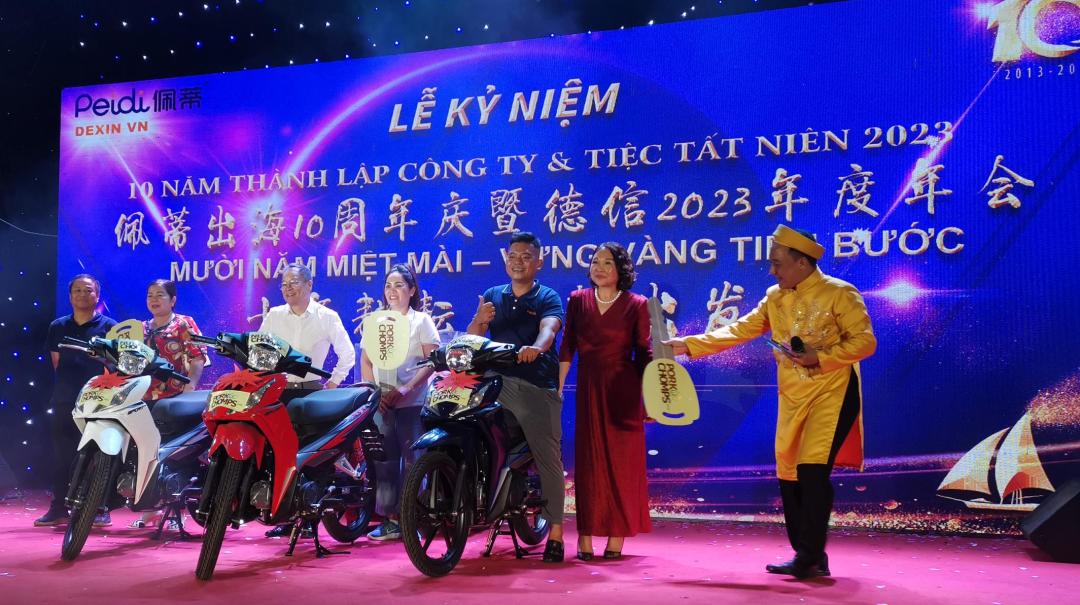
从海外代工到越南建厂,再到集群式海外投资,佩蒂的33年全球化之路|出海踏浪者
3 6 Ke· 2026-01-29 02:11
Core Viewpoint - Petty Animal Nutrition Technology Co., Ltd. has successfully expanded its operations internationally, establishing significant production bases in Cambodia, Vietnam, and New Zealand, capitalizing on the growing global pet market and adapting to changing trade environments [1][2][3]. Group 1: Company Growth and Strategy - Petty started as an OEM in the early 1990s, recognizing the potential of the pet market in the U.S. while domestic awareness of pets was minimal [3]. - The company developed China's first pet chew product, leveraging low-cost raw materials and gradually increasing its R&D investment to create customized products for different pet needs [3][4]. - By 2022, Petty's overseas export scale reached approximately 940 million yuan, nearly double that of its domestic exports, showcasing its successful international expansion [4]. Group 2: Supply Chain and Production Adaptation - Petty established its first overseas production base in Uzbekistan in 2011, which became a core raw material supply source, and later expanded to Vietnam in 2013, where exports grew from 6 million yuan in 2014 to 180 million yuan in 2017 [4]. - The company faced challenges in adapting local labor practices in Vietnam, initially encountering resistance to its piece-rate pay system, which was resolved by demonstrating productivity benefits through Chinese workers [5][6]. - Petty implemented various incentive measures, such as production competitions, to enhance worker motivation and productivity, resulting in a predominantly local workforce in its Vietnamese factory [6]. Group 3: Investment in Cambodia - Petty chose Cambodia for its new production base due to lower land and labor costs, a stable political environment, and favorable tax incentives, including up to nine years of income tax exemption [10][11]. - The establishment of the Bork Economic Zone included significant infrastructure improvements, such as a dedicated power supply and water reservoir, to support industrial operations [11]. - The economic zone aims to create a complete industrial ecosystem by selectively attracting related upstream and downstream enterprises, thereby enhancing the overall competitiveness of the region [13].

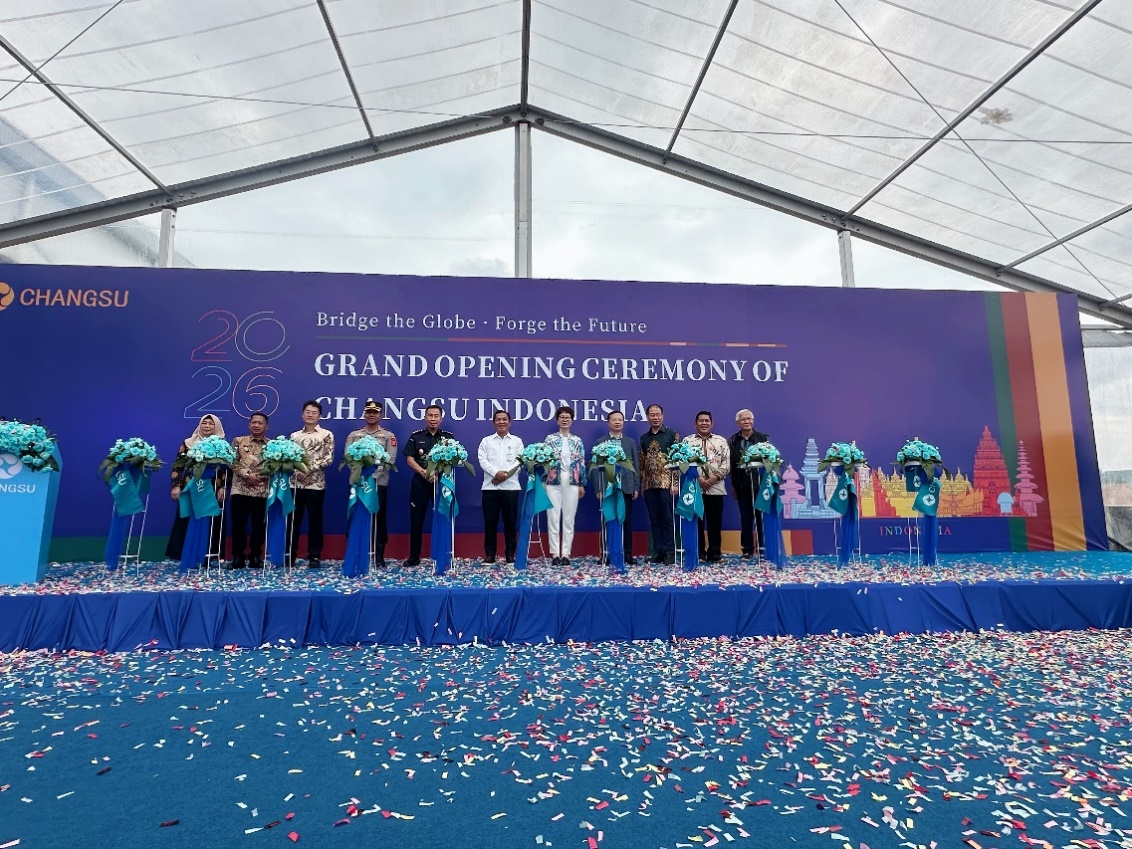
中仑新材旗下印尼基地投产,形成业绩增长新引擎
Mei Ri Jing Ji Xin Wen· 2026-01-16 01:37
Core Viewpoint - Zhonglun New Materials has officially launched its first overseas production base in Indonesia, marking a strategic upgrade from "product export" and "brand export" to "capacity export," reshaping the global functional film market and establishing a new growth engine for long-term development [2] Group 1: Global Capacity Expansion - The Indonesian production base, located in West Java, has a total investment exceeding 1 billion yuan and is planned to have an annual production capacity of 90,000 tons of high-performance BOPA film, making it the largest functional film production base in Southeast Asia upon reaching full capacity [2] - This facility is the fourth production base for Zhonglun New Materials, following those in Xiamen, Quanzhou, and the new energy film base, creating a global capacity network with domestic dual hubs and an overseas hub [2] Group 2: Market Demand and Competitive Advantage - BOPA film, known for its tensile strength and high barrier properties, is widely used in high-growth sectors such as new energy, food, pharmaceuticals, and daily chemicals, with localized production in Indonesia significantly shortening delivery times to Asia-Pacific and European markets [3] - The Indonesian base will enhance customer response efficiency and expand overseas business profitability, with additional capacity expected to be released over the next two years, further boosting Zhonglun's global supply capabilities [3] Group 3: Technological Leadership - Zhonglun New Materials holds over 200 core patents and has established itself as a leader in the industry, with the Indonesian base utilizing the company's fifth-generation low-carbon biaxial stretching technology, representing a world-leading level in the field [3] - The ability to replicate advanced manufacturing technology in Indonesia allows for high-efficiency, high-quality customized production, which will translate into product premium capabilities and a competitive market share [3] Group 4: Strategic Industry Positioning - The establishment of the Indonesian base has gained recognition from numerous global downstream customers across Southeast Asia, Europe, and North America, aligning with Indonesia's industrial upgrade needs and serving as a benchmark project for regional industrial development [3][4] - Zhonglun New Materials has developed a comprehensive global supply chain network and an integrated industrial layout, creating a competitive advantage that is difficult to replicate, with plans to deepen capacity layout in Europe and North America [4]
冲刺“A+H”双融资平台!国恩股份通过港交所聆讯,“一体两翼”构建全球化新版图
Xin Lang Cai Jing· 2026-01-15 12:48
Core Viewpoint - Guoen Technology Co., Ltd. is set to achieve a dual listing in Hong Kong after passing the main board listing hearing, aiming to enhance its "chemical new materials + health" dual business strategy and accelerate overseas capacity layout [1][4]. Group 1: Business Strategy - The company has established a unique "one body, two wings" business structure, leveraging vertical integration to create significant scale advantages [1]. - In the chemical sector, Guoen is the second-largest supplier of organic polymer modified materials and organic polymer composite materials in China, with a market share of approximately 2.5% as of 2024 [1]. - The health segment, through its subsidiary Dongbao Biological, has formed a complete closed loop in the collagen industry, benefiting from domestic substitution and consumption upgrades [2]. Group 2: Financial Performance - Guoen has demonstrated robust revenue growth, with a compound annual growth rate (CAGR) of 19.6% from fiscal year 2022 to fiscal year 2024, achieving revenues of RMB 134.06 billion, RMB 174.39 billion, and RMB 191.88 billion respectively [3]. - The company recorded revenue of RMB 174.44 billion in the first ten months of fiscal year 2025, continuing its stable growth trajectory [3]. - The combination of stable chemical business and high-barrier health business enhances overall operational resilience and profitability [3]. Group 3: Future Outlook and Expansion Plans - The company plans to establish a new production base in Thailand to better serve overseas customers and mitigate trade barriers [4]. - Domestic capacity expansion is planned in Yixing, Jiangsu, to further consolidate market share [5]. - A regional headquarters will be set up in Hong Kong to deepen global research and development and capital operations [6].

《关于调整光伏等产品出口退税政策的公告》政策解读
Lian He Zi Xin· 2026-01-15 11:10
Policy Overview - The Ministry of Finance and the State Taxation Administration announced a differentiated adjustment to the export tax rebate policy for photovoltaic (PV) products, effective April 1, 2026, marking a strategic shift from subsidy-driven to market-driven growth[5] - The policy aims to address issues of overcapacity, price competition, and international trade friction in the PV manufacturing industry[4] Short-term Impacts - The export tax rebate for all PV products, including silicon wafers, solar cells, and modules, will be completely eliminated, with the previous 9% rebate rate reduced to 0%[6] - The export volume for polysilicon, silicon wafers, solar cells, and modules in 2024 is projected to be approximately 40,000 tons, 60.9 GW, 58.3 GW, and 236.2 GW, respectively, with module exports accounting for 40.2% of production[9] - The removal of the rebate will increase tax costs for exporting companies, leading to a significant drop in profitability; for example, the profit margin for solar modules will decrease from 7.73% to -0.17%[9] Long-term Effects - The policy is expected to accelerate the exit of less competitive small and medium-sized enterprises (SMEs) from the market, leading to a structural reshaping of the industry[10] - By eliminating reliance on export tax rebates, the industry will shift towards a focus on technology and value-driven competition, enhancing innovation and quality[11] - The market concentration in the PV manufacturing sector is projected to increase, with the CR5 market share for polysilicon, silicon wafers, solar cells, and modules expected to rise to 78%, 77%, 62%, and 63% respectively by 2025[12] Strategic Implications - The adjustment is seen as a proactive measure to mitigate international trade disputes and enhance the global competitiveness of Chinese PV products[13] - Companies with established overseas production capabilities will benefit from the policy, as they can mitigate risks associated with the removal of export rebates and tariffs[12]
信义玻璃(00868):即时点评:沙特项目落地,中长期成长动能有望重塑
Guoyuan Securities2· 2026-01-15 07:20
Investment Rating - The report suggests a focus on industry bottom layout opportunities, indicating a cautious but optimistic outlook for the company's long-term growth potential [3]. Core Insights - The signing of the investment agreement with MODON marks a significant step in the company's globalization strategy and optimization of regional and product structure [3]. - The project in Saudi Arabia is expected to fill a gap in the local automotive glass manufacturing industry, aligning with Saudi Arabia's Vision 2030 localization strategy [2]. - The project aims to enhance the company's overall profitability by introducing high-value automotive glass and Low-E energy-saving glass production lines, which will help mitigate the cyclical fluctuations of domestic float glass [2]. Summary by Sections Event Overview - On January 14, 2026, the company signed an investment agreement in Saudi Arabia with a total investment of approximately $386 million, covering over 350,000 square meters for the construction of float, automotive, and high-performance Low-E energy-saving glass production lines [1]. Strategic Significance - The project allows the company to avoid trade barriers and deepen regional layout, effectively mitigating potential tariff risks and leveraging Saudi Arabia's free trade agreements [2]. - As the first automotive glass manufacturer in Saudi Arabia, the project provides a significant first-mover advantage, enabling the company to secure local supply chain demands amid the country's automotive industry development [2]. - The project is expected to benefit from local policy support in terms of taxes and energy, while proximity to energy sources will help control production costs [2].

电解液企业扎堆港股IPO,释放了哪些信号?
高工锂电· 2026-01-09 10:46
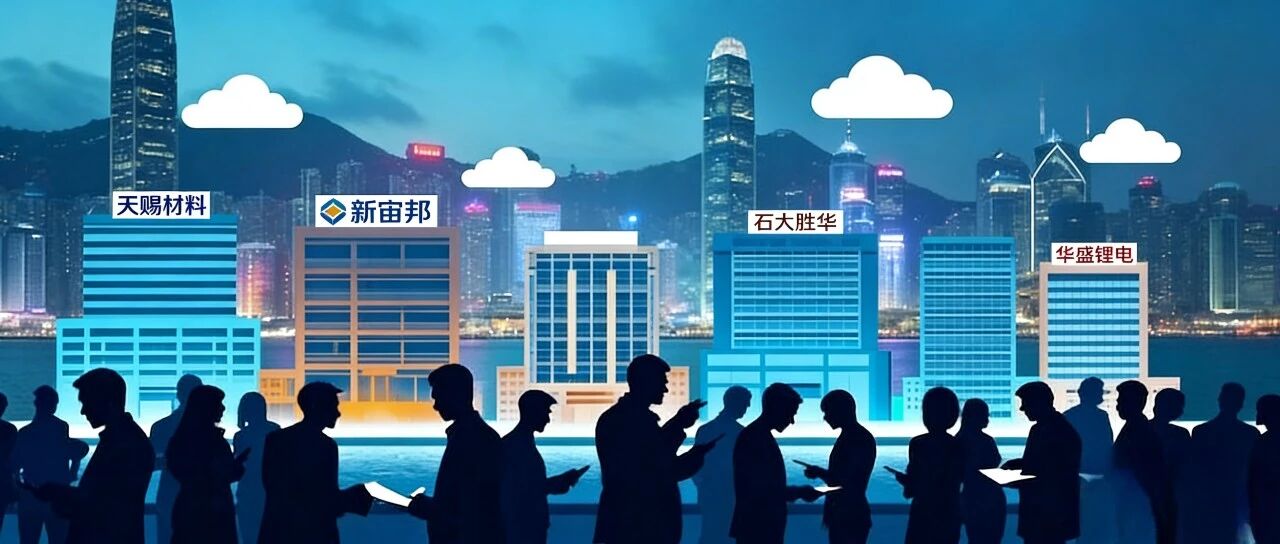
Core Viewpoint - The surge of electrolyte companies going public in Hong Kong is driven by industry dynamics and capital opportunities, reshaping the competitive landscape of lithium battery exports [1] Group 1: IPO Trends and Market Dynamics - Leading electrolyte additive company Huasheng Lithium announced plans for an H-share issuance and listing on the Hong Kong Stock Exchange, marking a significant event in the industry [2] - Since the second half of 2025, major players like Tianci Materials, Xinzhou Bang, and Shida Shenghua have also disclosed plans for IPOs in Hong Kong, indicating a collective push [2] - The easing of IPO regulations and the need for financing in the context of industry transformation have created a favorable environment for these listings [3] Group 2: Industry Growth and Financial Performance - The global electrolyte market is expected to experience explosive growth in 2025, with shipments projected to exceed 2.3 million tons, and Chinese companies holding over 90% market share [3] - Tianci Materials forecasts a net profit of 1.1 to 1.6 billion yuan for 2025, representing a year-on-year increase of 127.31% to 230.63% [3] - The average price of lithium iron phosphate electrolytes surged from 19,000 yuan per ton at the beginning of the year to 35,000 yuan per ton, indicating a structural reversal in the industry [3] Group 3: Global Expansion and Financing Needs - Major battery companies like CATL and Guoxuan High-Tech are accelerating overseas expansion, creating a pressing need for financing among electrolyte material companies [4] - The construction of overseas bases in countries like Hungary and Morocco requires substantial long-term funding, making IPOs in Hong Kong a necessary option [4] Group 4: Differentiated Strategies Among Companies - Tianci Materials aims to use 80% of its IPO proceeds to support global business development, particularly in establishing a lithium-ion battery material integration base in Morocco [7] - Shida Shenghua plans to focus on collaborative projects across the entire supply chain, while Xinzhou Bang seeks to enhance its international brand influence through the IPO [7] - Huasheng Lithium's IPO strategy is centered on niche market breakthroughs, with funds directed towards expanding production capacity and R&D for additive materials [7] Group 5: Impact on Competitive Landscape - The IPO wave is expected to significantly impact the lithium battery supply chain, driving demand for upstream materials and enhancing the global competitiveness of Chinese electrolyte companies [8] - The financing from IPOs will likely widen the gap between leading companies and smaller firms, as top players accelerate technological development and capacity expansion [8] - This trend marks a shift from "product export" to "capacity and technology export," fostering global collaboration within the lithium battery industry [8] Group 6: Future Outlook - The electrolyte industry is poised for high-quality development, supported by ongoing investments in technology and the establishment of overseas production capacities [9] - The Hong Kong capital market will provide continuous funding support, enhancing corporate governance and international operational capabilities [9]


普利司通、赛轮、浪马、中化等重金砸向埃及!
Xin Lang Cai Jing· 2026-01-05 10:45
Core Insights - The approval of Prometeon Tyre Group's $300 million investment in Egypt marks a new phase in international cooperation within the Egyptian tire industry, contributing to the region's emergence as a strategic hub for global tire production [1][8] Investment Details - The project will initially focus on manufacturing tires for heavy-duty vehicles, construction equipment, and agricultural tractors, with plans to expand into passenger car tires later [2][10] - The products will leverage Egypt's logistical advantages via the Suez Canal and Red Sea ports, catering to domestic demand and exporting to the Middle East, Africa, and Europe [2][10] - This investment is one of the largest foreign investments in Egypt's tire manufacturing sector in recent years, filling a gap in high-end commercial vehicle tire production [2][10] Industry Trends - The investment by Prometeon is part of a broader trend, with major Chinese tire manufacturers also accelerating their capacity expansion in North Africa, indicating a clear "cluster effect" [3][12] - Other notable investments include: - Chaoyang Longma Tire's $190 million project in the Suez Canal Economic Zone, aiming for an annual production of 4.5 million passenger tires and 1 million heavy truck tires, expected to create around 1,400 jobs [5][12] - Sailun Group's $291 million project for 3.6 million radial tires annually, with groundbreaking in September 2025 [5][14] - China National Chemical Corporation's plan to invest $400 million to expand its Alexandria factory, adding 1.5 million tire capacity [5][14] Strategic Advantages - Egypt has become a strategic location for companies targeting European and African markets due to four key advantages: - Free trade agreements with the EU, EFTA, Turkey, and the African Continental Free Trade Area (AfCFTA) allow for zero or reduced tariffs on qualifying products, reducing costs for tire manufacturers [6][15] - The Suez Canal provides significant logistical advantages, enabling controlled logistics costs and rapid access to Middle Eastern, African, and Southern European markets [6][15] - A young and cost-effective labor force, with approximately 60% of the population under 30, offers a competitive edge for labor-intensive tire manufacturing [6][15] - A solid automotive industry foundation, with 23 assembly lines producing around 120,000 vehicles annually, creates substantial local demand for tires [6][15] Government Support - The Egyptian government is actively promoting policies to support foreign investment, including tariff reviews to protect local industries and the establishment of investor associations for streamlined administrative processes [8][17] - As projects like those from Prometeon, Longma, and Sailun materialize, Egypt is transitioning from merely a sales market to a comprehensive regional tire manufacturing center, reshaping its industrial landscape and impacting global tire supply chains [8][17]