
茶叶

Search documents
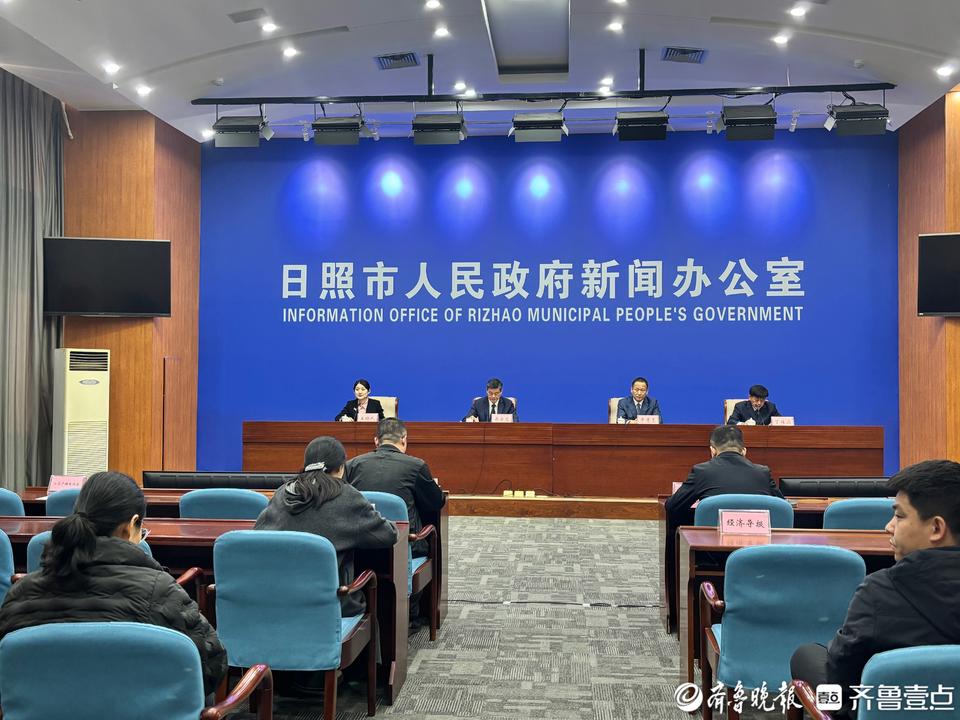
日照发布系列新举措,聚焦绿茶高质量发展
Qi Lu Wan Bao Wang· 2025-04-01 04:20
Core Viewpoint - Rizhao green tea is a key agricultural industry in Rizhao City, representing both the city's image and the livelihood of its residents, with significant achievements in quality development and brand promotion [3][5]. Group 1: Industry Development Initiatives - Rizhao City has implemented the "Grain Rain Project" to stabilize planting areas, enhance tea quality, and increase industry benefits, leading to a solid foundation for development [3]. - The city aims to leverage the newly enacted "Rizhao Green Tea Protection Management Regulations" as a key opportunity to promote the "Three-Year Action Plan for High-Quality Development of the Rizhao Tea Industry" [3][4]. Group 2: Key Action Areas - **Leading Enterprise Cultivation**: The city plans to adopt a model similar to French wine estates to develop "Rizhao Green Tea Estates," fostering large-scale, competitive enterprises that can integrate small tea gardens [4]. - **Quality and Safety Enhancement**: Establishing a pesticide traceability system and implementing a prescription system for pesticide sales to ensure comprehensive monitoring of pesticide use [4]. - **Technological Innovation**: Collaborating with the Northern Tea Research Center to advance research in green pest control and deep processing of tea, aiming to establish a standardized technical system for Rizhao green tea [4]. - **Brand Protection and Promotion**: Strengthening brand protection through the new regulations and enhancing marketing efforts on mainstream media platforms to tell the "Rizhao Green Tea" story [4]. - **Cultural and Tourism Integration**: Organizing tea culture festivals and developing new tourism products that combine tea culture with local hospitality and educational experiences [4][5]. Group 3: Future Outlook - The city is committed to advancing the Rizhao green tea industry towards a new phase of high-quality development, enhancing brand value and market competitiveness, and contributing to rural revitalization and socio-economic growth [5].

(乡村行·看振兴)广西三江侗乡:一片绿叶托起富民“金饭碗”
Zhong Guo Xin Wen Wang· 2025-03-25 15:29
Core Viewpoint - The tea industry in Sanjiang, Guangxi, is thriving, significantly contributing to local economic development and providing stable income for residents through tea cultivation and processing [1][6]. Group 1: Tea Production and Quality - Sanjiang's geographical location at the intersection of Guangxi, Hunan, and Guizhou provinces creates an ideal environment for high-quality tea production, characterized by early, unique, fresh, and fragrant tea [3]. - The early spring tea from Sanjiang has gained market popularity, with local farmers actively participating in tea picking, exemplified by one farmer who harvested 21 kg of tea leaves in a day, earning over 400 RMB [3][4]. Group 2: Economic Impact and Industry Growth - The Sanjiang Ecological Industrial Park has recently commenced operations, with a tea processing company reporting a nightly processing capacity of over 10,000 kg of fresh tea leaves, utilizing automated equipment to enhance production efficiency [4]. - Sanjiang Tea City experiences peak trading periods post-spring equinox, with daily dry tea trading volumes reaching approximately 50 tons, attracting tea merchants from various provinces [6]. - The tea industry in Sanjiang is projected to achieve a comprehensive annual output value of 8.7 billion RMB by 2024, with 215,000 acres of tea gardens serving as a stable income source for the local population, establishing the "tea economy" as a pillar of county economic development [6].

“无保真 不春茶”:小罐茶西湖龙井茶抢“鲜”上市
Sou Hu Wang· 2025-03-25 10:07
"无保真 不春茶":小罐茶西湖龙井茶抢"鲜"上市 "真正的好茶,不仅仅是一种味道,更是一种信任,一种责任。"小罐茶创始人杜国楹在直播中掷地有 声。近日,杜国楹走进西湖龙井茶园一线,以一场"无保真 不春茶"的沉浸式直播,向消费者展示了西 湖龙井茶园的一线采茶现状,也讲解了小罐茶的"敢保真"是如何让西湖龙井从茶园到茶杯一路保真的。 此次直播还邀请到国家一级评茶师、西湖龙井茶专家、西湖龙井茶标准及实物标准样制作者沈红,以及 小罐茶副总裁兼首席技术官郝连奇共同参与。杜国楹的"上茶山"直播,不仅展示了公证处的日常公证工 作,见证了小罐茶对春茶品质的庄严承诺,更是一次以西湖龙井为主的春茶知识普及与宣传活动。对于 当地来说,直播聚焦茶农采摘过程,切实助力乡村振兴,通过展示龙井茶园,进一步激发消费者的购买 需求。 杜国楹表示:"我们希望通过透明化的实践,让消费者闭眼买好茶,特别是让小罐茶的西湖龙井,成为 大众心目中毋庸置疑的春茶首选。这一举措,既能助力茶农增收,又能赋予每一片茶叶深厚的信任基础 与市场价值,让每一片茶叶都承载更多意义。" 网友云监工"上茶山":小罐茶打造"看得见的信任" 图:杜国楹直播亲自采茶 在直播画面中, ...

苏州:农文商旅“新”融合 碧螺春里展乾坤
Xin Hua Cai Jing· 2025-03-24 08:04
Core Viewpoint - The integration of agriculture, culture, commerce, and tourism in Suzhou's Dongting Mountain area is enhancing the development of the Biluochun tea industry, showcasing innovation in product offerings and marketing strategies [1][2][3][4] Group 1: Industry Development - Suzhou's Taihu National Tourism Resort is focusing on the integration of tea culture, industry, and technology, promoting Biluochun tea's inclusion in national intangible cultural heritage [2] - The implementation of the "Three-Year Action Plan for the Revitalization of Dongting Mountain Biluochun Tea Industry (2023-2025)" aims to enhance the quality and marketability of Biluochun tea [2] - The total output value of Biluochun tea in Wuzhong District is projected to reach 400 million yuan in 2024, with a 5.5% year-on-year increase in rural residents' disposable income [3] Group 2: Innovation and Entrepreneurship - Young entrepreneurs are exploring new products and business models, such as the development of Biluochun latte, which has gained popularity with an average daily sales exceeding 100 cups [2][3] - Collaborations with institutions for high-yield tea varieties are being pursued to extend production cycles and increase yield per acre [3] - The East Mountain Tea Factory has launched over ten new products annually, achieving total sales of 100 million yuan last year, benefiting local tea farmers with additional income [3] Group 3: Future Initiatives - The 2025 Suzhou Taihu Dongting Mountain Biluochun Tea Brand Conference and Rural Revitalization Partnership Plan was recently launched, emphasizing the development of new business models such as "tea tourism + research" and "tea tourism + health care" [4]
中国茶叶IPO终止审核!
梧桐树下V· 2025-03-22 15:12
一、产品市占率低 文/西风 3月21日,上交所公布对中国茶叶股份有限公司主板IPO终止审核的决定,直接原因是公司及保荐机构中信建投撤回申报。公司申报IPO于2023年2月28日获得受理, 3月15日收到首轮审核问询,但直到被终止审核都未见公布首轮问询的回复。公司只公布了受理时那版招股书(申报稿)。公司本次IPO拟募资11.4亿元。 公司前身中国茶叶进出口公司成立于1985年4月,2015年3月改制为中国茶叶有限公司,2000年12月整体变更为中国茶叶股份有限公司。公司目前注册地北京市朝阳 区,注册资本6.875亿元。中国土产畜产进出口有限责任公司持有公司 40%的股份,为公司的发起人及控股股东,中粮集团有限公司持有中土畜100%的股权,为公 司的实际控制人。茶缘一号、二号、三号、四号均为中国茶叶员工持股平台。 公司定位于全品类、一体化运营的品牌消费品公司,以"好茶在中茶"为品牌主张,主营业务为各类茶叶及相关制品的研发、生产和销售。公司创造了畅销海内外 的"中茶"核心品牌及"海堤""猴王牌""蝴蝶牌""百年木仓""龙冠"等子品牌,主要产品包括乌龙茶、普洱茶、花茶、红茶、六堡茶、白茶、安化黑茶、绿茶及相关制品 等 ...
中日抹茶之争,贵州先赢一城
吴晓波频道· 2025-03-21 18:48
Core Viewpoint - The article discusses the rising competition between Chinese and Japanese matcha industries, highlighting China's rapid growth in matcha production and the challenges faced by Japan in meeting increasing global demand [4][6][22]. Group 1: Market Dynamics - In 2024, Japan's green tea export value reached $240 million, a 25% increase year-on-year, but faced supply shortages [4]. - By 2025, China's matcha production is expected to exceed 5,000 tons, making it the largest producer globally, with Guizhou accounting for a quarter of this output [4][6]. - The global matcha market size reached $3.3 billion in 2024, projected to grow to $7 billion by 2029, with an annual growth rate of nearly 10% [13]. Group 2: Health and Cultural Trends - Matcha's popularity surged due to its health benefits, containing polyphenols, amino acids, and antioxidants, appealing to younger consumers seeking guilt-free indulgence [11][13]. - The cultural significance of matcha has evolved, with consumers choosing it not just for health but as a lifestyle statement reflecting sophistication and sustainability [13][14]. Group 3: Challenges in Japan - Japan faces a supply chain crisis due to declining domestic demand for traditional tea, limited tea garden area, and labor shortages, leading to a significant drop in matcha production [15][16][20]. - The aging population of tea farmers has resulted in a decrease from 53,000 farmers in 2000 to 12,000 in 2020, exacerbating the production challenges [16]. Group 4: China's Competitive Edge - China has rapidly developed its matcha industry, with Zhejiang being the largest production province, and Guizhou emerging as a key player with high-quality production and significant export volumes [26]. - The Chinese market's ability to quickly adapt to supply and demand changes, along with its vast green tea resources, positions it favorably against Japan's traditional production constraints [26]. Group 5: Future Outlook - The competition between China and Japan in the matcha market is expected to evolve into a model of "China-Japan technology cooperation + global capacity transfer," focusing on quality and cultural value [33]. - China's matcha industry is supported by government initiatives and significant investment, with over $5 billion in industry financing expected in 2024 [29][30].

2024年中国红茶行业:健康养生需求增长和消费需求细化,推动红茶市场多元化发展
Tou Bao Yan Jiu Yuan· 2025-03-20 12:00
Investment Rating - The report does not explicitly state an investment rating for the black tea industry Core Insights - The black tea market in China is experiencing steady growth driven by increasing health consciousness among consumers and a diversification of consumption patterns [3][6][68] - The total production of black tea in China has increased from 258,000 tons in 2015 to 491,000 tons in 2023, indicating a robust growth trend [3][4] - The market is expected to see stable growth starting from 2024, following fluctuations in previous years [6][17] Summary by Sections Definition and Classification - The report provides a comprehensive overview of the black tea industry, including its definition and classification [9] Development History - The black tea market originated in Wuyi Mountain, Fujian, and has evolved through various stages, including initial development, rapid growth, and a current phase of maturity and integration [10][12] Driving Factors - Key drivers of growth include rising health awareness, diversification of consumer preferences, and technological advancements in production [6][68] Market Size - The market size of black tea has shown fluctuations from 2019 to 2023, with a projected steady growth starting in 2024 [6][17] Import and Export Scale - China imports significantly more black tea than it exports, primarily from Sri Lanka, indicating that domestic production is not yet meeting consumer demand [20][22] Production Structure Analysis - The main production areas for black tea in China include Fujian, Anhui, and Yunnan, each contributing unique characteristics to the black tea produced [51][53] Industry Chain Analysis - The industry chain includes upstream suppliers, midstream processing, and downstream sales channels, highlighting the interconnected nature of the black tea market [57][59] Development Trends - Future trends indicate a focus on health-oriented products, technological innovations in processing, and a diversification of consumer demographics, particularly among younger consumers [68][73]