
水利工程

Search documents
A股水利板块盘初活跃,深水规划、大宏立20cm涨停,基康技术涨超18%,五新隧装涨超15%,设研院涨超14%,大禹节水涨超13%。
news flash· 2025-07-23 01:43
Group 1 - The A-share water conservancy sector is experiencing significant activity, with several companies showing notable stock price increases [1] - Deep Water Planning and Dahongli both reached the daily limit of a 20% increase [1] - BiKang Technology saw a rise of over 18%, while Wuxin Tunnel Equipment increased by more than 15% [1] - The Design Research Institute rose by over 14%, and Dayu Water-saving increased by over 13% [1]


李国英调研西藏水利工作
news flash· 2025-07-22 23:55
Group 1 - The core viewpoint emphasizes the importance of implementing Xi Jinping's water management philosophy, focusing on water conservation, spatial balance, systematic governance, and dual efforts to enhance water safety in Tibet [1][2] - The Ministry of Water Resources is accelerating the improvement of urban flood control systems, major water conservancy projects, and modernization of irrigation areas to ensure long-term stability and high-quality development in Tibet [1] - The research includes visits to various river basins and ongoing water conservancy projects, highlighting the need for effective river basin protection and flood control engineering in cities like Lhasa and Shigatse [1] Group 2 - The emphasis is placed on disaster prevention and mitigation, advocating for a systematic approach to flood control that includes the establishment of monitoring and forecasting systems [2] - There is a call for modernizing existing reservoirs and ensuring safety standards for both existing and planned reservoirs, with a focus on ecological and intelligent dam construction [2] - The initiative also includes advancing irrigation modernization and enhancing water culture heritage research and protection [2]
黄茅峡水库正式开工!广东防洪体系补上“关键拼图”
Nan Fang Du Shi Bao· 2025-07-22 15:16
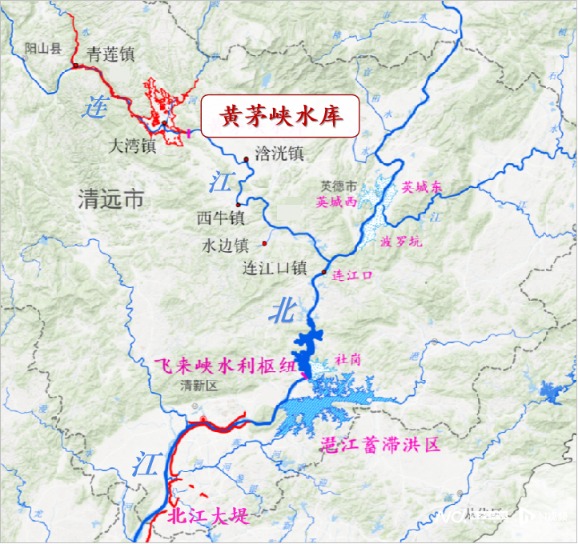
Core Viewpoint - The construction of the Huangmaoxia Reservoir in Guangdong marks a significant step in enhancing the flood control system along the Beijiang River, contributing to regional development and water safety [1][6]. Group 1: Project Overview - The Huangmaoxia Reservoir, located 6 kilometers downstream from Dawan Town in Yingde City, has a total capacity of 562 million cubic meters and is classified as a Class II large-scale project [2]. - The reservoir serves multiple purposes, primarily focusing on flood control while also supporting navigation, irrigation, and power generation, making it a comprehensive public welfare project [2][6]. Group 2: Flood Control and Navigation - Once completed, the reservoir will significantly improve the flood control system for the middle and lower reaches of the Beijiang River, alleviating flood pressure in cities like Guangzhou, Foshan, and Qingyuan [6]. - The project will also establish a Class IV navigation channel, enhancing the shipping capacity for 500-ton vessels and improving logistics efficiency in the region [6]. Group 3: Renewable Energy and Agriculture - The reservoir is expected to generate over 100 million kilowatt-hours of green electricity annually, contributing to the optimization of the regional energy structure [6]. - It will enhance irrigation supply reliability for the Yingde irrigation area, supporting agricultural water needs and promoting rural revitalization [6]. Group 4: Innovative Construction and Ecological Protection - The project integrates new urbanization and rural revitalization, combining hard investments with soft construction to create a high-quality water conservancy project [7]. - Innovative techniques, such as land elevation, will reduce land acquisition costs and promote large-scale farming, protecting arable land while lowering investment pressures [7][9]. Group 5: Community Development and Financing - The project aims to improve the living environment in rural areas, enhance commercial areas, and develop green living demonstration points, benefiting local communities [11]. - Innovative financing models, including the use of real estate investment trusts (REITs), will attract social capital and ensure reliable funding for the project [12].

大禹节水20250722
2025-07-22 14:36
Summary of Dayu Water Saving Conference Call Company Overview - **Company**: Dayu Water Saving - **Industry**: Water conservation and hydropower engineering Key Points and Arguments Industry and Market Opportunities - Dayu Water Saving has extensive experience in hydropower engineering construction in high-altitude areas, having completed over 1.3 billion orders in confidential high-altitude subcontracting projects, showcasing its construction capabilities under complex geological conditions [2][5] - The surrounding infrastructure investment for the Yaxia Hydropower Station totals 1.2 trillion, providing numerous participation opportunities for Dayu Water Saving [2][6] - The high-value rural construction sector has significant prospects, with increased investment in irrigation modernization. The national goal for agricultural infrastructure over the next decade is nearly 600 million acres, with a total market space exceeding 1.5 trillion [2][8] Financial Performance and Cash Flow - Dayu Water Saving's engineering revenue is primarily supported by central government funding, ensuring reliable cash flow. The expected operating cash flow for 2024 is approximately 4.3 billion, with recent cash amounts nearing 700 million [2][10] - The company plans to expand into national key projects, which are expected to have high cash return rates due to strong central funding support [10] Strategic Initiatives - The company is establishing a subsidiary to engage with the Yaxia project and leverage its market mechanisms and deep experience [2][6] - Dayu Water Saving is exploring the application of Real World Assets (RWA) in agricultural products, aiming to digitize the planting process and enhance commercial value [4][11] - The company has engaged in discussions with major institutions like Ant Group and JD.com to advance RWA applications, targeting to become the first listed company to issue agricultural RWA [4][12] Competitive Advantages - Dayu Water Saving holds a first-class engineering qualification in the water conservancy and hydropower industry, a rare qualification among private enterprises, and has participated in numerous large and medium-sized hydropower projects [3][5] - The company plans to further expand its capabilities through acquisitions and is developing digital twin models and flood prediction models to enhance its service offerings [3] Future Growth and Expansion - The Yajiang project, with a total investment of 1.2 trillion, is a significant milestone for the industry, and Dayu Water Saving aims to leverage this to drive overall performance and profit release over the next three to five years [9] - The company is optimistic about the future demand in high-value rural construction and irrigation modernization, supported by national policies and increased investment [8][9] Collaboration with State-Owned Enterprises - Dayu Water Saving has established long-term partnerships with state-owned enterprises like China Electric Power Construction and China Energy Construction, demonstrating strong collaboration capabilities [5][20] - The company has been involved in various projects in Tibet since 2015, showcasing its ability to work effectively in challenging environments [5][20] Technological Integration - The company is focused on integrating blockchain technology with agricultural practices to enhance asset digitization and traceability, aiming to improve the commercial value of agricultural products [14][15] - Dayu Water Saving is exploring innovative financing models and digital finance to support its business development and expand its market reach [18] Other Important Insights - The company is considering the implications of tokenization and the potential for overseas financing in the agricultural sector, which remains largely untapped [17][18] - Dayu Water Saving's strategic focus on digital transformation and RWA applications positions it well for future growth in both domestic and international markets [11][12][14]
揭秘涨停丨这只热门股封单超50亿元
Zheng Quan Shi Bao Wang· 2025-07-22 11:42
Group 1: Stock Market Highlights - A total of 52 stocks had closing orders exceeding 100 million yuan, with China Electric Power Construction leading at 5.305 billion yuan [1] - China Electric Power Construction, China Energy Construction, Tibet Tianlu, and China Railway Construction all had order volumes exceeding 1 million shares, with respective volumes of 8.6263 million, 4.4045 million, 3.1247 million, and 1.5808 million shares [1] - The stock Upwind New Materials achieved a remarkable 10 consecutive trading limit increases, with a cumulative increase of nearly 520% since July 9 [1] Group 2: Hydropower Sector - The hydropower sector saw a surge in stocks such as Poly United, China Electric Power Construction, and Tibet Tianlu, driven by the construction of hydropower projects [2] - China Electric Power Construction is the leading enterprise in hydropower, responsible for over 65% of large and medium-sized hydropower station construction tasks in China [2] - The opening of the Yarlung Tsangpo River downstream hydropower project is expected to significantly boost cement demand in Tibet and surrounding areas, benefiting companies like Huaxin Cement [2] Group 3: Coal Industry - The coal sector experienced gains with stocks like Shanxi Coking Coal and Lu'an Environmental Energy, focusing on enhancing their coking coal operations and safety measures [3] - Shanxi Coking Coal has a power generation capacity of 4.47 million kilowatts and a coking capacity of 3.82 million tons per year [3] - Lu'an Environmental Energy has expanded its mining operations from 4 to 23 mines, increasing raw coal production from under 10 million tons to over 50 million tons [3] Group 4: Supercritical Power Generation - Stocks in the supercritical power generation sector, including Guandong Electric and Dongfang Electric, have also seen positive movements [4] - Guandong Electric is involved in DCS and DEH control systems for supercritical units, projecting a significant increase in net profit for the first half of 2025 [5] - Dongfang Electric's development of the world's first 700 MW supercritical circulating fluidized bed coal-fired generator marks a significant advancement in clean coal technology [5]

水利概念涨2.94%,主力资金净流入74股
Zheng Quan Shi Bao Wang· 2025-07-22 09:39
Core Insights - The water conservancy sector has seen a rise of 2.94%, ranking 7th among concept sectors, with 126 stocks increasing in value, including notable gainers like Beikang Technology and Wuxin Tunnel Equipment reaching a 30% limit up [1] - Major inflows of capital were observed in the water conservancy sector, with a net outflow of 6.73 billion yuan, while 74 stocks experienced net inflows, with TBEA leading at 6.29 billion yuan [2][3] Sector Performance - The water conservancy concept sector had a daily increase of 2.94%, with significant contributors including TBEA, China Communications Construction, and Huawu Co., which saw net inflows of 6.29 billion yuan, 3.93 billion yuan, and 2.87 billion yuan respectively [2][3] - The top gainers in the water conservancy sector included TBEA (9.98%), China Communications Construction (10.01%), and Huawu Co. (19.98%) [3][4] Capital Flow Analysis - The highest net inflow rates were recorded for *ST Zhengping (100.00%), Poly United (75.07%), and Subo Te (58.95%) [3] - The water conservancy sector's capital inflow rankings highlighted TBEA, China Communications Construction, and Huawu Co. as leading stocks in terms of net inflow [3][4] Stock Performance - Stocks such as Beikang Technology and Wuxin Tunnel Equipment achieved a 30% limit up, while stocks like Pinming Technology and Huitong Group faced declines of 7.07% and 6.49% respectively [1][2] - The water conservancy sector's performance was characterized by a mix of significant gainers and notable losers, reflecting varied investor sentiment [1][2]



雅鲁藏布江下游水电工程开工,哪些企业有望受益?
2025-07-21 00:32
Summary of the Yarlung Tsangpo River Hydropower Project Conference Call Industry and Company Involved - The conference call discusses the Yarlung Tsangpo River Hydropower Project, specifically the Yarlung Zha Hydropower Station, which is a significant infrastructure project in Tibet, China. Key Points and Arguments 1. **Project Overview and Investment Scale** - The total investment for the Yarlung Zha Hydropower Station is 1.2 trillion yuan, which is nearly five times the total fixed asset investment in Tibet for 2024, estimated at 250 billion yuan. The average annual investment over the 15-year construction period is projected to be 80 billion yuan, accounting for 30% of Tibet's annual fixed asset investment [2][4][10]. 2. **Comparison with the Three Gorges Project** - The installed capacity of the Yarlung Zha Hydropower Station is approximately three times that of the Three Gorges Project, with a total investment close to five times that of the Three Gorges. The expected immigrant cost is low, around 15%, leading to an actual construction fund scale of about 1 trillion yuan, which is over six times that of the Three Gorges Project [3][10]. 3. **Impact on Local Economy** - The project is expected to significantly boost the local economy, with an average annual construction investment of 36 billion yuan, representing 14% of Tibet's annual fixed asset investment. This ratio is expected to increase during peak construction periods [4][10]. 4. **Challenges in Foundation Treatment** - The project faces challenges due to complex geological conditions in the Motuo region, with foundation treatment accounting for 30%-40% of the construction period. The average annual investment in foundation treatment is estimated to be between 15 billion and 20 billion yuan. Zhongyan Dadi, with its core technologies, is expected to gain significant market share in this area [5][10]. 5. **Cement Demand and Market Impact** - The Yarlung Zha Hydropower Station is expected to require over 60 million tons of cement over the 15-year period, with an average annual demand of about 4 million tons, which constitutes 30% of Tibet's total production in 2024. Peak demand may reach 6-8 million tons, significantly impacting the cement supply chain [6][10]. 6. **Current Status of the Cement Market in Tibet** - The cement market in Tibet is characterized by strong regional limitations, with major players including Tibet Tianlu (31% market share), Huaxin Cement (27%), Qilian Mountain (21%), and Conch Cement (6%), collectively holding 85% of the market share. Tibet Tianlu, as a local state-owned enterprise, has a competitive advantage and performance elasticity [7][10]. 7. **Development of the Explosives Industry** - The explosives industry in Tibet is in its early stages, with an expected demand of about 100,000 tons of industrial explosives annually for the Yarlung Tsangpo project, which is more than double the current annual production of 50,000 tons. Highzheng Explosives, as a local leader, has established a development team for the project and is well-positioned to benefit [8][10]. 8. **Demand for Tunnel Construction Equipment** - The project requires advanced tunnel construction equipment due to its complex geological conditions. Leading companies such as Wuxin Tunnel Equipment, Tiedao Heavy Industry, and China Railway Industry are expected to play significant roles in providing necessary equipment [9][10]. Other Important but Possibly Overlooked Content - The project is expected to generate approximately 300 billion kWh of clean electricity annually and contribute around 20 billion yuan in fiscal revenue [2][10]. - The project will involve the construction of five tiered power stations, utilizing a straightening and tunnel diversion development approach [2][10].

黄河很美,将来会更美
He Nan Ri Bao· 2025-07-18 23:35
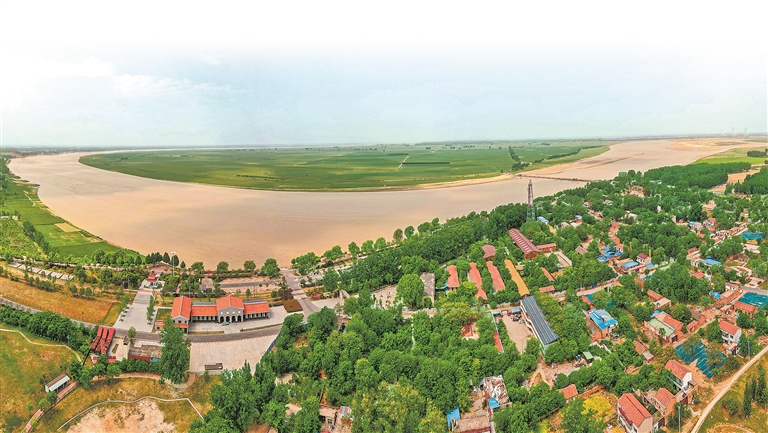
Core Viewpoint - The ecological protection and high-quality development of the Yellow River basin has become a significant national strategy, with ongoing efforts to enhance water quality and promote sustainable development in the region [2][3]. Group 1: Ecological Protection and Development - The Yellow River's water quality has shown steady improvement, with Shandong Province compensating Henan Province with 62.07 million yuan for ecological protection in 2024 [3]. - Since 2019, Henan has addressed 14,000 "four chaos" issues related to the Yellow River, with 6.45 million acres of afforestation and 27,800 acres of wetland restoration completed [5]. - The water quality of the Yellow River in Henan has consistently reached Class II since 2020, with significant improvements in soil quality [6]. Group 2: Water Management and Safety - The water flow from the Xiaolangdi Reservoir was reduced to 600 cubic meters per second, marking the end of the Yellow River's water and sediment regulation for 2025 [7]. - Since the first water and sediment regulation in 2002, the main channel of the Yellow River has deepened by an average of 3.1 meters, with the minimum flow capacity increasing from 1,800 cubic meters per second to approximately 5,000 cubic meters per second [8]. - The flood control system in Henan has been enhanced, with major water conservancy projects and a comprehensive flood control engineering system in place [9]. Group 3: Cultural Heritage and Tourism - The newly opened Han-Wei Luoyang Ancient City Ruins Museum showcases over 1,300 cultural relics representing Yellow River culture, highlighting the region's commitment to cultural preservation [10]. - The Yellow River cultural tourism belt has seen significant visitor numbers, with 6.45 million tourists and 37.11 billion yuan in tourism revenue during the "May Day" holiday, reflecting a year-on-year growth of 4.6% and 4.8% respectively [10]. Group 4: Green Transformation and Economic Development - Henan Province has initiated a "waste-free city" construction program across the Yellow River basin, with several cities included in the national list for the 14th Five-Year Plan [11]. - The province has implemented ultra-low emissions modifications in key industries and achieved high proportions of new energy vehicles in public transport [11]. - By 2024, energy consumption per ten thousand yuan of industrial added value and water usage per ten thousand yuan of GDP in Henan are expected to decrease by 23.5% and 23.1% compared to 2019 [12].
广东前汛期蓄水目标全面完成 可调水量约74亿立方米
Nan Fang Ri Bao Wang Luo Ban· 2025-07-18 07:53
Core Insights - Guangdong's water management system has effectively maintained reservoir water levels despite uneven rainfall distribution during the pre-flood season, achieving a total adjustable water volume of approximately 74 billion cubic meters, which is 77% of the planned capacity [1] Group 1: Rainfall and Water Management - The rainfall in Guangdong during the pre-flood season showed significant variability, with April experiencing a 39% decrease, May a 13% increase, and June remaining stable compared to historical averages [1] - The East River and Han River basins recorded rainfall deficits of 33% and 38% respectively, while the North River basin saw a 30% increase in rainfall [1][3] - The provincial water authority has proactively developed a water scheduling plan for the five major river basins to ensure flood safety and maximize water storage [1][4] Group 2: Water Supply and Ecological Safety - The main reservoirs have exceeded their water storage targets, with a total adjustable water volume of 73.8 billion cubic meters and a recovery volume of 21.7 billion cubic meters by July 1 [3] - All ecological flow and minimum discharge requirements for seven national monitoring sections have been met, ensuring water supply for both Guangdong and neighboring regions [3] Group 3: Future Outlook - The post-flood season is expected to present complex climatic conditions, with rainfall predicted to be higher in the western regions and lower in the east, alongside the potential impact of 3 to 5 tropical cyclones [4] - The provincial water authority plans to enhance monitoring and strictly implement water scheduling to maintain water storage effectiveness and ensure supply and ecological safety [4]
“两手发力”兴水利
Liao Ning Ri Bao· 2025-07-18 00:54
Group 1 - The core viewpoint emphasizes the importance of leveraging financial mechanisms to enhance rural water supply projects, ensuring safe drinking water for 226,000 residents across 10 towns [1] - The province has signed financing agreements exceeding 800 million yuan for various rural water supply projects, indicating strong financial support for water infrastructure development [1] - Historically, water infrastructure projects relied heavily on government funding due to their public welfare nature, but the need for a diversified financing approach has become evident [1][2] Group 2 - Non-fiscal funding for water investment has significantly increased from an average of 1.59 billion yuan during the 13th Five-Year Plan to 5.56 billion yuan in the 14th Five-Year Plan, representing a growth in annual investment share from 16.4% to 28.0% [2] - Cumulatively, the province has completed water investments totaling 79.68 billion yuan in the first four years of the 14th Five-Year Plan, marking an increase of 31.19 billion yuan or 64.3% compared to the entire 13th Five-Year Plan [2] - Innovative financing mechanisms have attracted social capital into water investment, with projects like the 1.4 billion yuan South Sha River Basin environmental remediation project successfully securing a loan from the BRICS New Development Bank [2][3] Group 3 - The province is actively implementing policies to enhance water investment, including local government special bonds and public-private partnerships (PPP), to facilitate the financing of water projects [3] - Future efforts will focus on maximizing the use of national and provincial financing policies to gather funds for water project implementation [3]