奢侈品

Search documents
辛芷蕾封后,“押对宝”的香奈儿危机四伏?
Xin Lang Cai Jing· 2025-09-07 08:07
Core Viewpoint - Chanel is facing significant challenges in the Chinese market, with declining revenues and increased layoffs, while its brand image is suffering due to various controversies and consumer dissatisfaction [2][3][4]. Financial Performance - Chanel's total revenue for 2024 decreased by 5.3% to $18.7 billion, and net profit fell by 28.2% to $3.4 billion [3]. - The Asia-Pacific market, which accounts for nearly half of Chanel's total revenue, saw a substantial decline of 9.3%, totaling $9.233 billion [3]. - In contrast, competitors like Hermès and Prada reported growth, with Hermès achieving a 4.5% increase and Prada experiencing a 17% rise in global revenue [3]. Layoffs and Workforce Changes - Chanel is reportedly increasing layoffs in China, with plans to reduce its workforce from approximately 460 to about 370, representing a nearly 20% cut [6]. - The layoffs are affecting various employee levels, including long-term staff with permanent contracts [4][6]. Brand Image and Consumer Sentiment - Chanel's brand image has been negatively impacted by incidents involving staff and customer conflicts, leading to public backlash [7][8]. - Complaints regarding poor service and product quality have surged, with over 6,000 complaints filed against Chanel [2]. - Controversies such as the "powder pricing incident" have further fueled consumer dissatisfaction, with consumers accusing Chanel of overpricing [10]. Market Position and Strategy - Chanel's reliance on classic products and frequent price increases have led to consumer resistance, as many perceive a lack of innovation and value [13][14]. - The rise of domestic luxury brands and changing consumer preferences are diverting demand away from Chanel [14]. - Analysts suggest that Chanel needs to realign its value proposition and improve service quality to regain consumer trust and market position [14].

迷你 Labubu 二手市场价格回落;雀巢中国与瑞幸共同研发新品;缺席“外卖大战”的霸王茶姬业绩受挫丨品牌周报
36氪未来消费· 2025-09-07 07:26
Group 1: Nestlé Leadership Change - Nestlé's former CEO Laurent Freixe was dismissed due to a violation of the company's code of conduct related to a romantic relationship with a subordinate [3] - Philipp Navratil, who has over 20 years of experience at Nestlé, has been appointed as the new CEO, effective immediately [3] - Navratil previously led Nestlé's coffee business, which generates nearly 200 billion yuan in sales and accounts for over 22% of the company's total revenue [3] Group 2: Challenges in Greater China - Nestlé's Greater China region reported a 6.5% decline in profits, amounting to a loss of 1.5 billion yuan, and a 1.8% drop in sales for the first half of 2025 [4] - The company's growth strategy in this region is shifting from channel-driven distribution to consumer demand-driven sales, while also reducing inventory [4] - The coffee business in China is a focal point, with ongoing collaboration with Luckin Coffee to enhance product development [4] Group 3: Bubble Mart's Mini Labubu Price Drop - The resale price of the Mini Labubu toy has decreased by 10% to 30% within a week of its launch, with the most popular "L" version dropping nearly 30% [7] - The rapid price decline is attributed to oversupply and consumer dissatisfaction with product quality [7][8] - Bubble Mart's production capacity has increased significantly, with plush product output exceeding ten times that of the previous year [8] Group 4: Bawang Tea's Performance - Bawang Tea reported a 23% decline in monthly GMV, the only negative growth among six listed tea brands [9] - The company is facing challenges from intensified price wars on delivery platforms, impacting customer retention [10] - Despite a strong expansion with 2042 new stores, the rapid growth has led to internal competition, diluting sales performance [10] Group 5: MaxMara's Pricing Strategy - MaxMara maintains prices in China that are over twice those in Europe, leading to consumer backlash and a thriving gray market [11] - The brand's pricing strategy aims to create a high-end image, but risks could arise from regulatory changes and increased competition [11][12] - Chinese consumers are increasingly price-sensitive, seeking value and transparency, which could challenge MaxMara's pricing model [12][13] Group 6: H&M's Expansion in China - H&M has opened two new stores in Shenzhen, including its largest flagship store in Southern China [19] - The brand is adapting to the Chinese market by enhancing its product offerings and entering new e-commerce platforms [20] - H&M's strategy focuses on maintaining affordability while transitioning towards a more fashionable and quality-oriented brand image [21] Group 7: Kweichow Moutai's Stock Performance - Kweichow Moutai regained its position as the highest-priced stock in A-shares, closing at 1476.1 yuan per share [23] - The stock's fluctuation was influenced by a brief surge in the price of another company, which was later corrected [23] Group 8: Elliott's Investment in PepsiCo - Elliott Investment Management has acquired a stake worth $4 billion in PepsiCo, becoming one of its largest investors [24] - The firm has proposed five major reform initiatives aimed at optimizing the beverage business and enhancing accountability [25] Group 9: GAP's Entry into Beauty Market - GAP announced its entry into the beauty market, testing products in 150 Old Navy stores [26] - The initiative aims to expand its product range and attract a broader customer base [26]
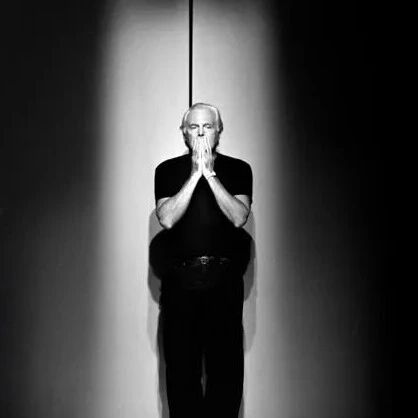
「工作狂」乔治·阿玛尼,百亿遗产无子女继承
36氪· 2025-09-05 14:25
Core Viewpoint - The passing of Giorgio Armani marks a significant moment for the luxury fashion industry, raising questions about the future direction and leadership of the Giorgio Armani brand [4][5][25]. Company Background - Giorgio Armani, founded in 1975, became synonymous with Italian style and luxury, with notable designs such as the "Armani Power Suit" and iconic red carpet dresses [8][10]. - The brand expanded rapidly, diversifying into various sectors including fragrances, home decor, and hospitality, while maintaining its independence despite offers from luxury conglomerates [14][16]. Leadership and Succession - Giorgio Armani was the sole actual shareholder and held the positions of Chairman and CEO until his passing, with no children to inherit the brand [16][17]. - A succession plan was drafted in 2016, outlining the future management and operational strategies of the company, which includes family members and a long-time collaborator as potential heirs [18][19][20]. Financial Performance - The brand has faced challenges, with a reported revenue of €2.3 billion in 2024, a 5% decline year-on-year, and a significant drop in operating profit by nearly 69% to €67 million [23]. - The brand's performance in the Asia-Pacific region has also declined, with its share of total revenue dropping from 21% to 19% due to a slowing market [23][24]. Market Challenges - The luxury goods sector is currently facing intense competition and market pressures, making it difficult for brands to maintain their positions [25].
“工作狂”乔治·阿玛尼,百亿遗产无子女继承
虎嗅APP· 2025-09-05 11:27
Core Viewpoint - The passing of Giorgio Armani, the legendary Italian fashion designer and founder of the luxury brand, marks a significant moment in the fashion industry, raising questions about the future of the brand and its leadership succession [4][5]. Group 1: Biography and Career - Giorgio Armani was born in 1934 in Piacenza, Italy, and grew up in a modest family during World War II, which shaped his unique understanding of fashion and elegance [7]. - He entered the fashion industry at the age of 40 after working as a medical student and later as a fashion buyer, gaining recognition for designing a men's collection for Nino Cerruti in 1964 [7][8]. - The Giorgio Armani brand was officially established in 1975, and by the late 1970s, it had gained significant acclaim, including designing outfits for high-profile events and films [8]. Group 2: Work Ethic and Leadership - Armani was known as a workaholic, dedicating himself fully to his company and projects until his last days, emphasizing the importance of hard work instilled by his upbringing [10]. - He had plans to gradually transfer his responsibilities to close associates, indicating a structured approach to succession planning [12][13]. Group 3: Company Structure and Succession Planning - The Armani brand was one of the first luxury brands to diversify its offerings, expanding into various sectors including food, furniture, and hotels [11]. - Before his passing, Armani was the sole actual shareholder and had not publicly named a successor, leading to speculation about the brand's future in a competitive luxury market [12]. - A succession plan drafted in 2016 revealed that shares would be distributed among family members and a charitable foundation, aiming to ensure the brand's legacy [14][15]. Group 4: Financial Performance and Market Challenges - The Armani Group faced a decline in sales, with a 5.2% drop in 2016, and continued struggles in subsequent years, including a reported revenue of 2.3 billion euros in 2024, down 5% from the previous year [18]. - The brand's performance in the Chinese market has also been affected, with a decrease in its share of total revenue from 21% to 19% due to a challenging consumer environment [18][19]. - The overall luxury goods industry is facing challenges, and the future direction of the Giorgio Armani brand post-Armani's death remains uncertain [20].
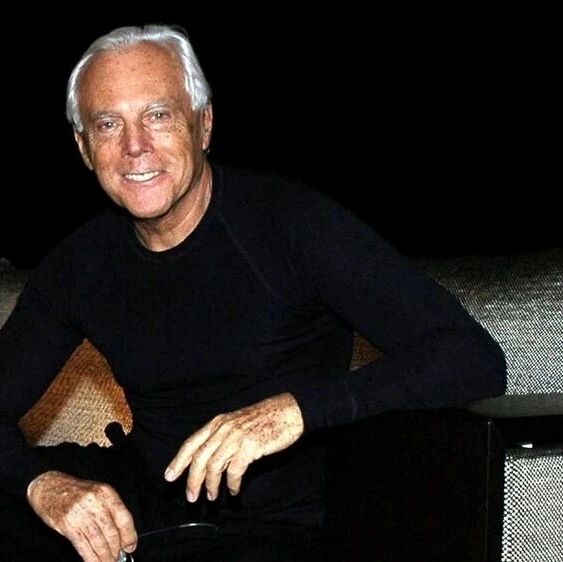
阿玛尼去世后,时尚帝国如何延续?-美股-金融界
Jin Rong Jie· 2025-09-05 07:31
Group 1 - Giorgio Armani, the iconic Italian fashion designer, passed away at the age of 91, marking the end of an era in the luxury fashion industry [1][2] - Armani maintained the private nature of his company, ensuring independence from larger conglomerates like LVMH and Kering, with projected sales of approximately $2.7 billion in 2024 [1][2] - The company will face significant challenges in preserving the founder's legacy while transitioning to a new phase, with control shifting to the "Giorgio Armani Foundation" established in 2016 [1][2] Group 2 - The future of the Armani brand will attract considerable industry attention, as luxury brands rarely appear on the market [2] - Since its establishment in 1975, the Armani Group has expanded into various sectors, including haute couture, ready-to-wear, and lifestyle products, but experienced a 5% revenue decline and nearly a 25% drop in operating profit in 2024 [2] - Armani emphasized the importance of independence and legacy, advising his team to remain humble in an industry often characterized by excessive self-awareness [2]
中新网评:同质不同价,香奈儿在羞辱谁的智商?
Zhong Guo Xin Wen Wang· 2025-09-05 07:15
Core Viewpoint - The pricing strategy of Chanel's two powder products has sparked controversy, highlighting a disconnect between luxury brands and consumer perceptions [1][2] Group 1: Product Pricing Controversy - Chanel offers two versions of its lightweight powder: a 30g version priced at 600 yuan and a 6g travel size also priced at 600 yuan, leading to consumer complaints about the pricing disparity [1] - Consumers expressed disbelief over the equal pricing, questioning the value of the additional features like a mirror and puff in the travel size [1][2] Group 2: Brand Perception and Consumer Trust - This incident reflects a broader issue of luxury brands facing scrutiny over their pricing strategies, particularly in the Chinese market, where consumers feel they are being treated differently [2] - The luxury brand's pricing is often based on brand premium rather than actual product cost, but when pricing appears to insult consumer intelligence, it risks damaging brand trust [2] - Chanel is urged to provide a more convincing explanation for the pricing strategy, as consumers are becoming increasingly rational and discerning [2]
阿玛尼谢幕:一个人的时尚帝国与资本的终局博弈
Sou Hu Cai Jing· 2025-09-05 03:21
Core Insights - Giorgio Armani, the iconic designer, passed away at the age of 91, leaving behind a fashion empire valued between €80-100 billion, while maintaining a unique independent status in the luxury industry [1][3] - The company is facing challenges in maintaining its valuation and market position, particularly after the founder's death, which may lead to potential acquisition interest from larger luxury groups [3][5] Group 1: Company Overview - Armani Group's revenue is projected to decline by 6% to €2.3 billion in 2024, despite significant investments of €332 million in renovating flagship stores and consolidating e-commerce operations [1] - The company's EBITDA is expected to drop by 24% in 2024, with sales in the Chinese market falling to 19% [3] Group 2: Inheritance and Control - The inheritance plan involves distributing shares among family members and long-term partners while establishing a charitable foundation that holds symbolic shares, ensuring that true control remains within the family [3] - This approach is rare in the luxury sector, contrasting with other brands like Prada and Ralph Lauren, which have brought in external management [3] Group 3: Business Philosophy - Armani's design philosophy emphasizes minimalism, with a product matrix that includes the main line Giorgio Armani, the mid-range Emporio Armani, and the AX series targeting younger consumers, allowing the brand to maintain a 49% market share in Europe despite a global luxury market contraction [4] - The founder's wariness of capital involvement stems from past experiences, leading to a preference for maintaining brand integrity over financial gain [4] Group 4: Industry Implications - The passing of Armani may trigger a chain reaction in the luxury market, with estimates suggesting that brand premium accounts for over 60% of the group's valuation, putting future control at risk [5] - The independent model established by Armani has served as a survival template for smaller luxury brands, and its potential decline may accelerate consolidation among larger players like LVMH and Kering [5]
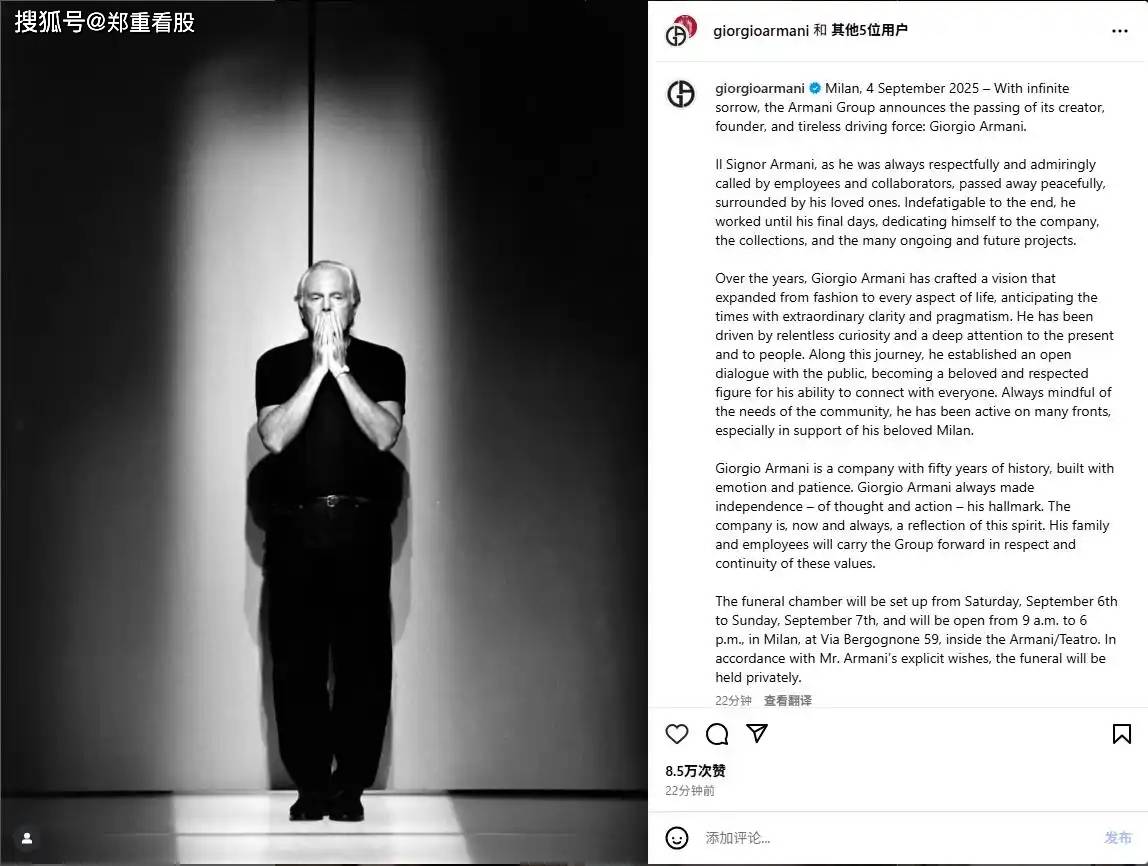
奢侈品牌阿玛尼创始人乔治·阿玛尼去世,享年91岁
Xin Lang Cai Jing· 2025-09-04 21:16
Group 1 - Giorgio Armani, the founder and driving force behind the luxury brand Armani, passed away at the age of 91, as announced by the company on September 4 [1] - Giorgio Armani was born on July 11, 1934, in Piacenza, Emilia-Romagna, Italy, and he previously worked as a menswear designer at Cerruti [4] - According to the 2025 Hurun Global Rich List, Giorgio Armani's wealth was estimated at 80 billion RMB, ranking him 219th on the list [4]
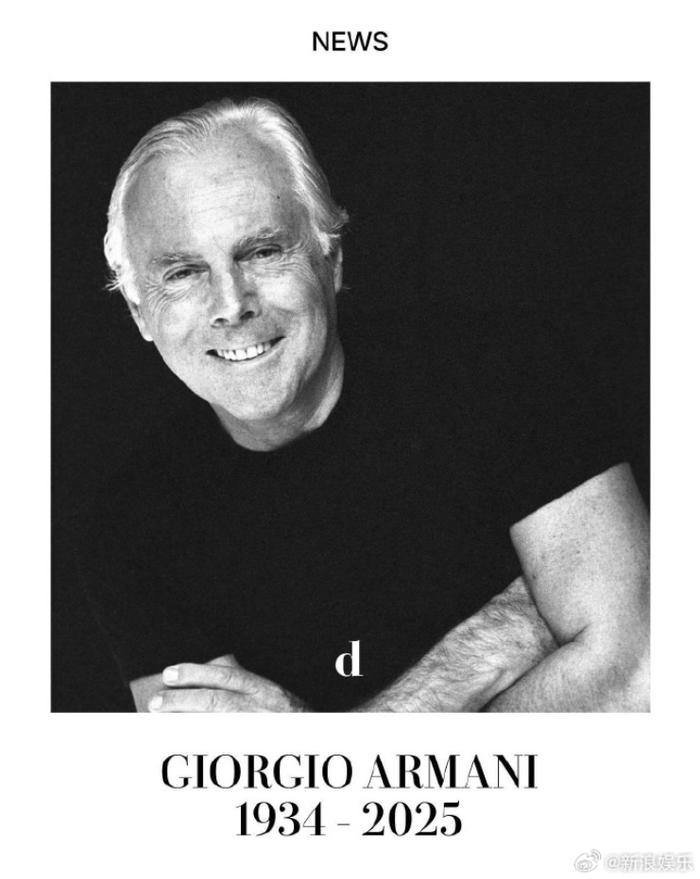
阿玛尼让西装成为现代人第2层皮肤
Di Yi Cai Jing· 2025-09-04 16:57
Core Viewpoint - The passing of Giorgio Armani marks the end of an era in fashion, as he significantly influenced modern dressing and luxury aesthetics over the past fifty years [1][2]. Group 1: Company Overview - Armani Group is valued between €8 billion and €10 billion for 2024, maintaining independence without external capital [1]. - The brand is recognized for its "softening menswear and hardening womenswear" philosophy, which reflects a unique aesthetic in the luxury fashion industry [2]. Group 2: Industry Impact - Armani is noted as one of the few independent designers in a luxury market dominated by conglomerates like LVMH and Kering [1]. - His designs have had a profound impact on Hollywood, dressing numerous actresses for prestigious events, thus shaping the visual culture of modern luxury [1].
奢侈品牌阿玛尼创始人离世!享年91岁 身家800亿元
Mei Ri Jing Ji Xin Wen· 2025-09-04 15:07
Group 1 - Giorgio Armani, born on July 11, 1934, in Piacenza, Emilia-Romagna, Italy, is a renowned fashion designer and the founder of the luxury brand Armani [2] - As of March 27, 2025, Giorgio Armani ranks 219th on the Hurun Global Rich List with a wealth of ¥800 billion [3]